Categories
Israel Study Trip

Day 5 – Qumran and Bet She’an & Scythopolis

This morning we left our first hotel and started heading north, following the coast of the Dead Sea.
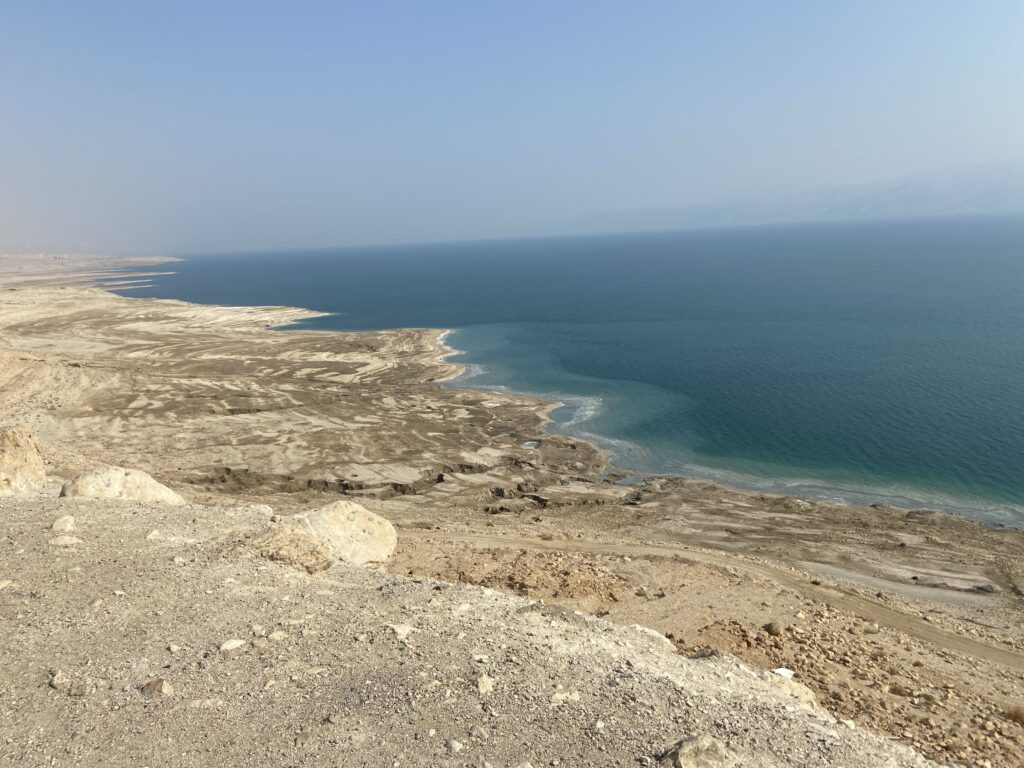
If you look closely at the right of the picture just above the sea, you can see the mountains of Moab. Andrew reminded us that it was from these mountains that Baalam did not curse the Israelites.
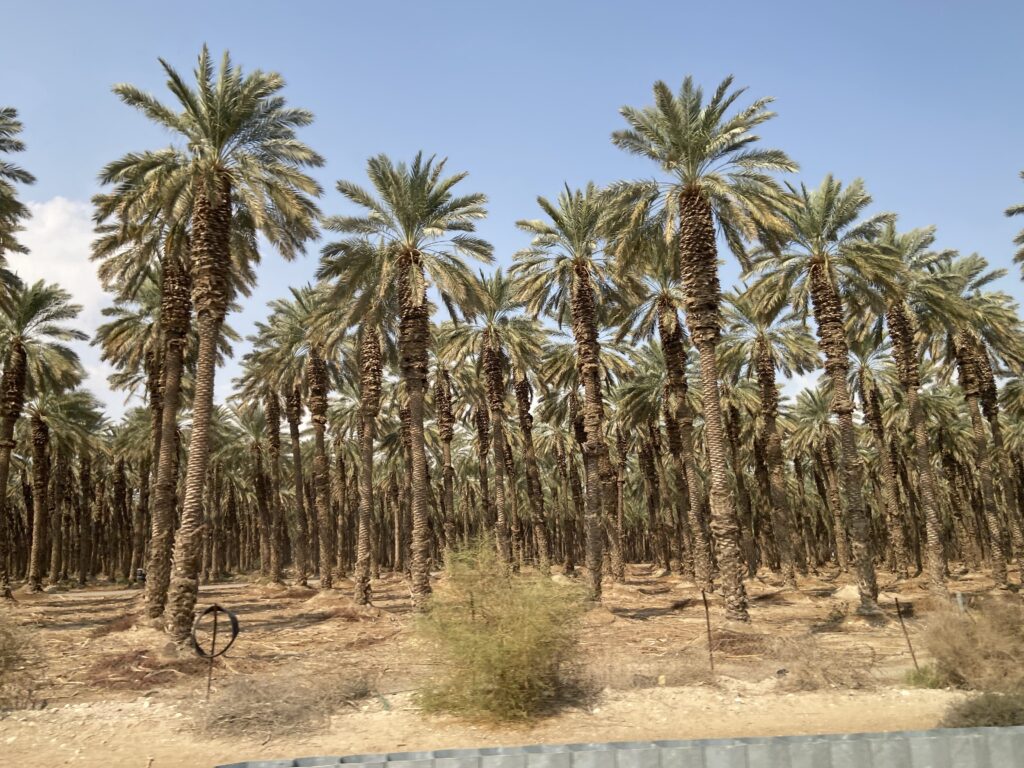
We have seen many fruit trees during our time on the road, including date palms, bananas, citrus, and olives.

Our first main stop today was at Qumran. A group Essenes men (and later some women as well) lived, worked, and studied together. They had many strict rules they kept. And they also copied books from the Old Testament.
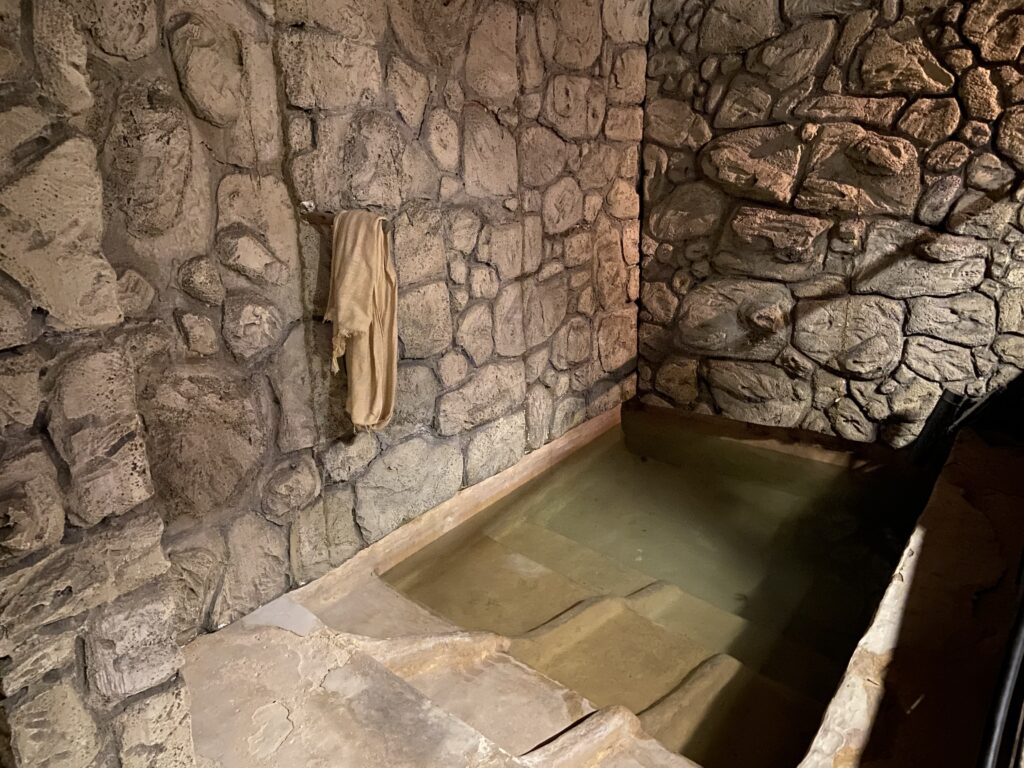
They had rituals related to being cleansed and twice day they would dip themselves in water. One side of the steps they went down unclean, and would come up on the other side of the steps clean. This water must be flowing, which was a challenge in the desert, so they had just a trickle coming into their mikveh.
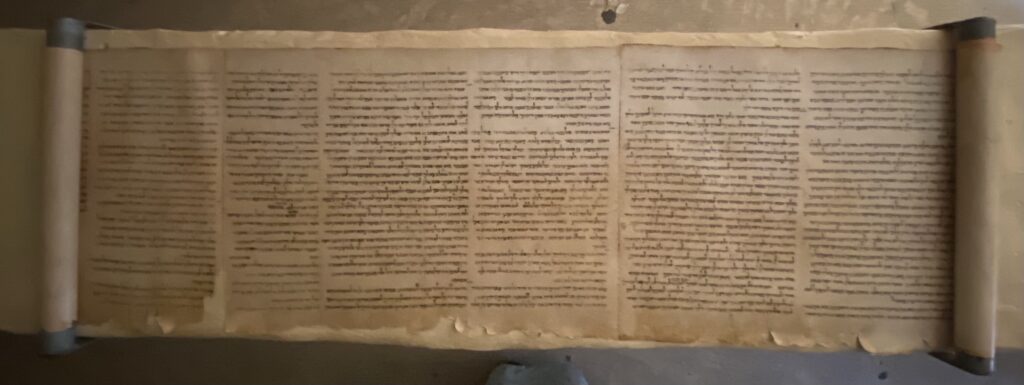
This is a copy of one of the scrolls they copied. The longest scroll was eight feet long.

After we were finished inside, we headed out to see the actual ruins and caves.

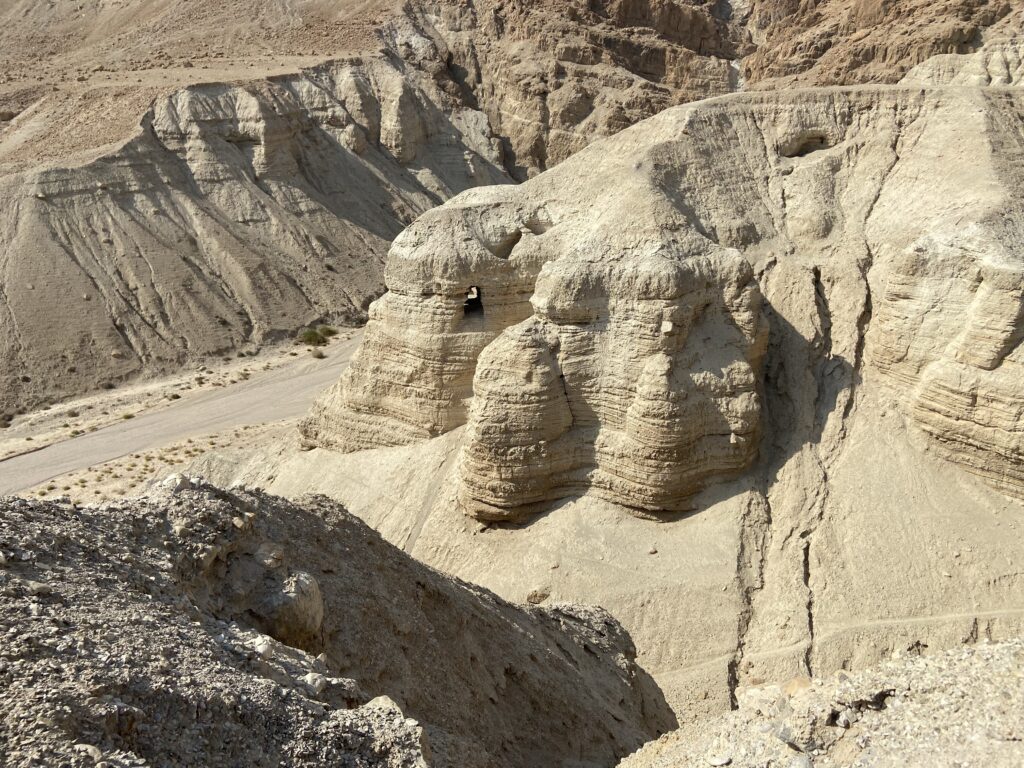
One day, a young Islamic shepherd boy kicked a rock into a cave and heard something break. He was too scared to investigate by himself so he took his brother along to see what they could find. They discovered clay jars and eagerly opened them, hoping for great treasures such as gold. However, much to their disappointment, all they found were parchments, and they actually burnt part of one! Later, a search was made of the surrounding caves and more parchments were found. It is generally assumed that Essenes hid their parchments before the Roman’s conquered the area.
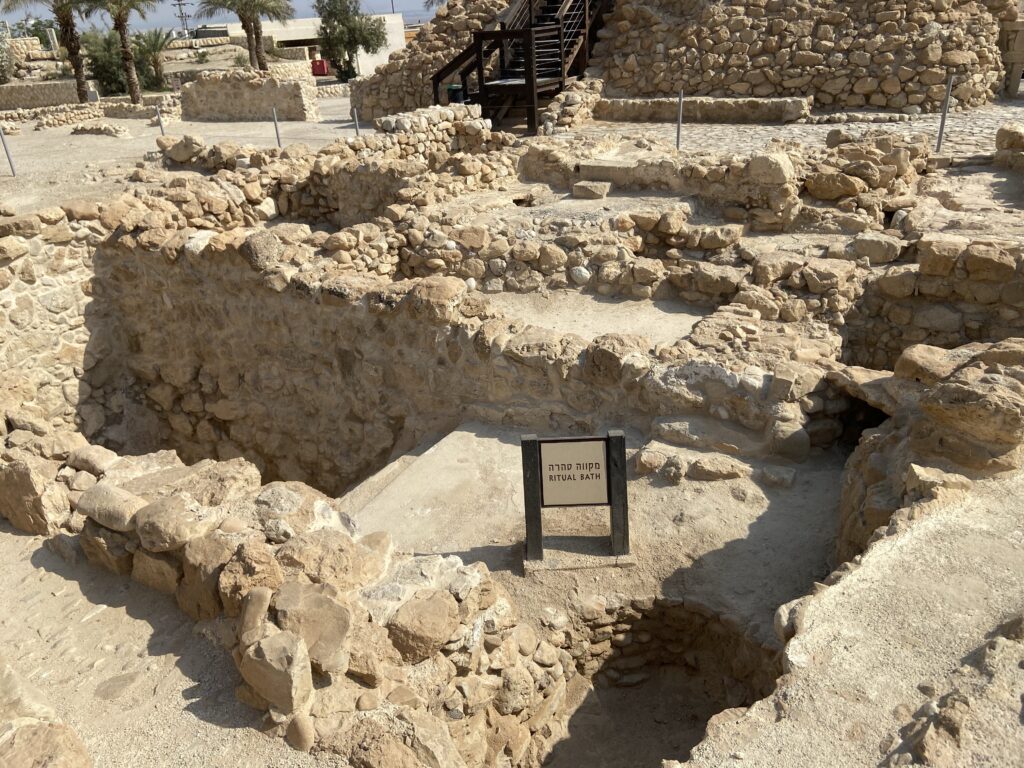
Qumran ruins
Most of the parchments were found in cave four, which you can see in the center of the picture.

Our next stop was another overlook, and this one also brought more of the Bible to life.
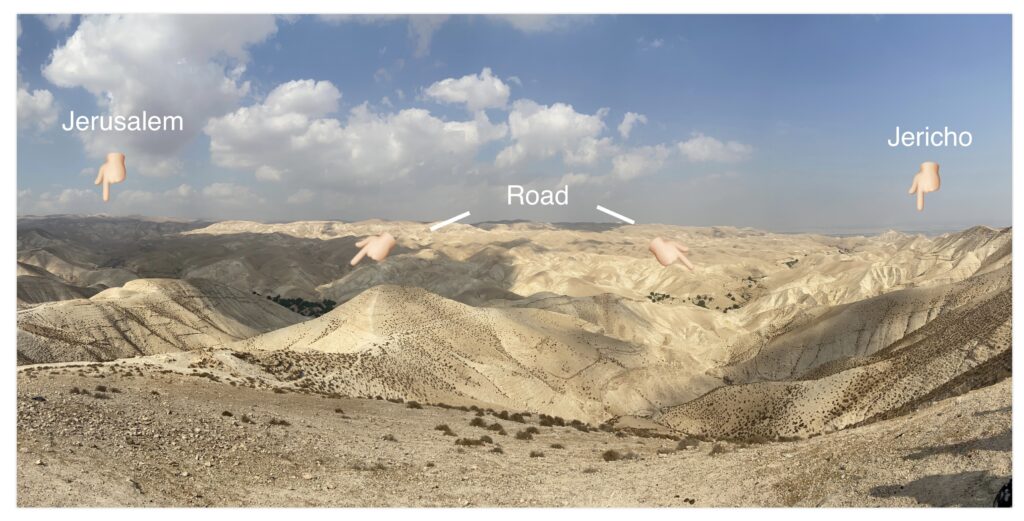
Looking ahead, Andrew pointed out Jericho to the right and Jerusalem to the left. A road in the Wadi goes from one city to the other. This is the road Jesus was referring to in the story of the Good Samaritan. Andrew told us that it is still a dangerous road to travel today.
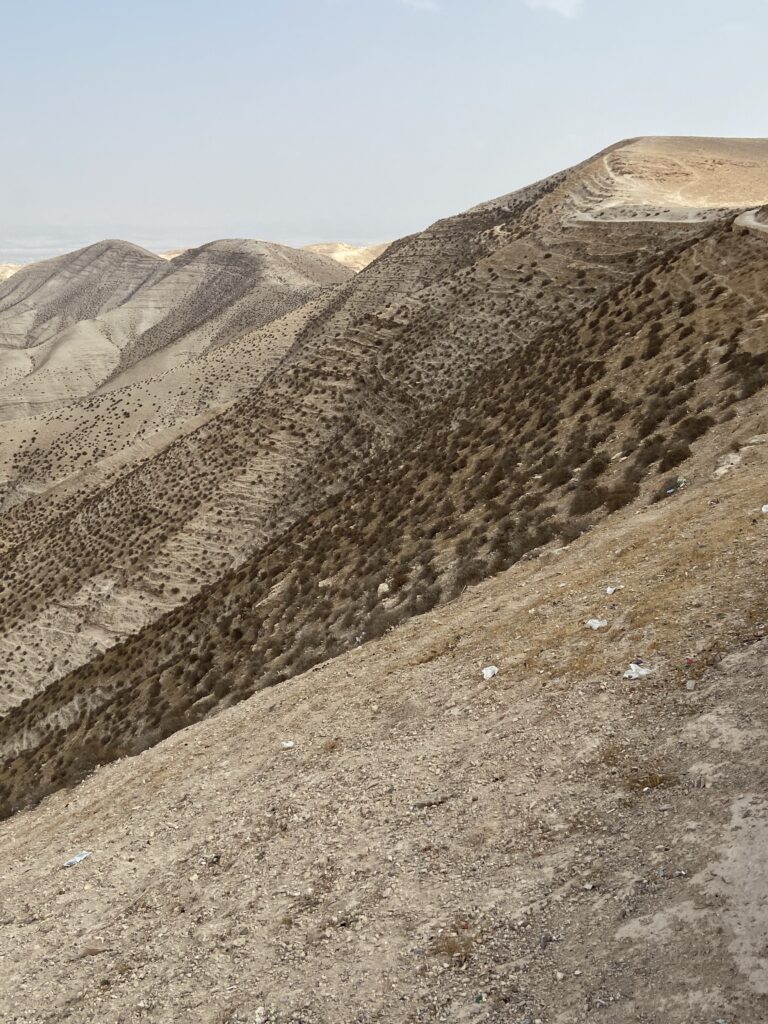
Looking at the sides of the mountain, Andrew pointed out what David’s mental picture was as he penned the phrase in Psalm 23. “He maketh me lie down in green pastures.” The shepherds knew just where to find the grass that has grown enough to give their sheep what they needed for the day. So our Shepherd does for us – gives us the grace and strength we need just for today, and He knows exactly where to lead us next! This grass grows not because of rain, but because moisture comes in the night breezes from the Mediterranean Sea.

Our last stop for the day was at Bet She’an and Scythopolis.
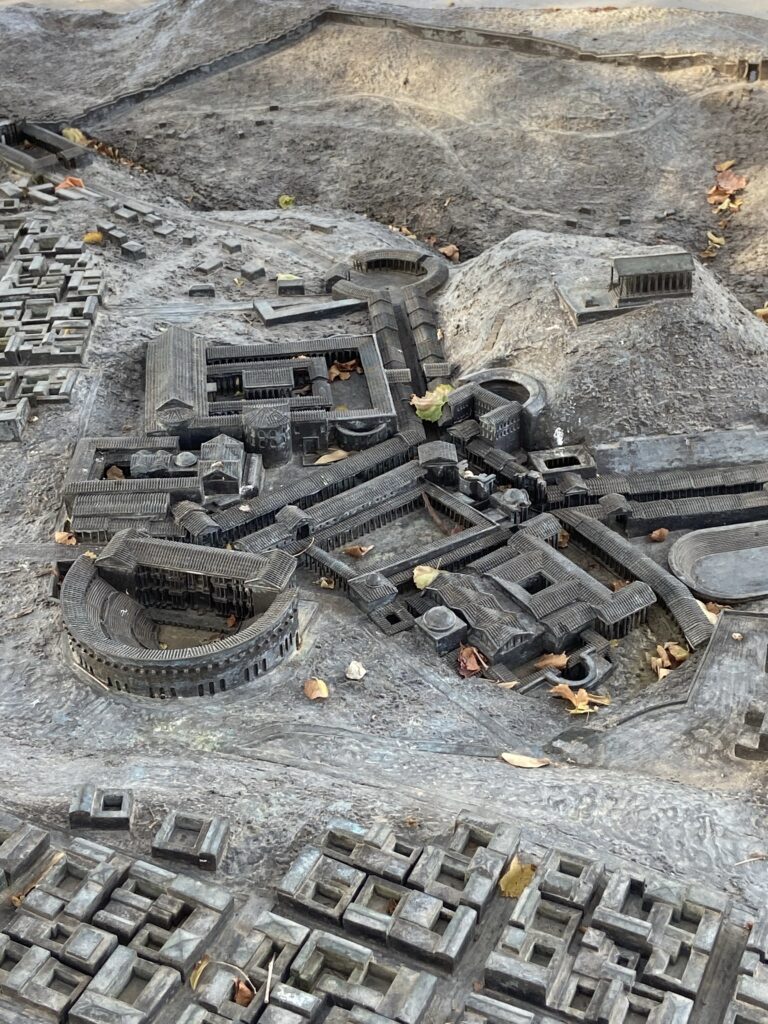
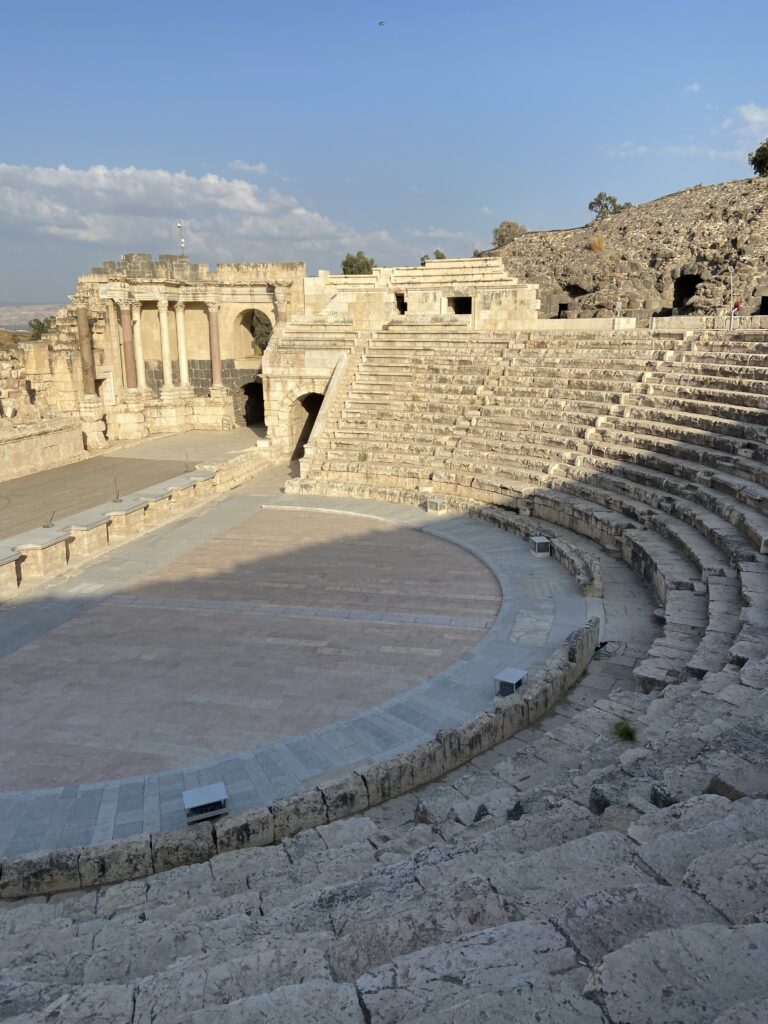
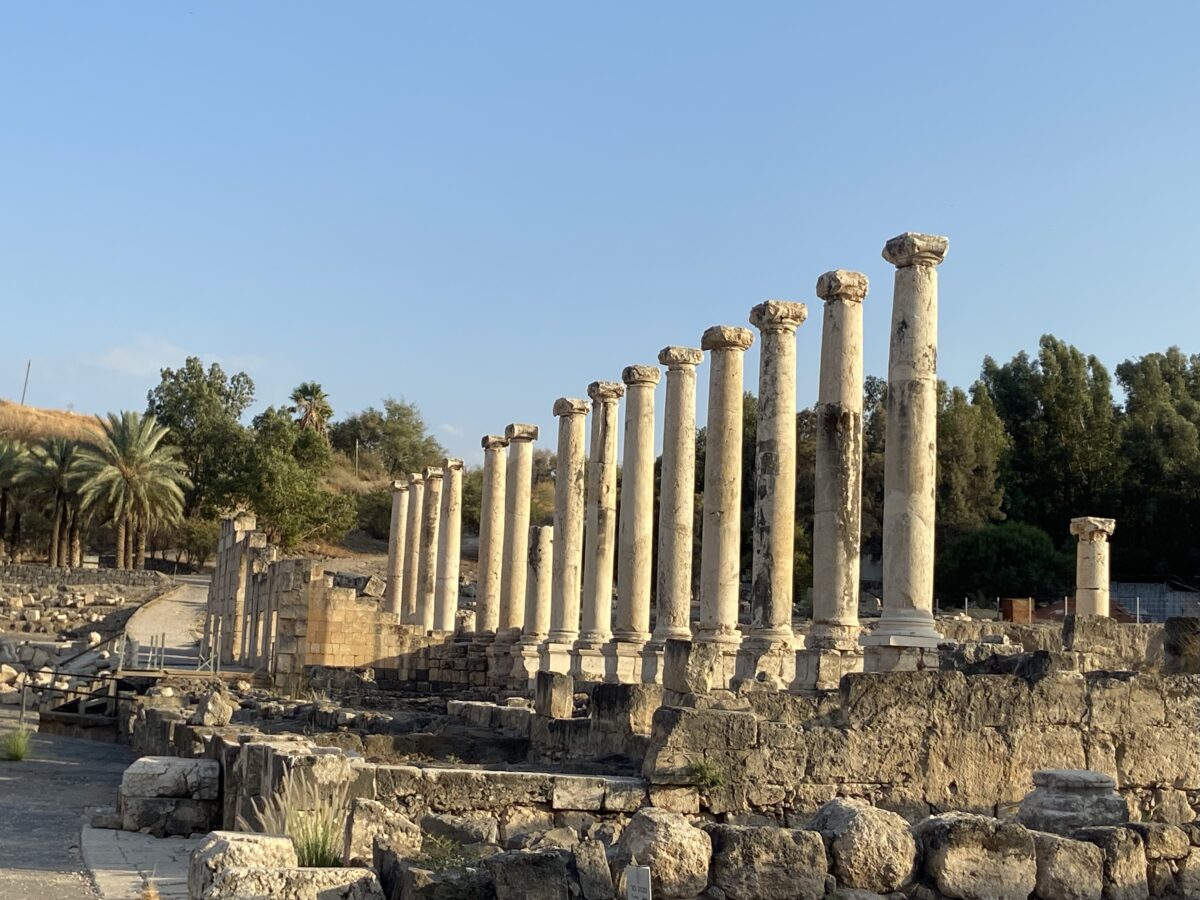
This model shows the main part of the Hellenistic city. You can see the theater on the left and the main city streets with shops along them.
The theater was an important part of town. The acoustics there also worked amazingly well. One of our group went down to the stage and spoke in his normal voice and we could easily hear him!
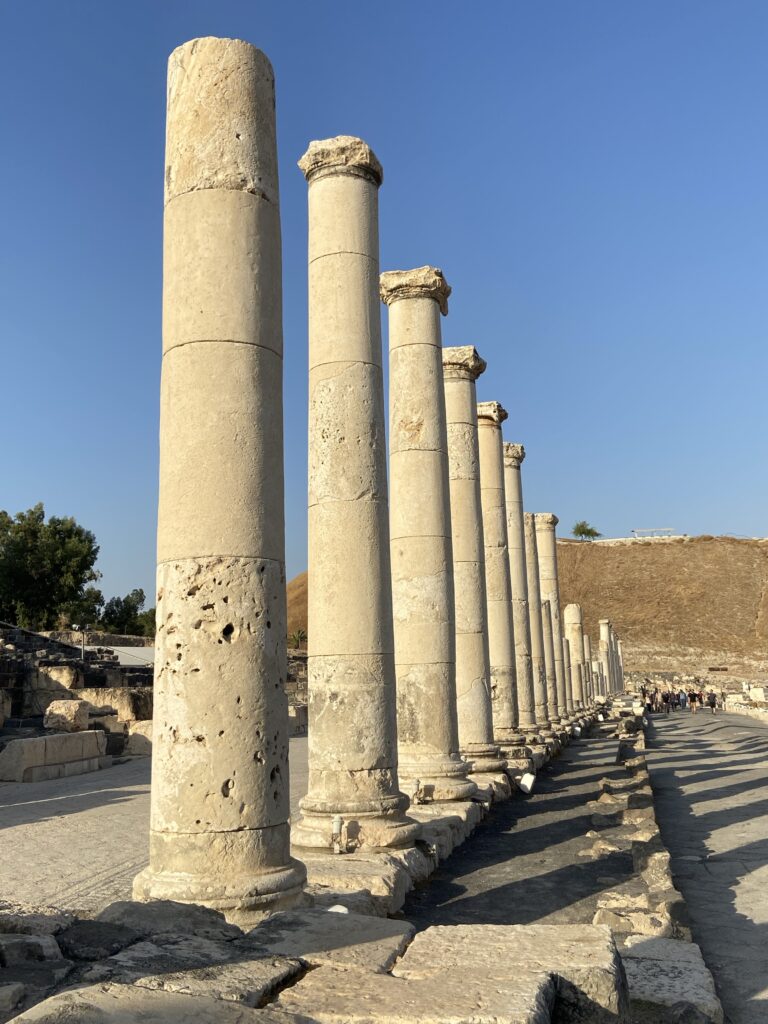
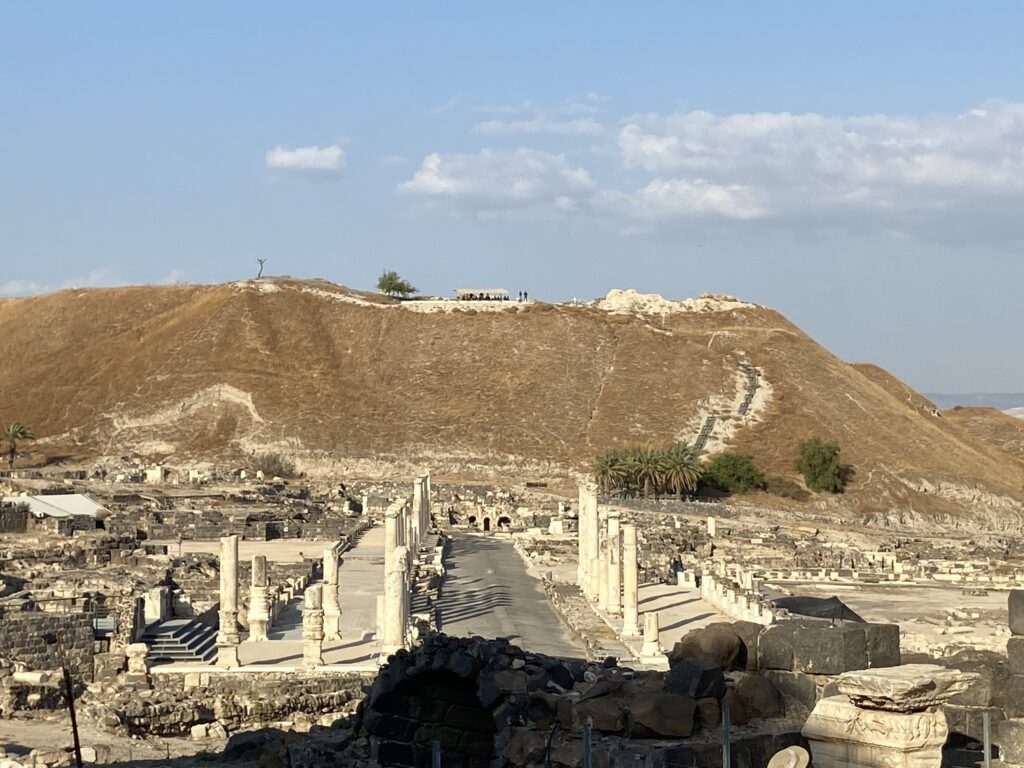
Looking down the Main Street of town.
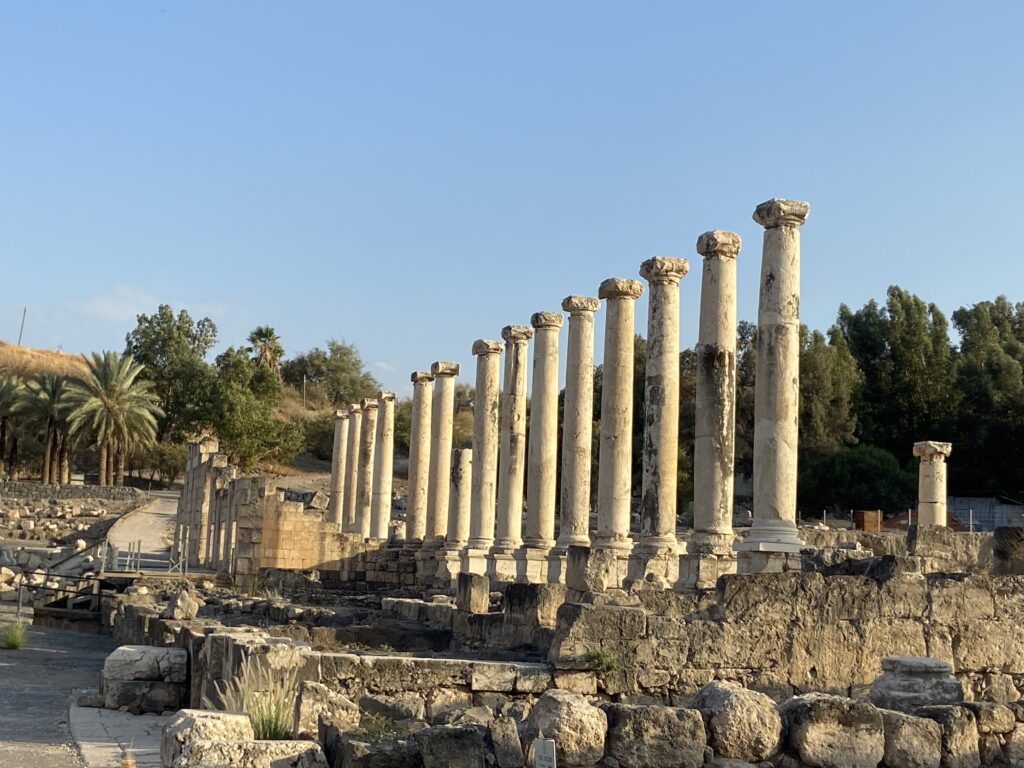
More ruins of the city
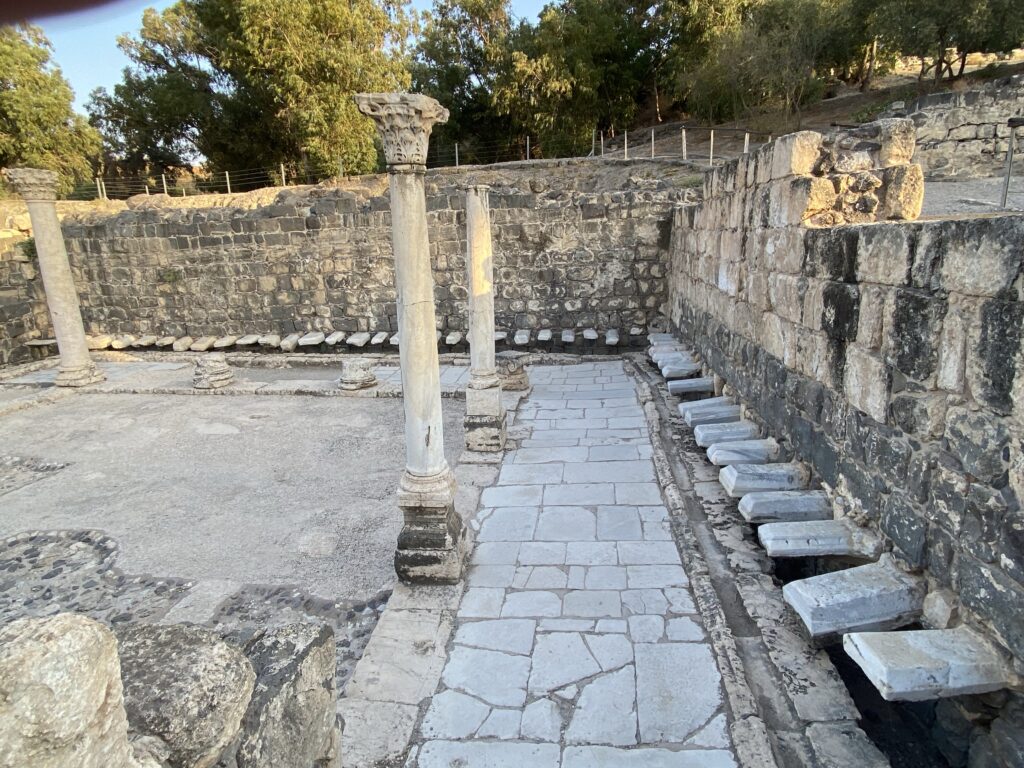
This was the public bath house.
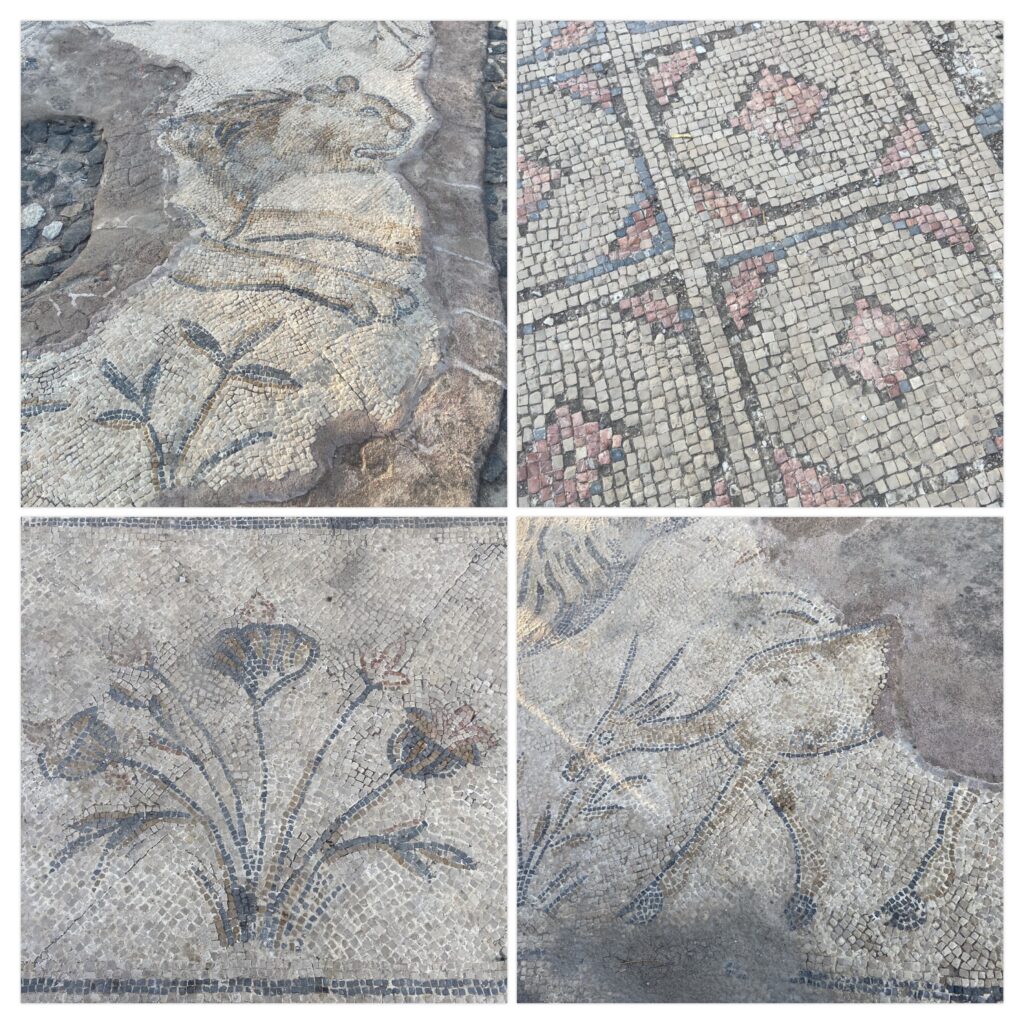
We noticed many beautiful mosaics in the floor

Above the city set Bet She’an, which the more energetic of our grouped climbed up to. That city was significant because that is where the bodies of Saul and his sons were hung after they died on Mt Gilboa.
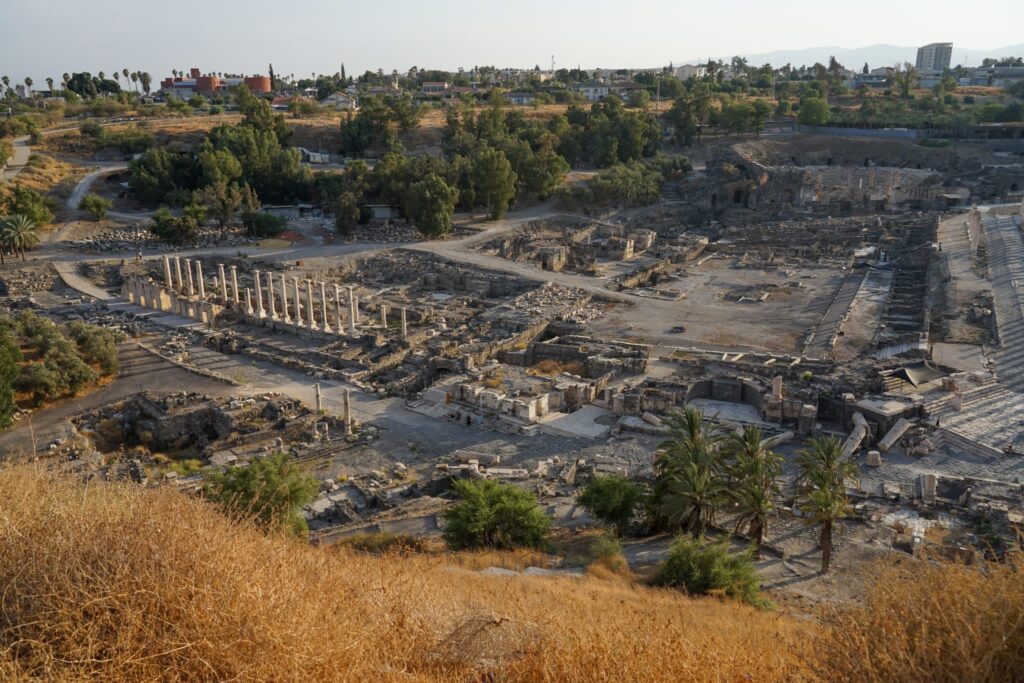
A view of Scythopolis from Bet She’an
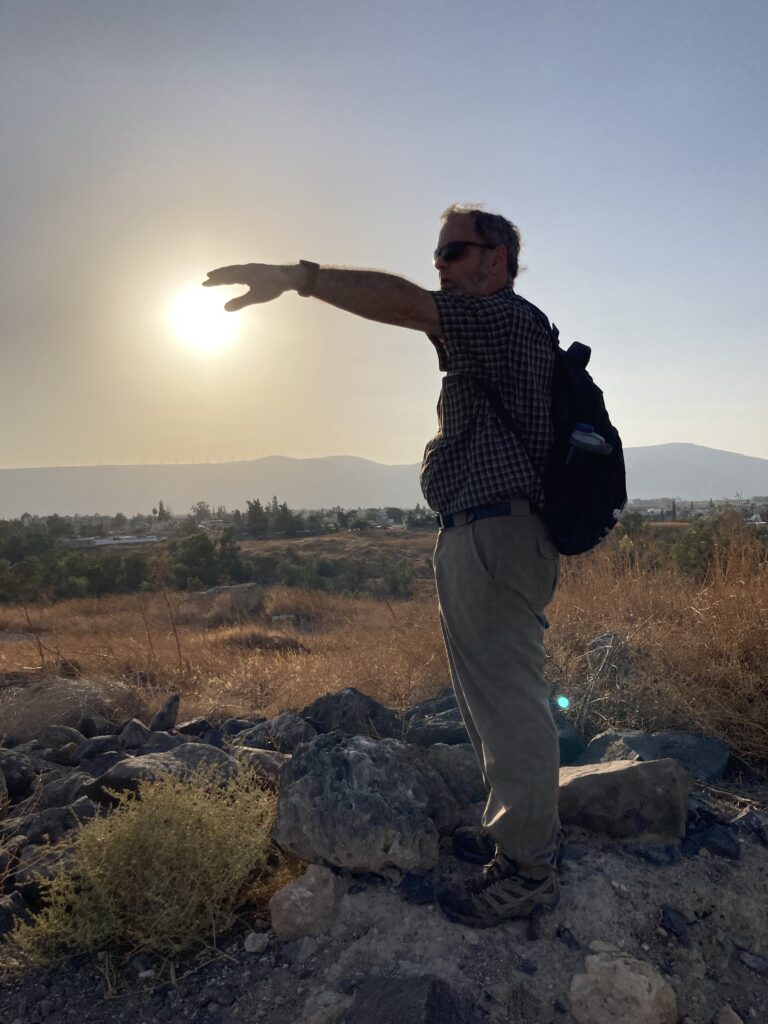
Andrew teaching on Bet She’an

During our travels north today, we left the Negev and came to the Jordan River valley, a more fertile part of the Land. We traveled up to Tiberius to our hotel that is on the banks of the Sea of Galilee.
Categories
Israel Study Trip

Day 1 – And We’re Off!

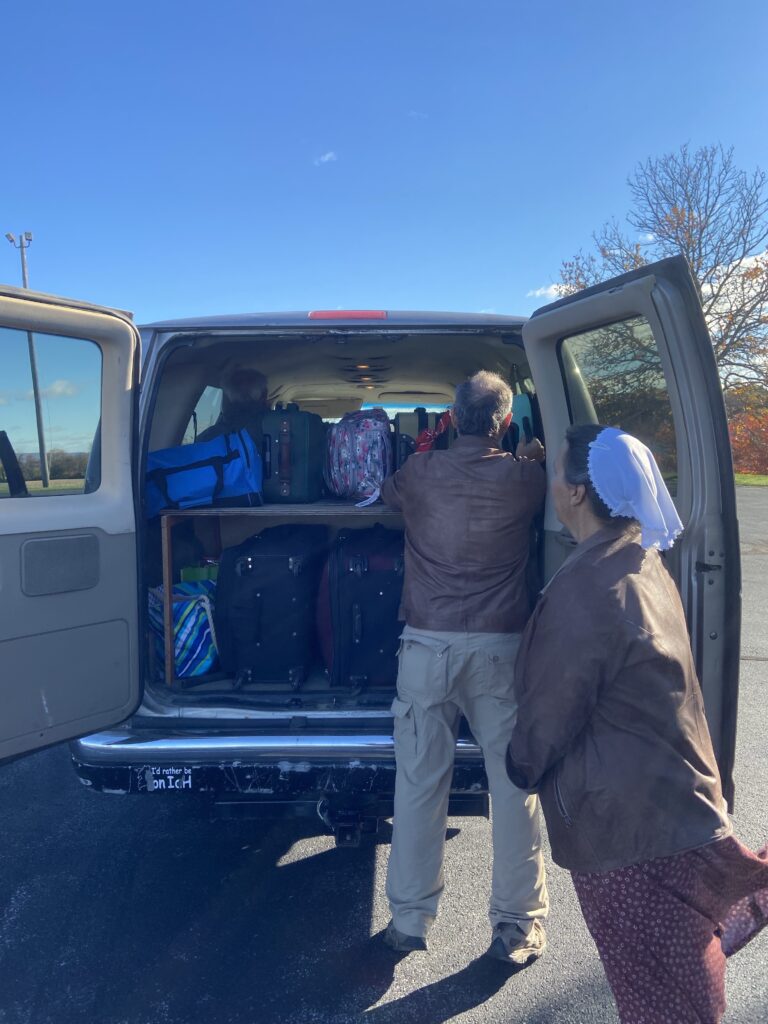
After weeks of preparation, the long anticipated day has arrived! Those of us from Pennsylvania met at Swatara Church and loaded all our luggage into the back of the Andrew’s van. After prayer, we started our eastward trek.

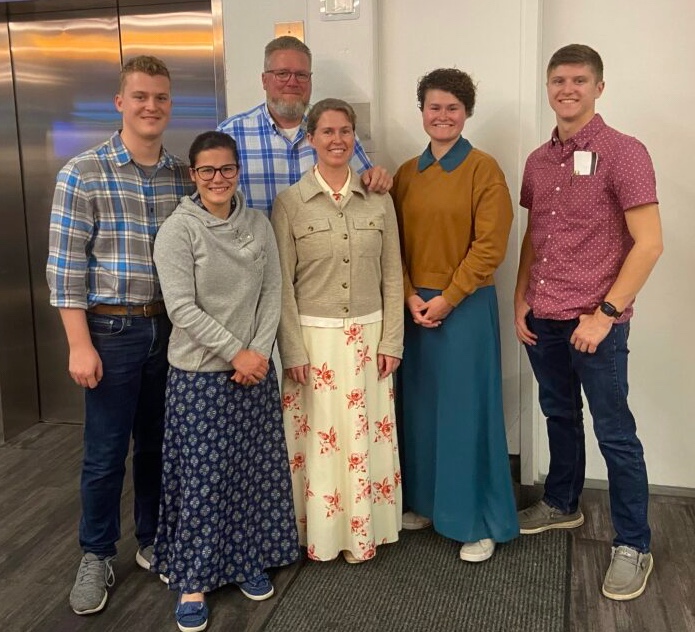
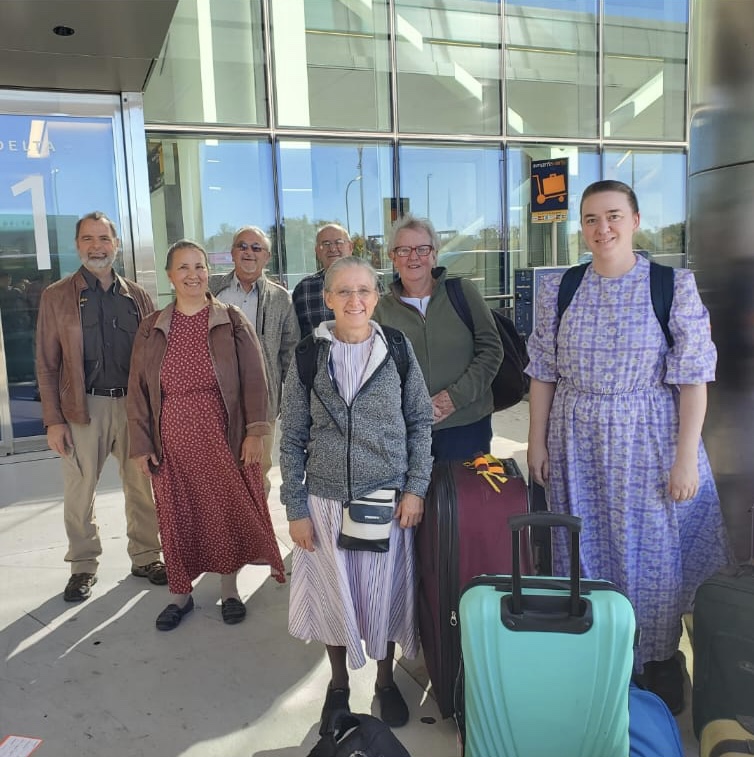
Ready to enter the airport. L-R Andrew, Julia, Warren, Willard, Miriam, Blanche, Marissa

Our first flight took us to Boston, where we met the rest of our group from that flew from Ohio.

L-R Brendan and Rylee, Dave and Michelle, Bailey, Dane

Our flight to Tel Aviv was delayed, but we finally found our seats and settled in for our long night ahead. Next stop – Israel!!!

Categories
Archaeology

Last Day in Megiddo

Margaret said she planned to take us around the four other active dig areas in Megiddo next week. Some of us were staying for only the first week, so we did a mini-tour during our last break. Above, Area Z is digging next to the Solomonic Gate to find walls in the area. Caleb was working in this area.

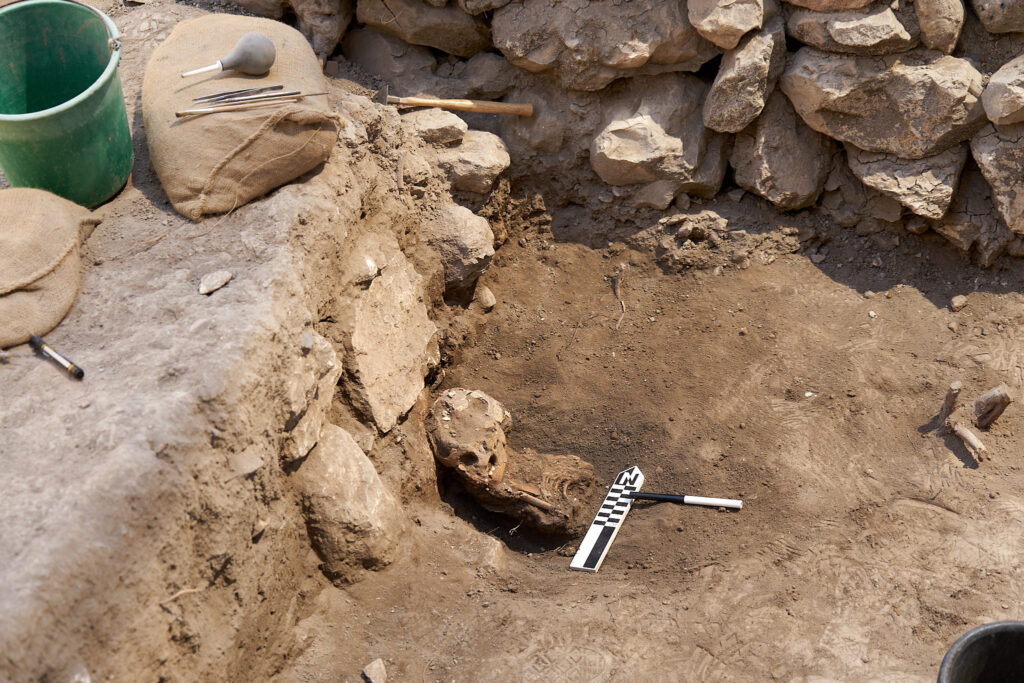
Area K found a human skull. They were on the perimeter of the tell.

Area X found some interesting items, including a gold earing from the Assyrian period.

Area S was digging into the Bronze Age.
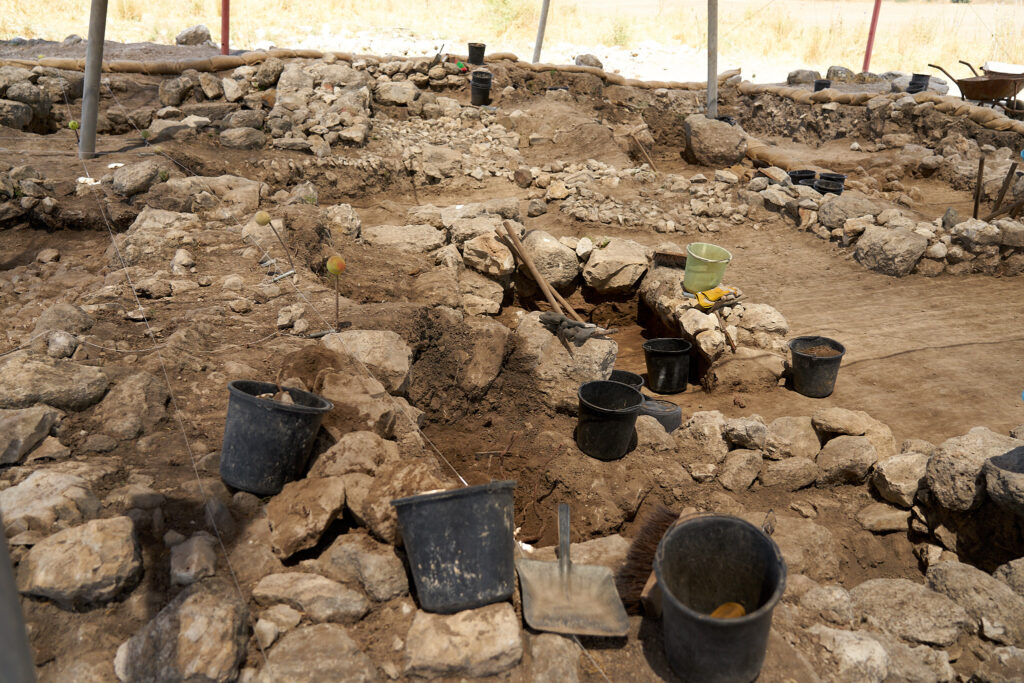
I took some final photos of “my” dig site in Area R. We had found a lot of interesting pottery pieces and the bathtub piece. Some orangish and blackened areas gave hints of mud bricks. Was it the floor we were looking for, or material from a collapsed wall? I’ll need to leave it to others to find out.

We enjoyed participating in the expedition. It was hard physical work at times. But the opportunity to participate in discoveries, learn from experienced archeologists, and interact with others interested in the past made it a worthwhile experience.

Categories
Archaeology

Another Day On The Dig

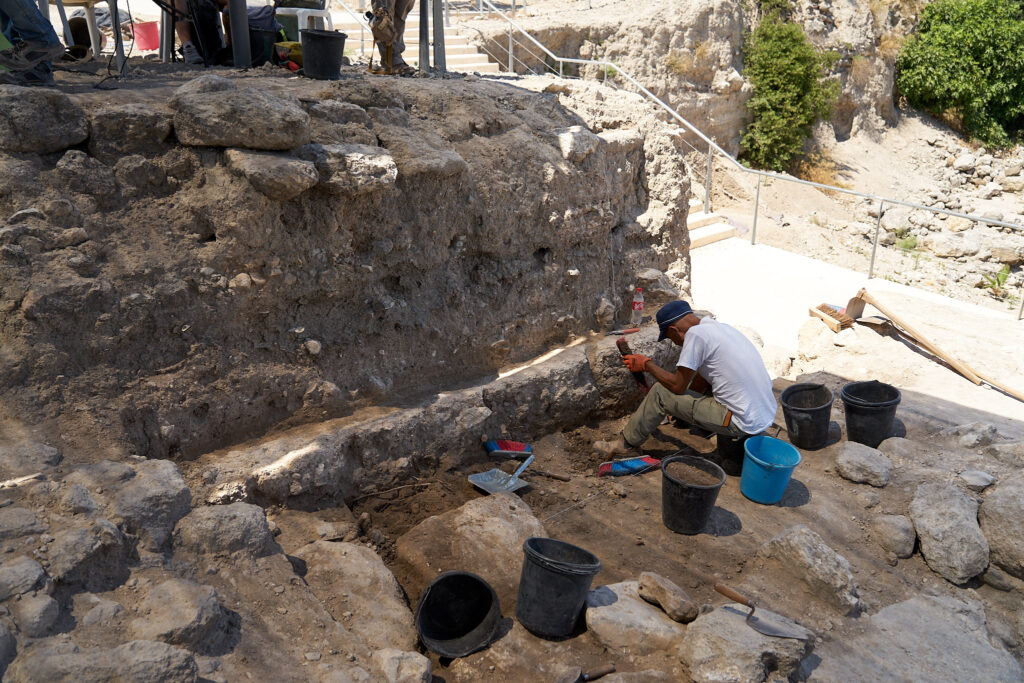
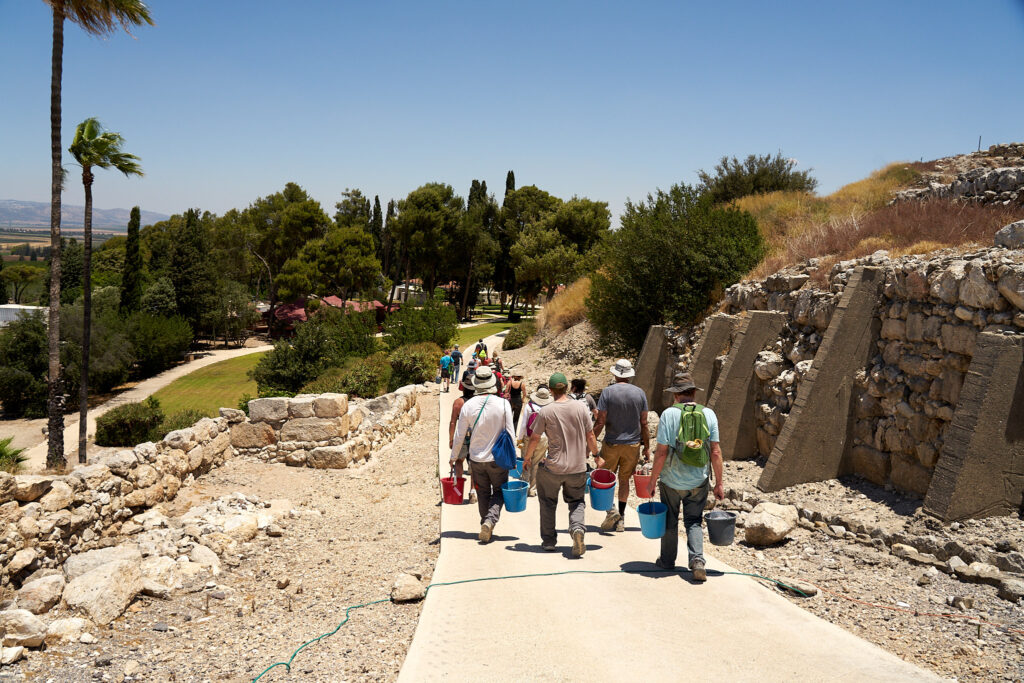
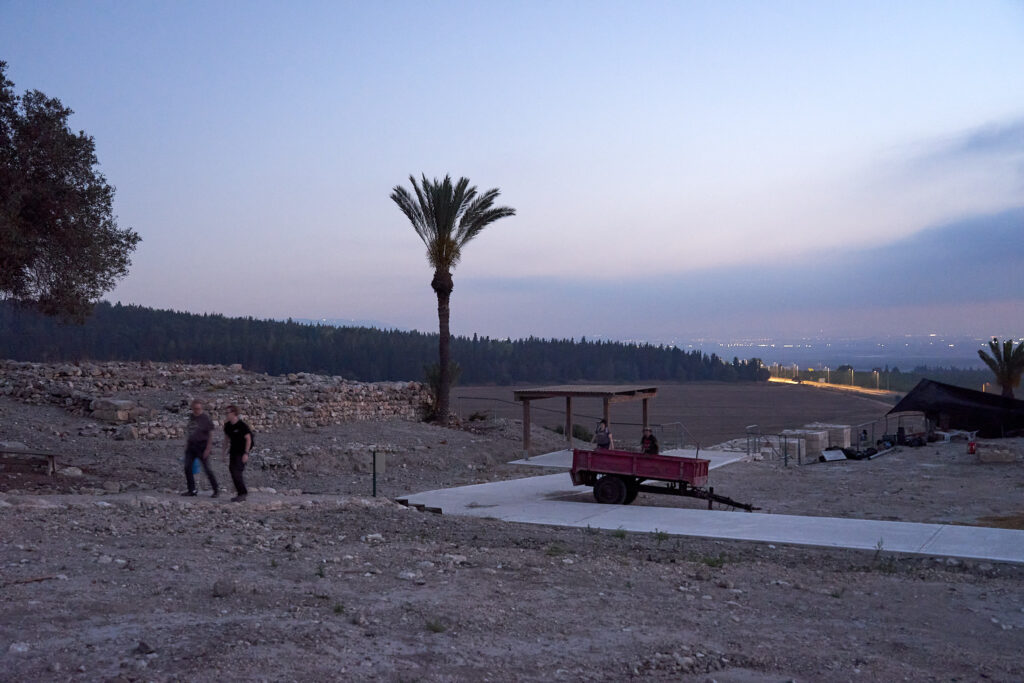
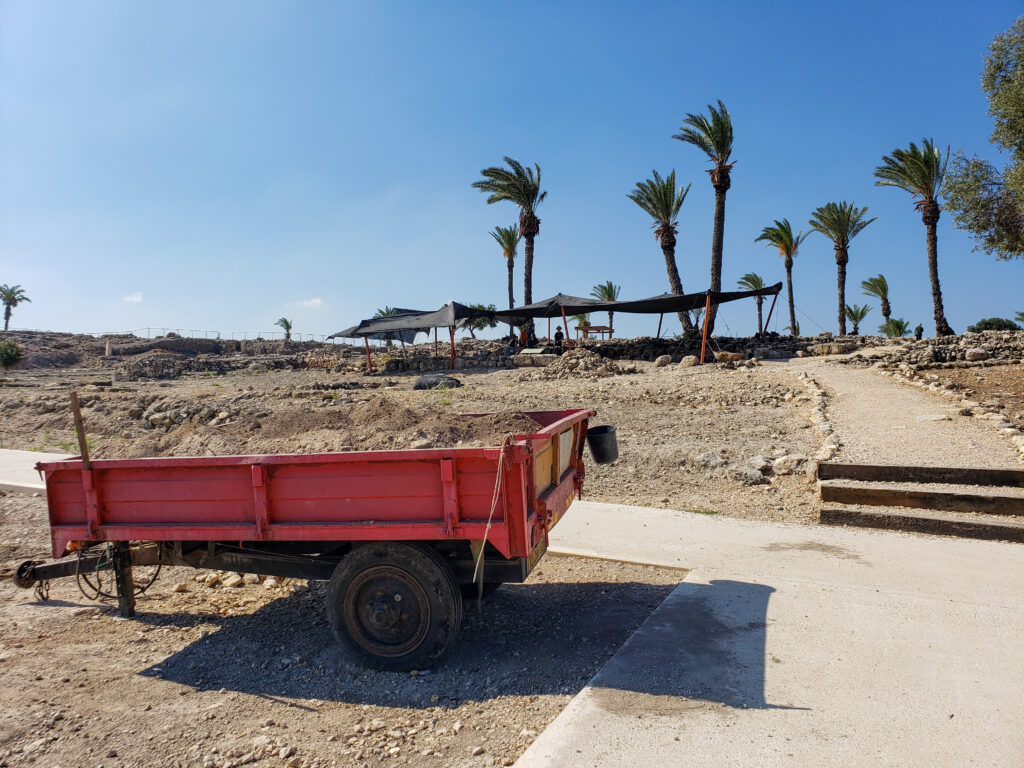
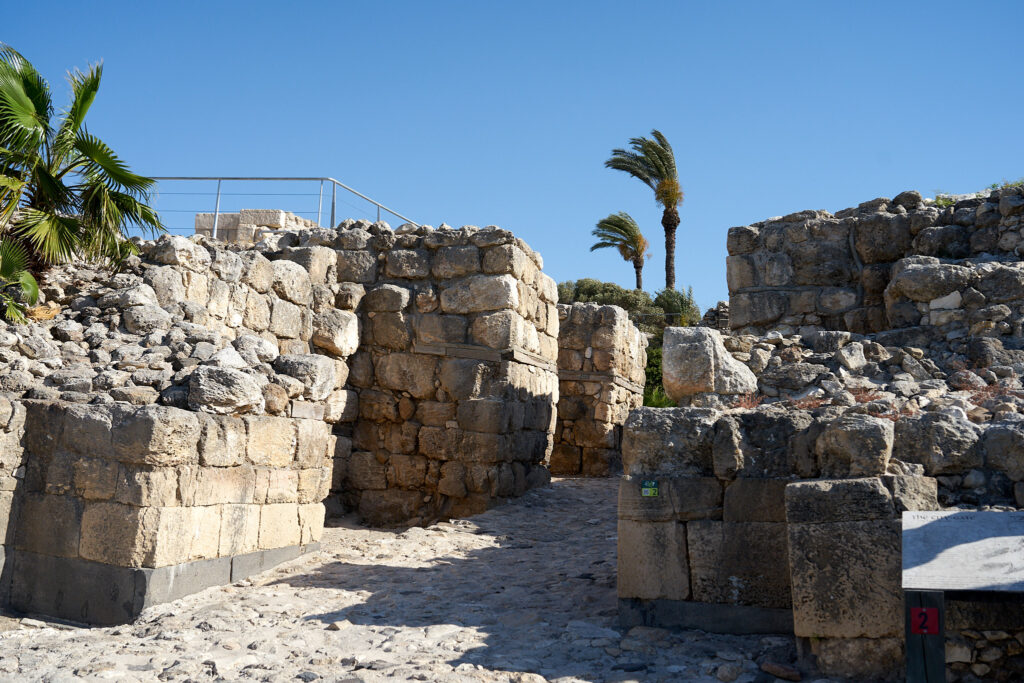
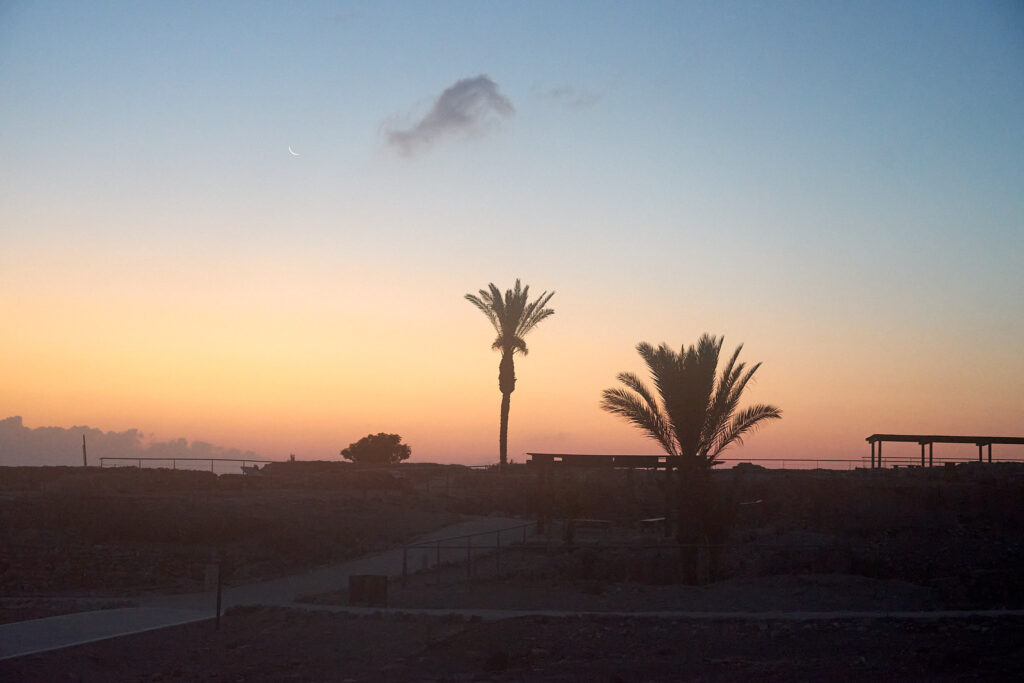
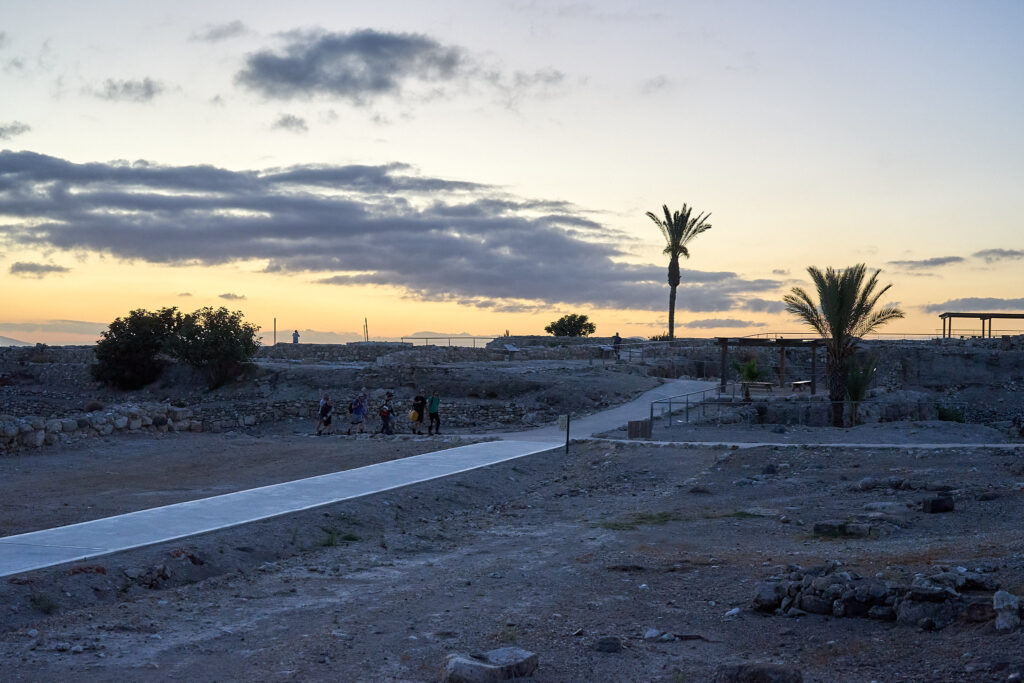
Each day we ride the bus to Tel Megiddo, arriving at 5:00 AM. We climb the steep walkway to our dig site. We pass through the Solomonic Gate before the sun is up. In the picture above you can see the empty trailer waiting for our buckets of excavated dirt.

We’re digging up bones, pottery, and even what might be a piece of a bathtub. The sun has risen a million times on Megiddo since this stuff was last used.

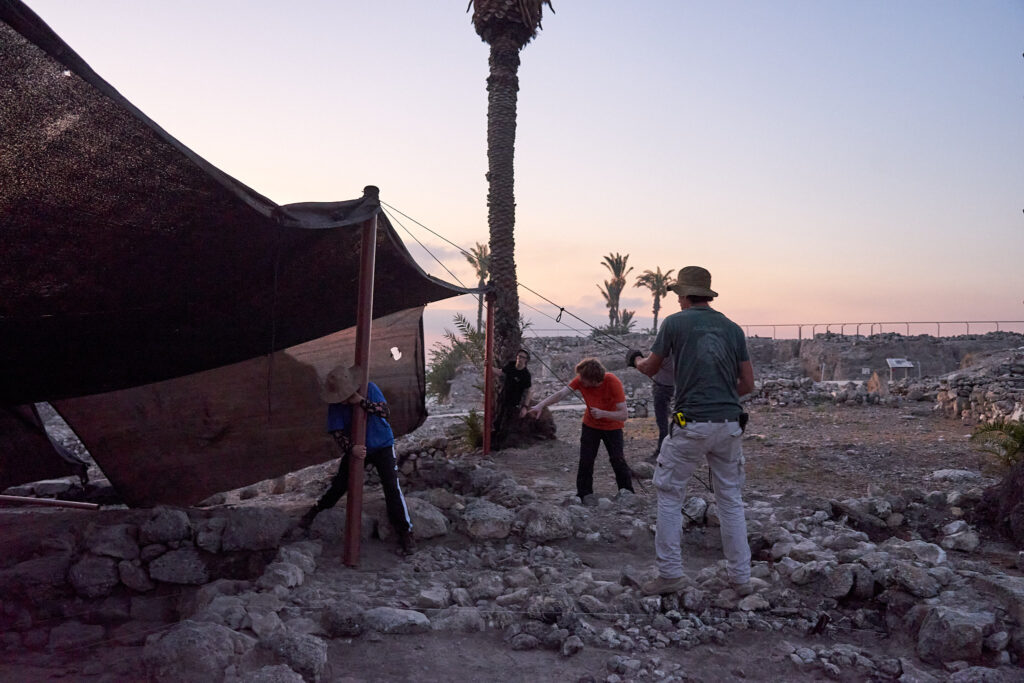
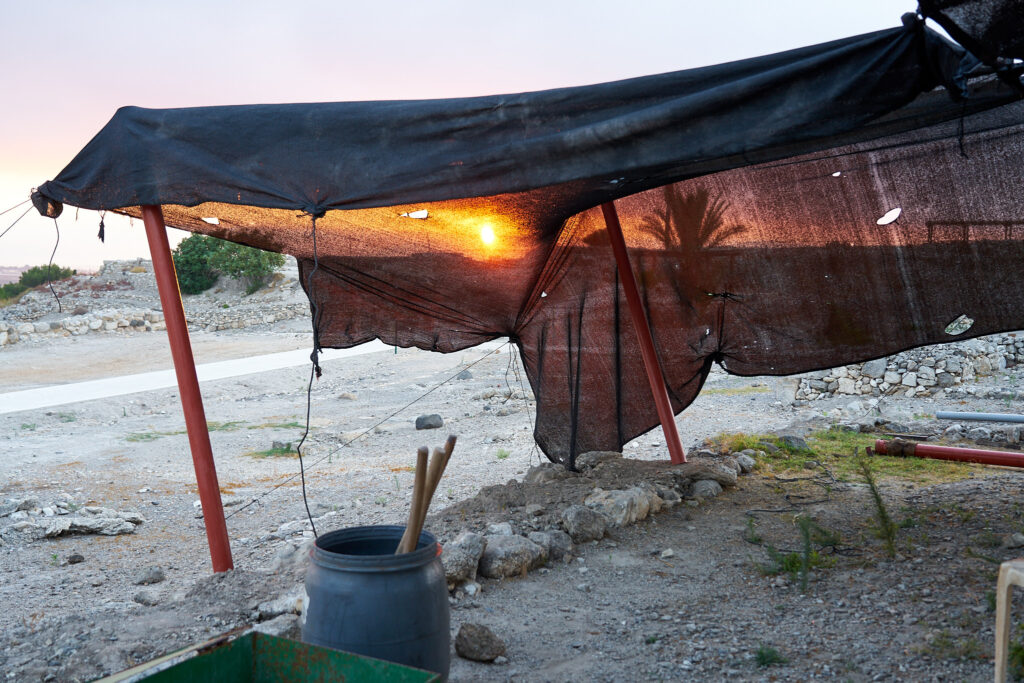
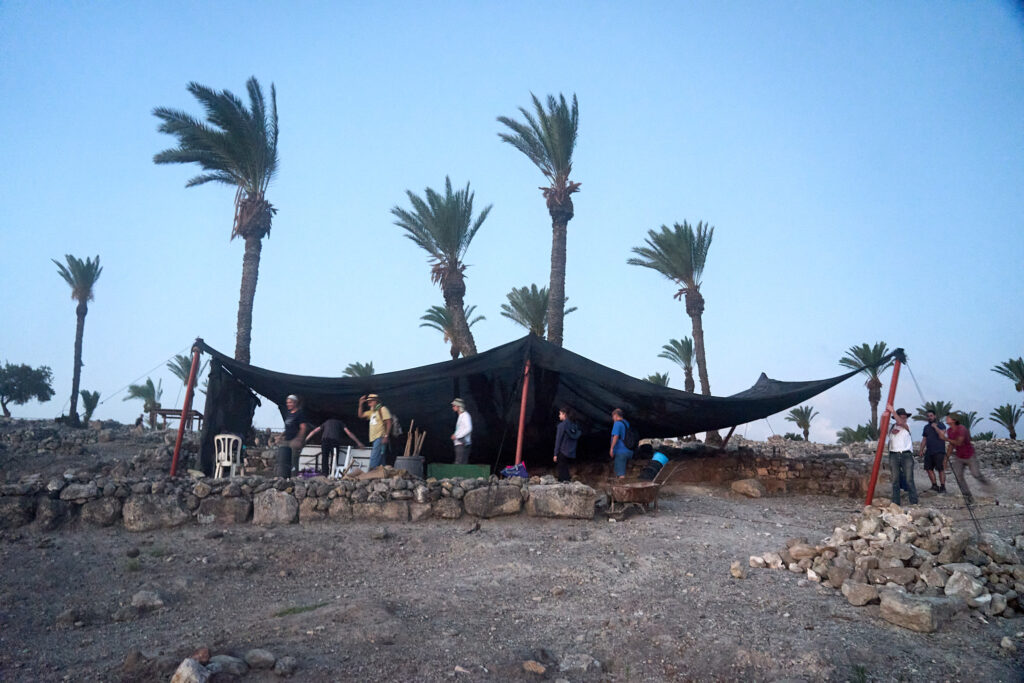
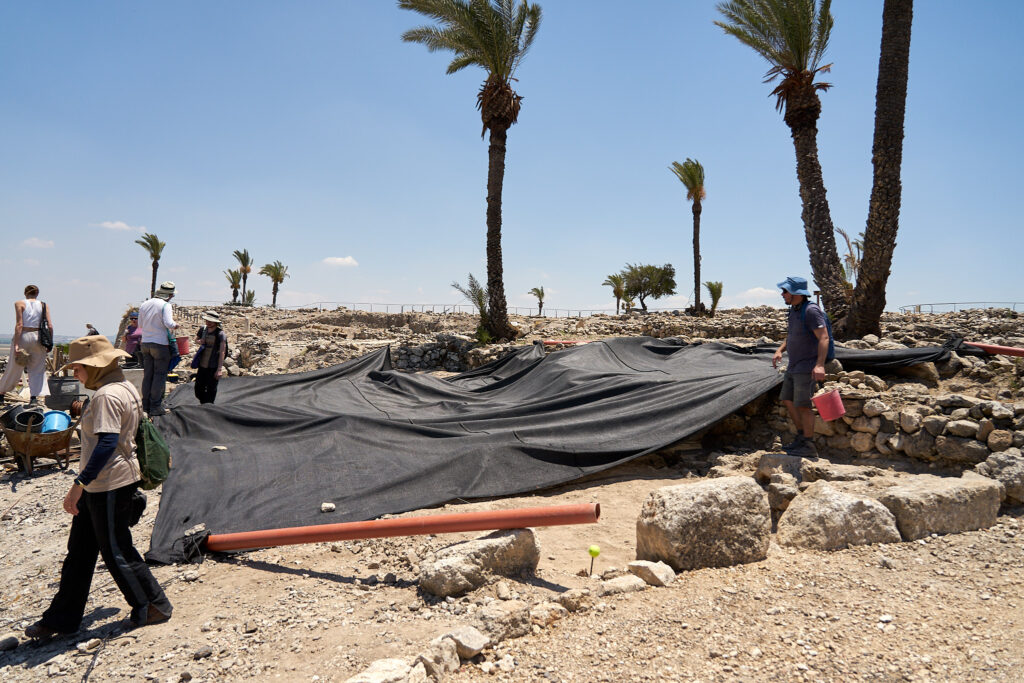
The first job upon arrival is to raise the shade cloth.

By the time the sun comes up the dig work is well under way.

By breakfast time at 8:30 we had the first trailer load ready to go. We’re doing faster digging in some of the loci with fewer artifacts.

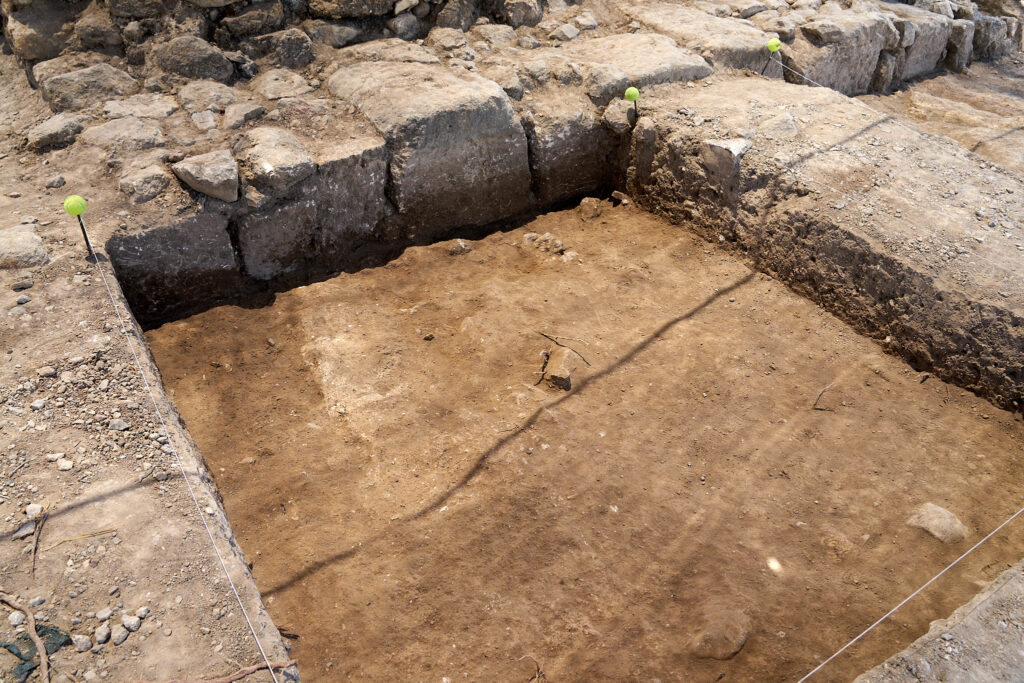
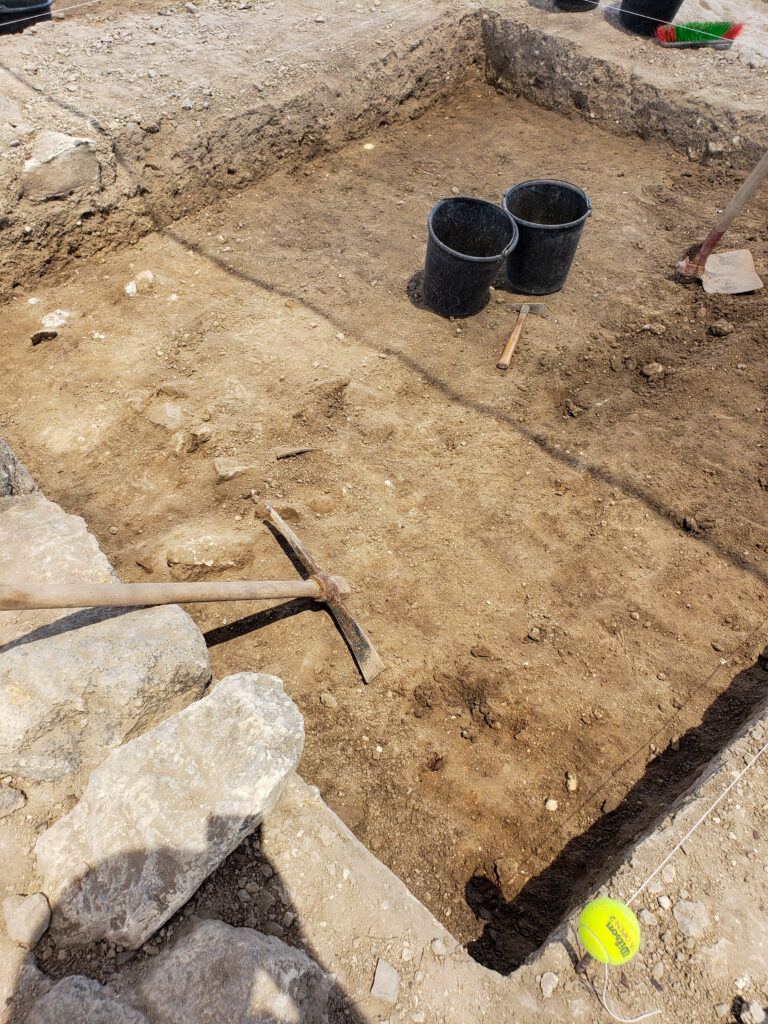
What interesting things might be just below this surface? We’re still looking for a floor, but so far we haven’t found one in this locus. Finkelstein is pretty sure we found a connecting wall to the original “monumental wall” that brought their interest back to this site. He believes this may be an administrative building for Megiddo.

Categories
Israel Study Trip

Fall 2022 Israel Tour

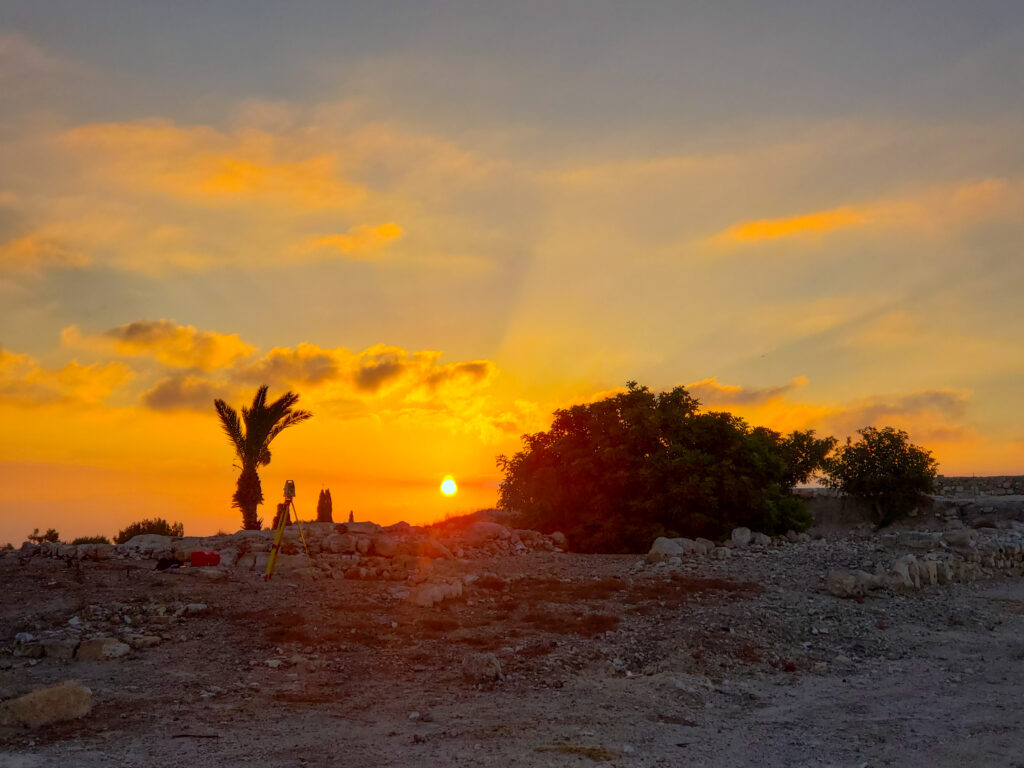
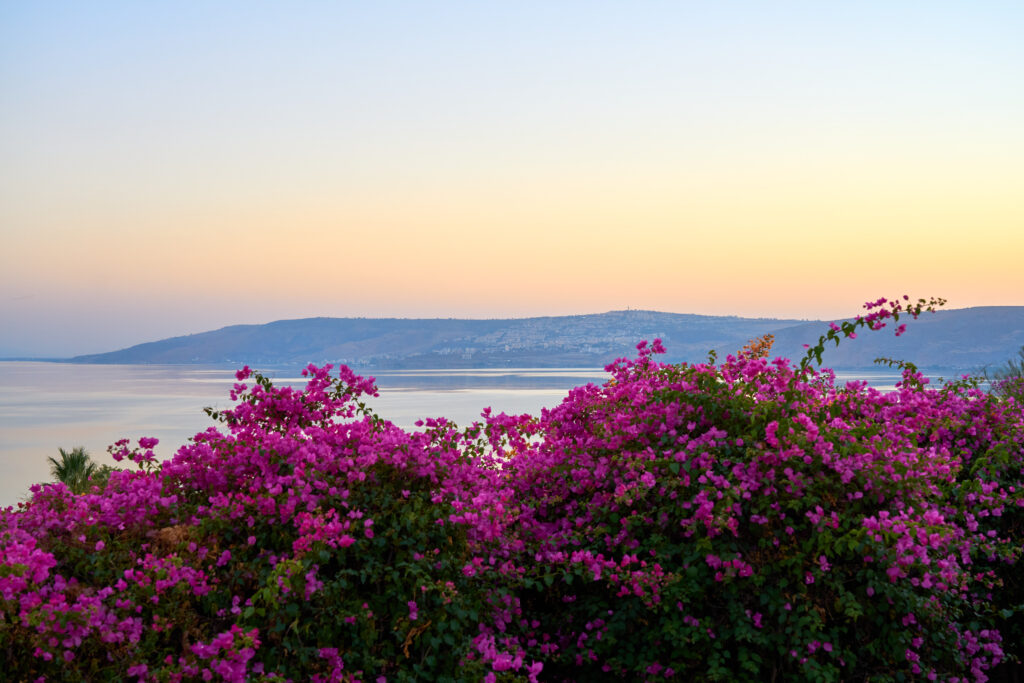
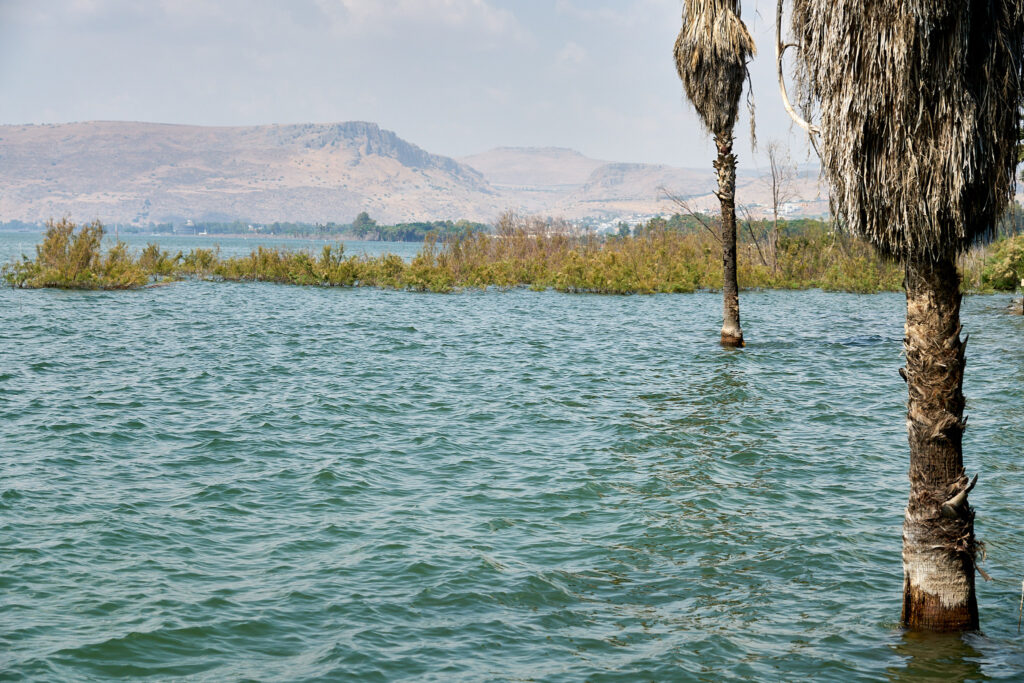
Sunset over the Sea of Galilee

Our fall tour is planned for October 27 to November 8. Watch this page for updates when we’re in the Land!

Categories
Archaeology

Ancient Pottery

It feels as though I’m getting acclimated to the hot weather and 5:00 AM (Jerusalem Time Zone) starting time. I had a quite enjoyable day on the dig. I did some more drone photography over lunch time. We see relatively few tourists, quite a difference from pre-Covid days.

The area we’re working in is from the Assyrian time period. We did some cleanup and photogrammetric documenting of what had already been excavated by the Chicago University people about a hundred years ago. After that we were able to start going deeper. We don’t know yet if we’re in eighth or ninth century BC. The locus I’ve been assigned to has proven quite interesting. We found a bunch of plaster-type material. Is it floor or collapsed walls? There are pottery pieces from some nice-sized vessels. I suppose the pottery experts will be able to figure out their origin. We also find some animal bones. Margaret, our area supervisor, says they learn much more from animal bones than from pottery. The material we’re finding is indicative of being indoors, possibly resting on a floor. I’m still looking for a plaque that says, “Solomon ate here.”

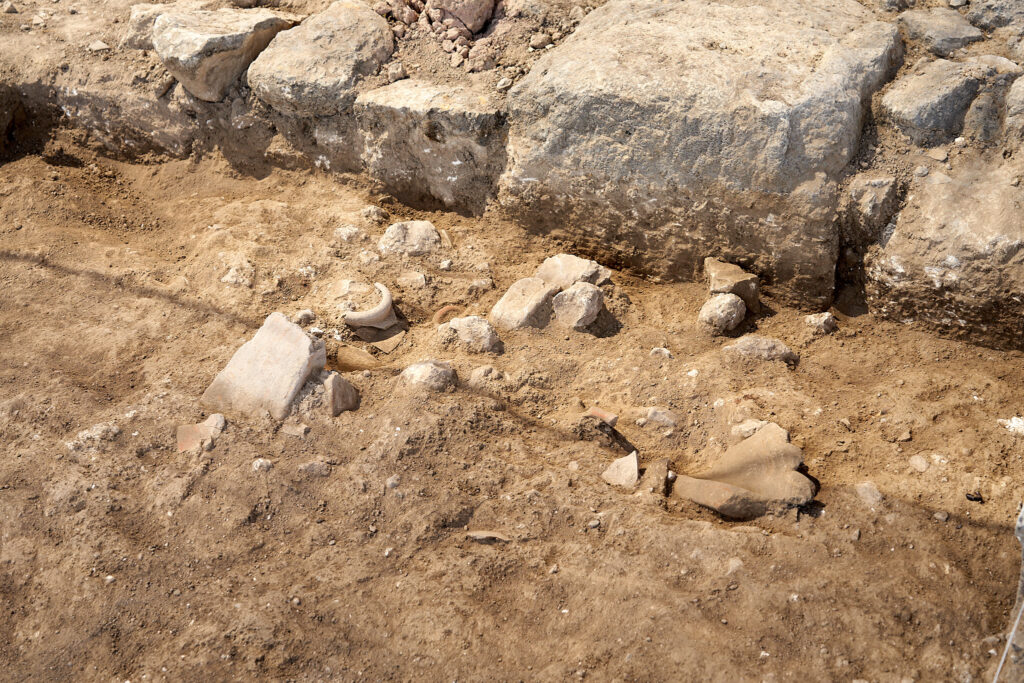
Some exposed pottery pieces within our locus. We remove the dirt in layers of 5 to 10 centimeters. These pieces were exposed, then the area was documented with photography and point surveying. On the next layer we removed most of them. The flat piece may be a grinding stone, according to Dr. Finkelstein.

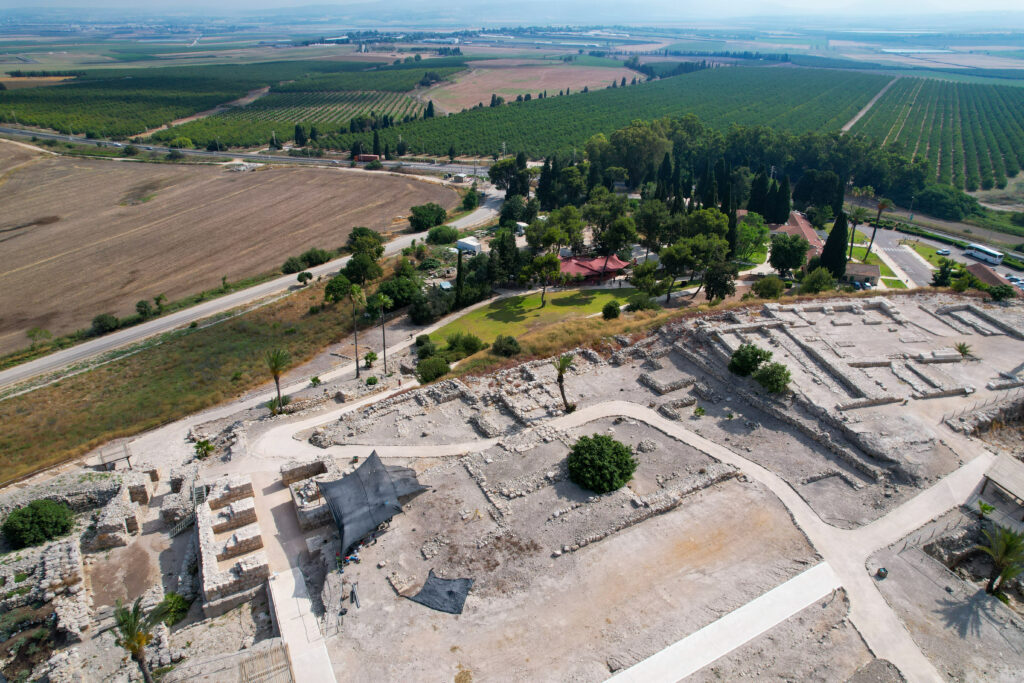
Caleb is working in Area Z, next to the Solomonic Gate in the lower left of the picture. Israel Finkelstein says the gate is later than Solomon’s time. This drone shot is looking out toward the visitor’s center. The buildings in the trees were built with Rockefeller money during the Chicago expedition.

After pottery washing I might listen in on the field techniques class. After dinner there will likely be another lecture. Last night’s was by co-director Matthew Adams. He told us how a tell such as Megiddo is built over the millennia. Not so much the destruction of marauding armies, but people just bringing lots of stuff into their living area. Sometimes knocking down their house and building bigger and better. Digging pits to bury people or things.

The history of this site is mind-boggling. Read about how Josiah, the righteous king of Judah, met his end in 2 Kings 23.

Categories
Archaeology

Excavating

Last evening we were led through the site by Dr Israel Finkelstein, director of archaeology here for the past 24 years. We saw the “Solomonic Gate,” which Finkelstein believes to be later than the time of Solomon. Caleb is working with the group in area Z, around the gate. There may be another gate below the one identified by Albright as Solomon’s.

We saw the stables, originally identified as Solomon’s. Finkelstein did quite a bit of research, including visiting large stables in the United States, before he concluded these were actually stables.

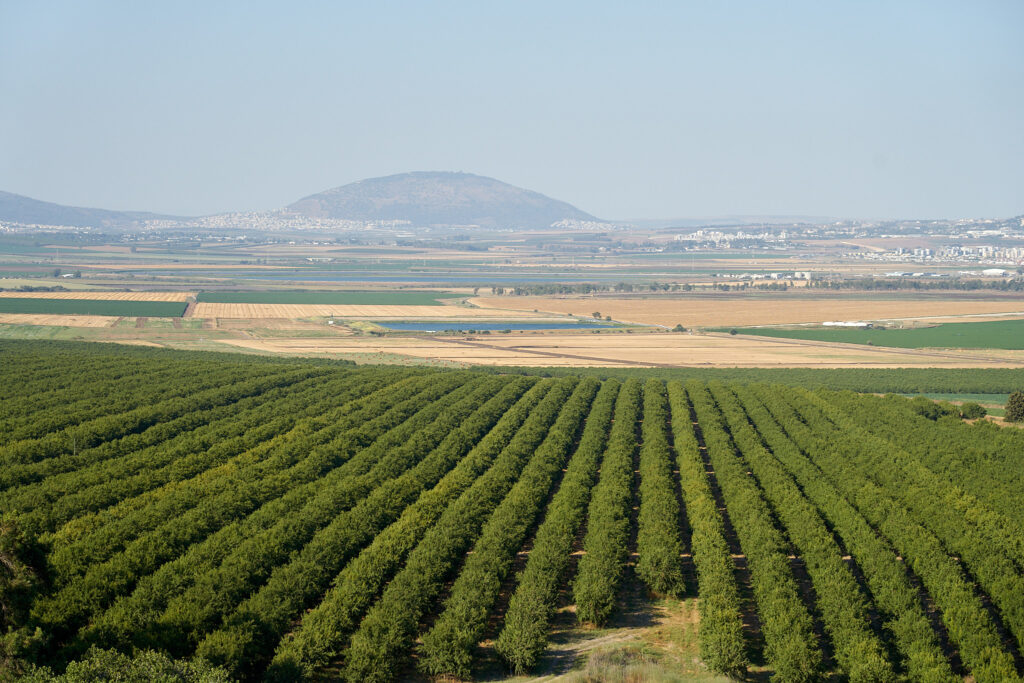
Mount Tabor is prominent on the horizon, looking across the Jezreel Valley from Tel Megiddo.

While the archaeologists here would like to dig into the earlier periods of the tell, the tourists who visit, and therefore the National Park Service, are more enamored by the Biblical connection to Solomon.

We start the day at Megiddo early, first raising the all-important shade cloth for protection from the merciless sun. The early hours of daylight are the best time to get to digging.

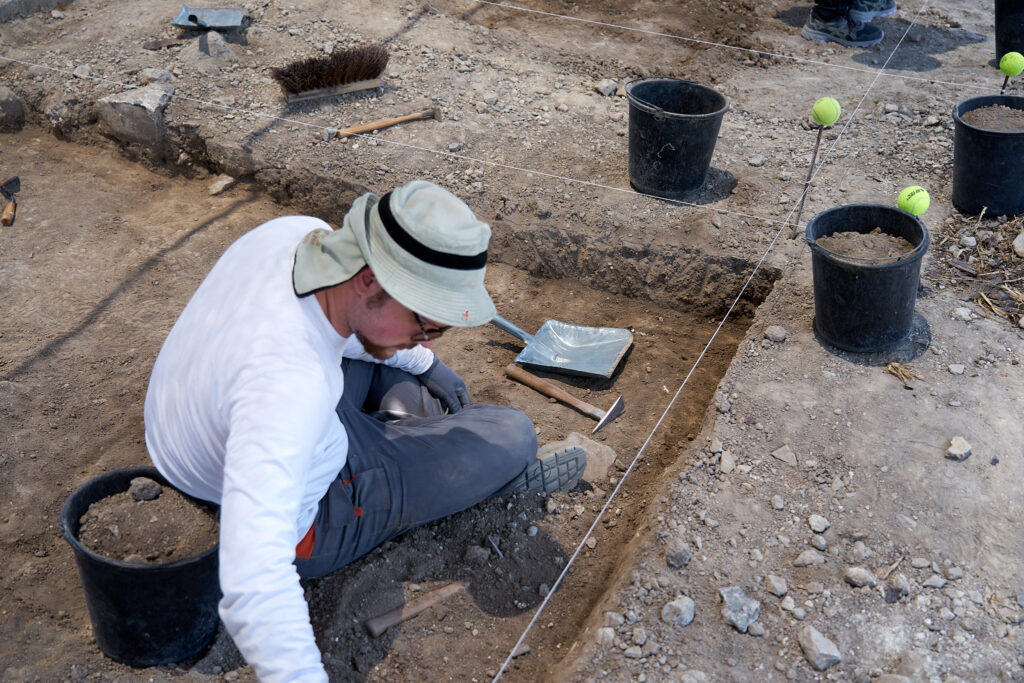
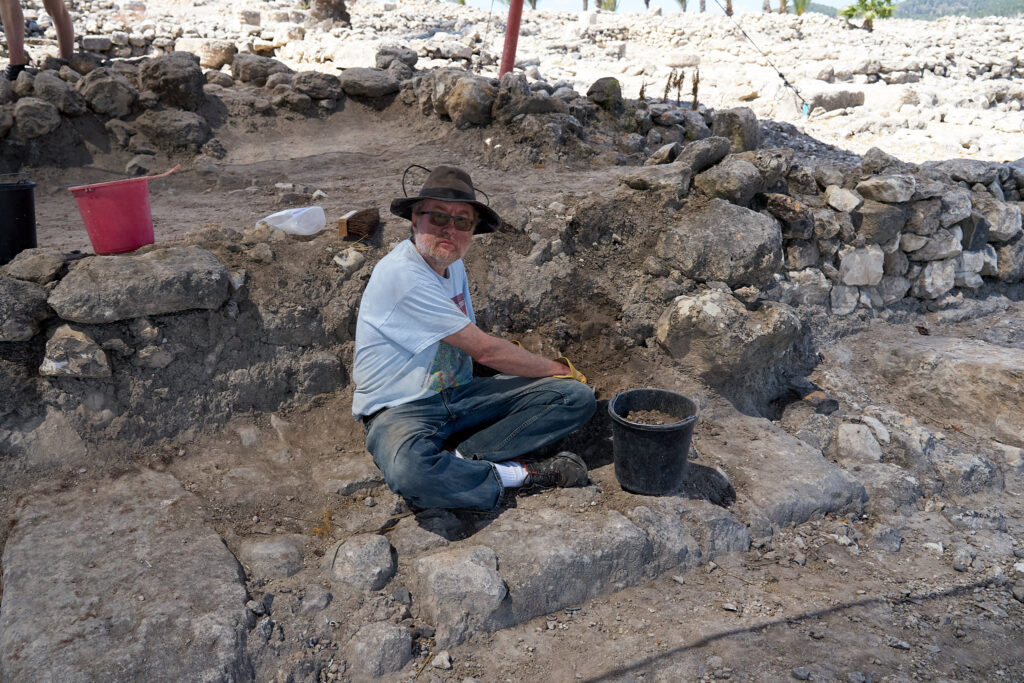
After finishing some cleanup, we got into actual excavations. We marked out six areas to dig. Four of us participants dug the first layer here in locus 5. We found quite a bit of pottery, and some animal bones. We’re hoping to find some structural feature, such as a wall or floor. But we’ll peel back layer after layer for now.

Just before 1:00, after the work in the field is finished for the day, we take down the shade cloth so it doesn’t blow away. Back at the kibbutz we’ll wash the pottery. After dinner we’ll listen to a lecture given by one of the directors.

Categories
Archaeology

Tel Megiddo

Our first day on the dig started before sunrise. The daily schedule will include working at the dig site from 5:00 AM to 1:00 PM. We have breakfast around 8:30 and another break at 11:00.

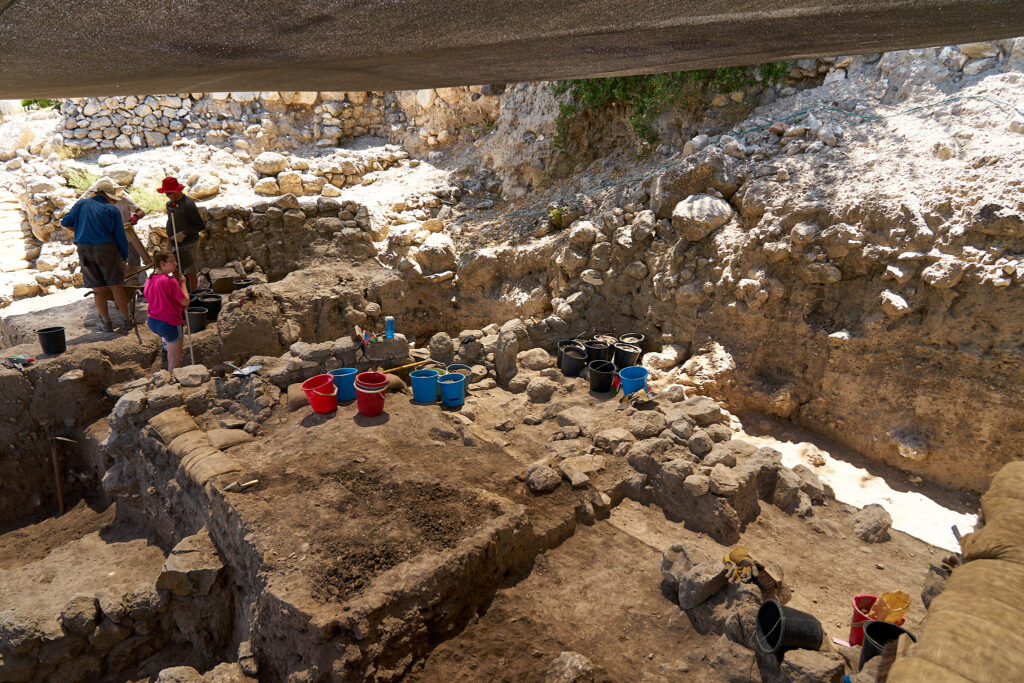
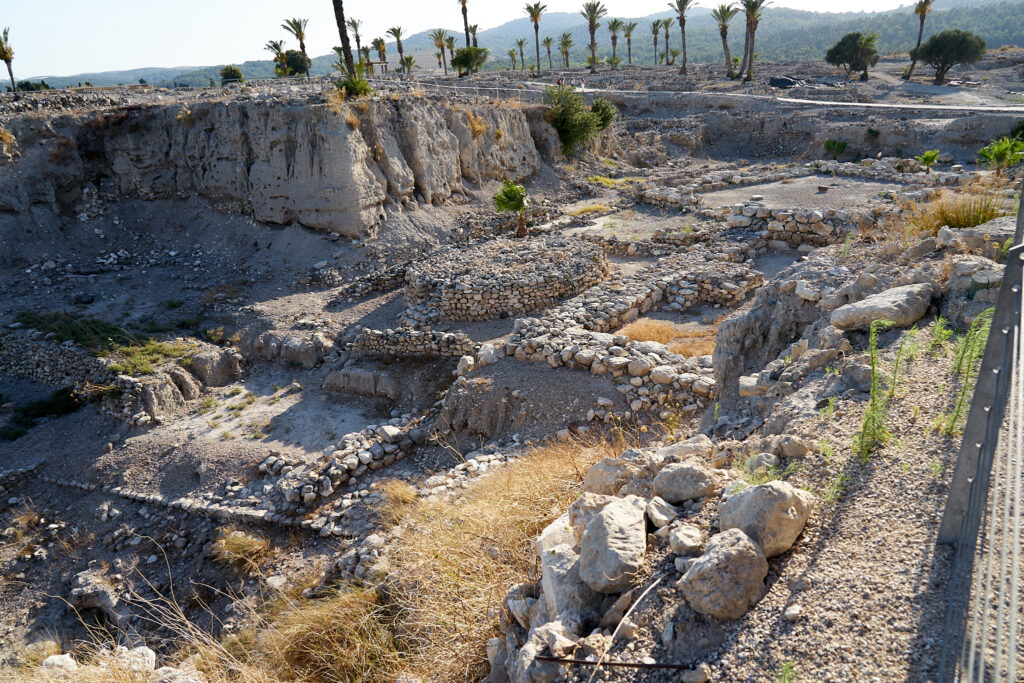
The group I’m participating with is working in part of what is known as the Assyrian quarter. We’re cleaning the Assyrian structures that were excavated about a century ago. After documenting photographically, including a digital 3D model, they’ll excavate further to see what lies beneath Stratum 4. Maybe an eighth to ninth century (BC) palace?

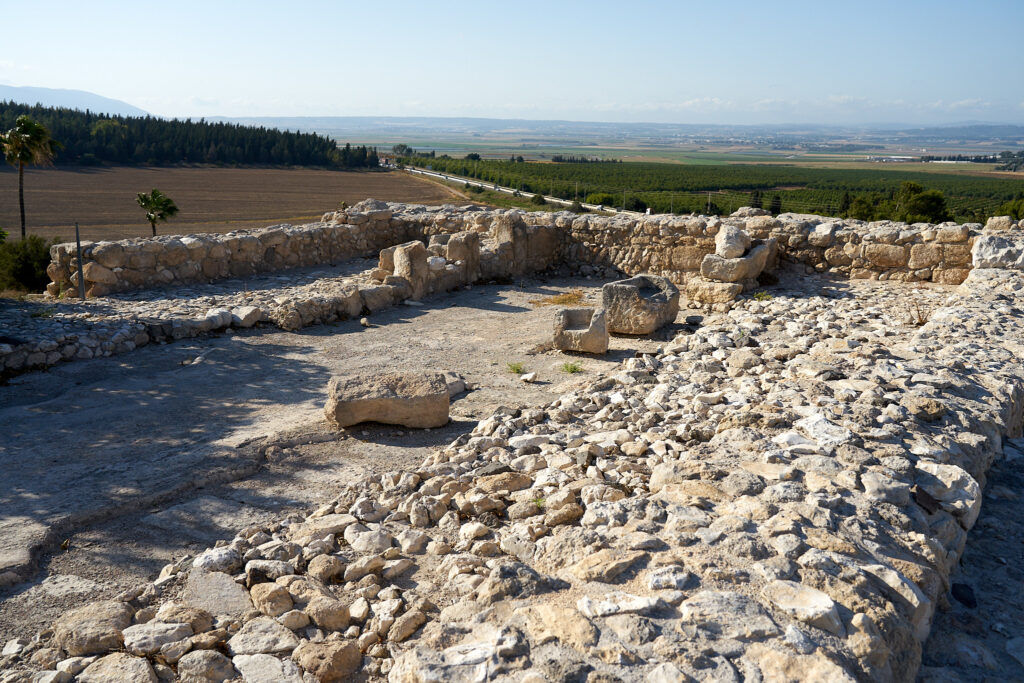
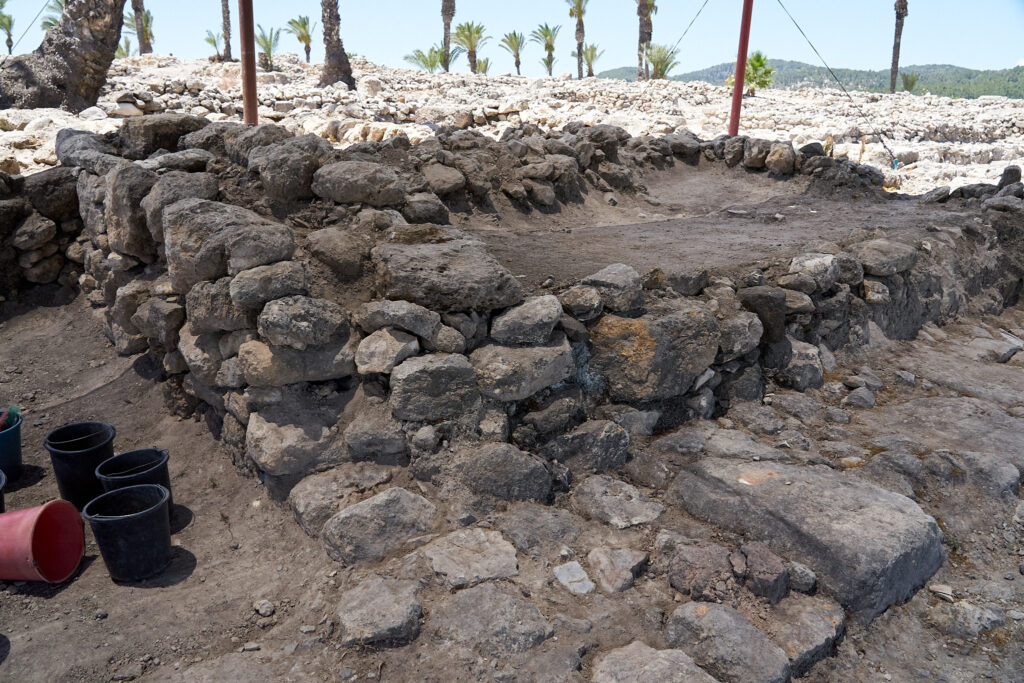
The stone structure is Assyrian. The recently uncovered wall in the foreground is of unknown origin. That is the exciting discovery just around the corner. The alignment with a prominent city gate means it could be something monumental.

We’re looking forward to an in-depth tour of Tel Megiddo by the archaeologists.

Categories
Uncategorized

Galilee Tour

We arrived in Tel Aviv on Friday afternoon, June 24. We took a taxi to our hostel, the Florentin House. The main purpose of our trip is to participate in the archaeological dig at Tel Megiddo. Participants are Andrew, Caleb, and Collin. We had an extra day planned to allow for a Covid test and isolation. Fortunately, that is no longer required in Israel. So we booked a day tour to Galilee for Saturday.

Mount Arbel, across the Galilee

We stopped at a number of Biblical sites, mostly the traditional locations marked by churches built long ago. Tabgha commemorates both the multiplication of the loaves and fishes, and the fourth post-resurrection appearance to the disciples. Here we could go to the shore, touch Galilee, and enjoy the view, including Mount Arbel across the water.

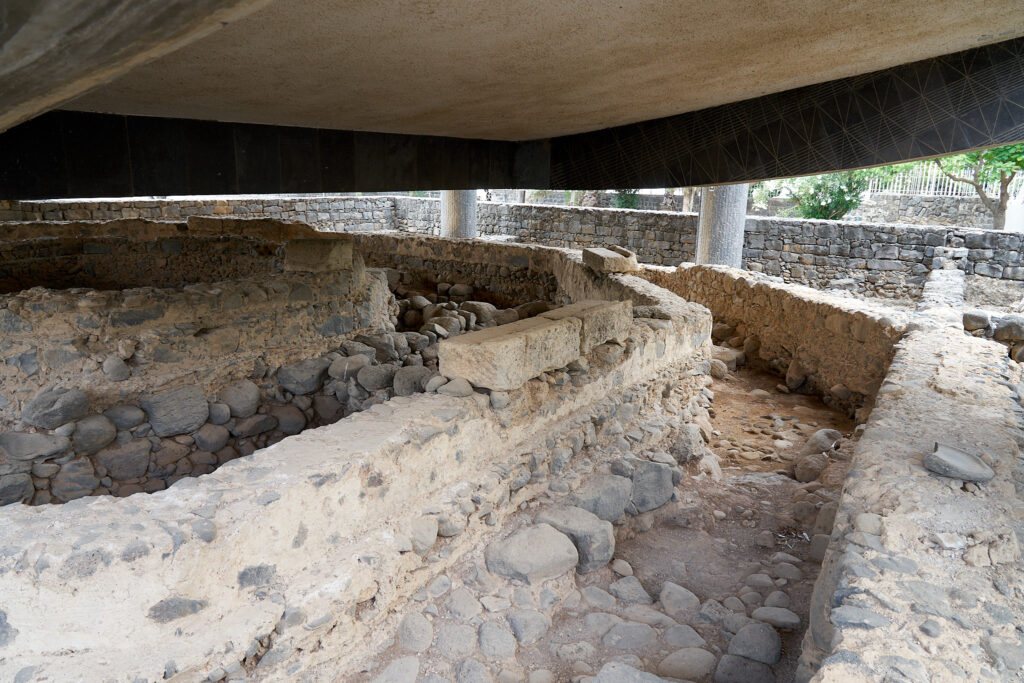
House of Peter

We visited Capernaum. The site known as the House of Peter has a new church building constructed over the old. It is believed that Christians used this house as a place of meeting during times of persecution. Later, an octagonal church was build around the house.

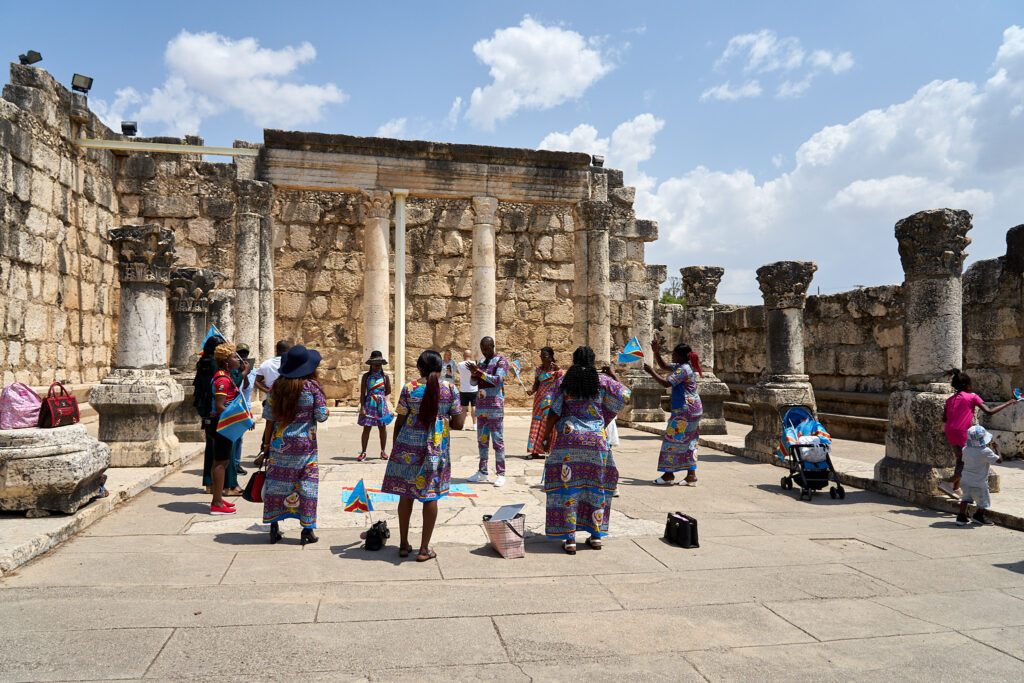
In the fourth century synagogue a worship service was taking place. It was quite different than the worship style of the Franciscans who own this place.

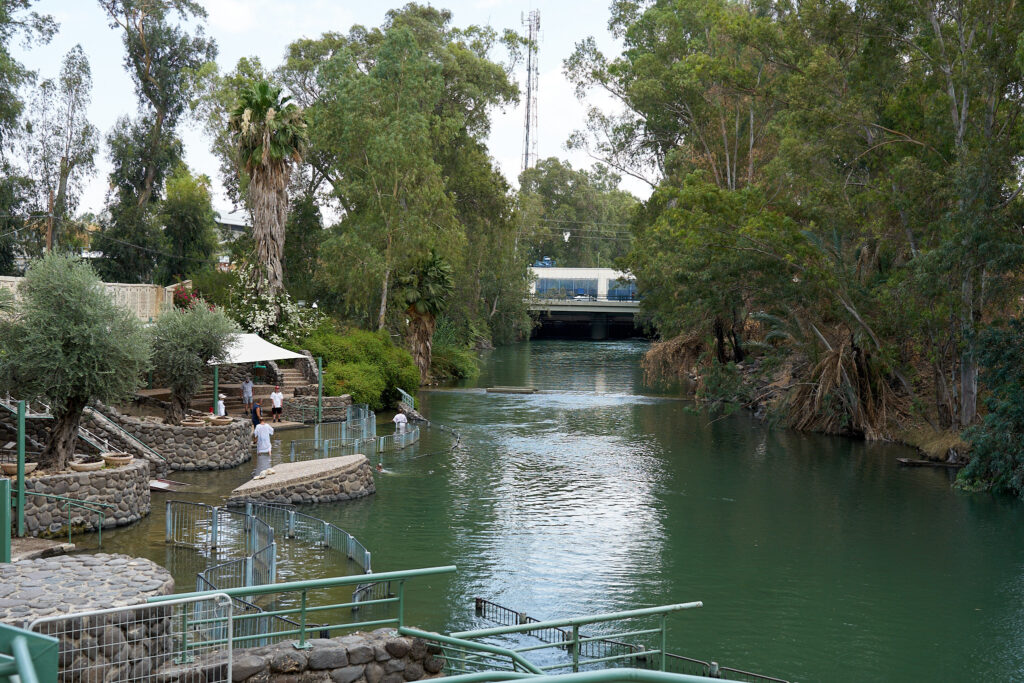
After circumnavigating the entire Sea of Galilee we visited the traditional Yardenit Baptismal Site.

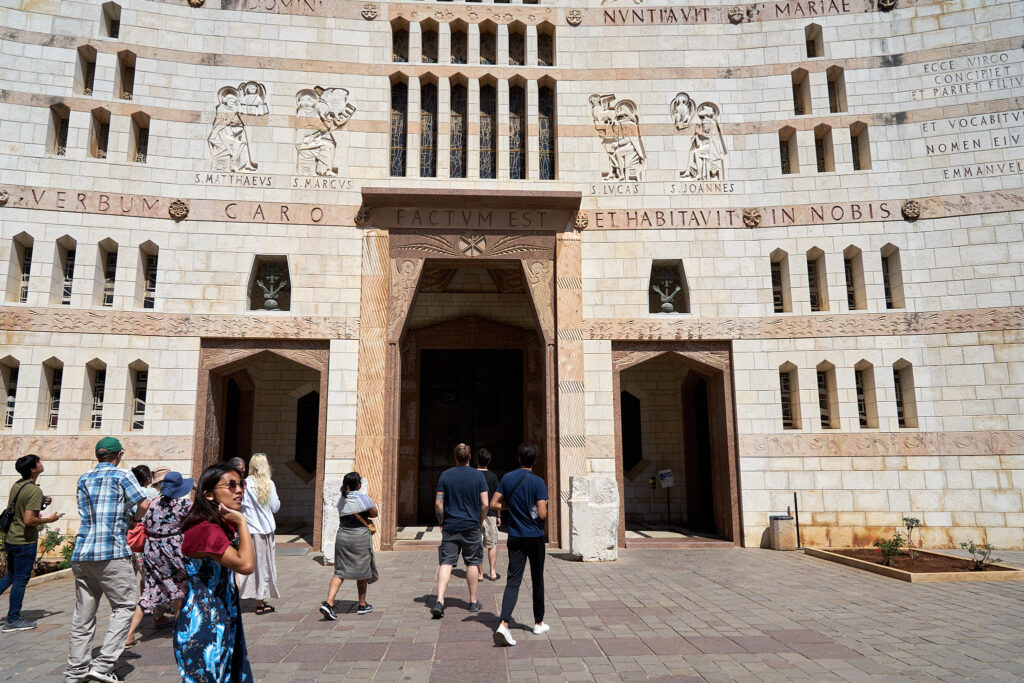
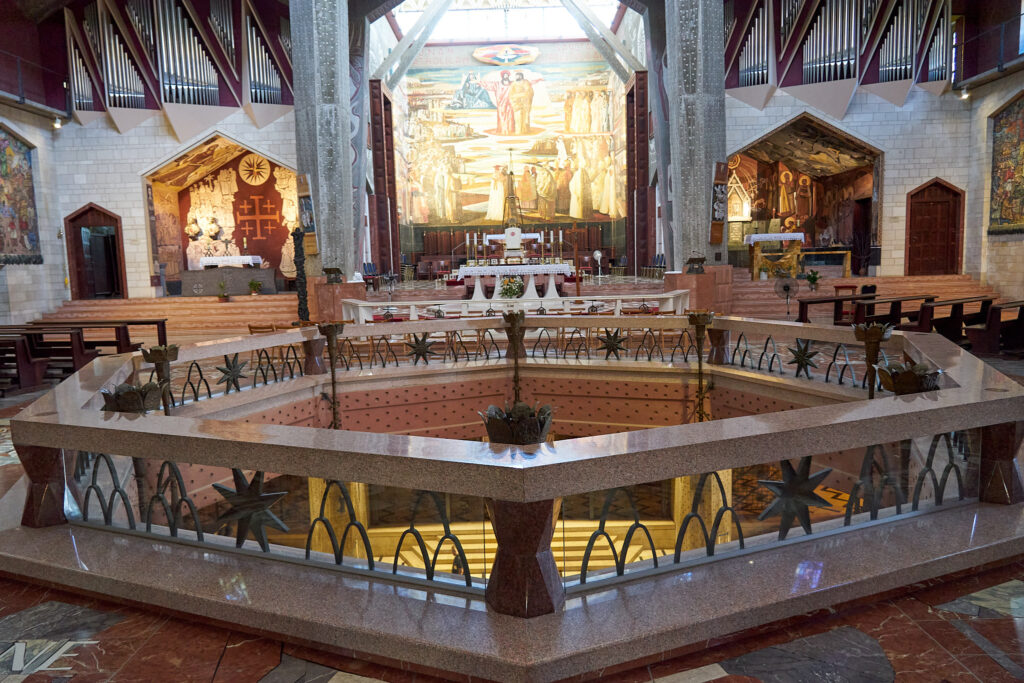
In Nazareth, the Church of the Annunciation is unusual in that it is both a basilica style and octagonal structure.

We had an enjoyable day, met some fellow travelers, and learned a lot from our tour guide. His Jewish perspective on the Christian stories added an intriguing flavor to the tour.

The bus dropped us off at Megiddo Junction, and Matt, a director of the dig, picked us up. We’re looking forward to learning more about Megiddo and archaeology over the next few days.

Categories
Israel Study Trip

Joppa Seaport

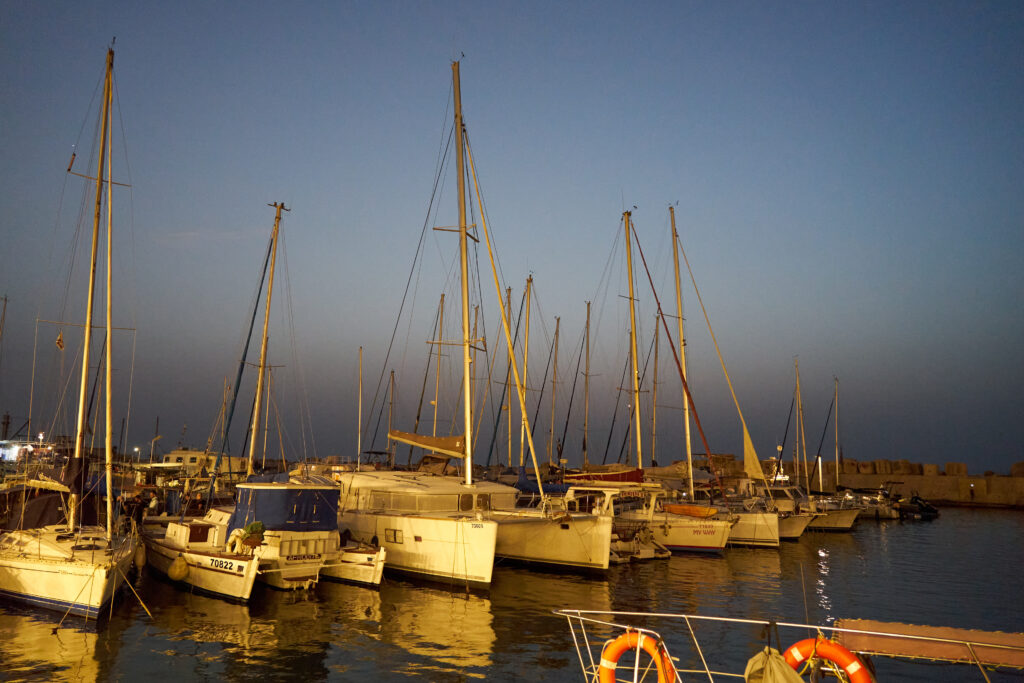
We ended our tour last fall with an evening visit to the Joppa Seaport. Modern day Jaffa is named after the Joppa of Bible times. We weren’t able to find a ship bound for Tarshish. But we don’t want to repeat Jonah’s mistakes, anyway.

If you’d like to participate in a tour of the Holy Land, consider our fall 2022 trip. The dates are October 27 to November 8. We plan to fly from Newark. We keep the group size small for a better experience. The price is $4,190 per person double occupancy.