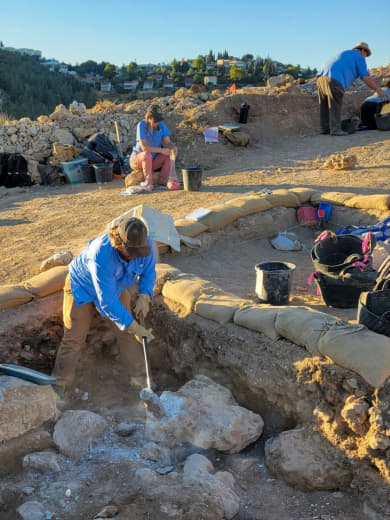
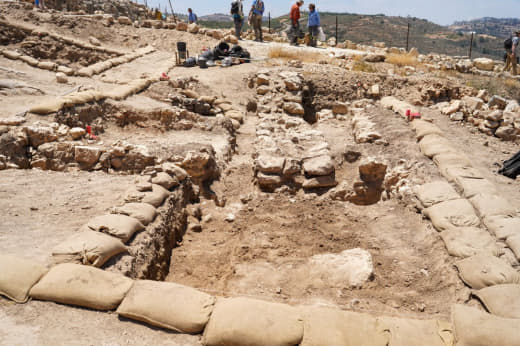
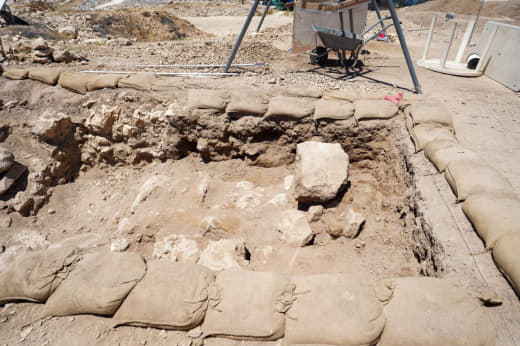
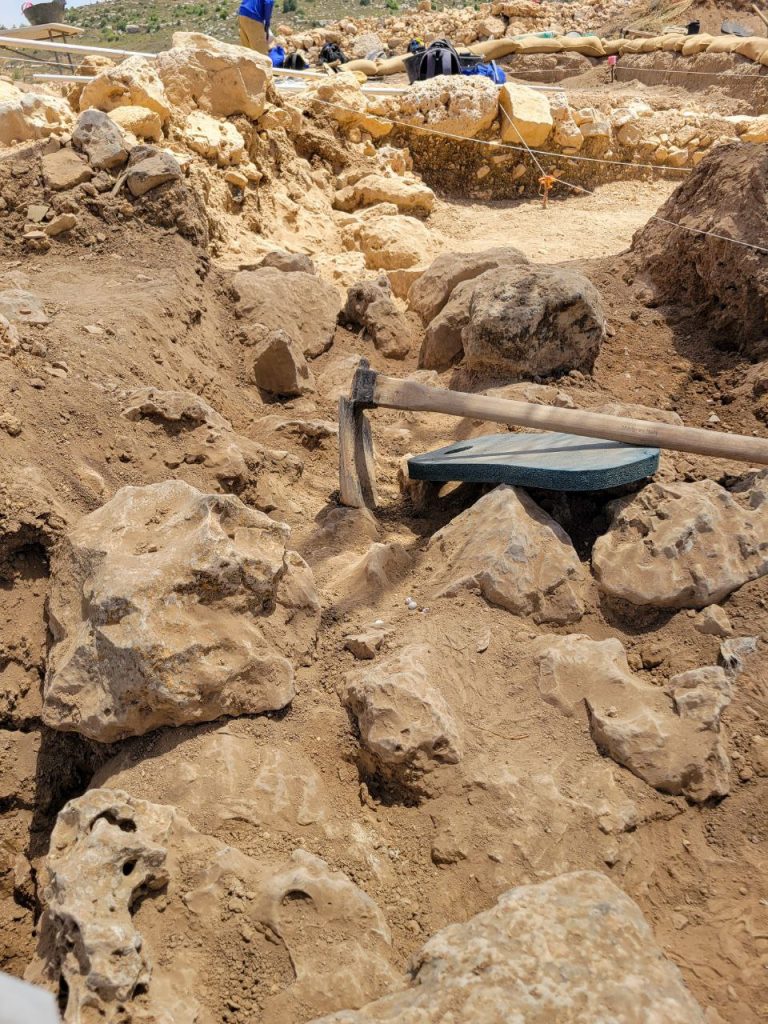
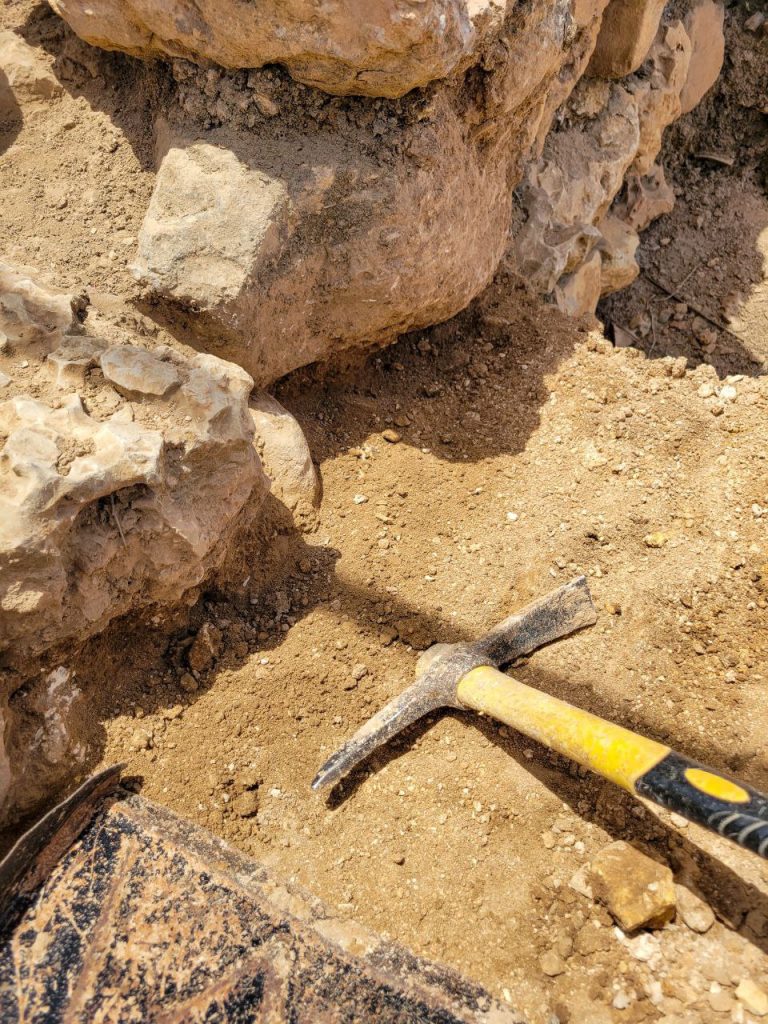
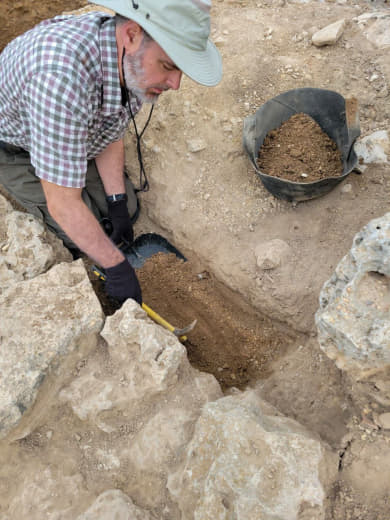
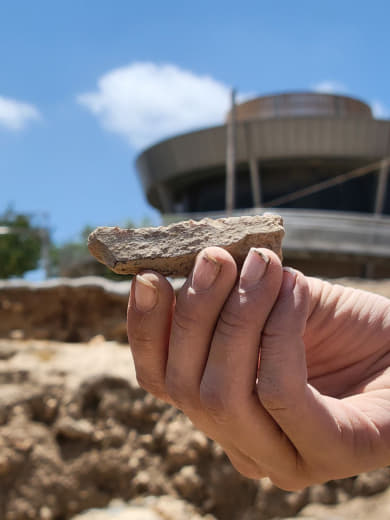
This large rock is either “tumble” or part of the Roman era wall. To remove it we broke it into pieces and carried them out.
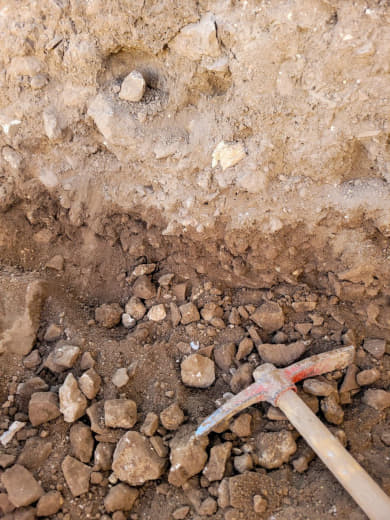
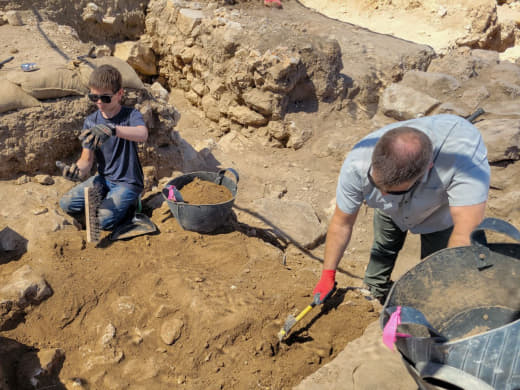
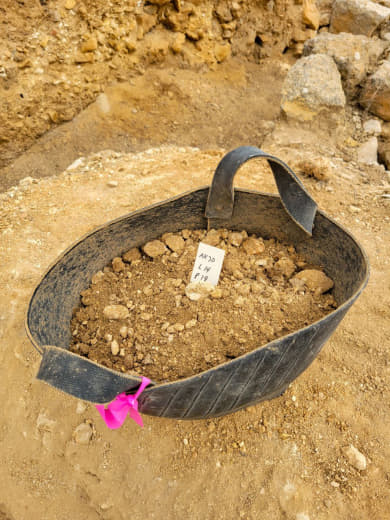
While excavating to find the northeast corner of the monumental building I ran into a lot of pottery pieces, or potsherds. Can you find any in the picture?
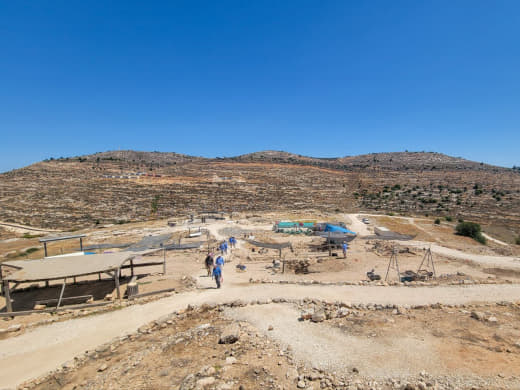
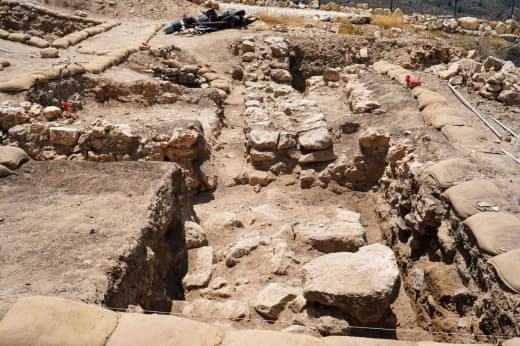
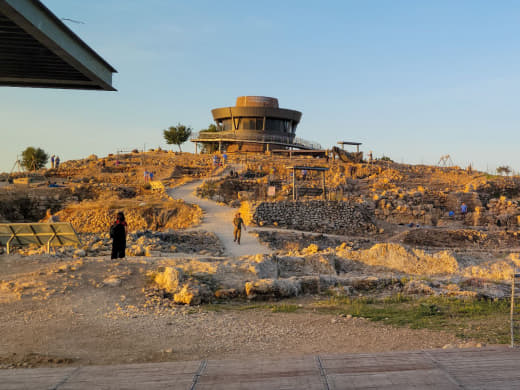
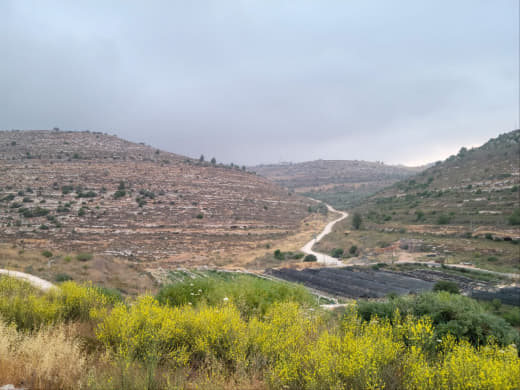
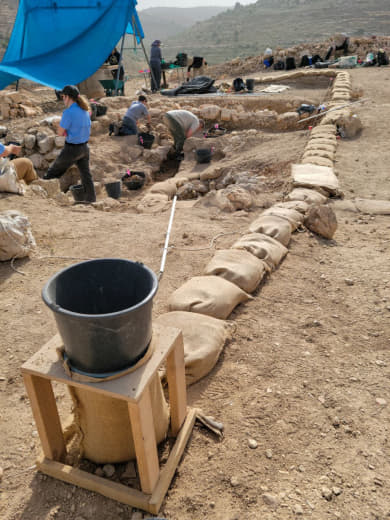
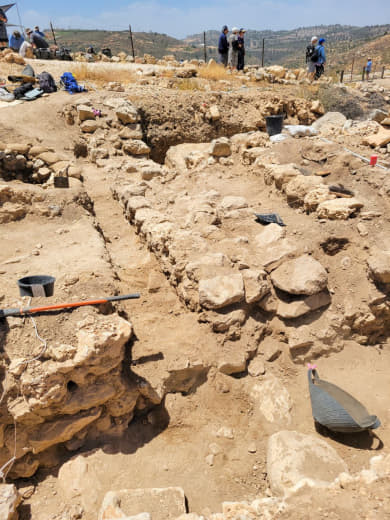
We went up on the flying saucer tower for a group photo. I took this wide view of our work areas from there.
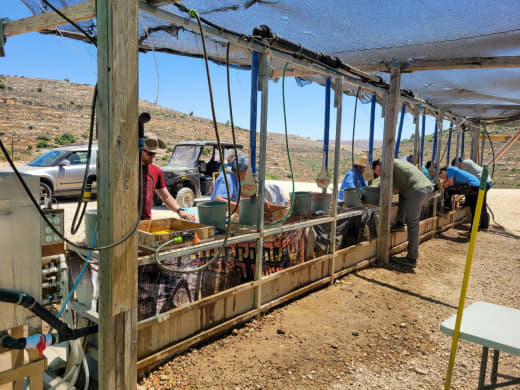
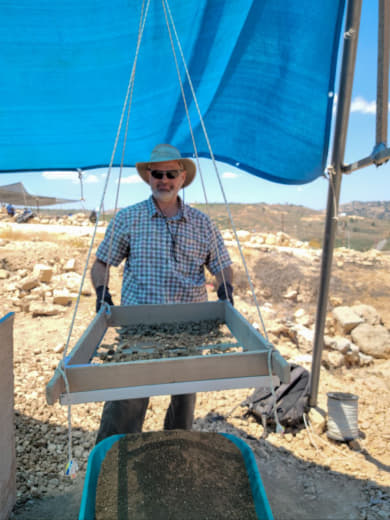
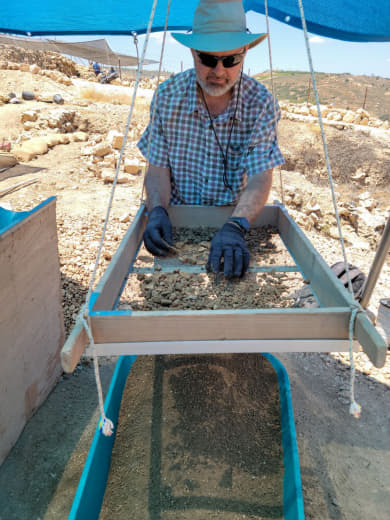
The wet sifting station provides opportunity for those who are not as physically able to do the digging. Frankie Snyder, who found the lead tablet in Mount Ebal, supervises this area.
Instead of definitively finding the northeast corner, we unearthed three complete pottery vessels. We bagged the vessels separately so they can be reconstructed.
Here’s Frankie doing wet sifting.
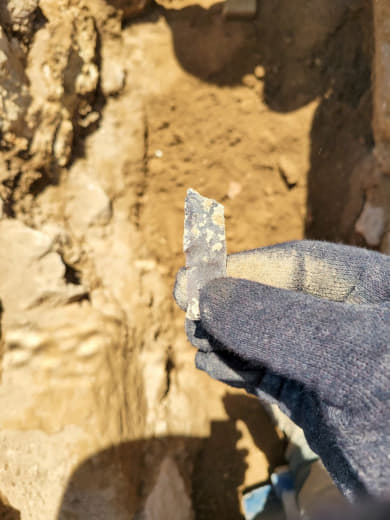
Here’s a flint blade I found today.
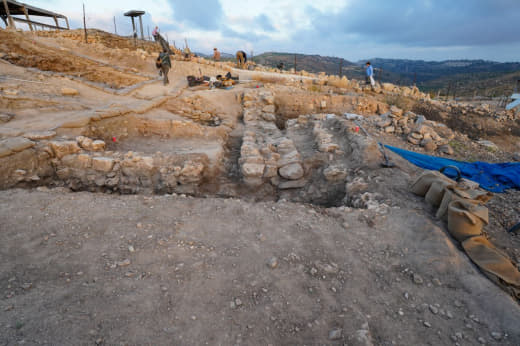
Here’s how I left it at the end of the week. I was able to excavate to the second course of stones near the end of the wall. I had to stay away from the buried pottery. We think we’re near the corner. More excavation in our quarter square and the one adjacent will bring more clarity. The later structures repurposed stones from the original building, making a complex puzzle.
A section of the northern wall was removed and another built over it. We removed the later Roman era wall. Now we want to find out if the original wall extends beyond this area. We really want to find the corner of the monumental building.
Ellen made a number of good finds in our area today. Three coins and a piece of jewelry. We’re digging the Roman era layer.
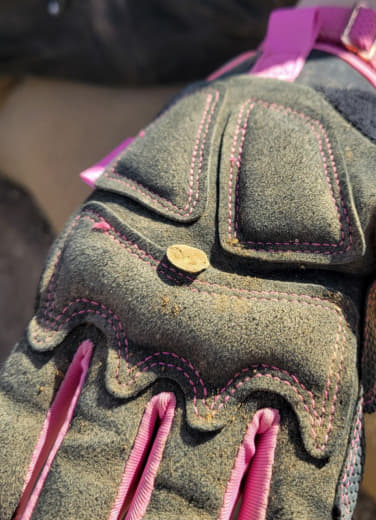
Here’s a coin. I’m not allowed to publish pics of our best stuff.
Here’s the new square we started today to find the corner of the monumental building.
Thursday, MAY 29
This morning we continued our quest to find the wall and corner. We are working inside a 2.5 meter by 2.5 meter square.
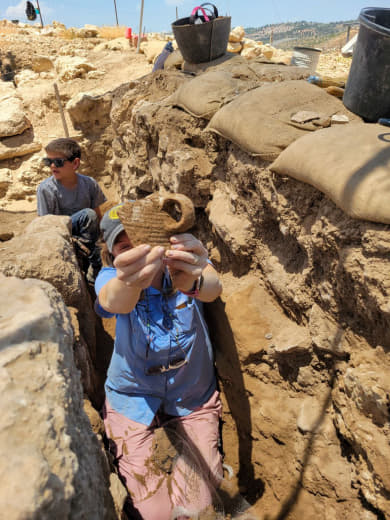
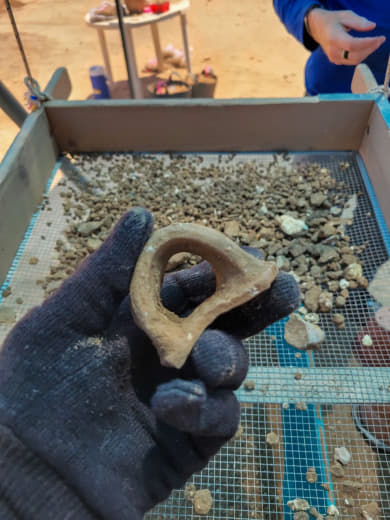
I spent some time dry sifting. Here’s a nice pottery handle I found. Reading pottery styles is one of the most reliable methods of determining the age of a layer.
At the dry sifting station we dump gufas of dirt onto a suspended screen and shake it.
Then we pick through what’s left, looking for pottery, bones, flint, or other objects. We bag the remainder and send it to wet sifting.
By end of day we made significant progress. We’re seeing a promising outline of a wall. Hopefully tomorrow we’ll have some solid conclusions on the cornet, and from that, dimensions of the monumental building.
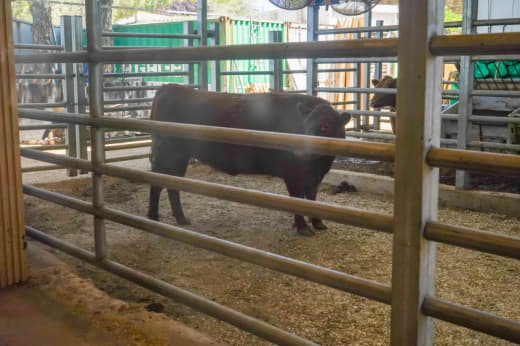
Some of us took time to see the red heifers kept at Shiloh. They are Red Angus, and came from Texas. They are kept in anticipation of performing the purification sacrifice described in Numbers 19.
On Thursday, May 23, Andrew, Ruby and George flew to Israel via Athens, Greece. Ruby will be helping on a kibbutz for a few days; Andrew and George are volunteering at an archeological dig at Shiloh. They were there before, in 2023.
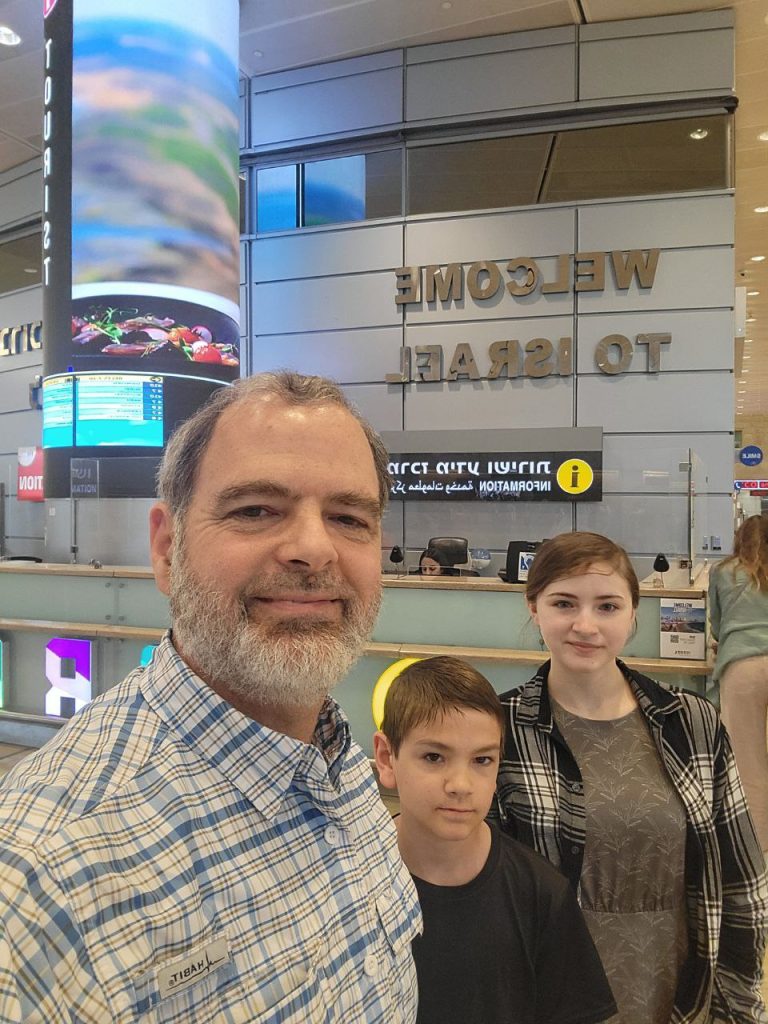
Arriving at Ben Gurion Airport. We had the weekend free to visit friends and explore Jerusalem before going to Shiloh.
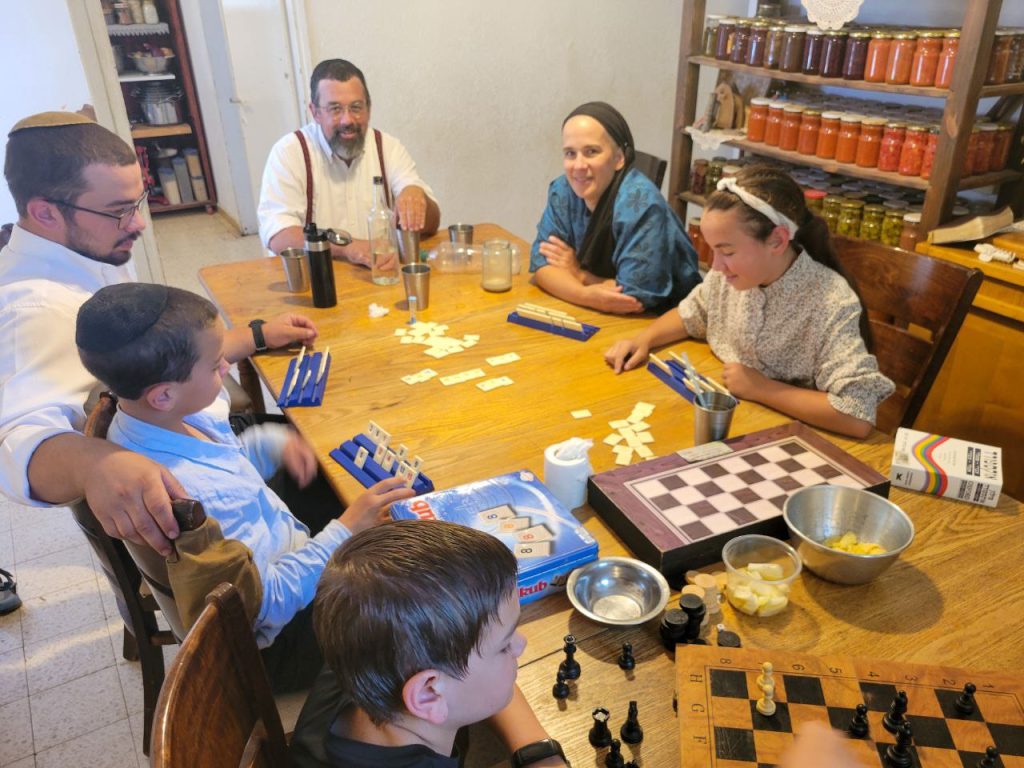
We visited Jonathan and Charlene Hollinger Friday evening and Saturday. We plan to visit them with our tour group in October.
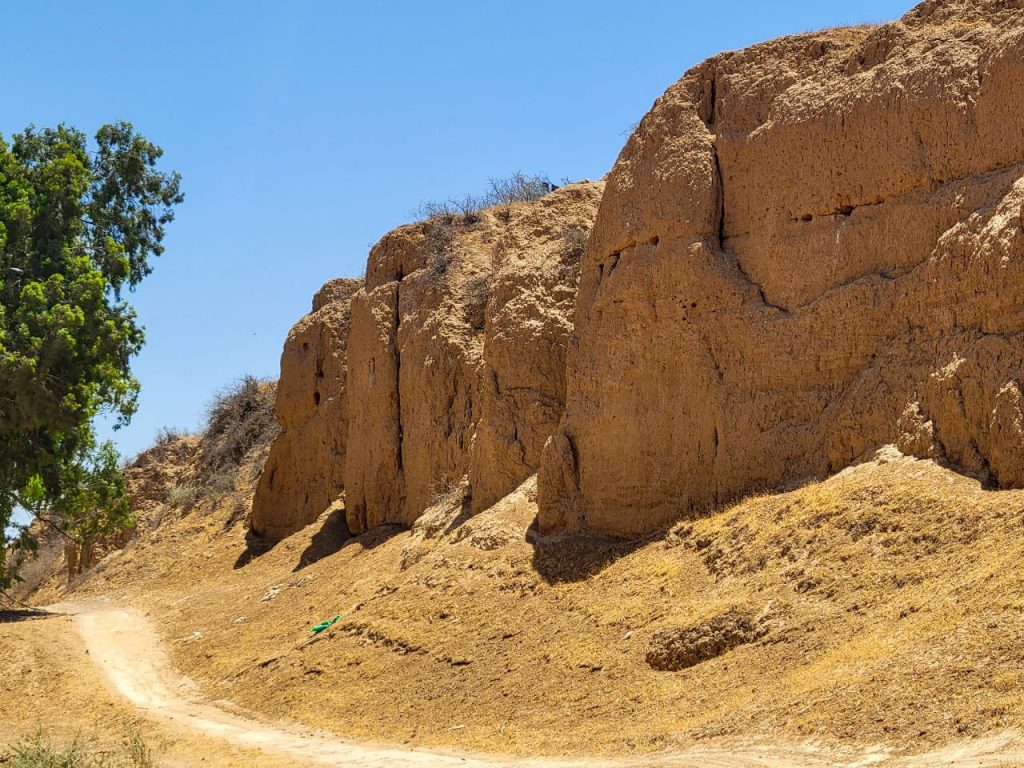
We’re in Abraham’s neighborhood. We wonder what the climate and land were like. He must have had more rainfall than today. The layer with the holes is a softer sand that birds can nest in.
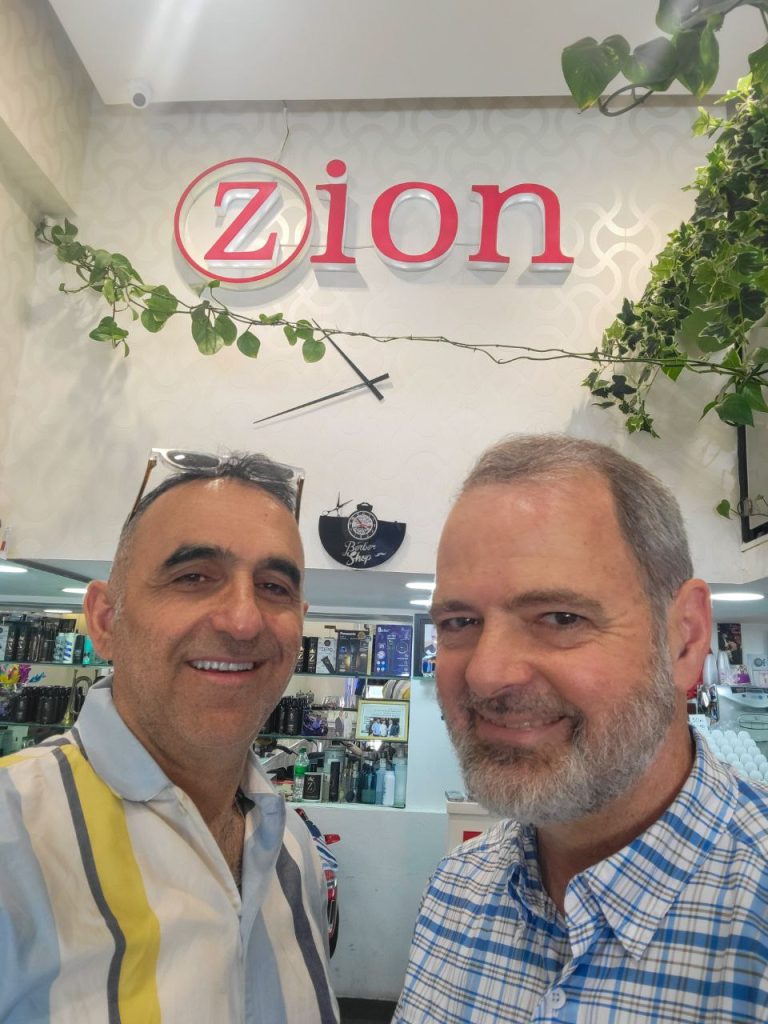
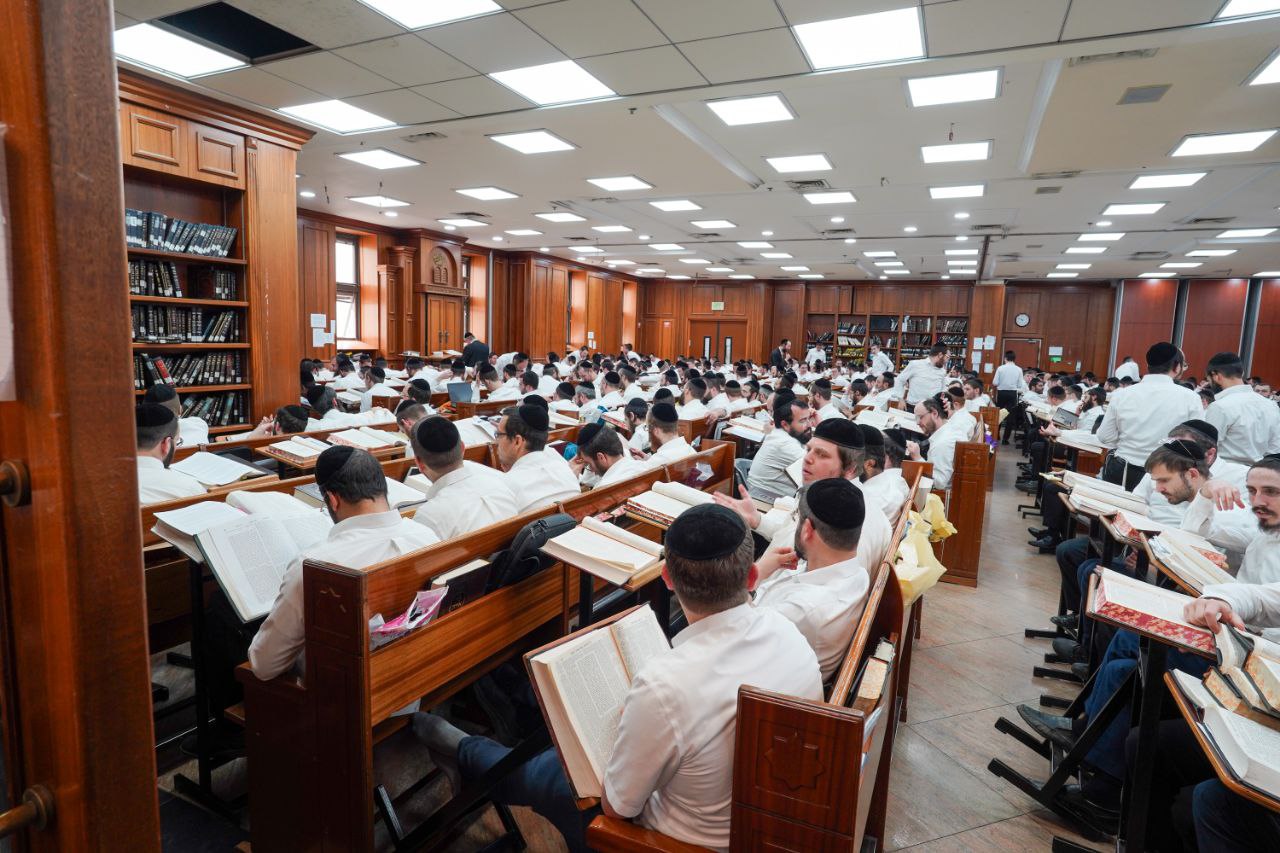
Zion (his name) gave me a trim. Then offered to take us to the yeshiva. He said they have 10,000 students, including from America.
The yeshiva consists of multiple buildings here in the Haredi section of Jerusalem. They study out loud in small groups. The room was quite noisy, to me.
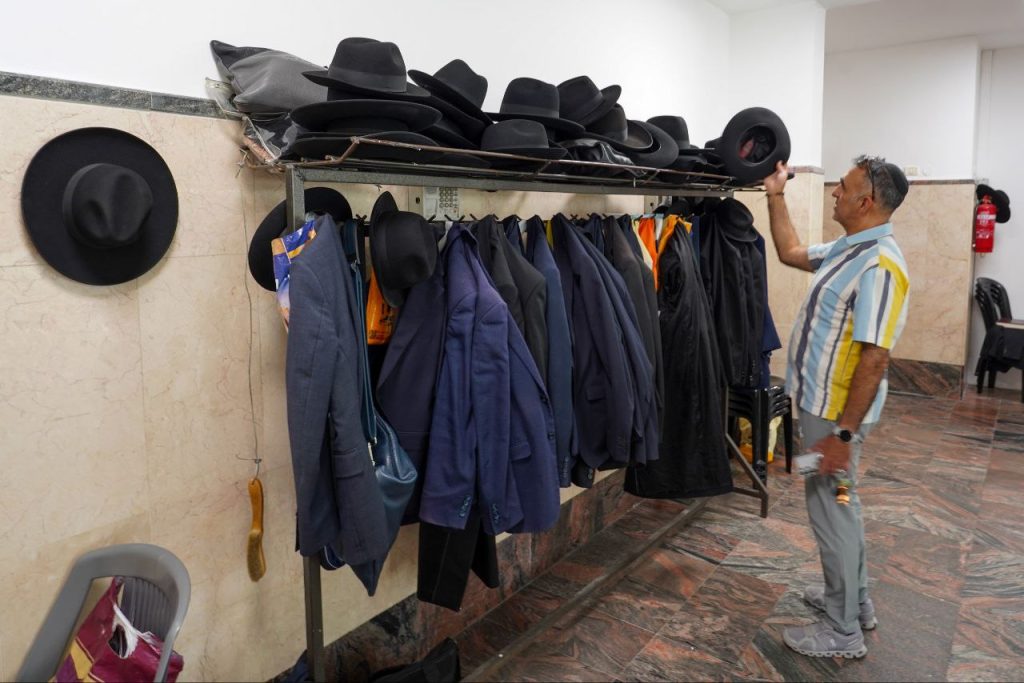
Zion says they can recognize their hats and don’t need names in them.
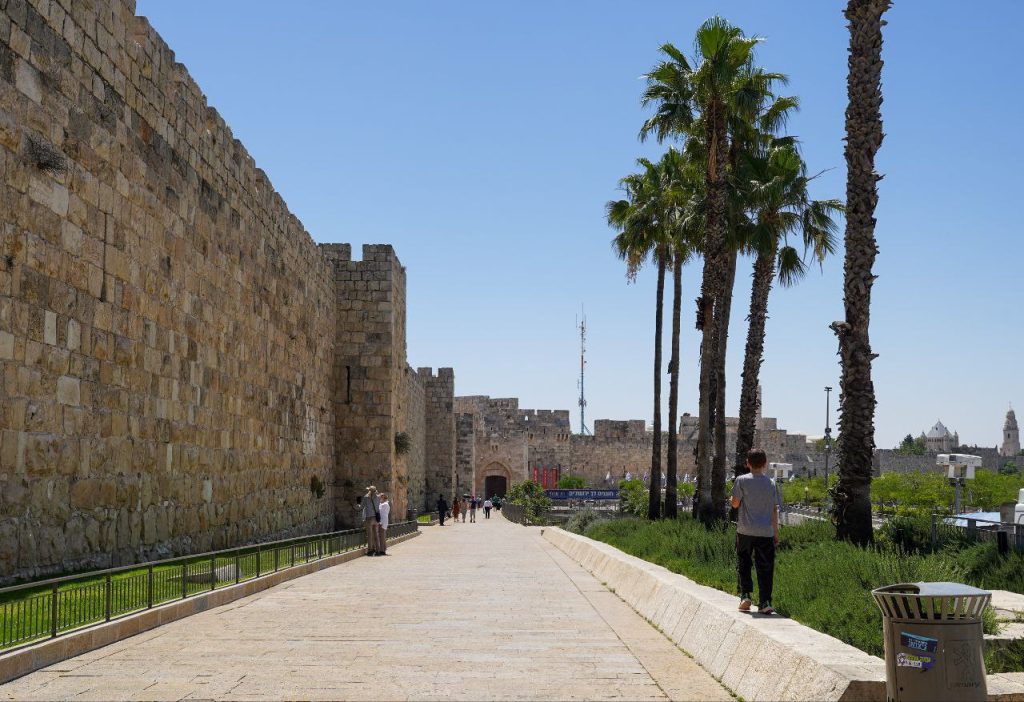
Walking toward Jaffa Gate to enter the Old City.
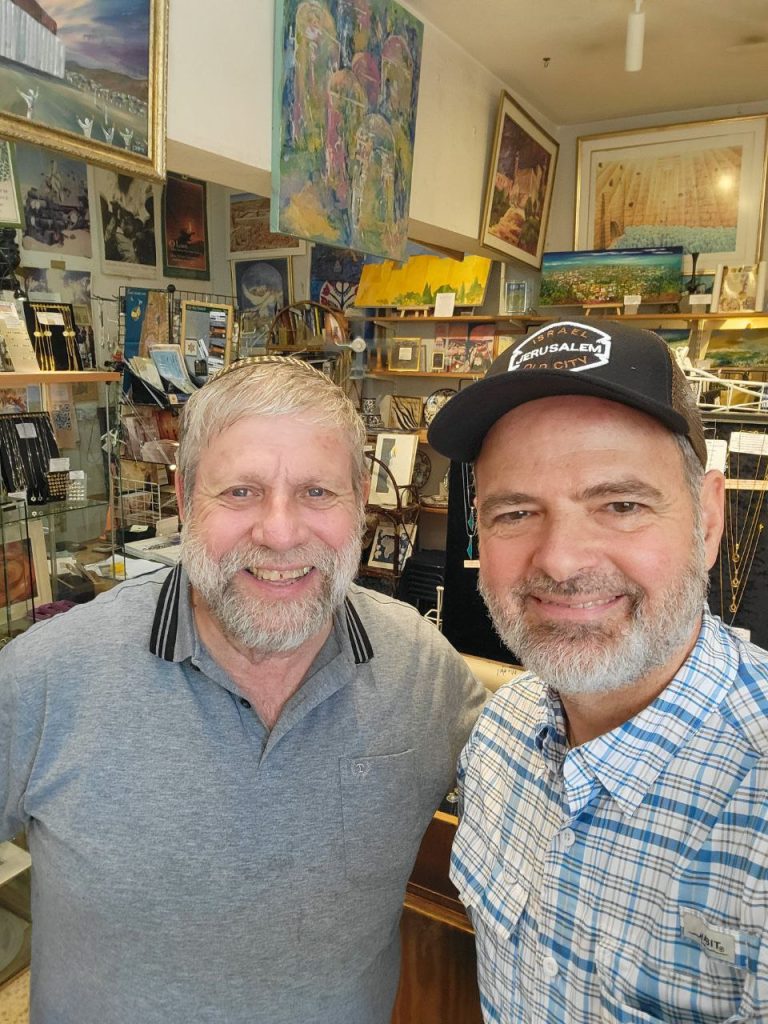
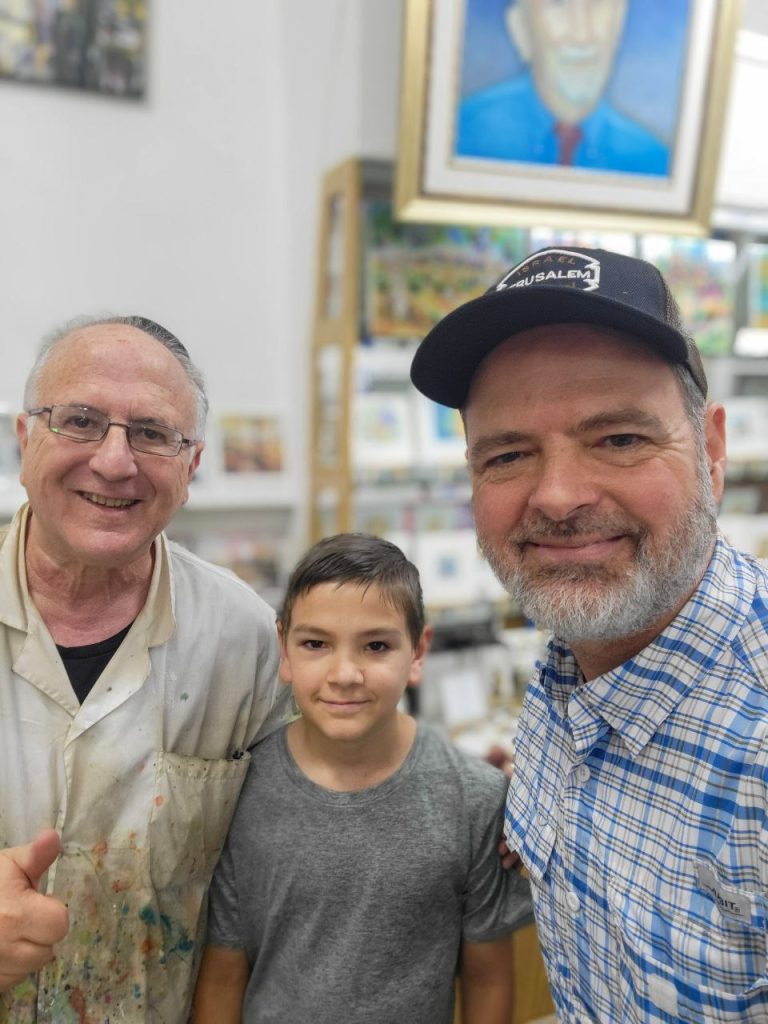
Visited Moshe at his Shorashim Shop,
and Udi at his studio.
Monday, MAY 26
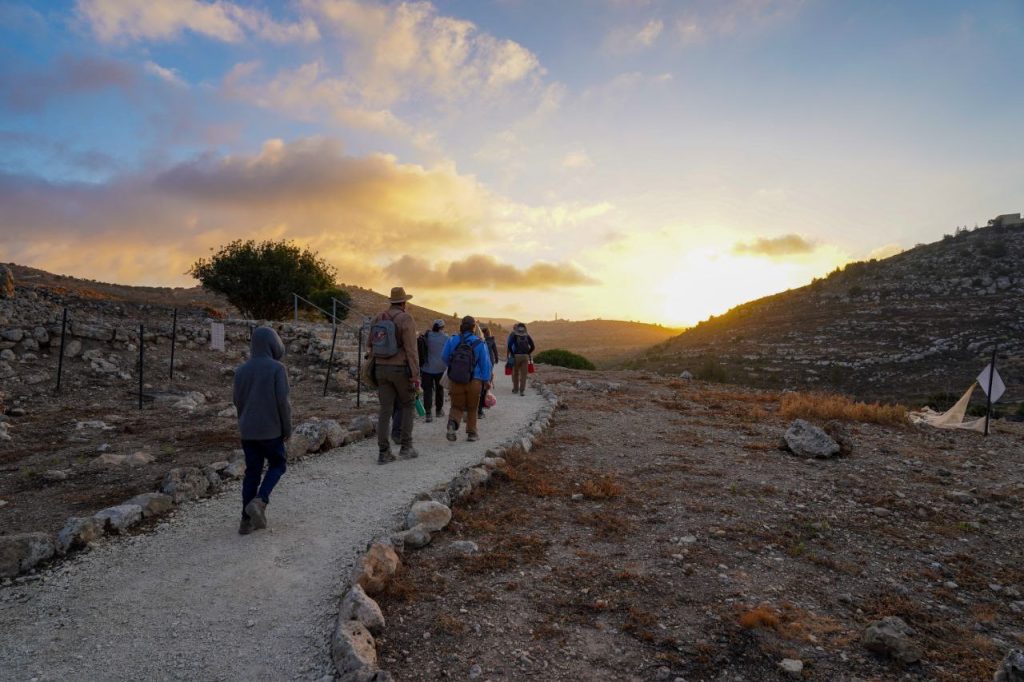
Breakfast, then ready for the day.
We’re at Shiloh ready for orientation.
“Archeology does not change the Biblical text; Archeology illuminates the Biblical text.” – Dr Scott Striplin
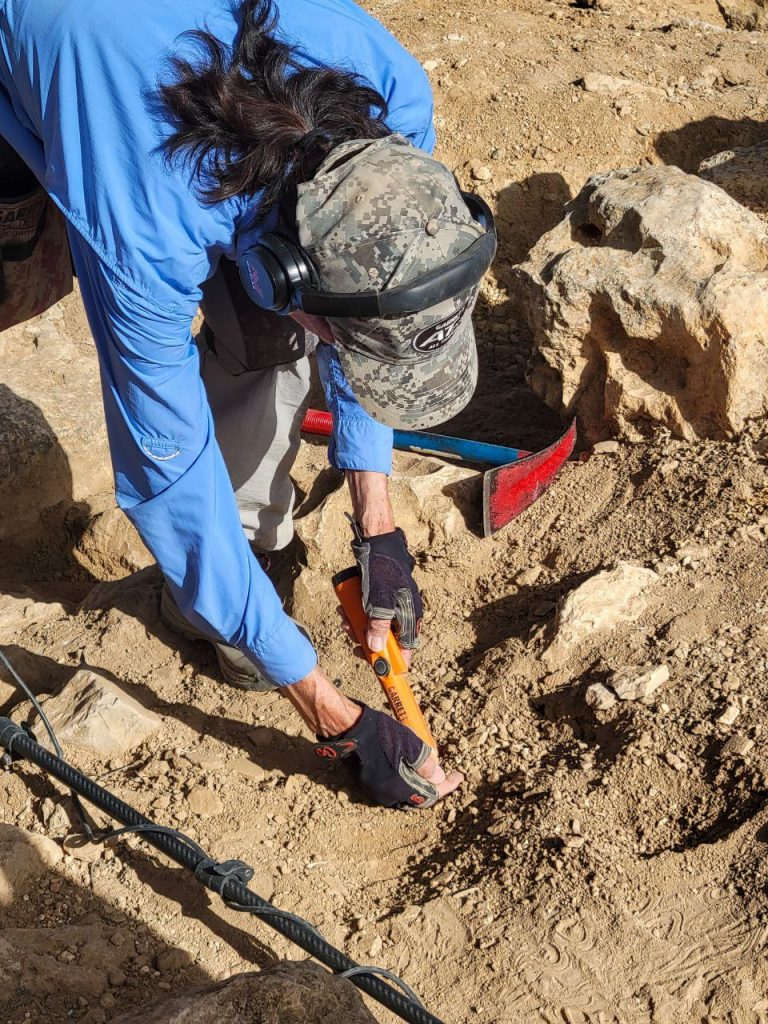
I’ve been assigned to work on a wall of the “monumental building.” We expect the building is the stone structure that was built to house the tabernacle. The tabernacle was at Shiloh for more than three centuries. If current analysis is correct, the wall we’re excavating is the northern wall of the holy place. Ellen Jackson, with her metal detector, visited our area three times today. On her first visit she found a coin where I was excavating.
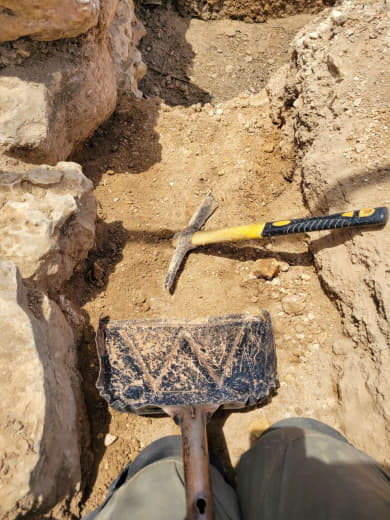
I’m digging a trench along the wall to expose a couple of courses of stone to confirm it is part of the building. I’m below the first course. We work slowly and carefully to recover any artifacts. We found a good bit of pottery inside the building and very little outside.
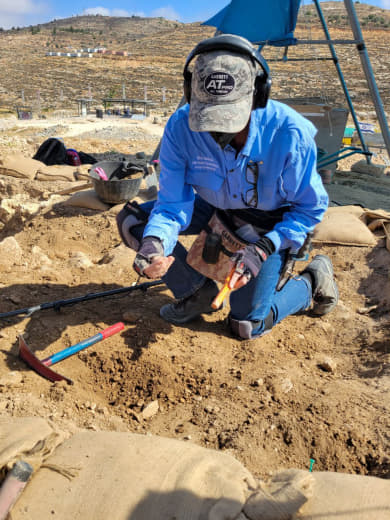
Ellen zeroing in on an object. We record the elevation where it was found.
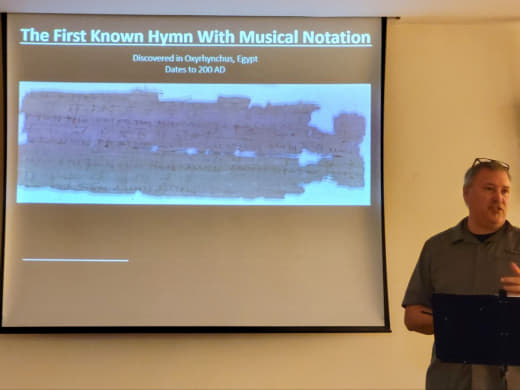
Archeological music. The oldest known preserved hymn with musical notation. It dates to 200 AD, found in northern Africa. It is trinitarian, naming Father, Son, and Holy Spirit. We sang it (in English).
Tuesday, MAY 27
Today started out cloudy, and was generally much cooler than yesterday’s 96 degrees.
I finished out the section of wall I was clearing yesterday.
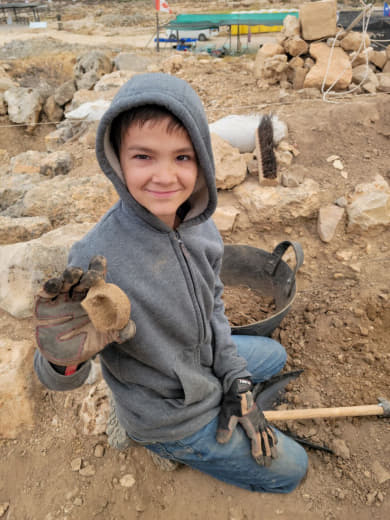
Each “gufa” of soil that goes to the sifting station is labeled with the square number, locus, and pail number. The floppy buckets are called gufas. Archeology tools in Israel are generally referred to by Arabic terms.
George found a nice pottery handle.
Sand bags are used to delineate and protect the squares. I did some sand bag replacements today.
Our team found a flint blade in dry sifting.
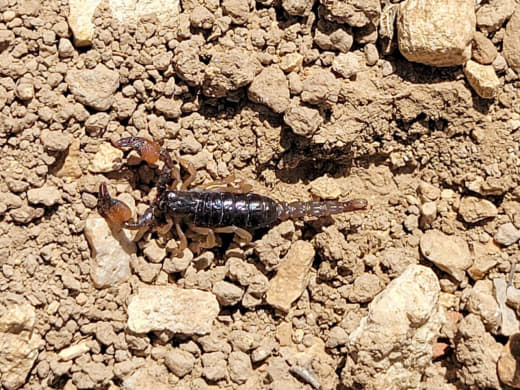
I found a cute little scorpion.
There’s a Roman era wall intersecting our more ancient wall. We’re trying to clarify what is original wall, and ultimately find the northeast corner of the monumental building. I hope we find it this week. Otherwise, I won’t be there for the discovery.
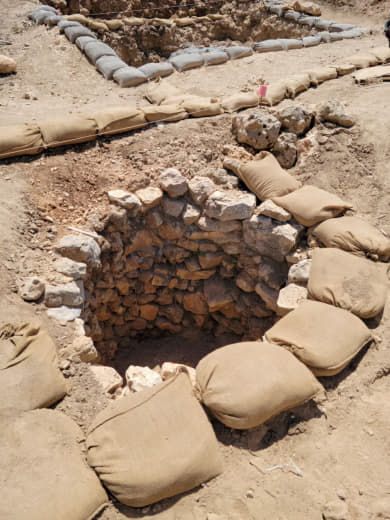
Roman era Jews built these storage silos inside the ancient building site. The builders were apparently oblivious of the historical significance of the site. I guess we’d call the storage pits “Shiloh silos” or “silos of Shiloh.”
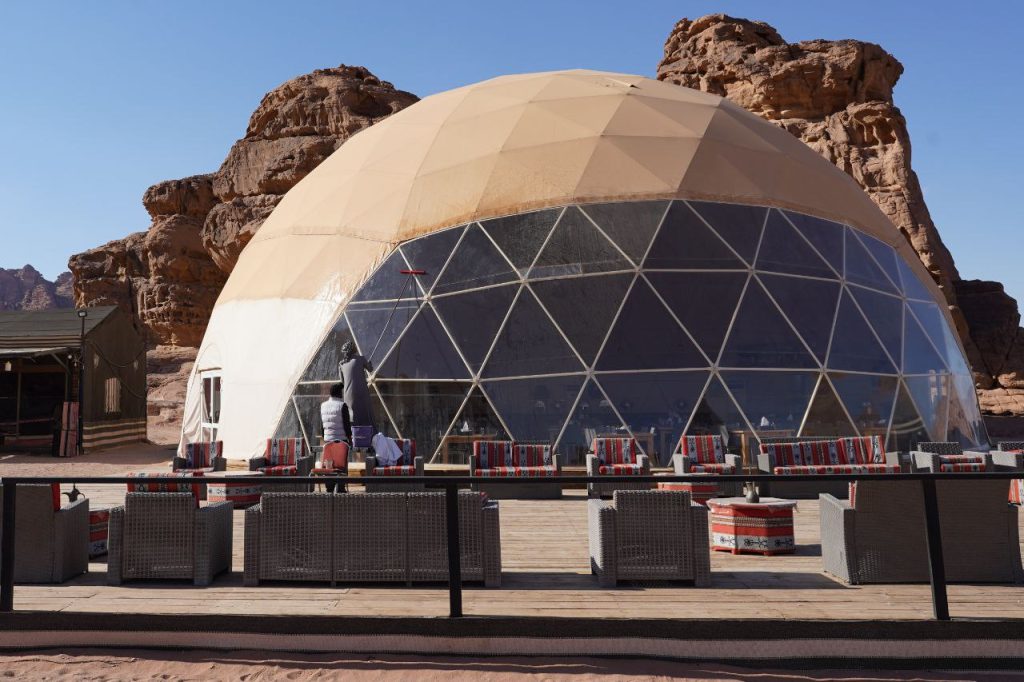
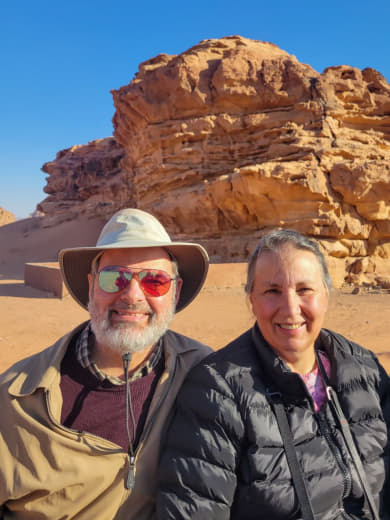
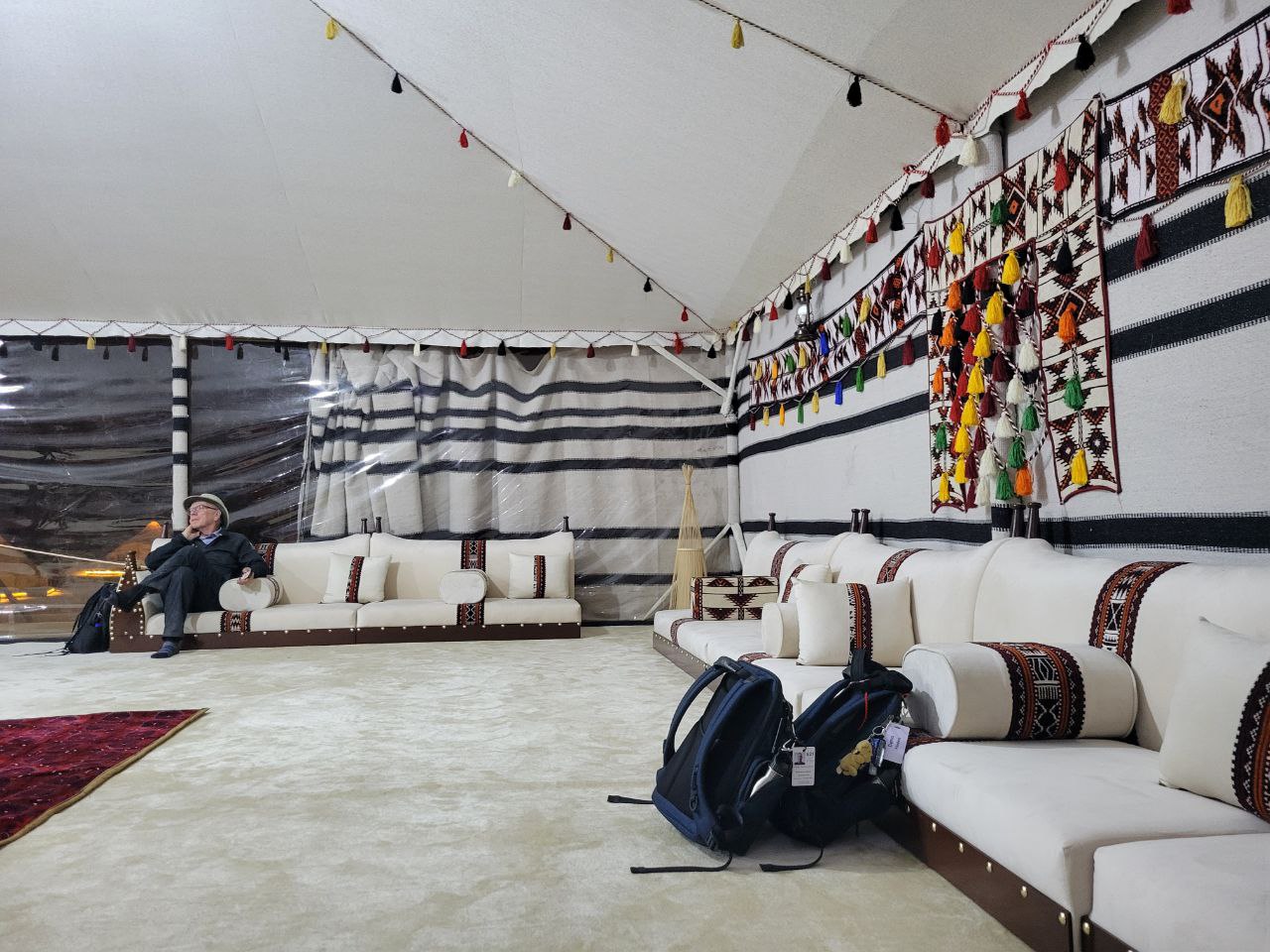
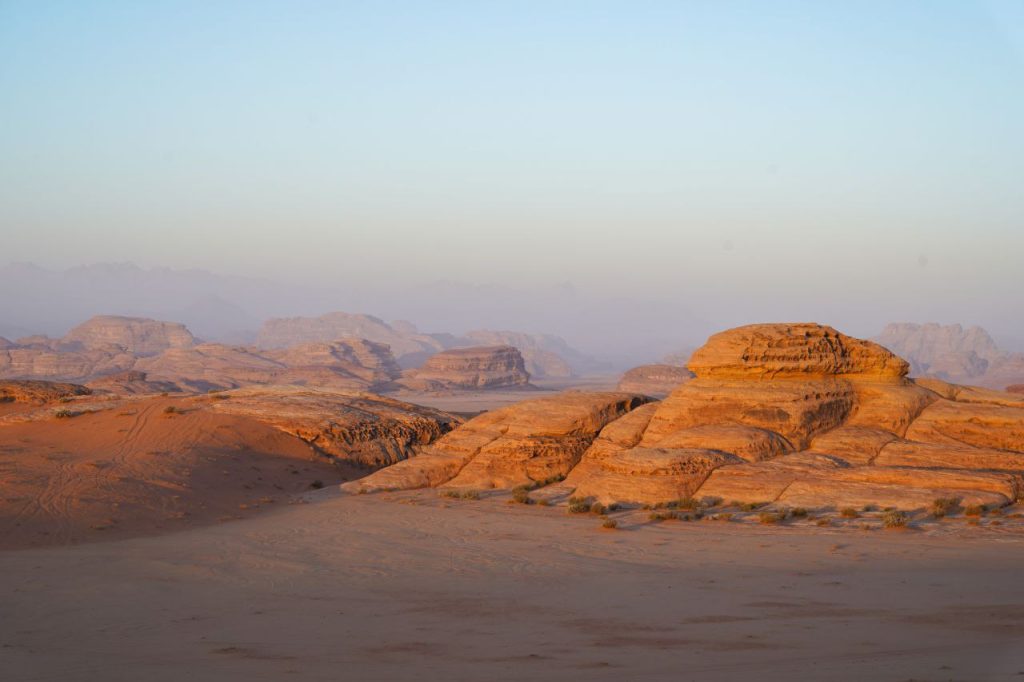
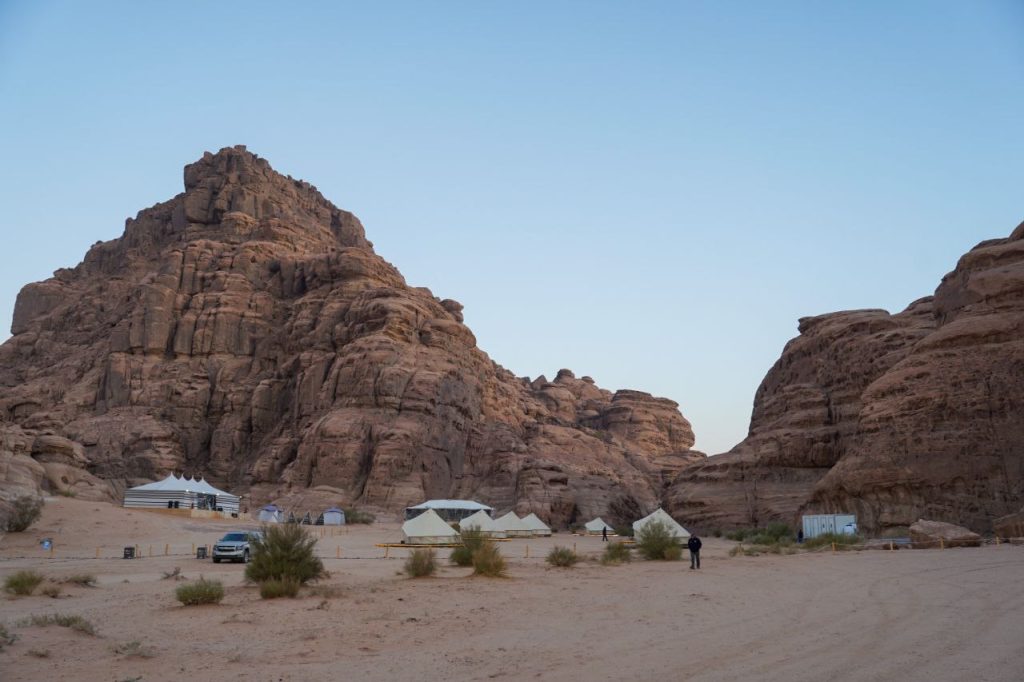
Yesterday we exited Saudi Arabia. Then we were stuck in no man’s land for 3 or 4 hours waiting on paper work. I guess it came by camel caravan. We drove to Suncity Camp, the original desert camp in Wadi Rum.
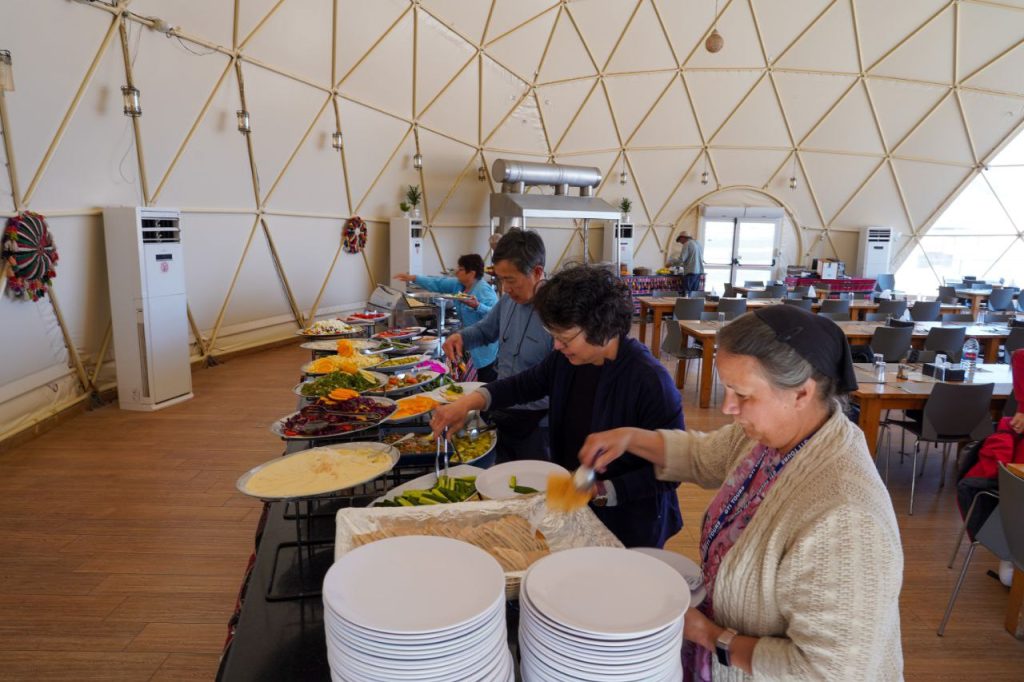
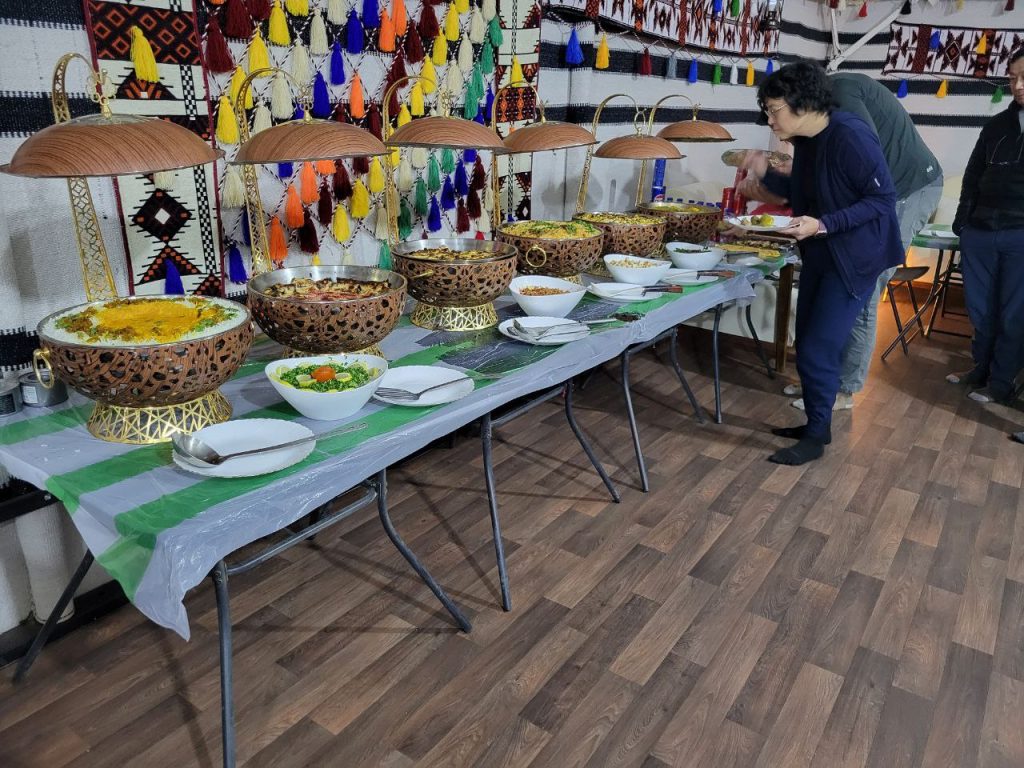
The dining room
It got pretty chilly in the evening.
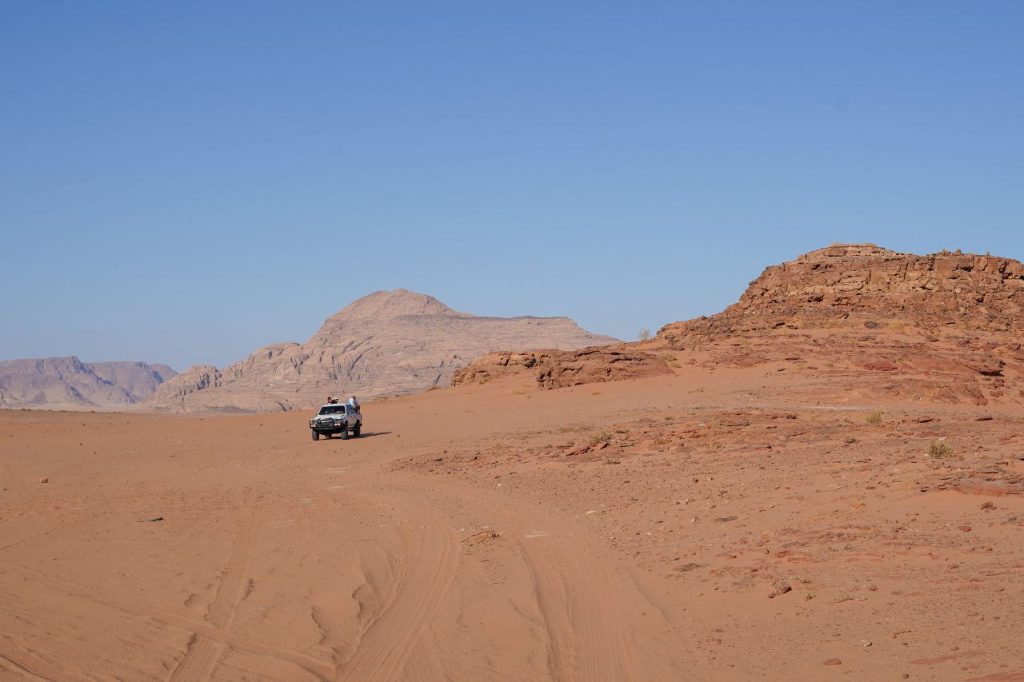
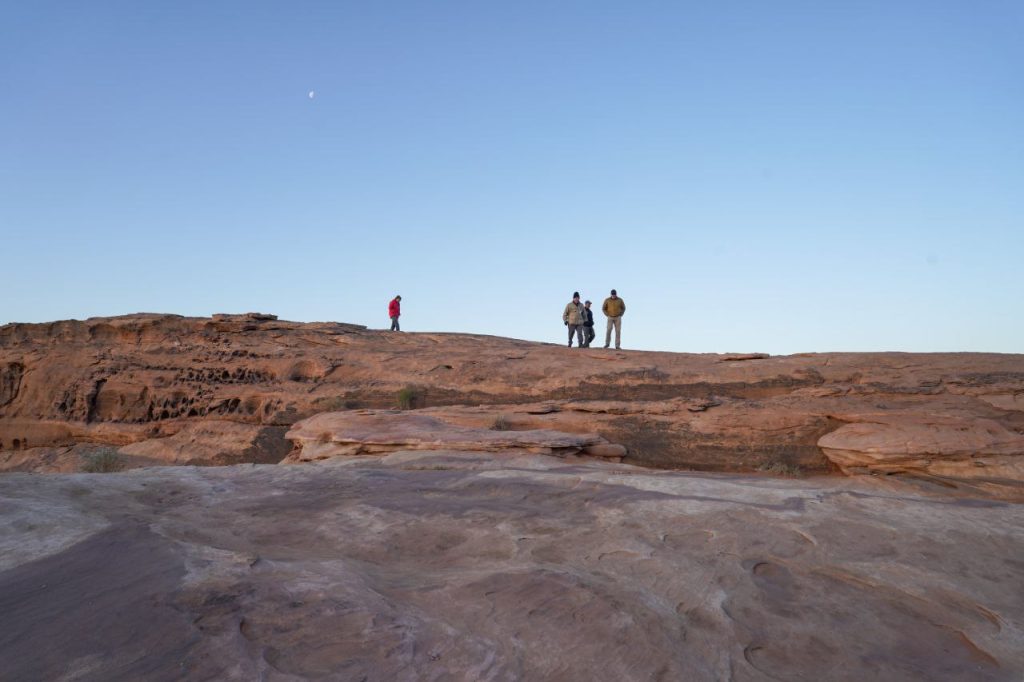
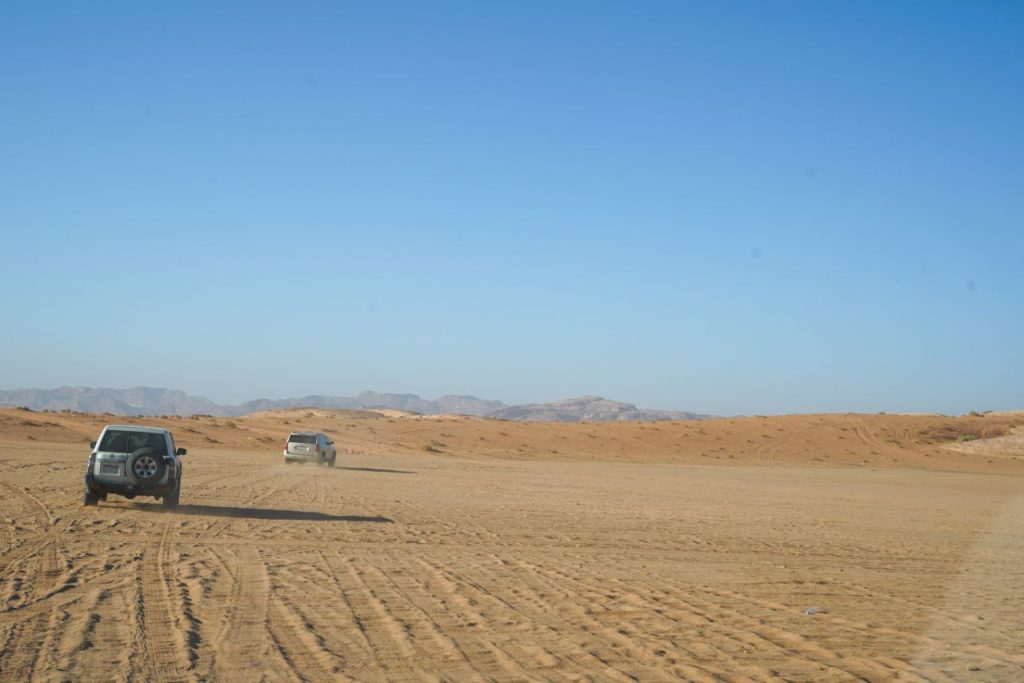
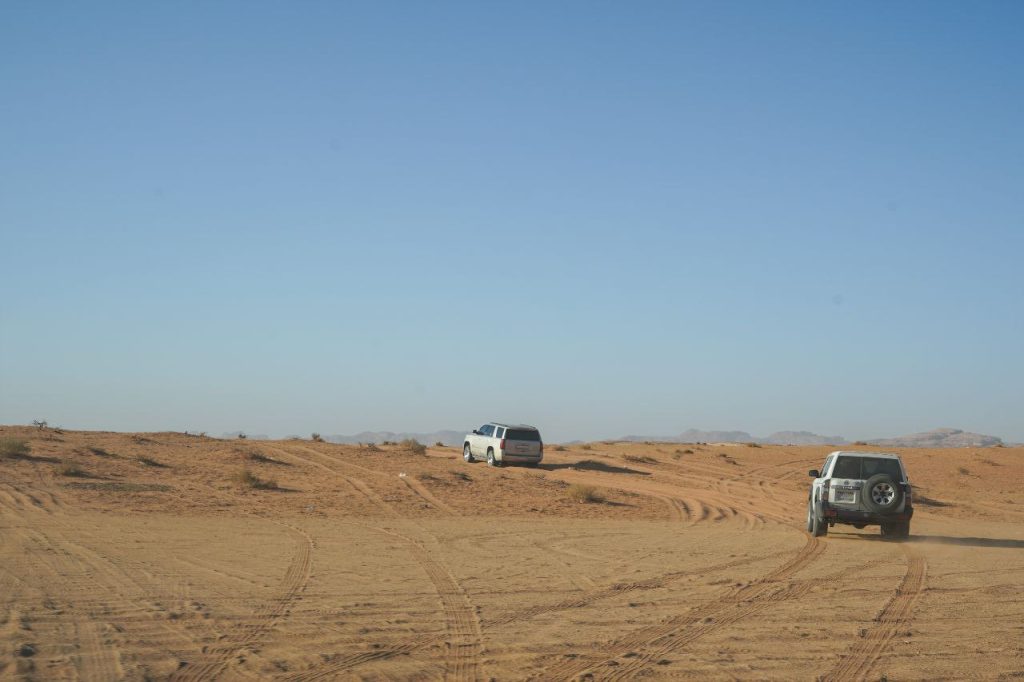
We did a sightseeing jeep ride.
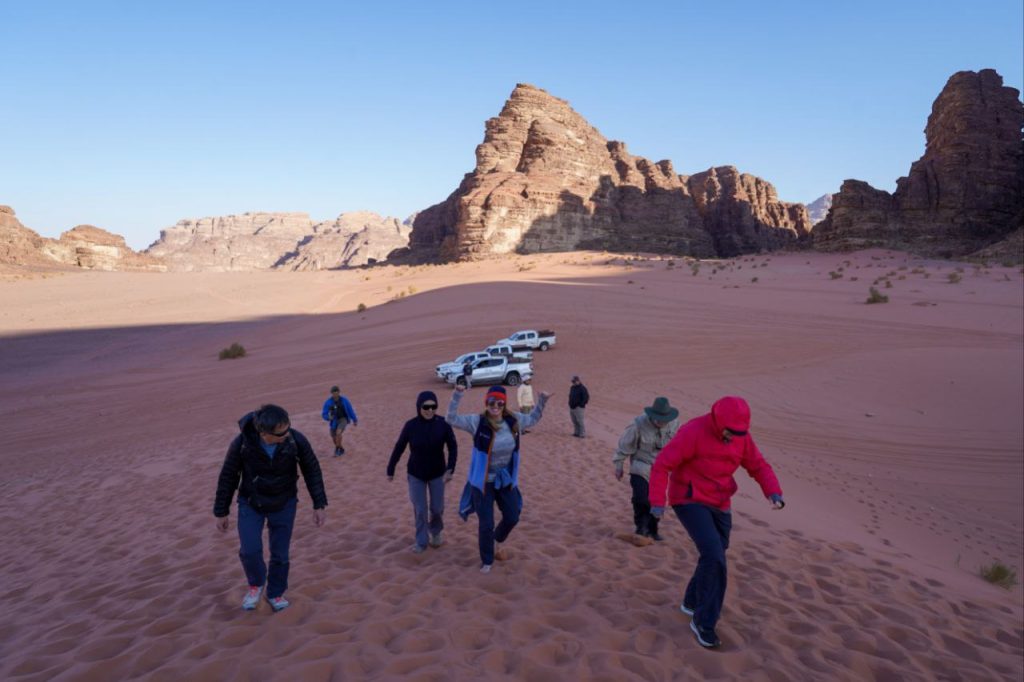
Uphill in loose sand
Sand drifts in the wind almost like snow.
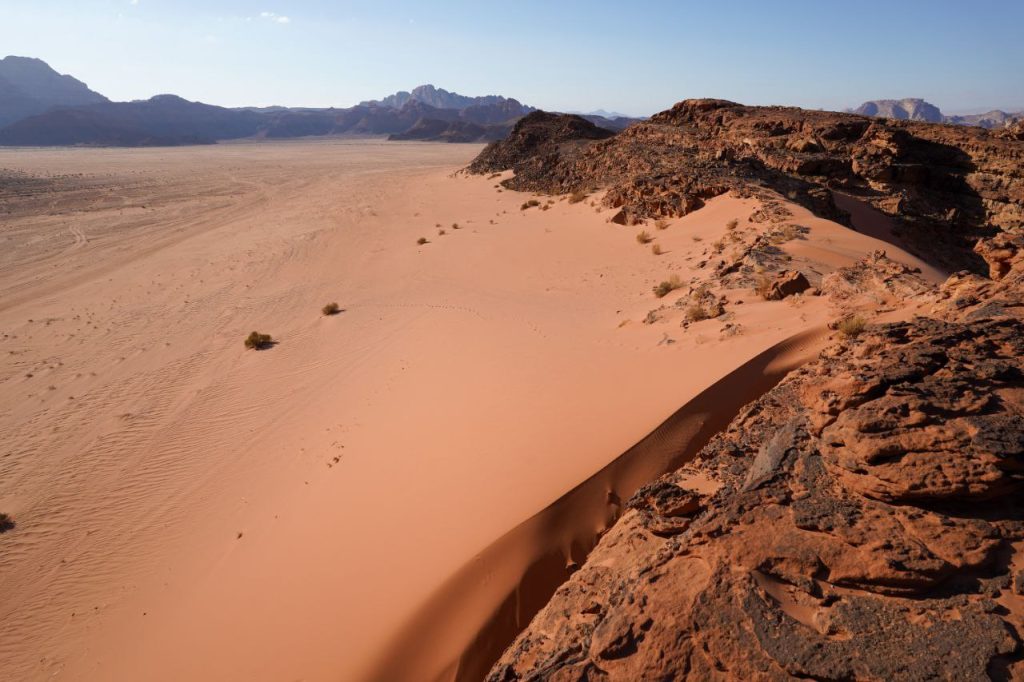
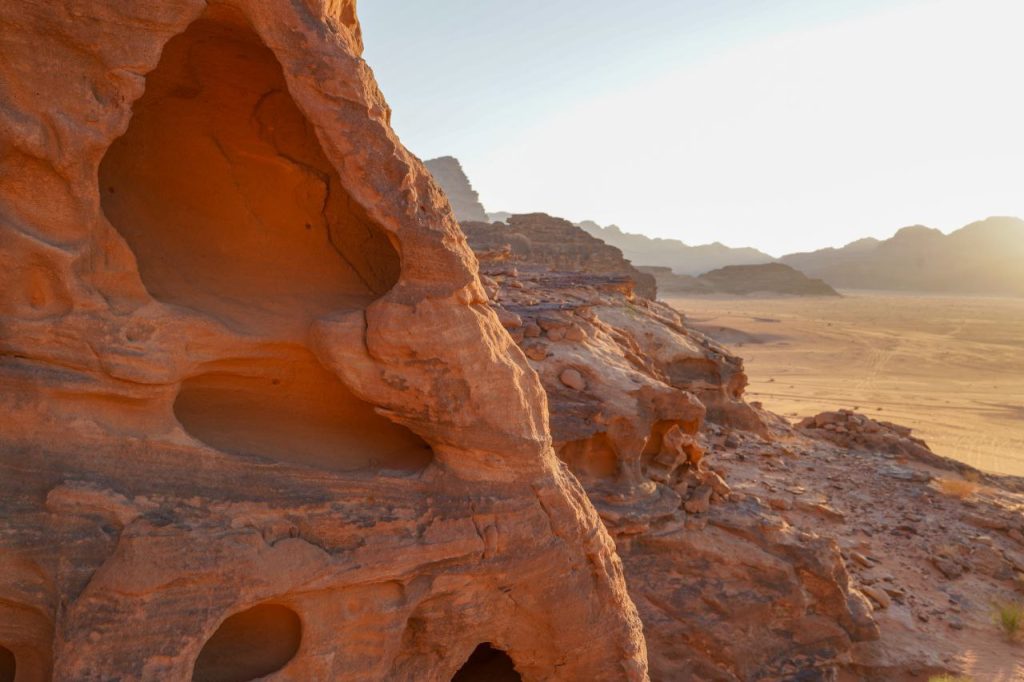
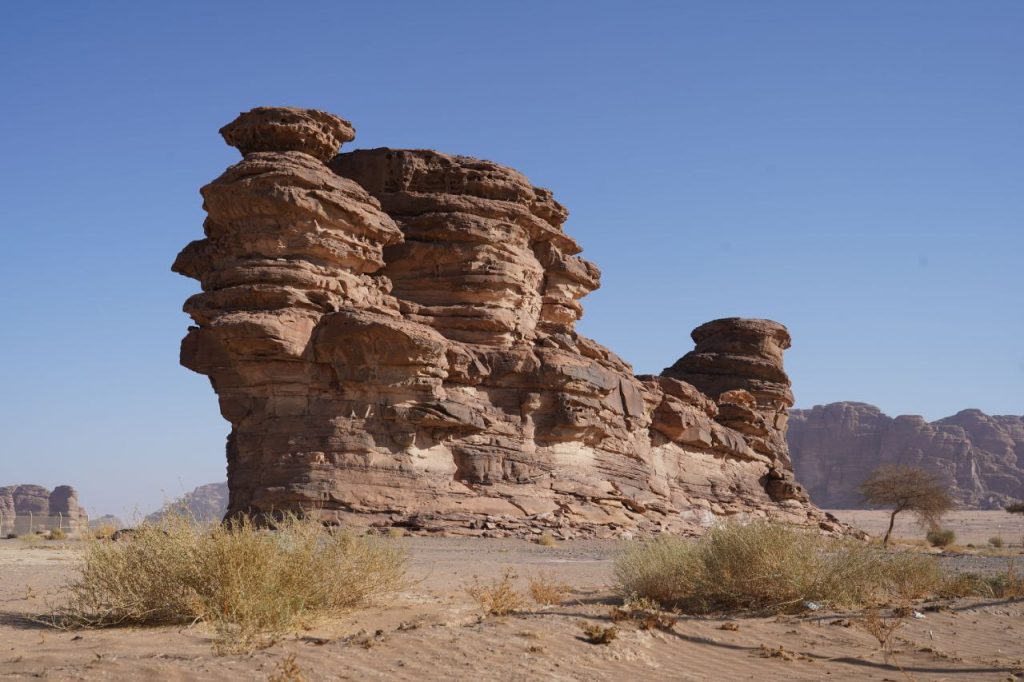
The erosion patterns are quite varied and interesting.
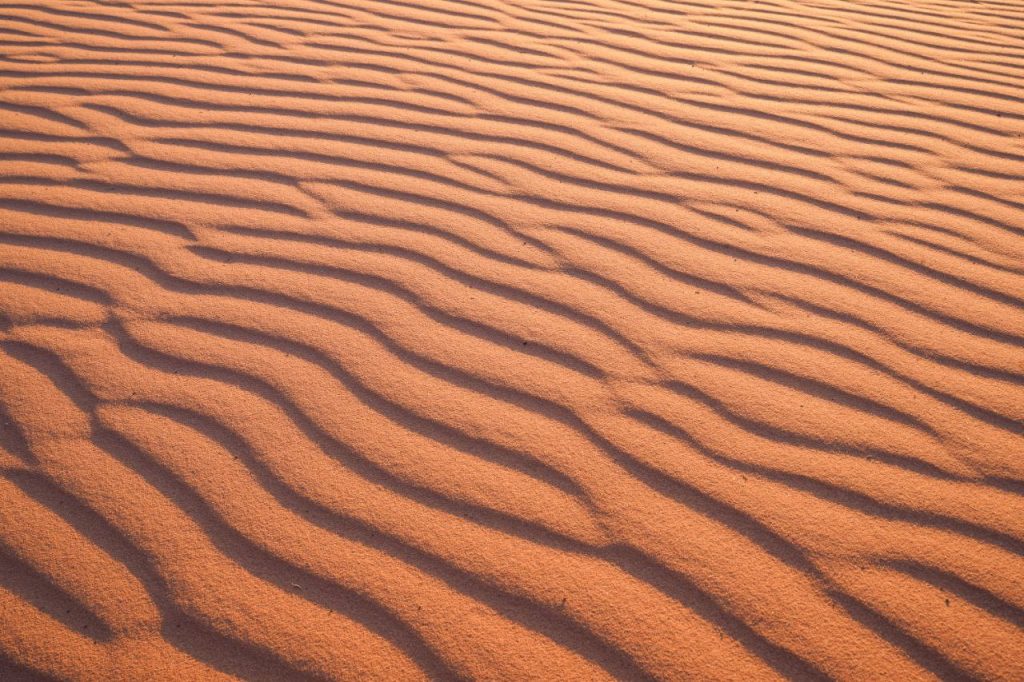
Sand ripples
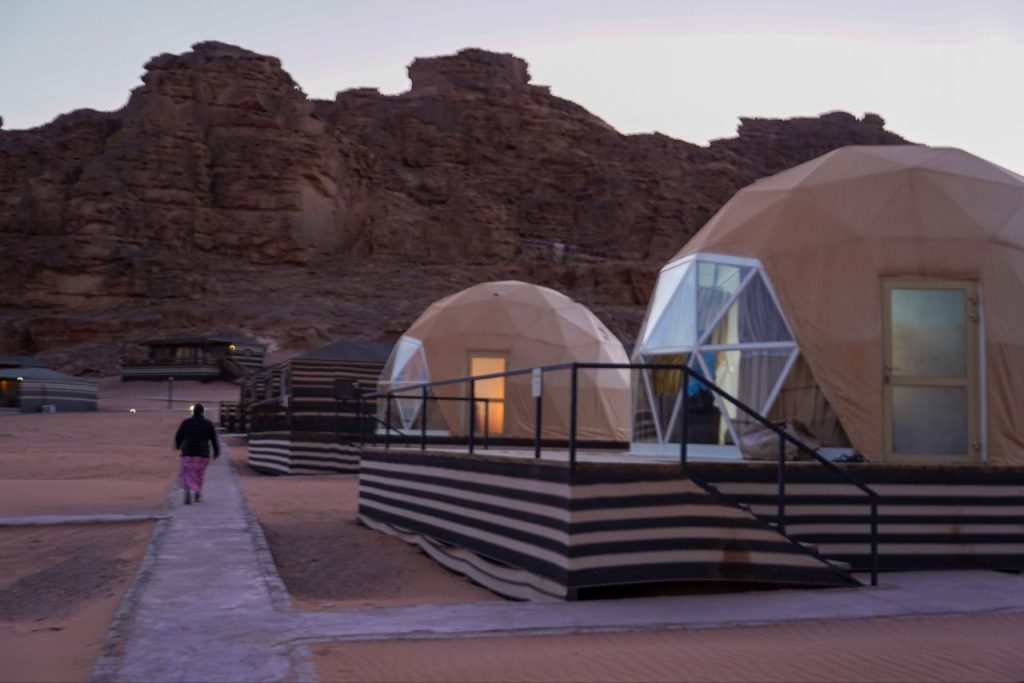
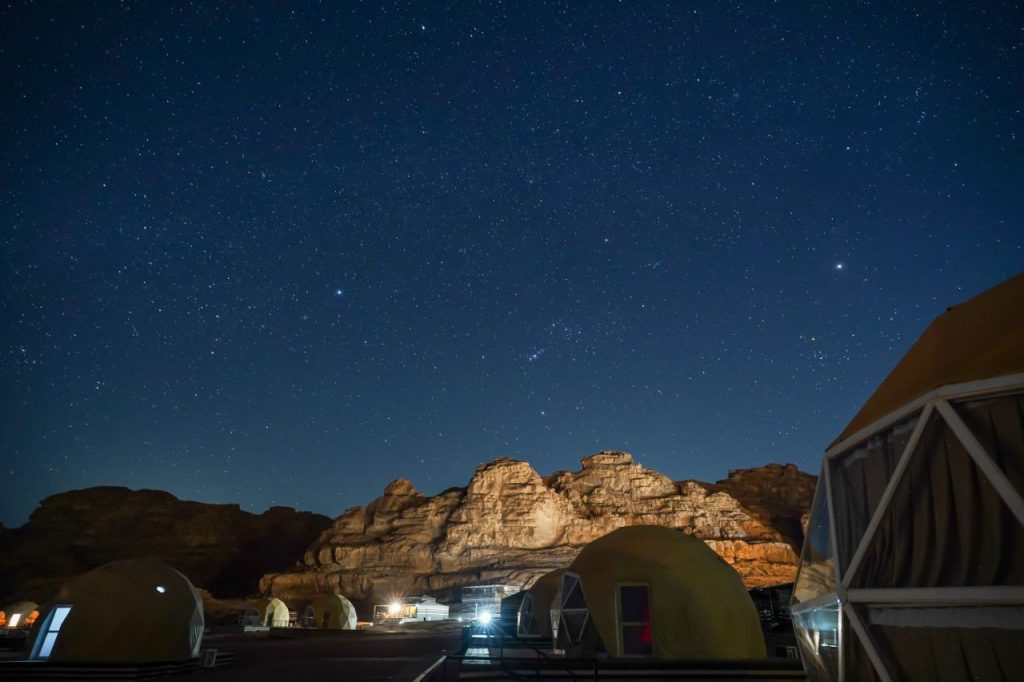
Our hotel room
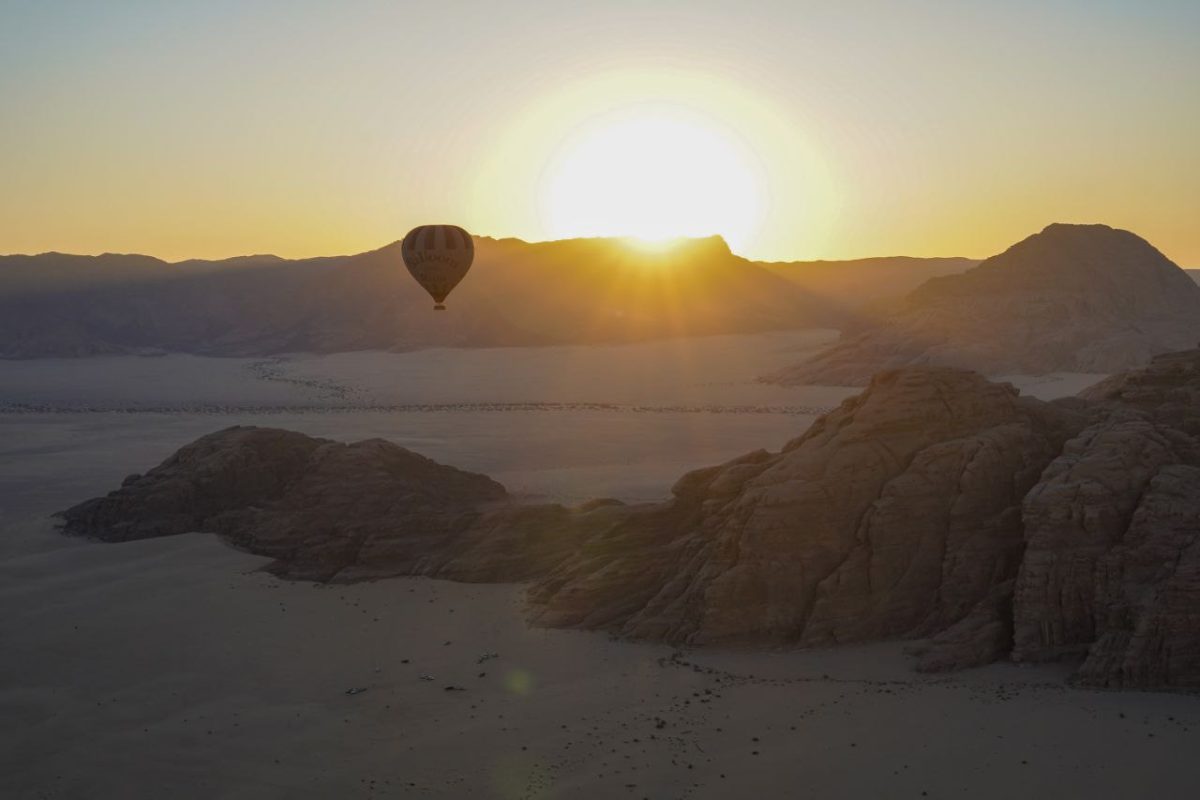
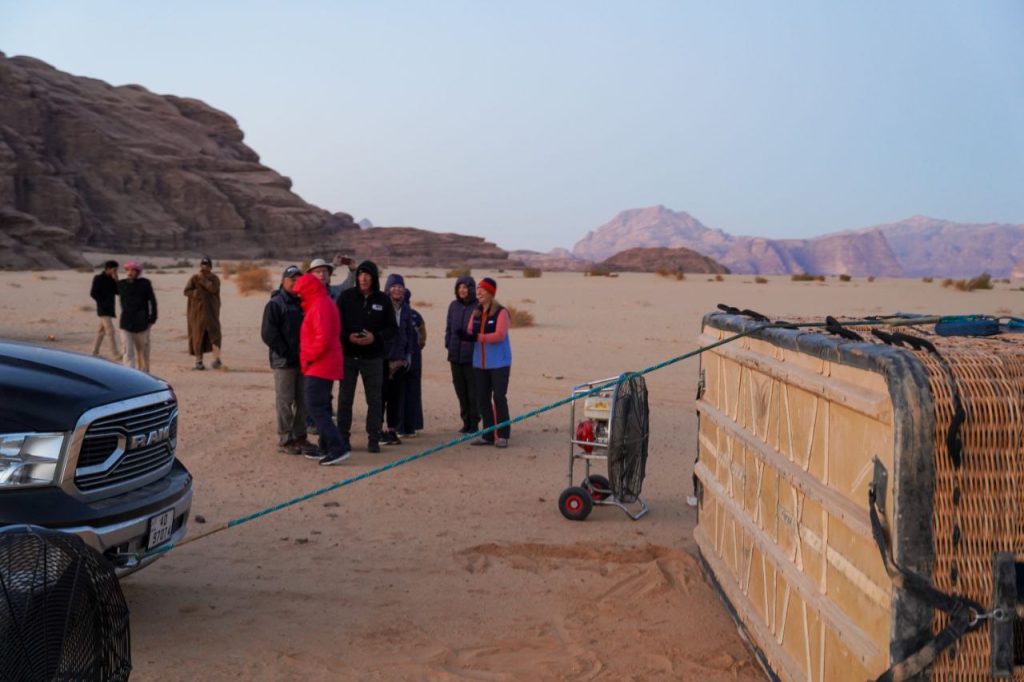
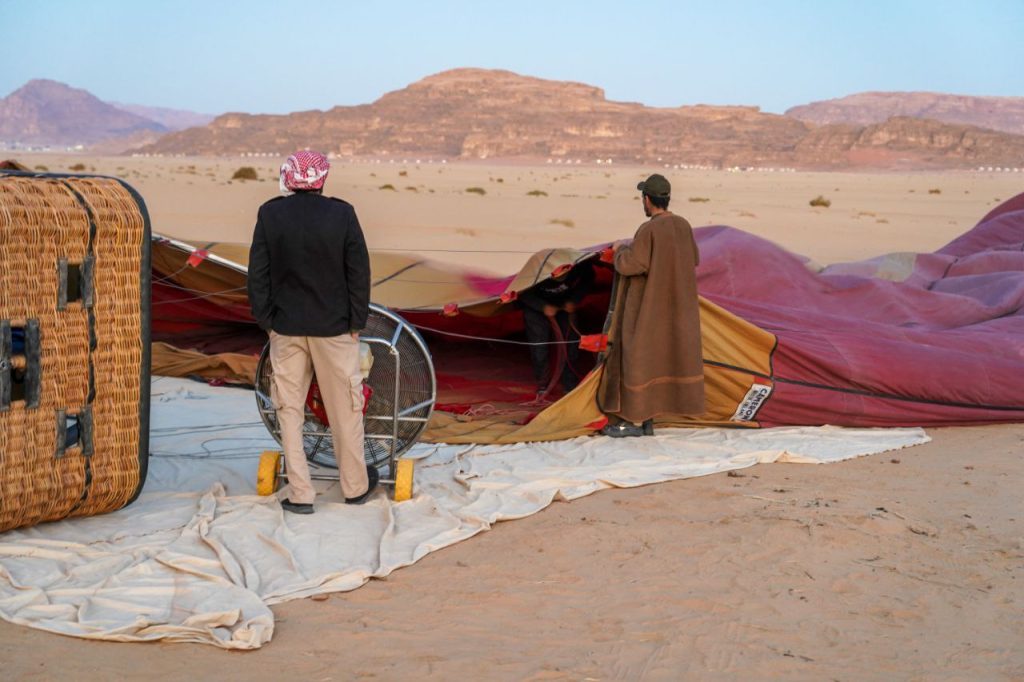
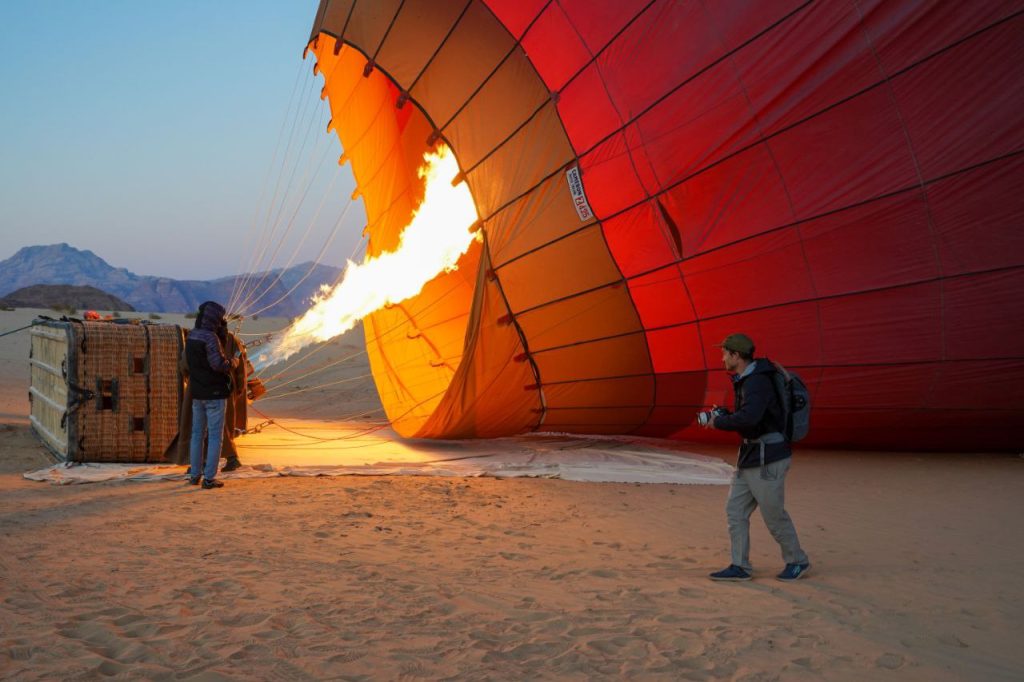
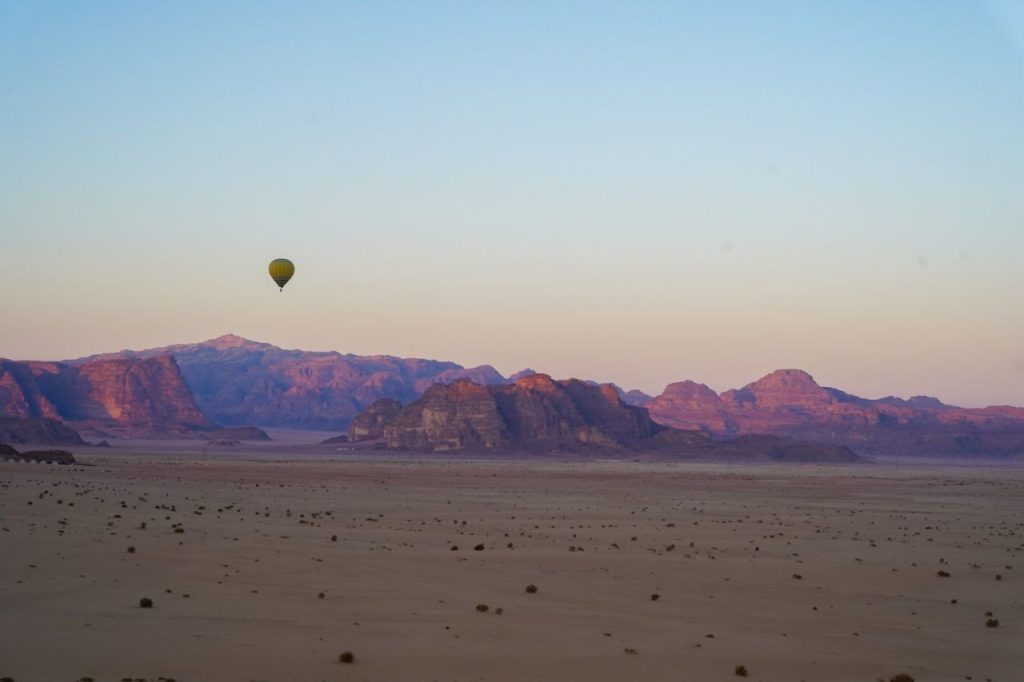
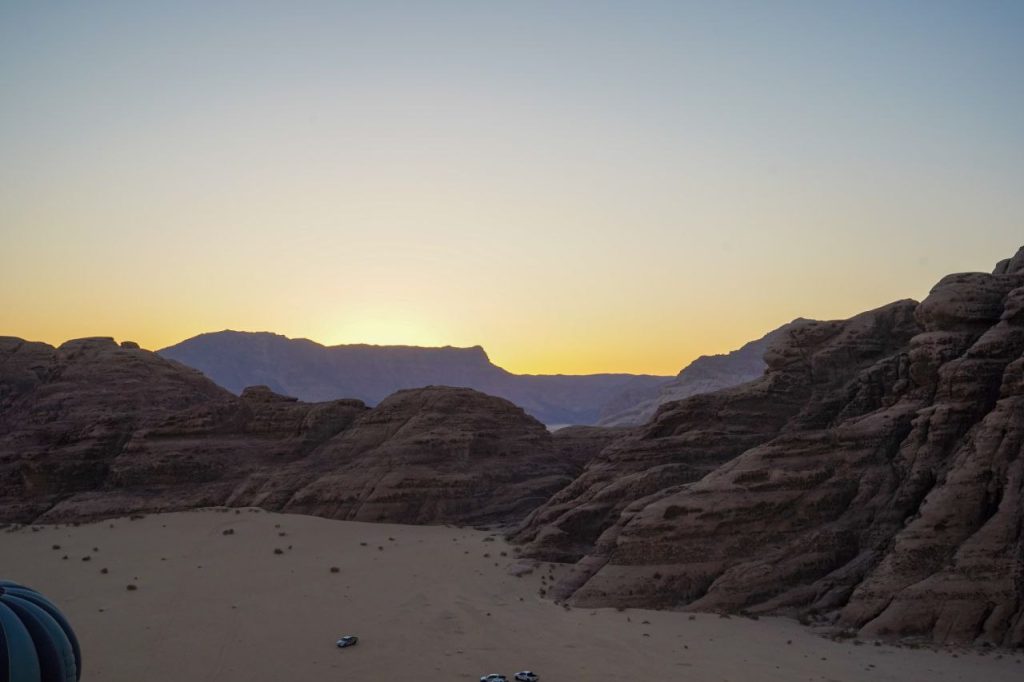
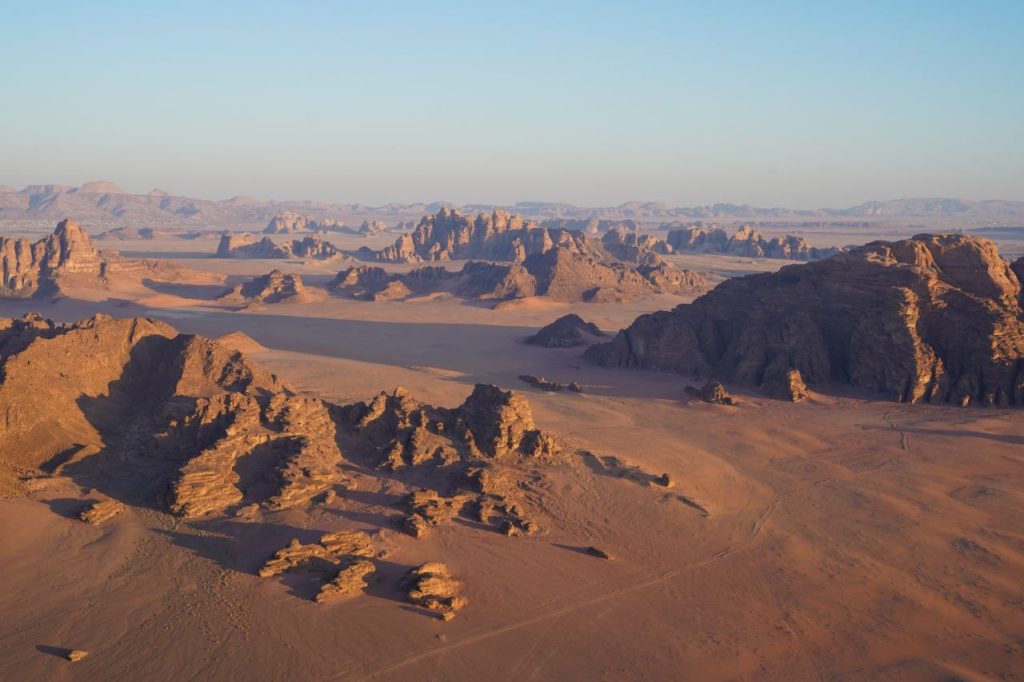
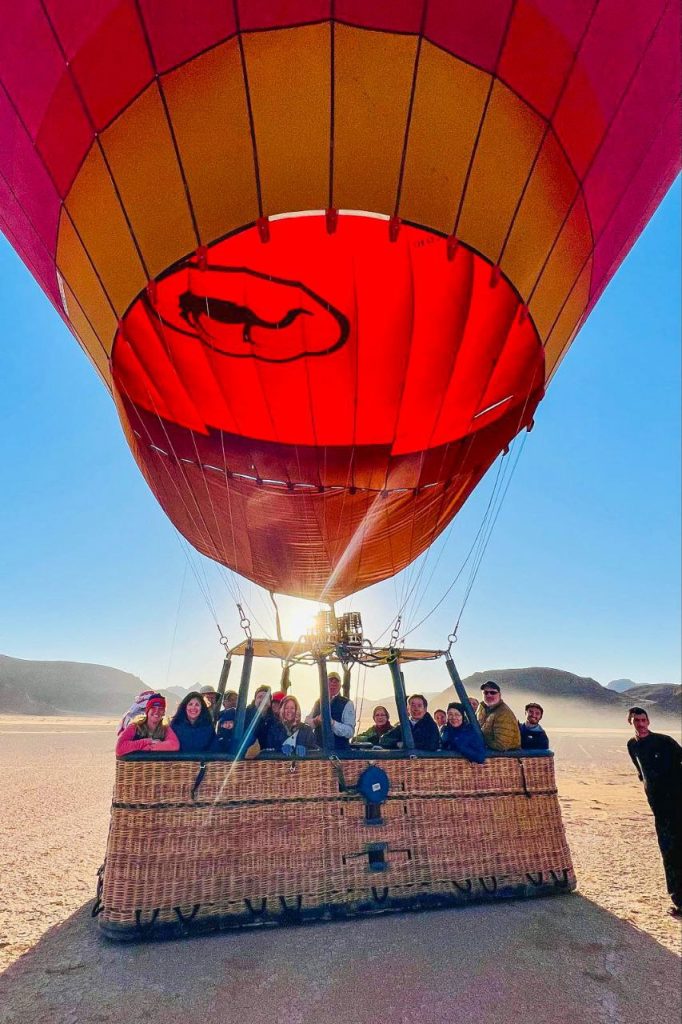
We did a balloon ride in Wadi Rum.
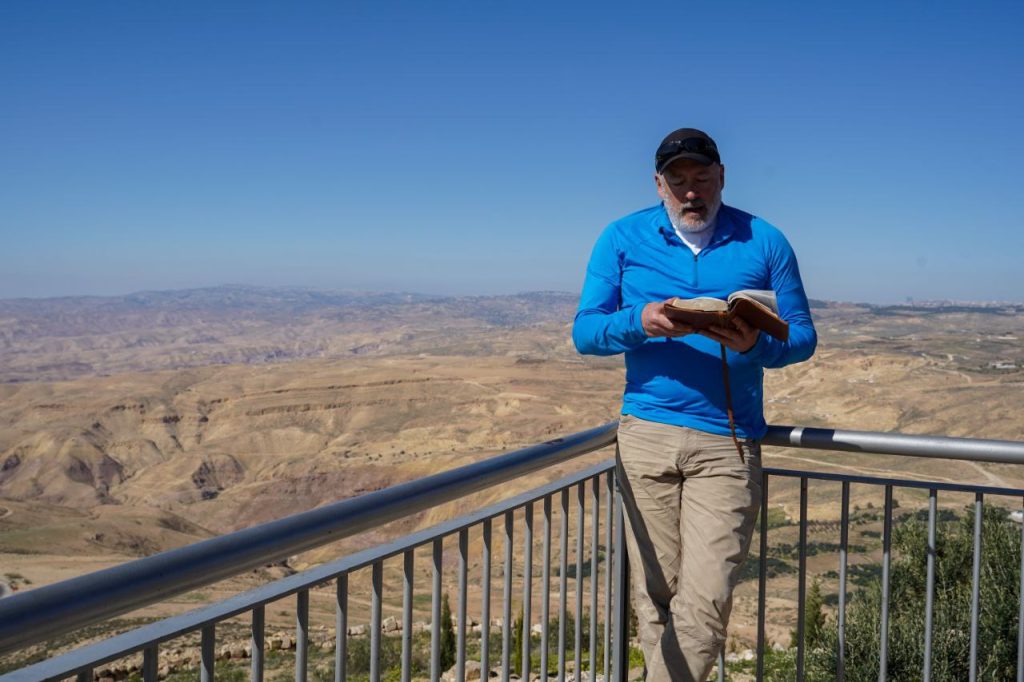
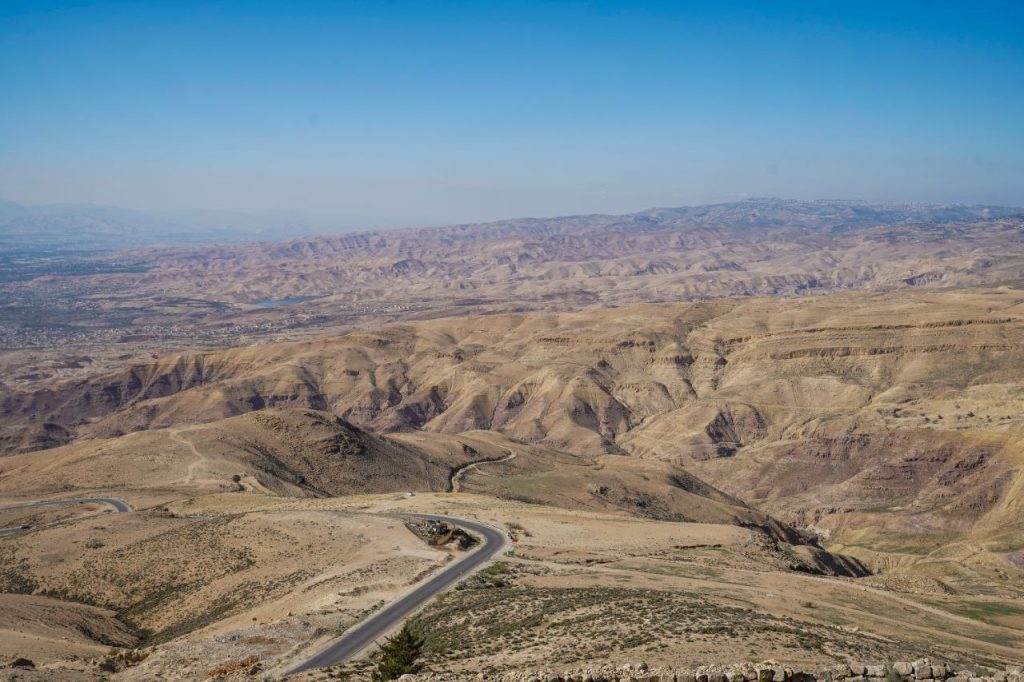
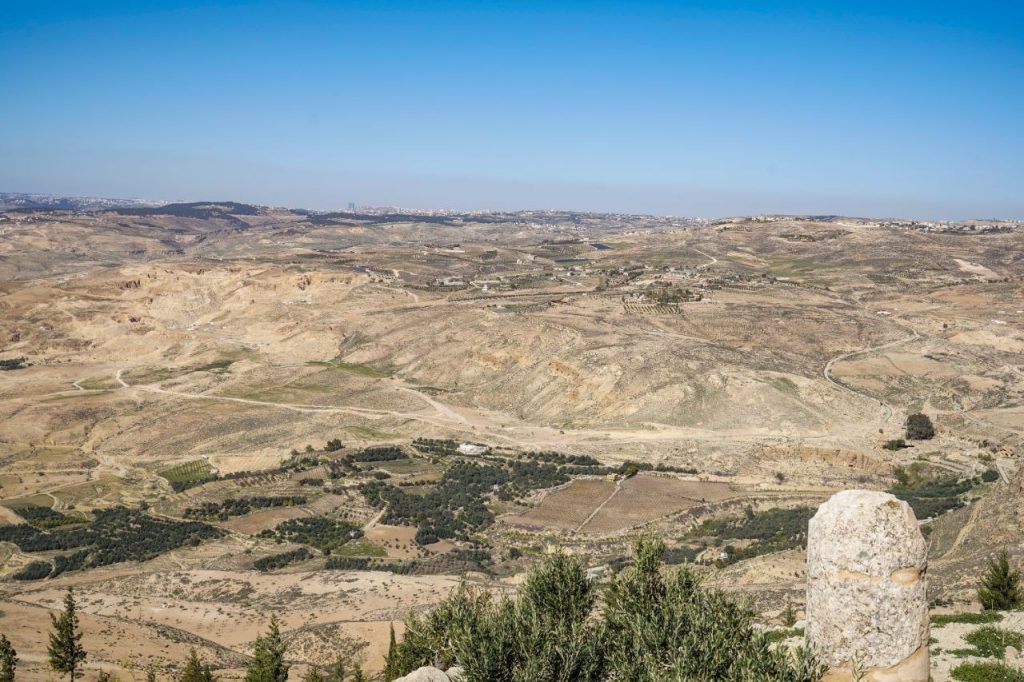
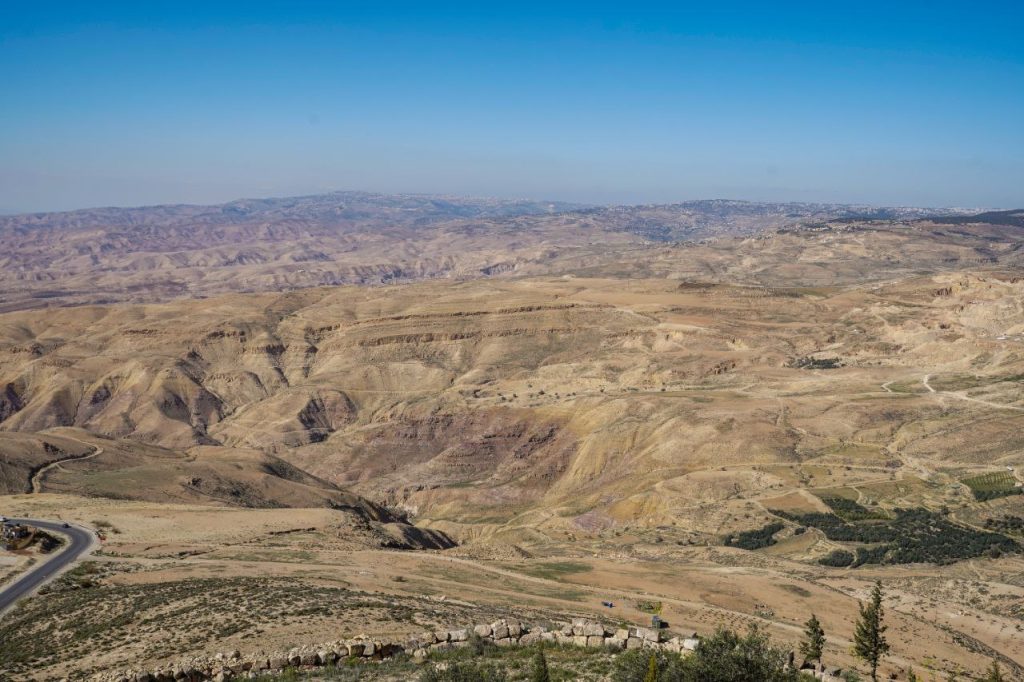
We ended the Exodus study on Mount Nebo. It was here that Balaam looked at Israel in the plains of Moab. He prophesied of a Star out of Jacob, and a Sceptre out of Israel.
From here Moses could view the Promised Land. Like Moses, we didn’t go into the Land. That will be another trip.
I’m dreaming of organizing an Arabian Exodus Study Trip for Passover 2027. We would need 22 to 25 participants. We’d fly into Saudi Arabia and spend three days visiting the Exodus sites and learning about the different wildernesses. We’d cross into Jordan, continue in the wilderness, wrap up with Jerash and the Amman Citadel, then fly home from Amman. Let me know if you’re interested. It would cost somewhat more than an Israel study trip.
We do have a few openings for our Israel Study Trip this fall. This is a great time to visit the Middle East. The sites are not crowded, the people are very happy to see visitors. It is very safe.
The dates are October 23 to November 4.
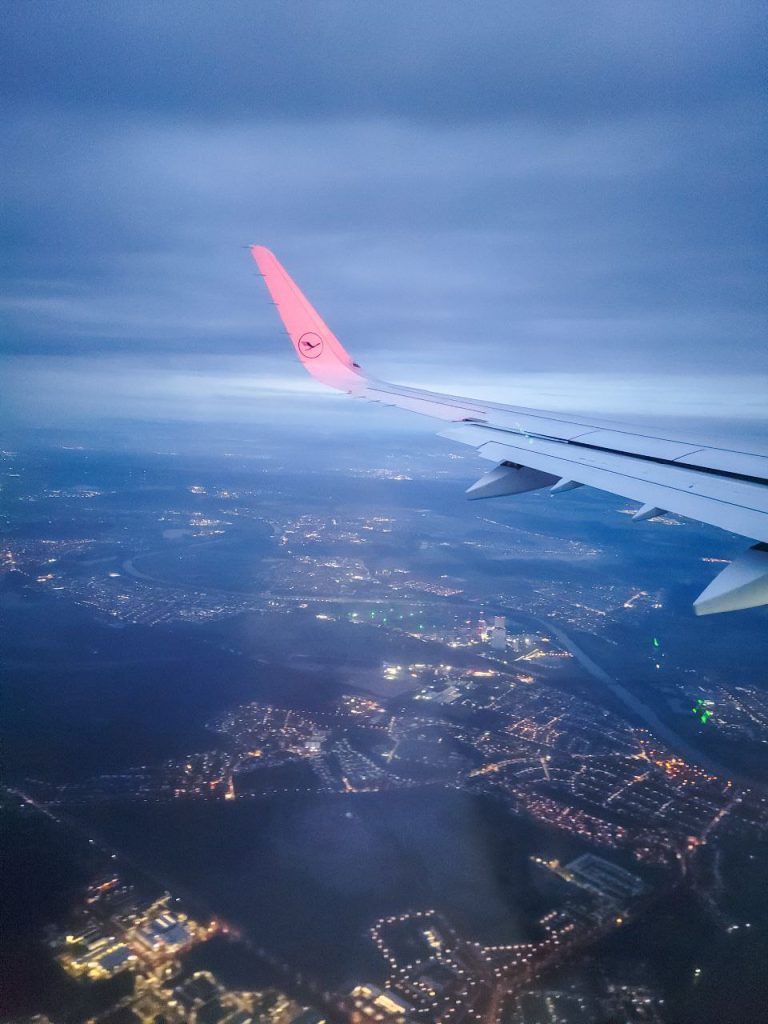
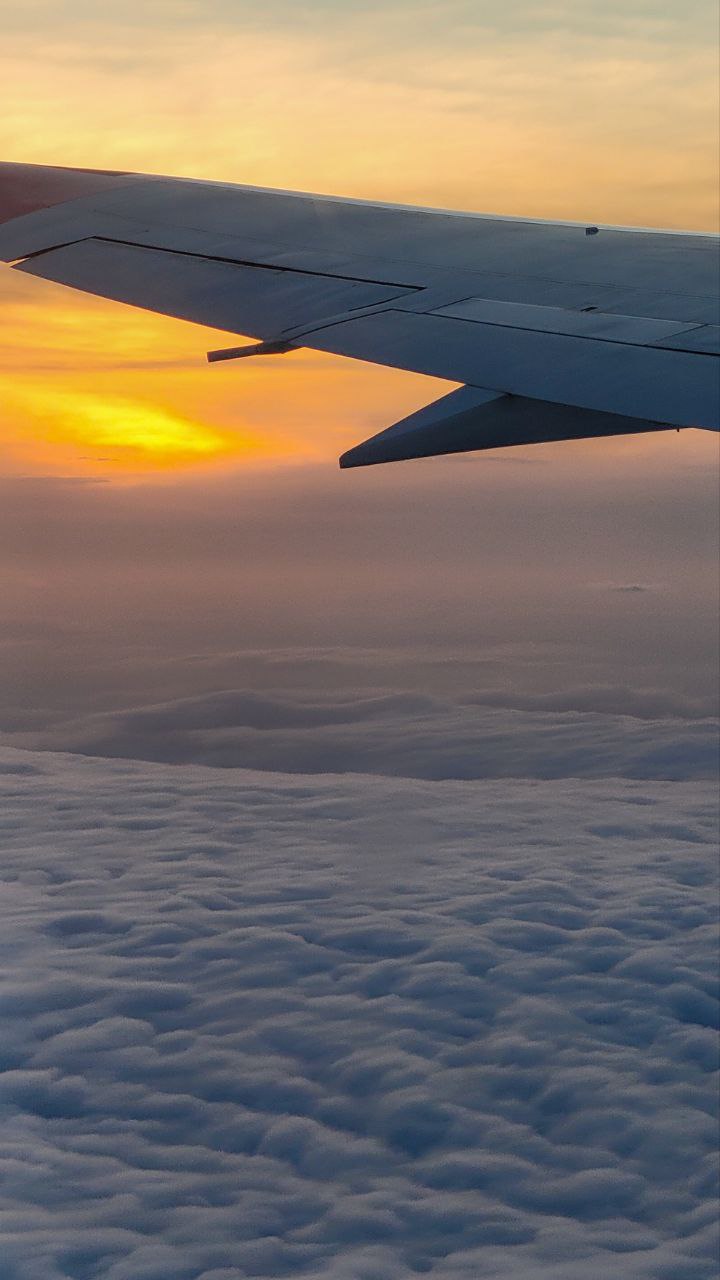
Traveling home, we flew Lufthansa from Amman to Frankfurt, Germany.
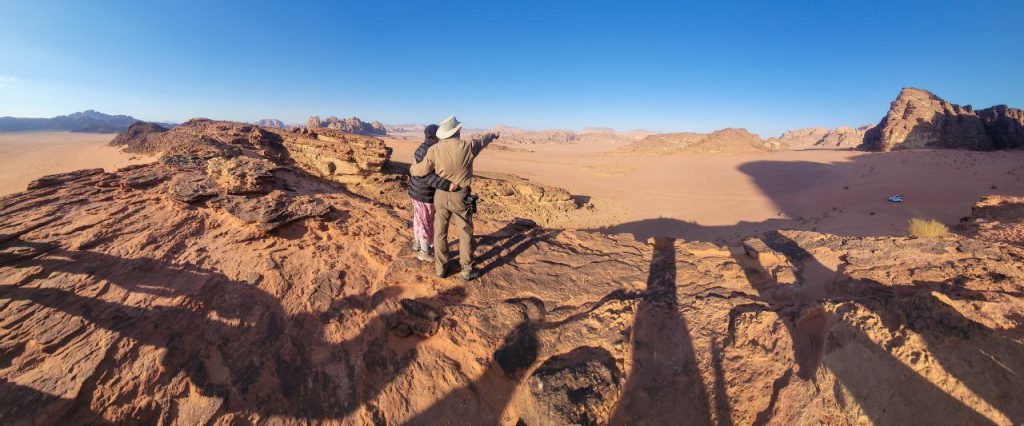
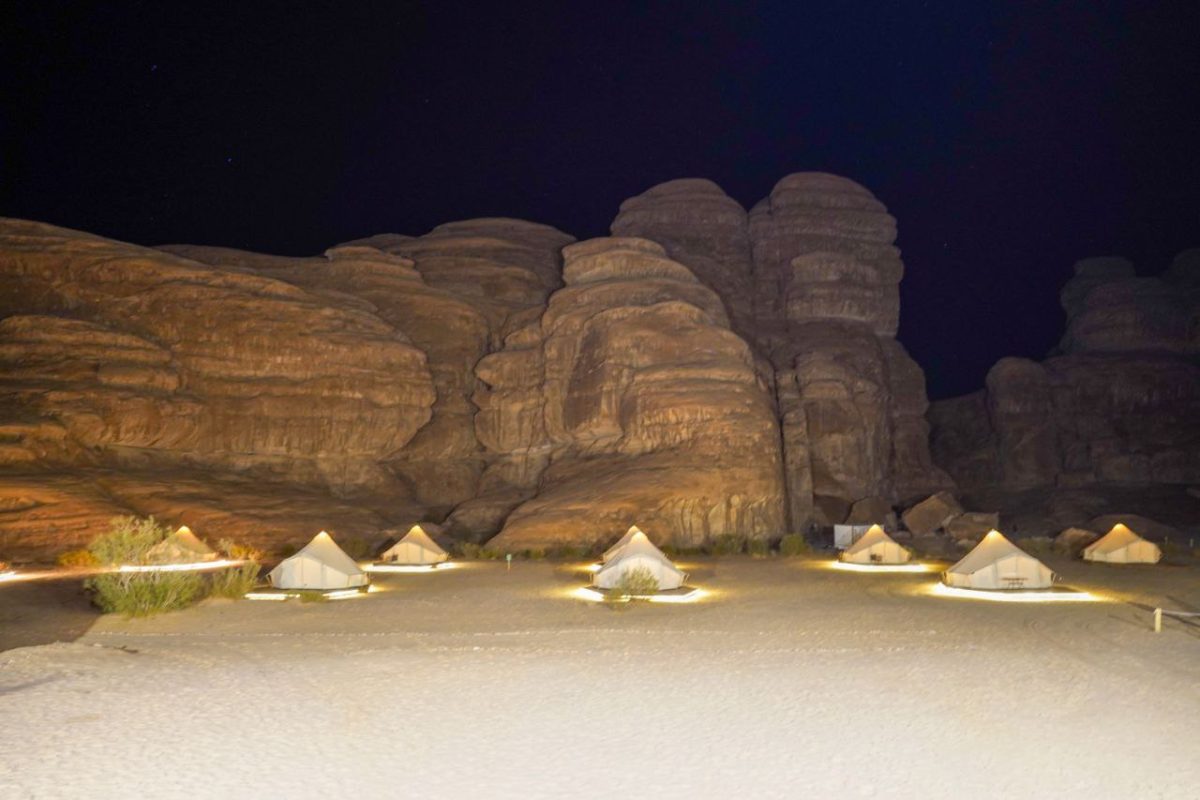
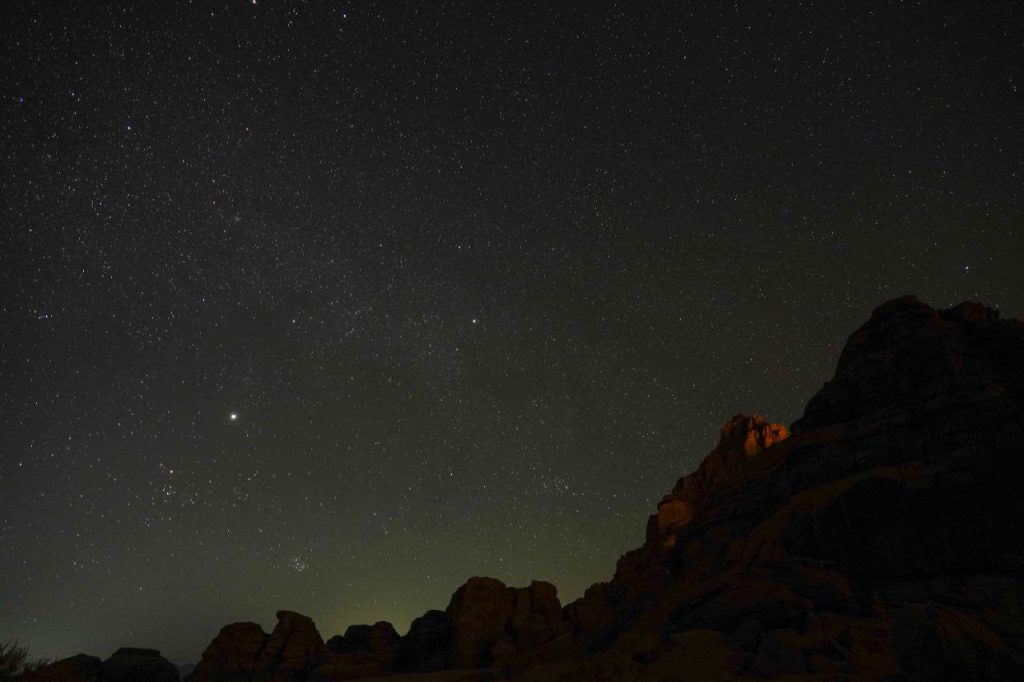
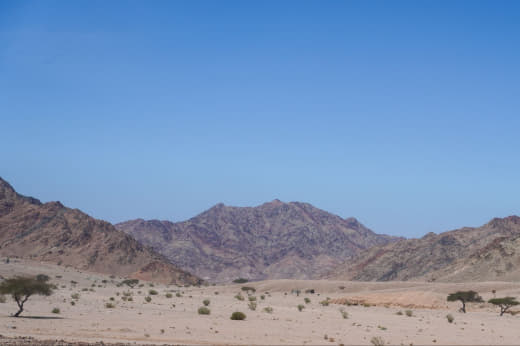
We’re at about 1,000 meters elevation, in the Hisma desert. We stayed in a desert camp, off road a couple kilometers. Still another kind of wilderness.
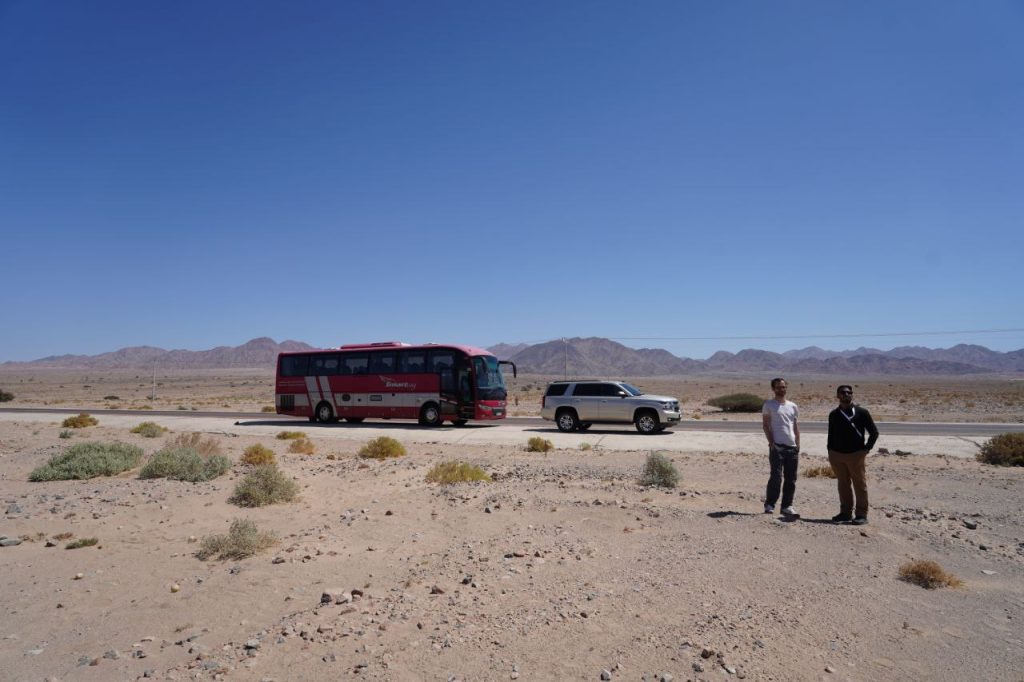
Driving through the wilderness to the highway to get to the bus.
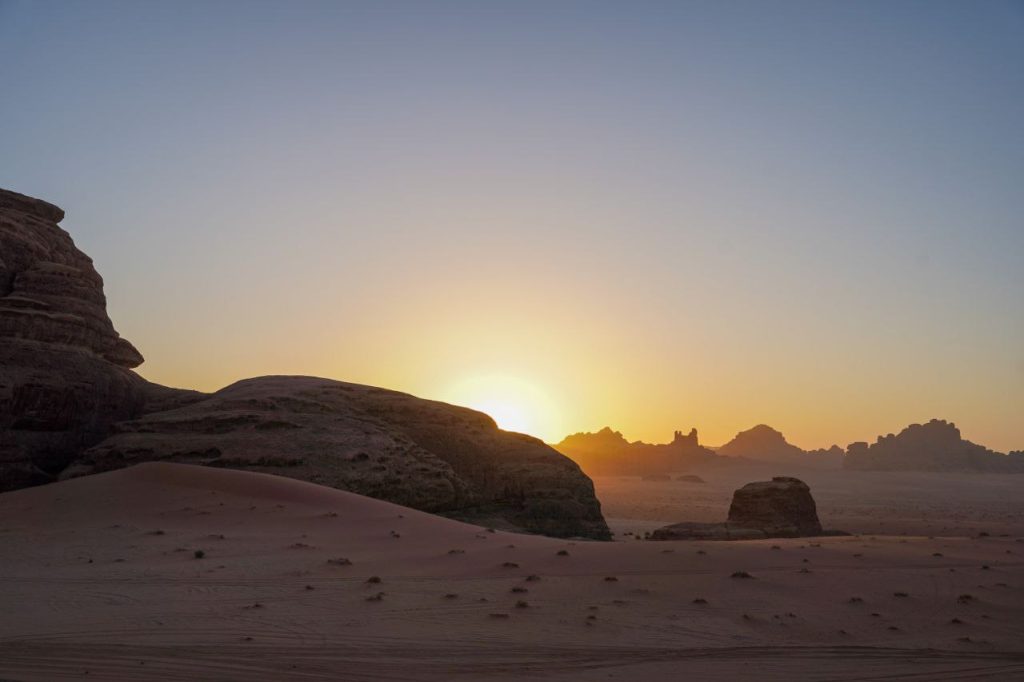
I went out at sunrise for photos.
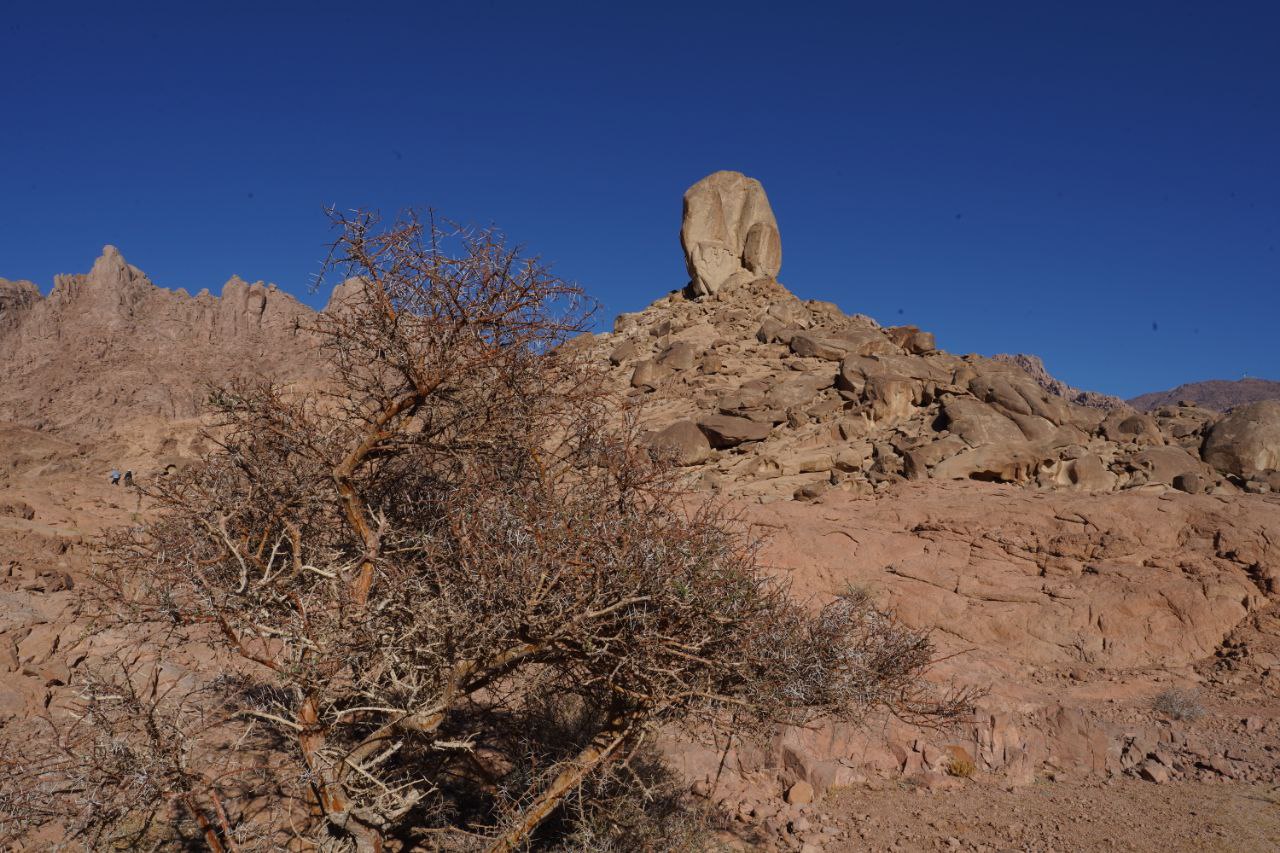
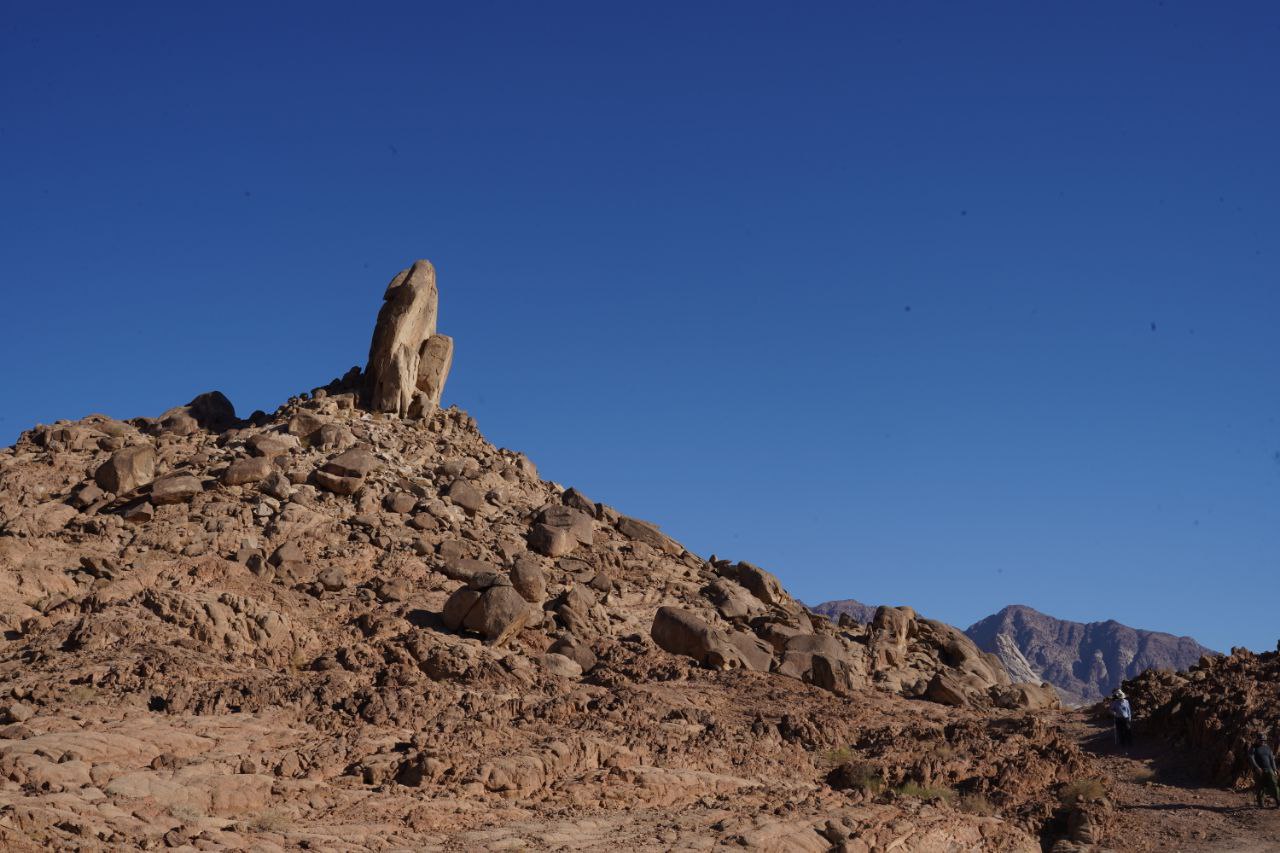
We saw a lot today. This is Shiprock.
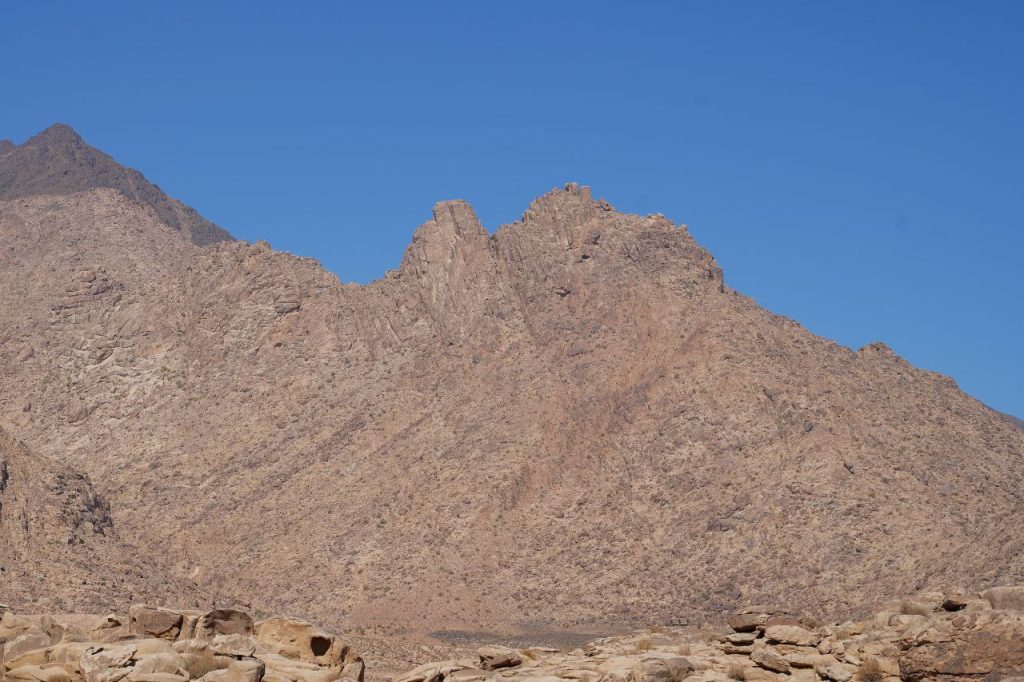
Jabal Maqla
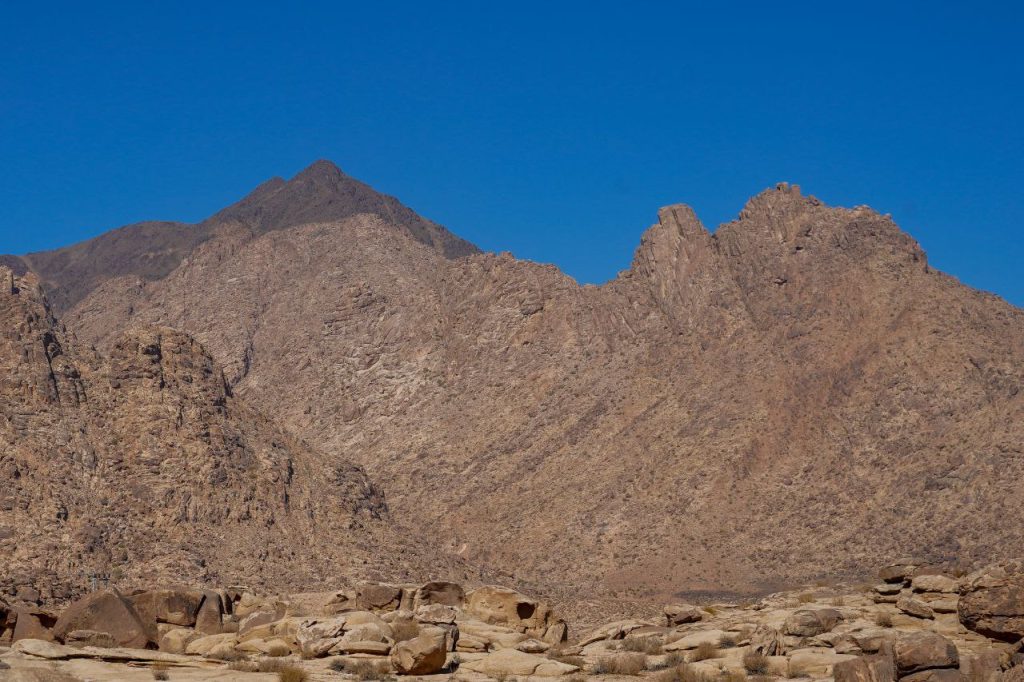
The locals call it Jabal Musa, or mountain of Moses. Maqla can mean quarry in Arabic. Some have said the mountain appears burnt. The peak is formed of basalt, a volcanic rock, not the granite of other peaks in the Lawz range.
The slightly lower peak next to Maqla has a cave. It is known locally as Elijah’s cave.
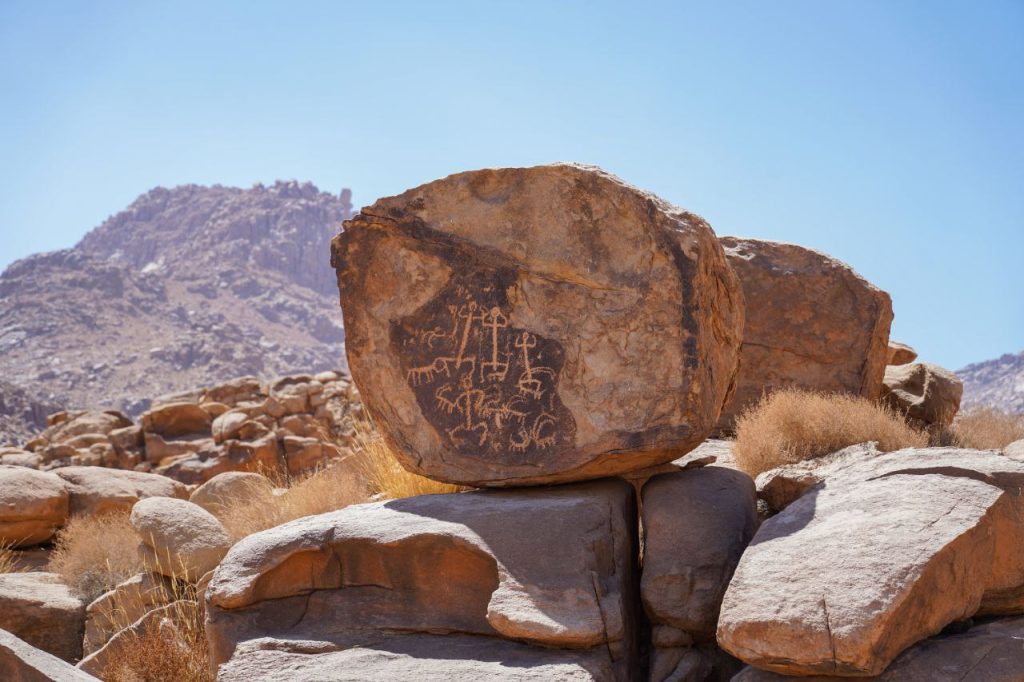
Petroglyph of dancing people.
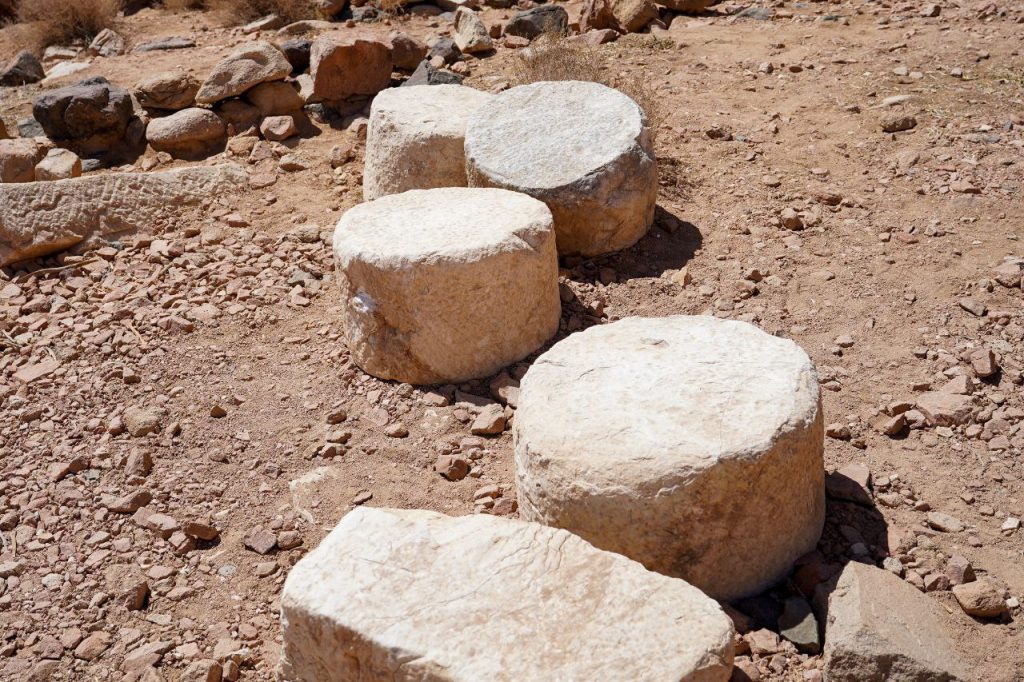
These marble pieces are from a tiny quarry on Maqla. The quarry is not large enough to have been a commercial enterprise. It must have been for a few special-purpose pieces. I wonder what kind of stone tablets Moses brought down the mountain.
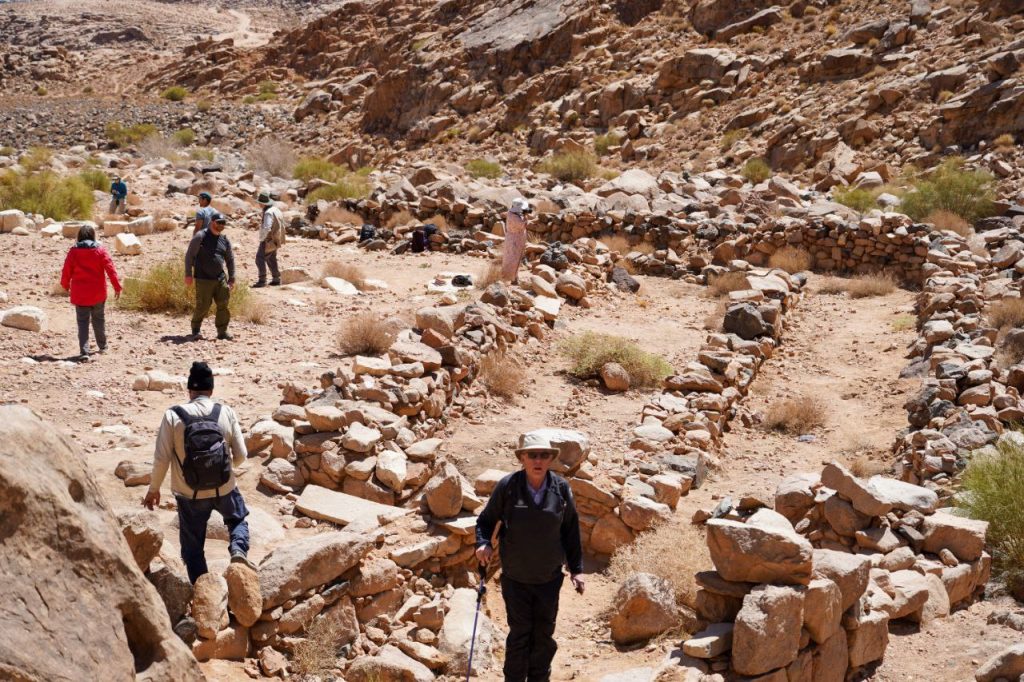
Next to the marble seats (that’s how we used them) are these stone structures that could have been cattle chutes.
The chutes have a bend so animals entering couldn’t see the other end. They ended at some large boulders.
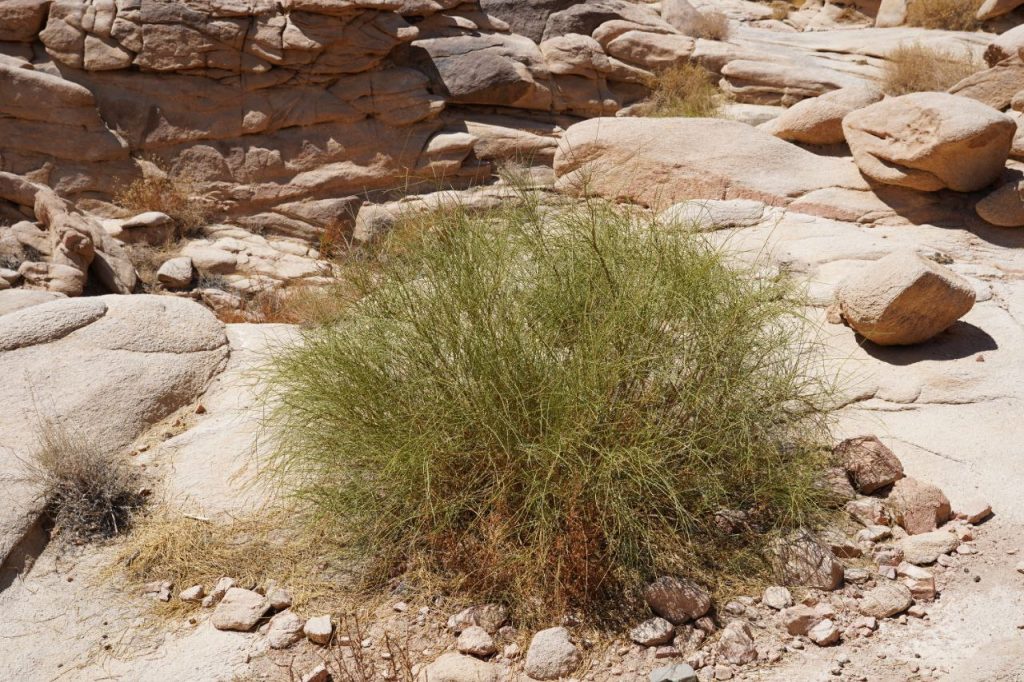
A broom tree, or bush, makes a hot fire.
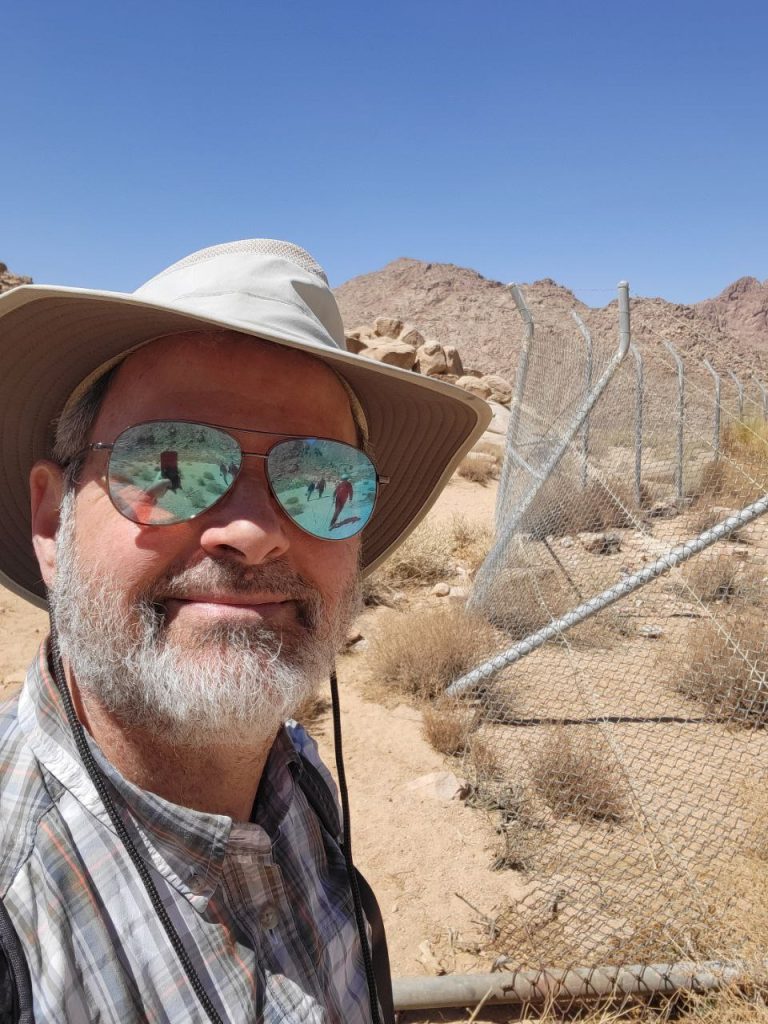
It’s wonderful that the area is now accessible. This fence used to block entry.
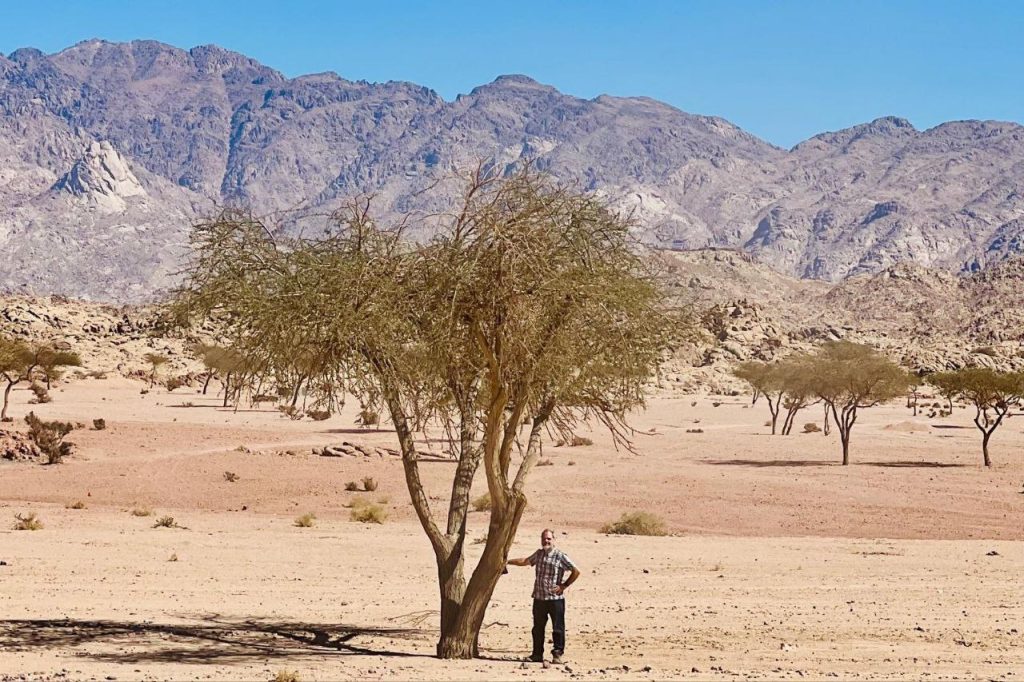
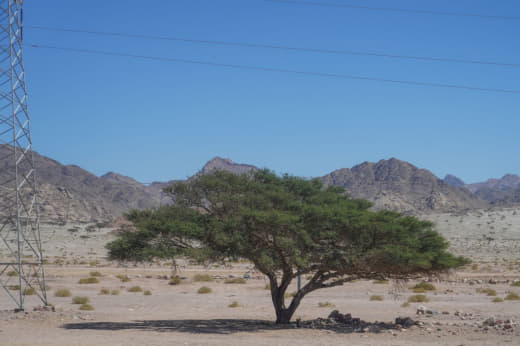
Saudi’s Acacias are bigger than those in Israel.
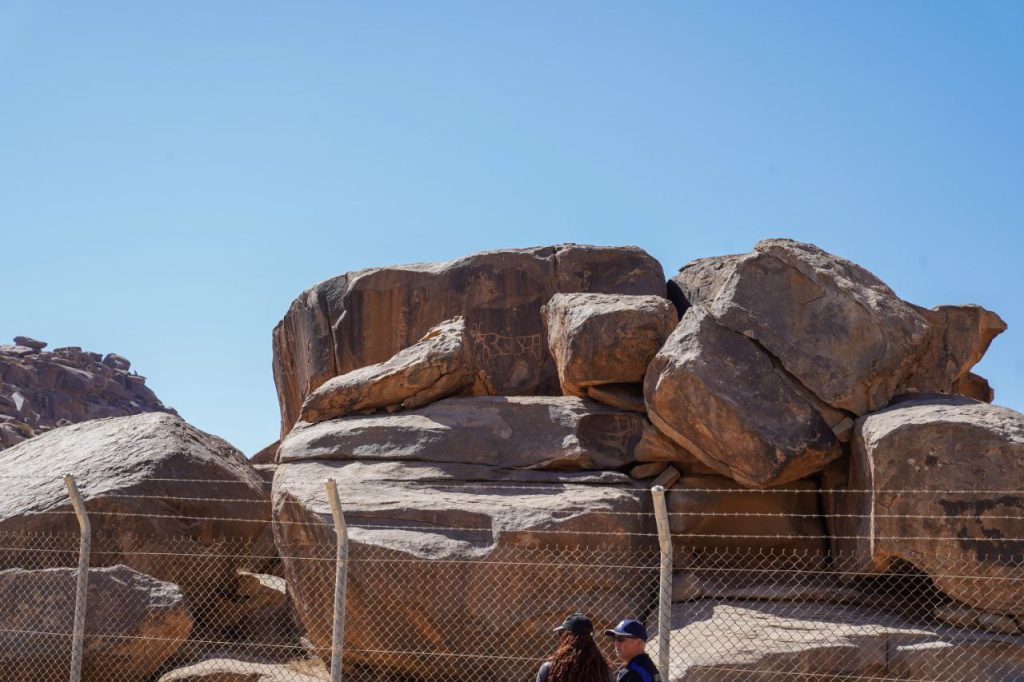
The “high place” is officially recognized as an archeological site. That’s why it has a fence.
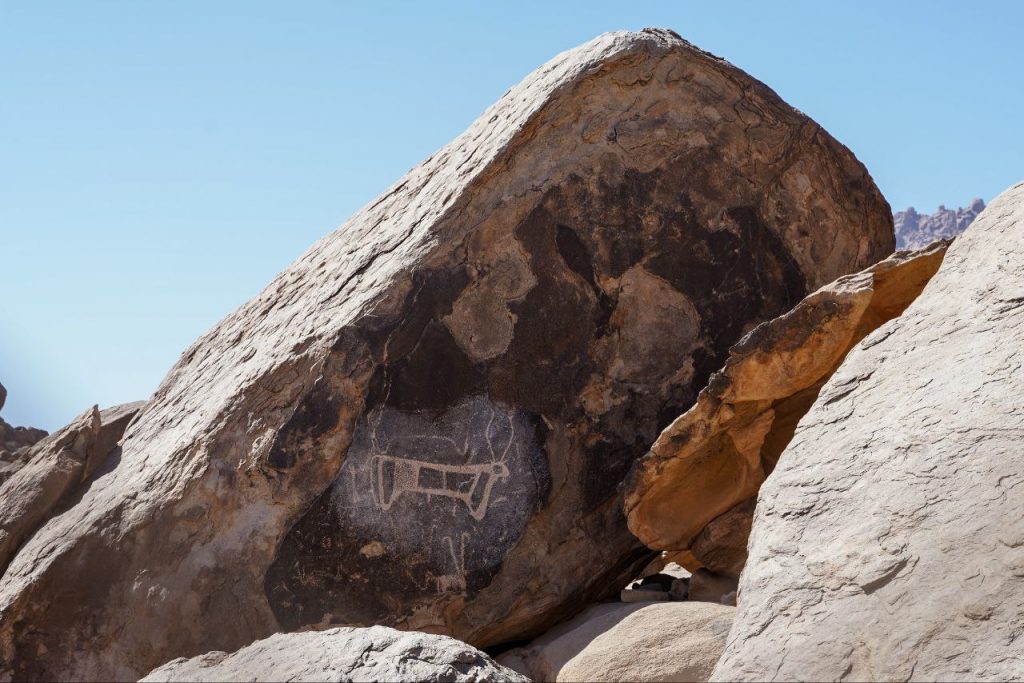
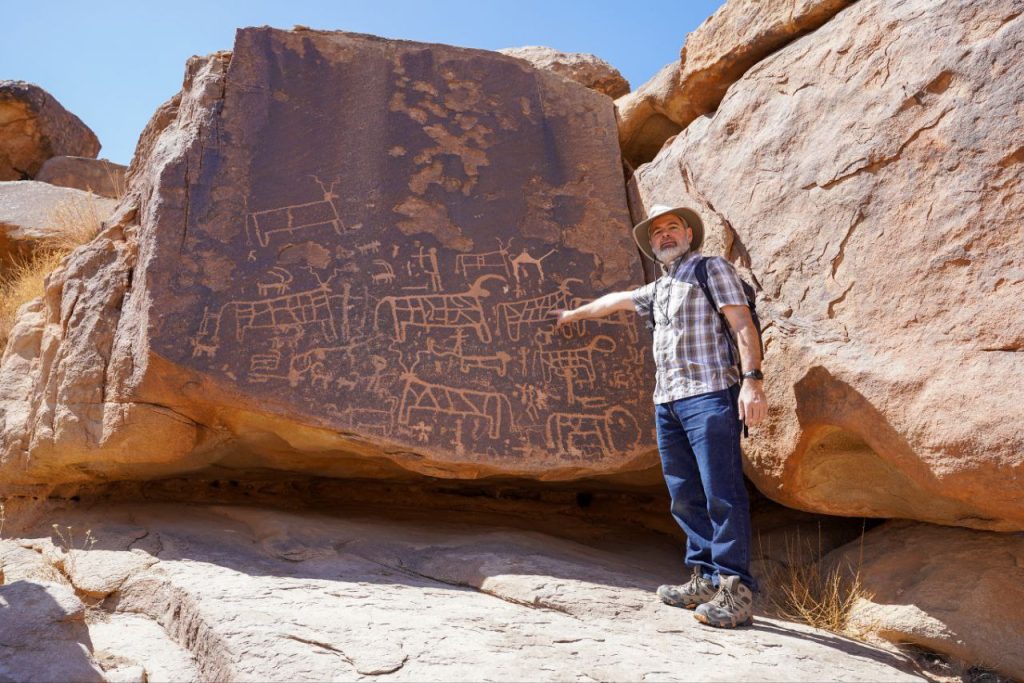
Petroglyphs with Egyptian influence. Age estimates vary considerably but include late Bronze Age.
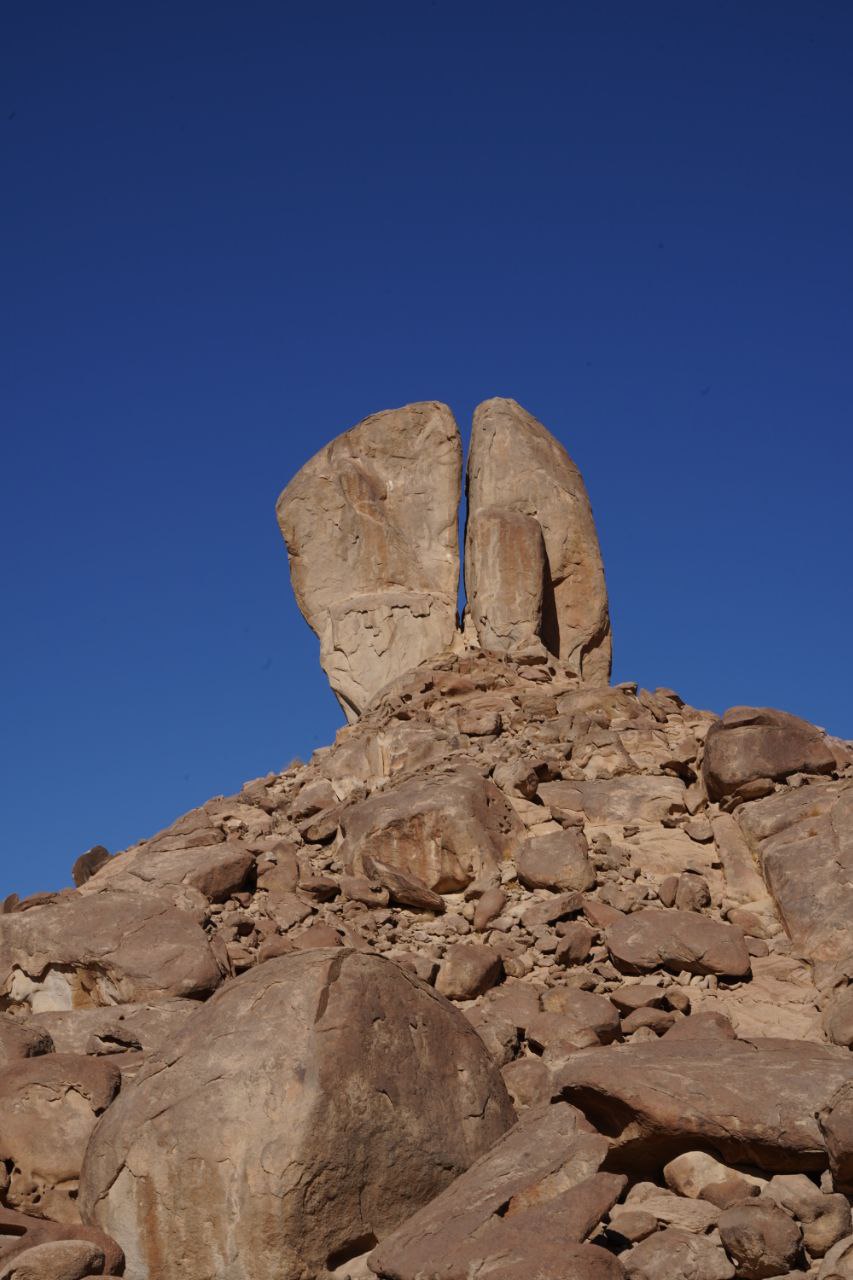
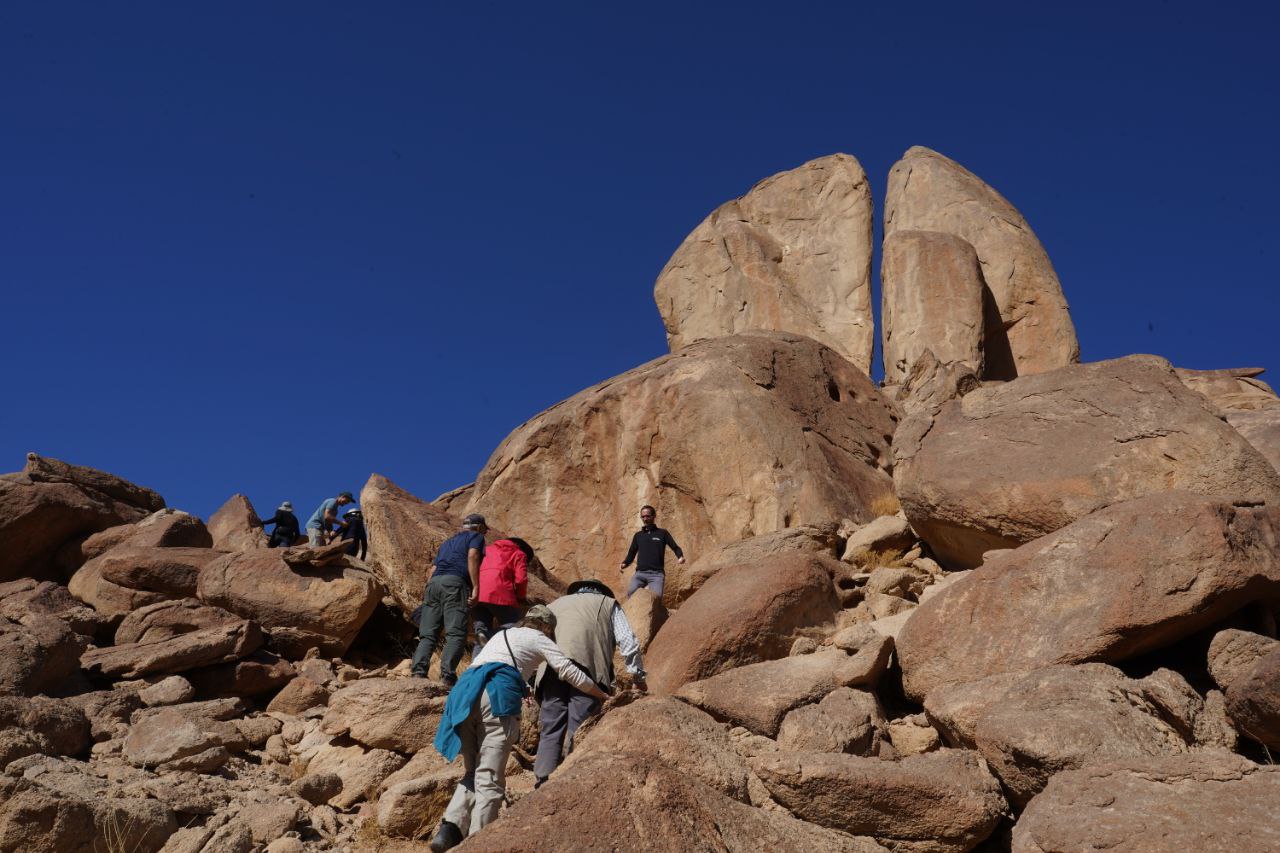
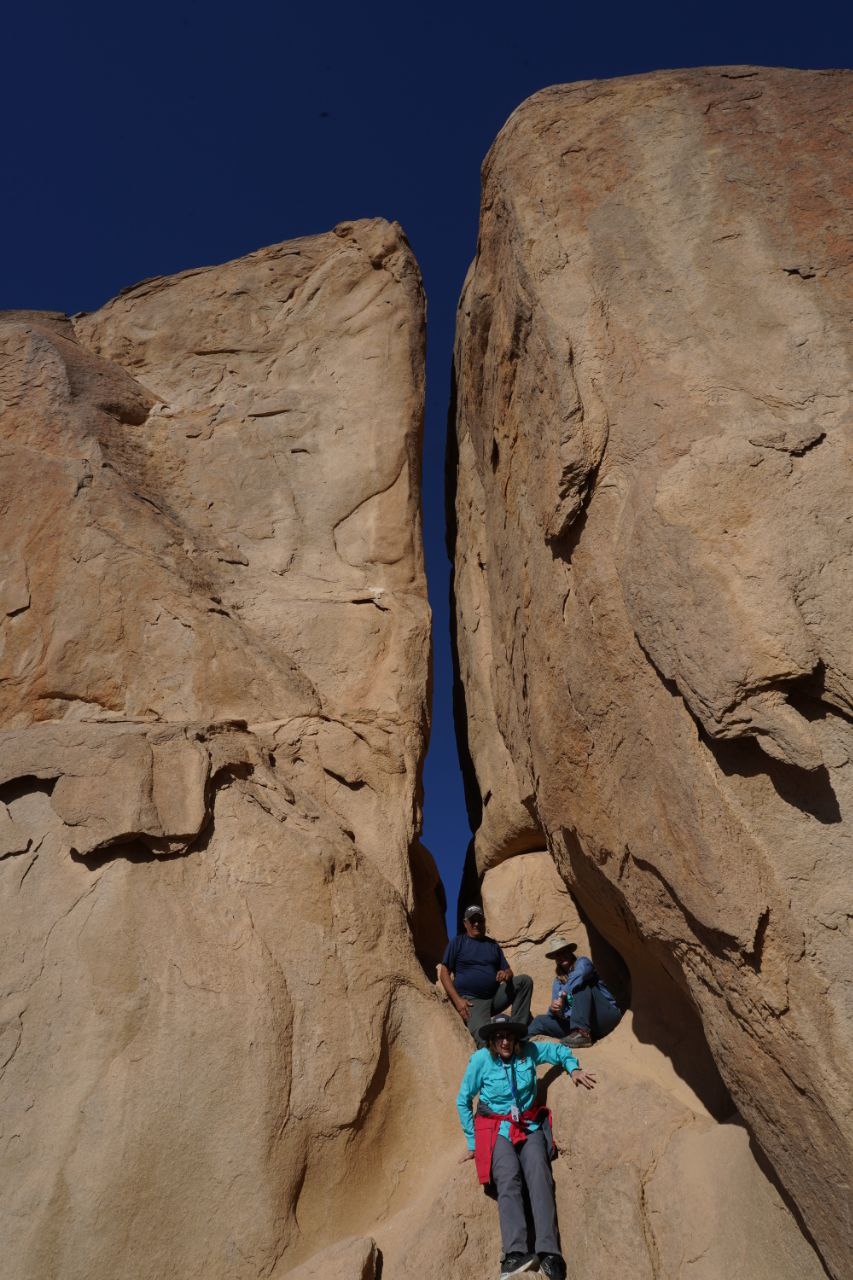
Highlight of today, the split rock Horeb. Exodus 17, Psalm 78
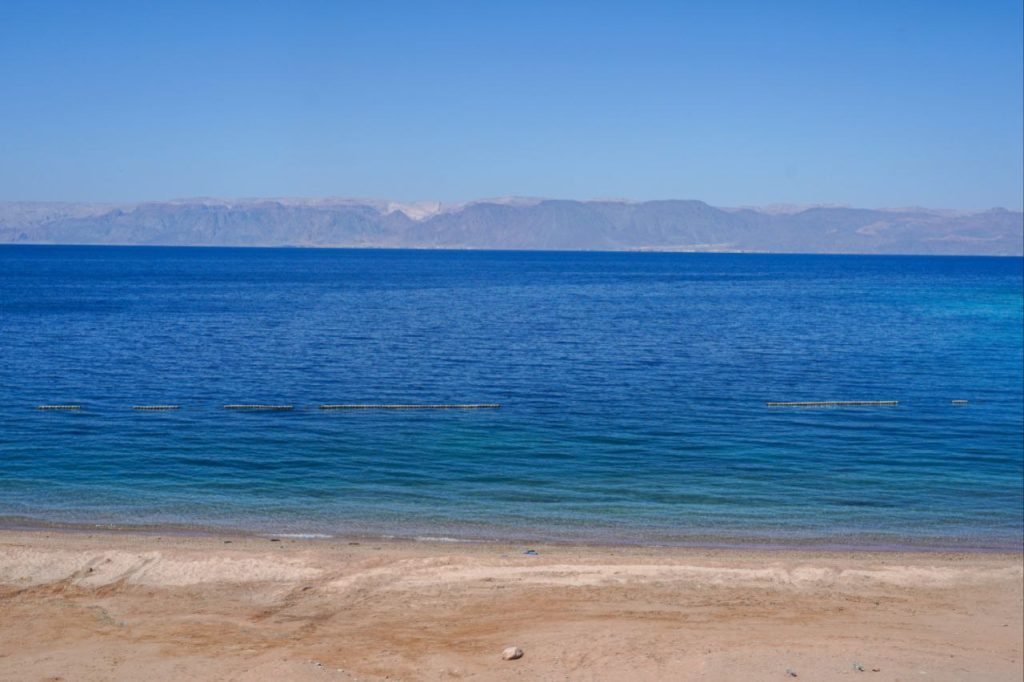
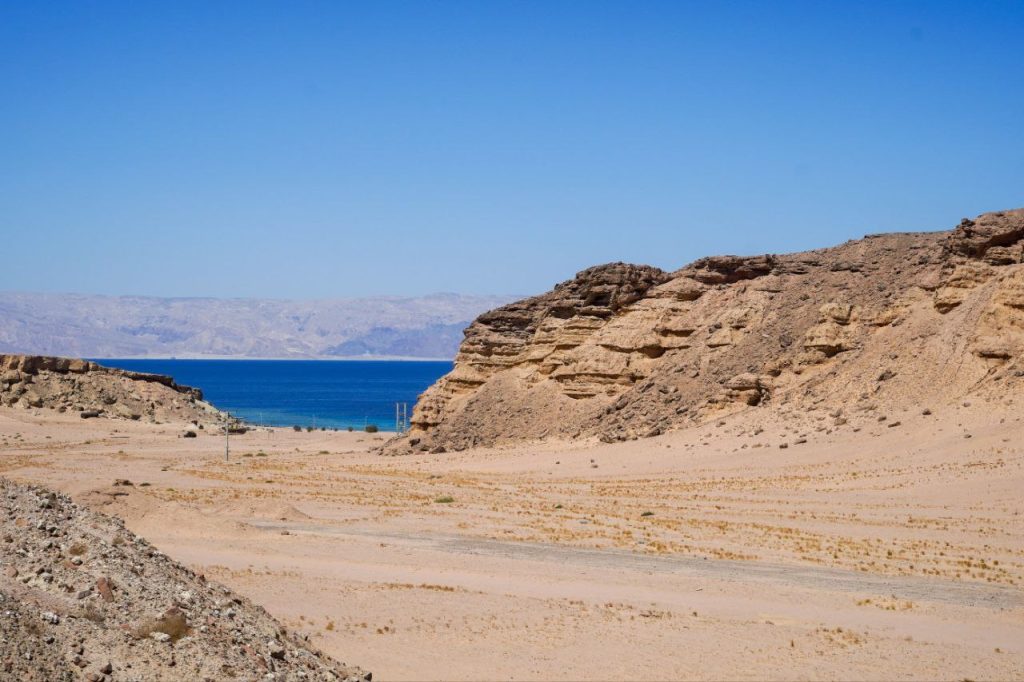
We’re across the border. We can see the mountains of the Sinai Peninsula across the water. This isn’t a good place for a large group of people to cross even with the water removed.
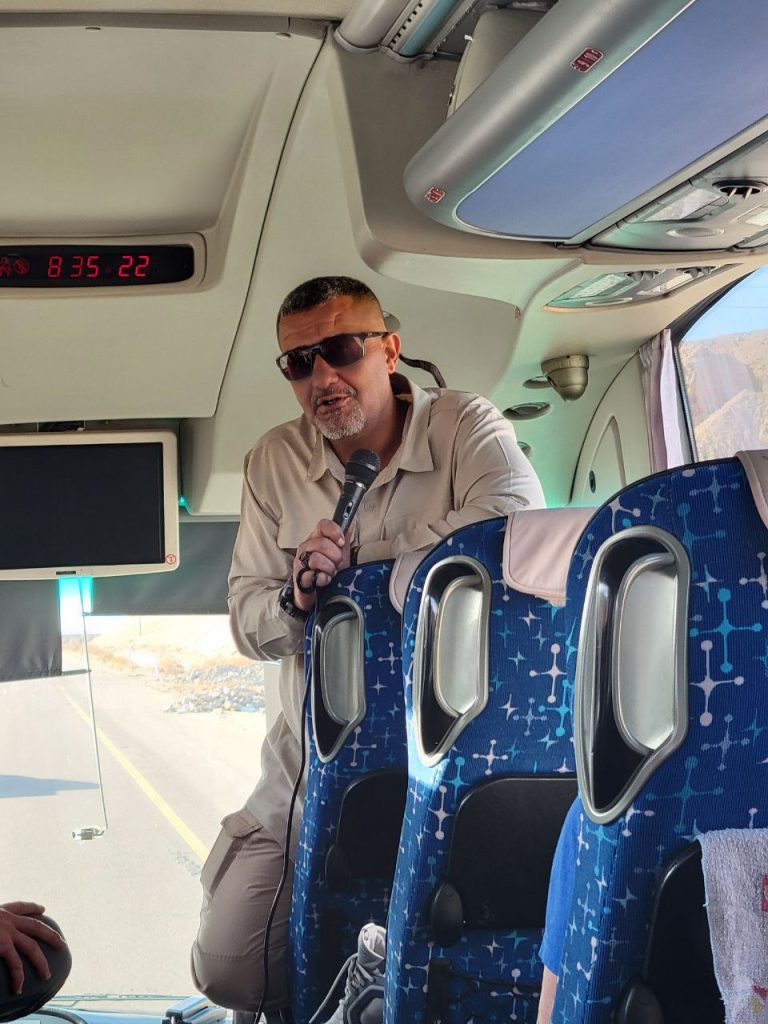
Mah-Moon hopes we won’t wander in the wilderness for 40 years. He says we’re the first tour group going into Saudi Arabia
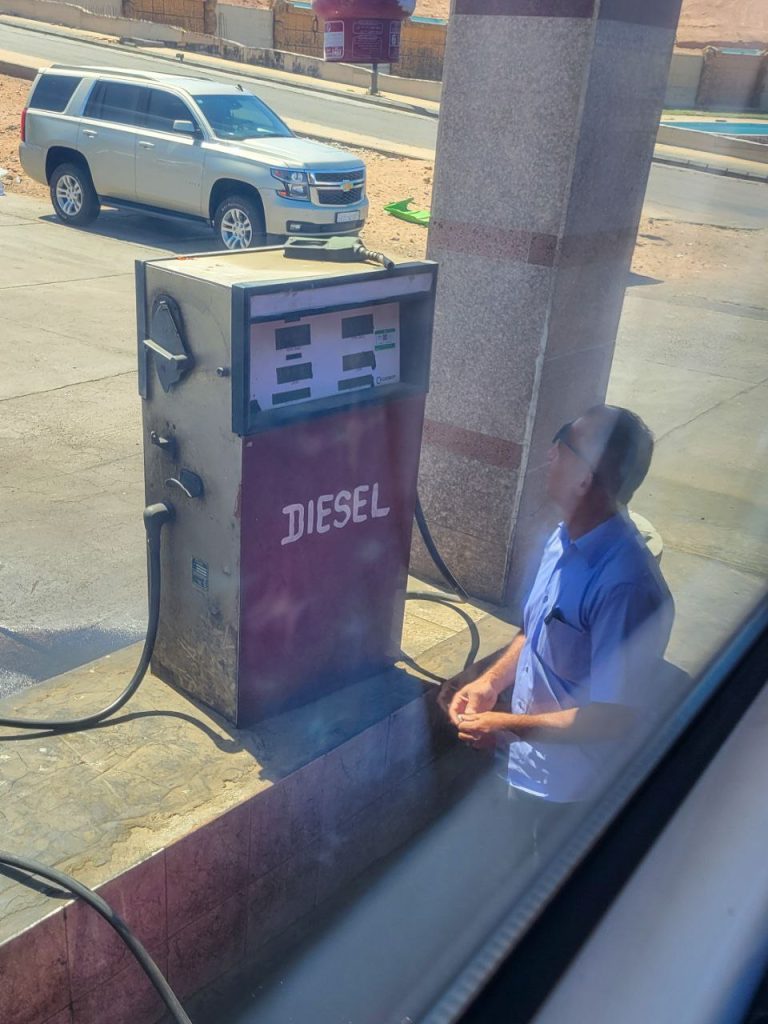
Diesel fuel price is equivalent of about $1.50 a gallon.
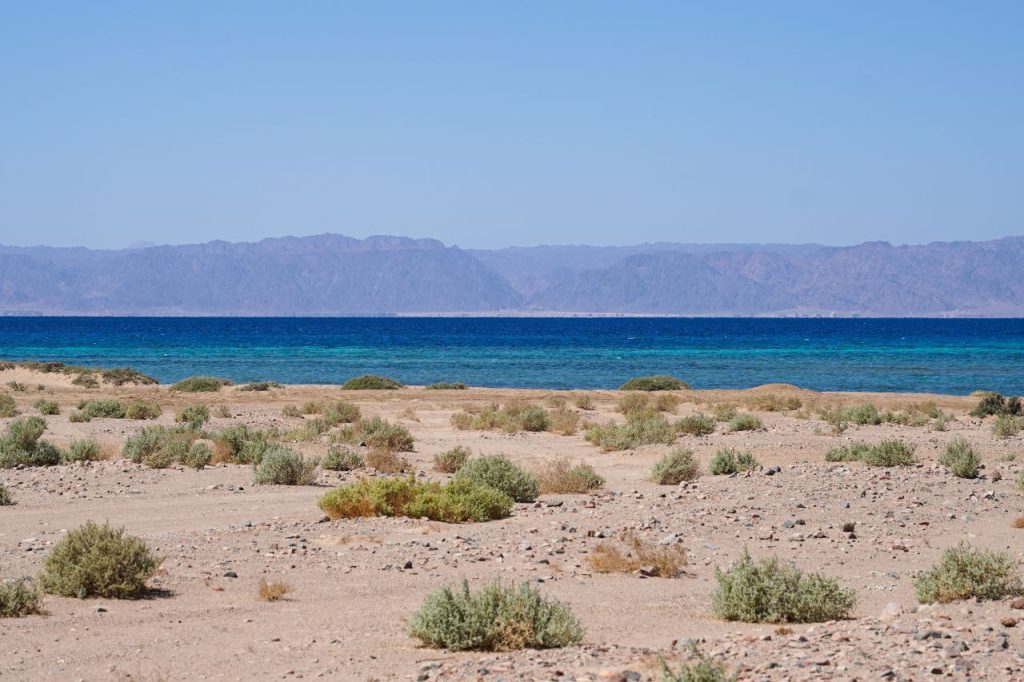
Nuweibaa Beach across the Red Sea. Notice the canyon through the mountains, and the expanse of beach. The crossing here would have been a gradual slope for crossing, but also “the depths” that drowned an army.
We have an escort vehicle, apparently.
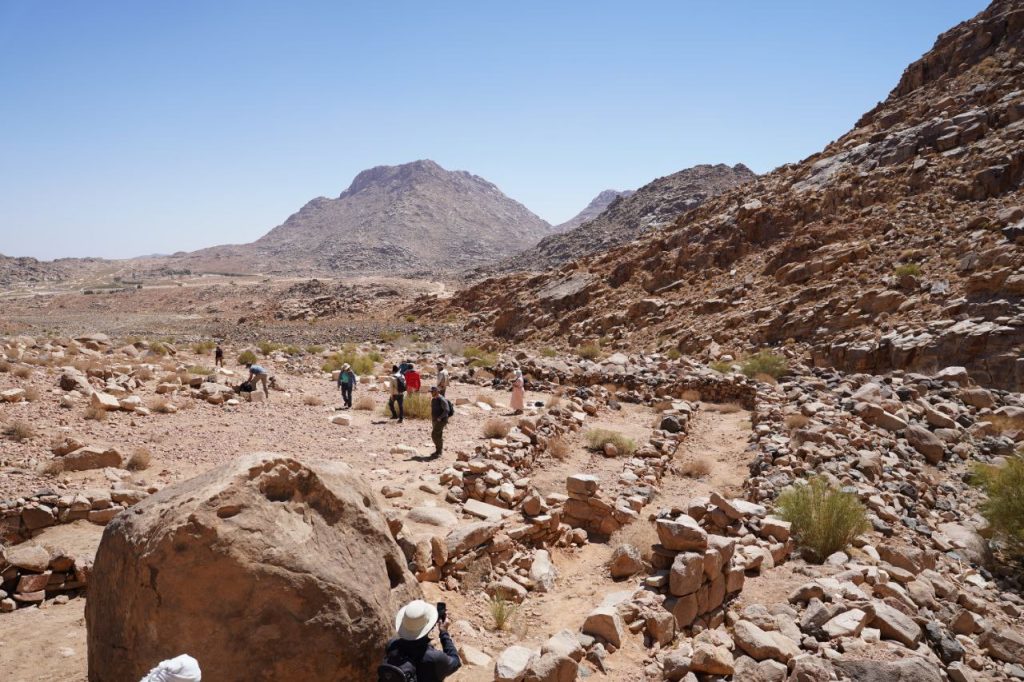
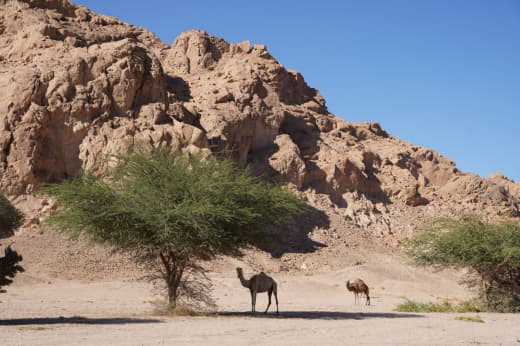
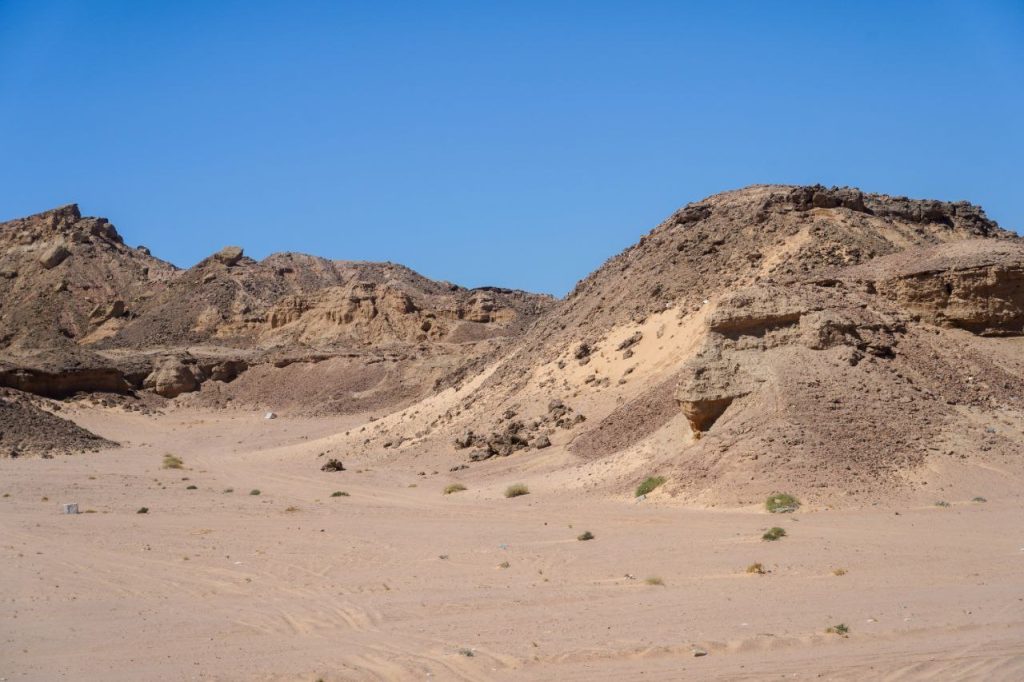
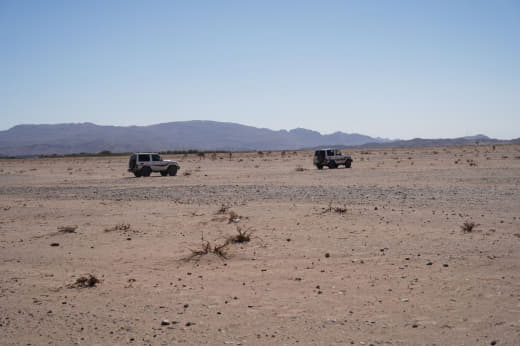
We’re seeing broad, flat expanses of wilderness punctuated by mountains. There are plenty of Acacia trees, which factor into the biblical story.
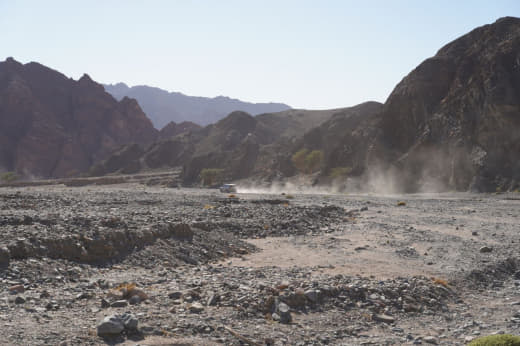
The modern road follows the ancient wadis. We’re on the likely Exodus route.
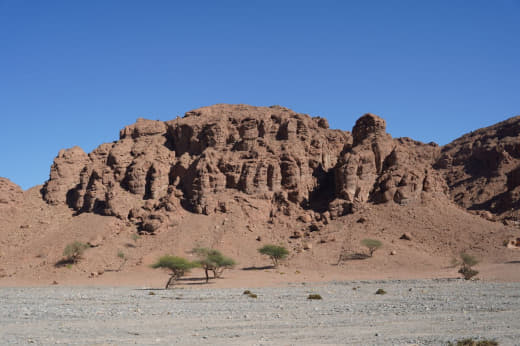
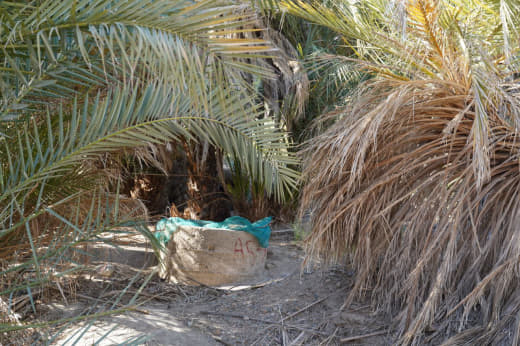
Some of the Acacia trees here are larger than what we see in Israel. I see some big enough to build the ark of the covenant or altar of incense from one tree.
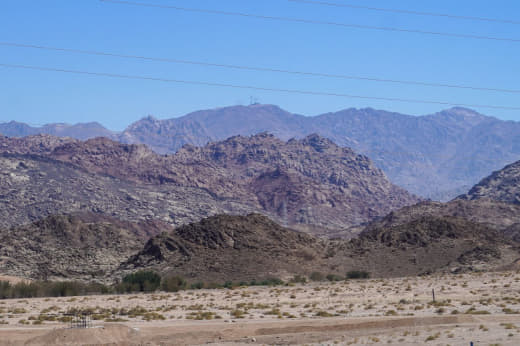
Our first glimpse of Jabal el Lawz. The distant peak with the towers.
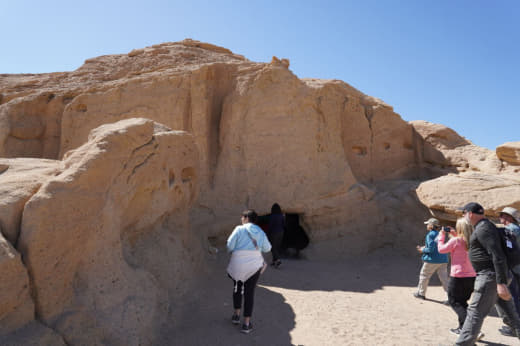
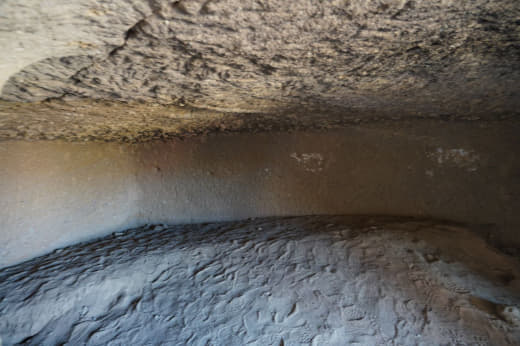
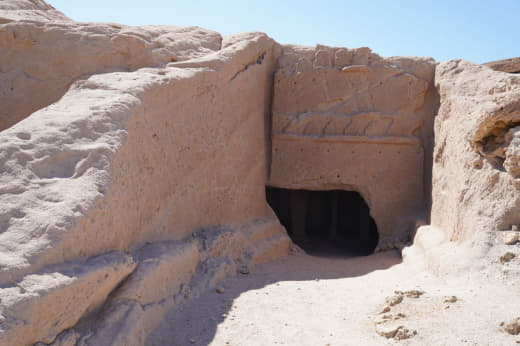
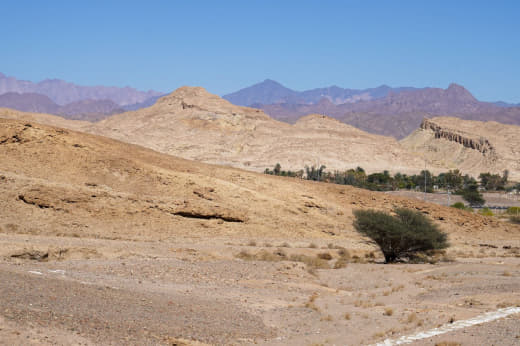
Jethro’s caves
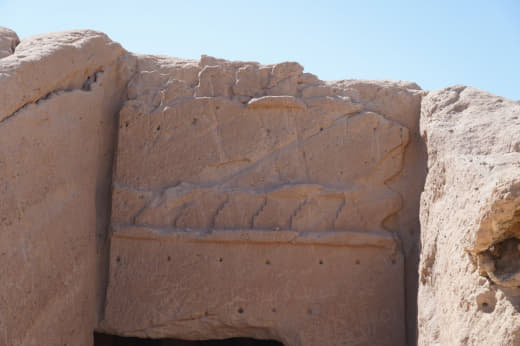
Seems like the Nabateans updated the tombs when they came along.
Lawz from the other side
Jeep ride to Elim?
Some of the harshest environment on earth
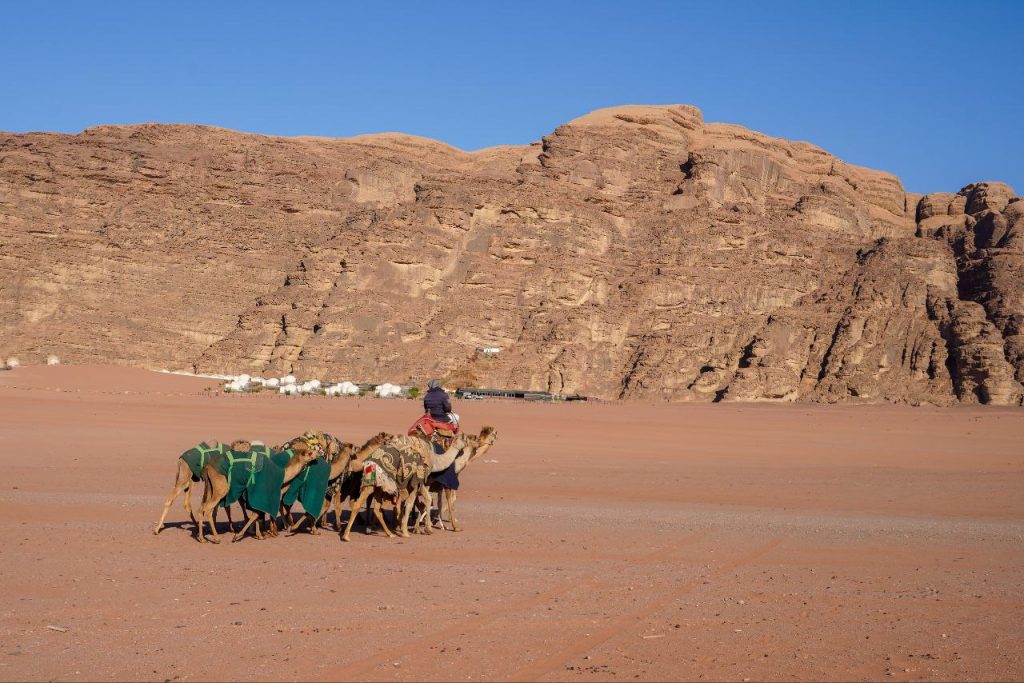
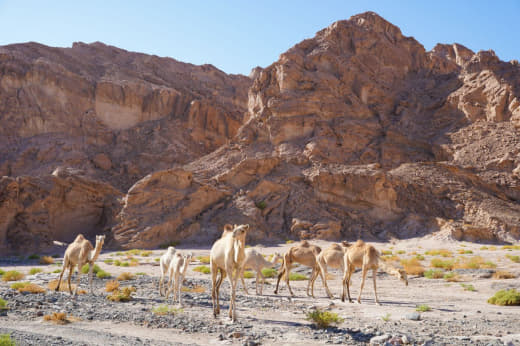
Free range camels, know where their home is.
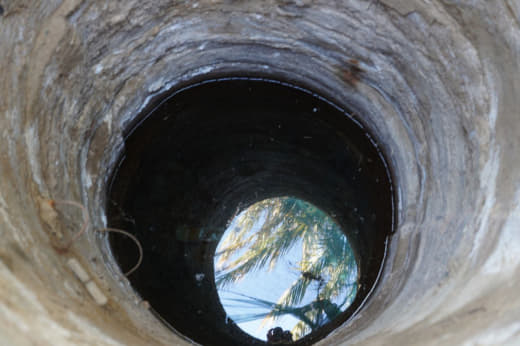
On Marah and Elim. Exodus 15
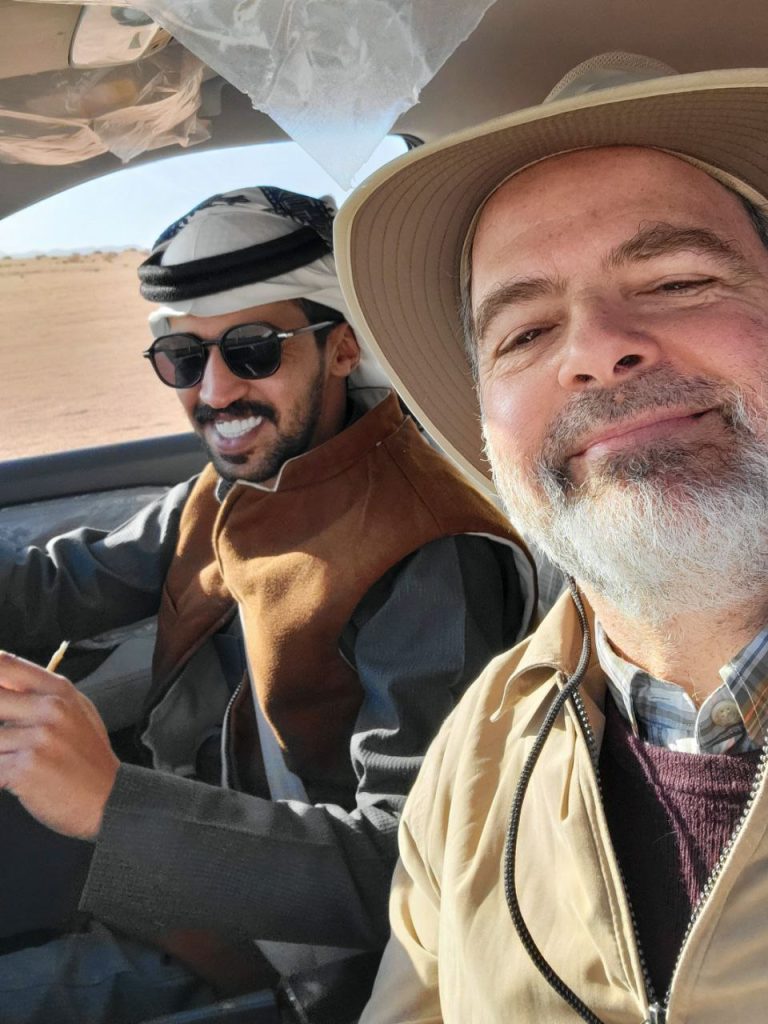
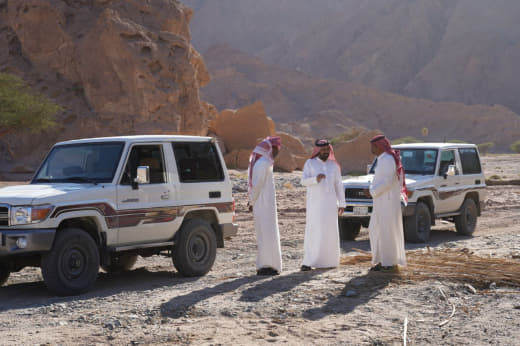
Our chauffeurs
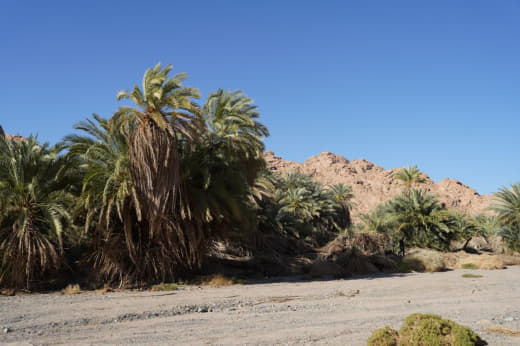
Oasis in the desert
We drove through another wilderness south of Al Bad’a. More flat expanses and fewer mountains. Wilderness of Sin?
Click the following links to see 360 pics from Petra
We spent the night in Wadi Musa, valley of Moses. This mountain is known as the mountain of Aaron, where he was buried. Mount Hor?
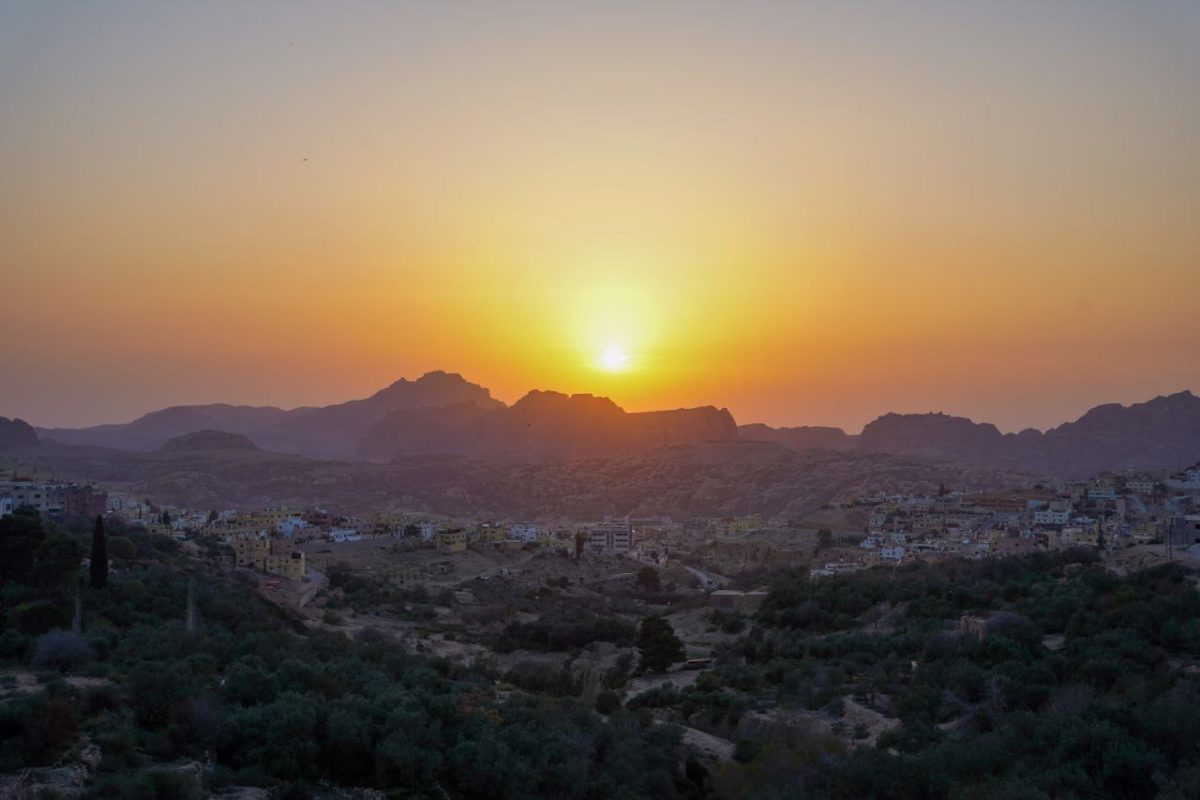
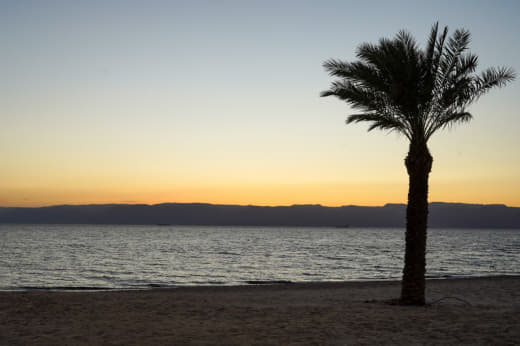
Sunset at Aaron’s mountain last evening. There’s a tomb at the top to commemorate Aaron. Tradition says this is Mount Hor where he was buried. Josephus connects Petra to Mount Hor.
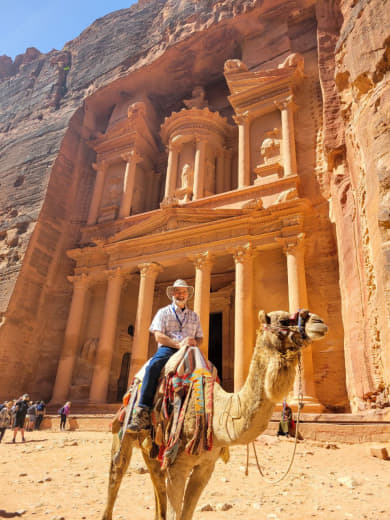
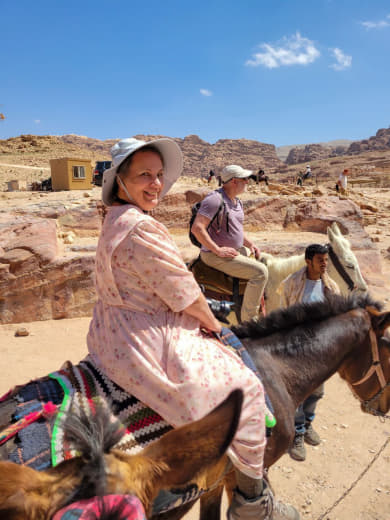
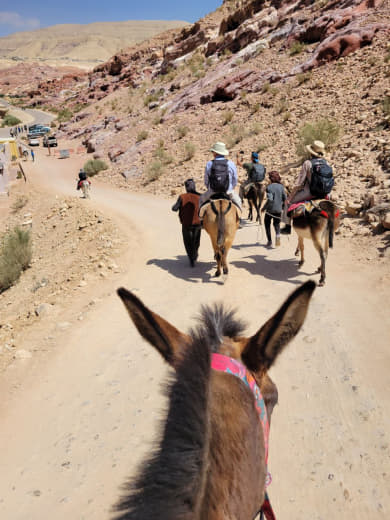
Camel ride in Petra 😁
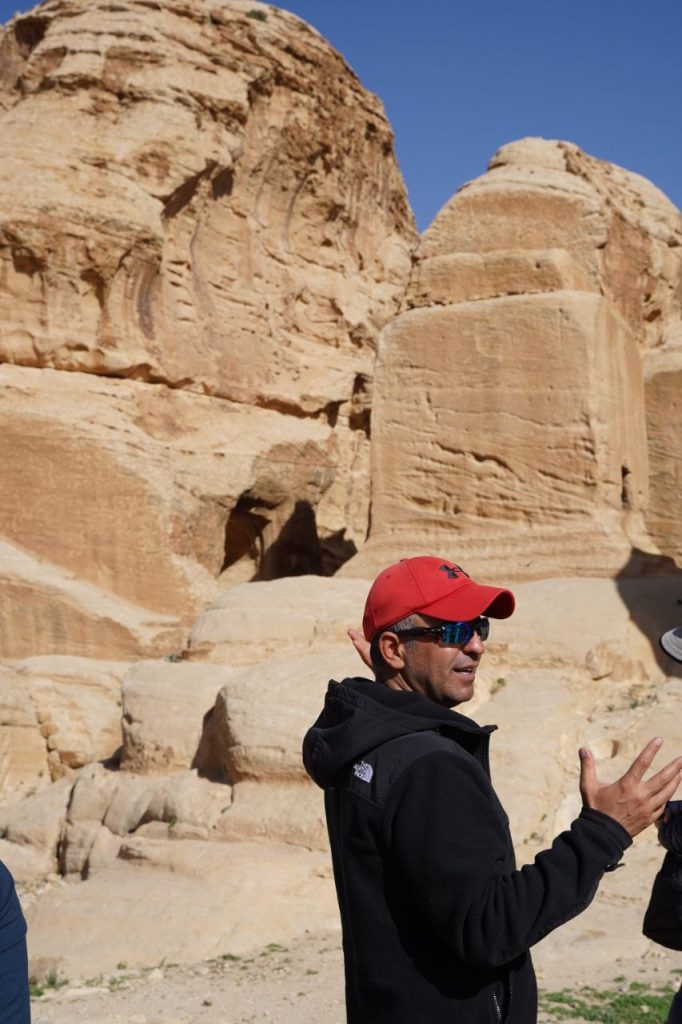
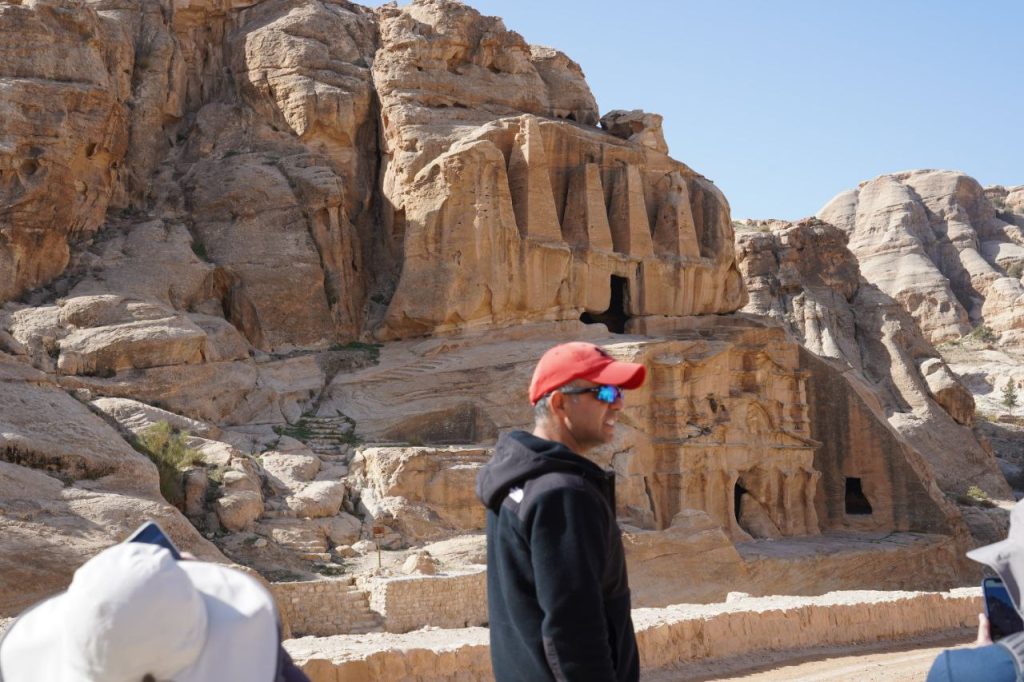
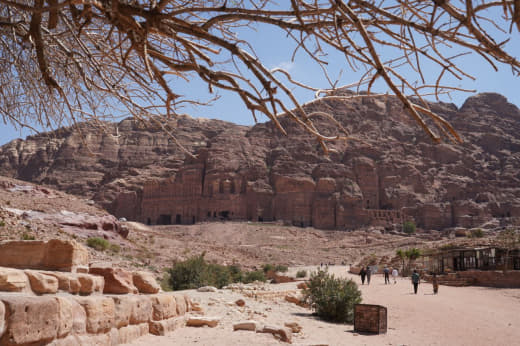
Petra is an amazing place. We saw Nabatean, Roman, and Byzantine stuff. Mohanned, our guide, grew up here. (Apparently I had his name wrong yesterday.)
Mo believes there are several civilizations still uncovered.
~~~
The Edomites took this area from the Horites. You’ll recall that Edom wouldn’t allow Israel to travel through their land. Right now we’re on the King’s Highway with no Edomites to stop us.
The Nabateans were here from about second century BC until Rome took over.
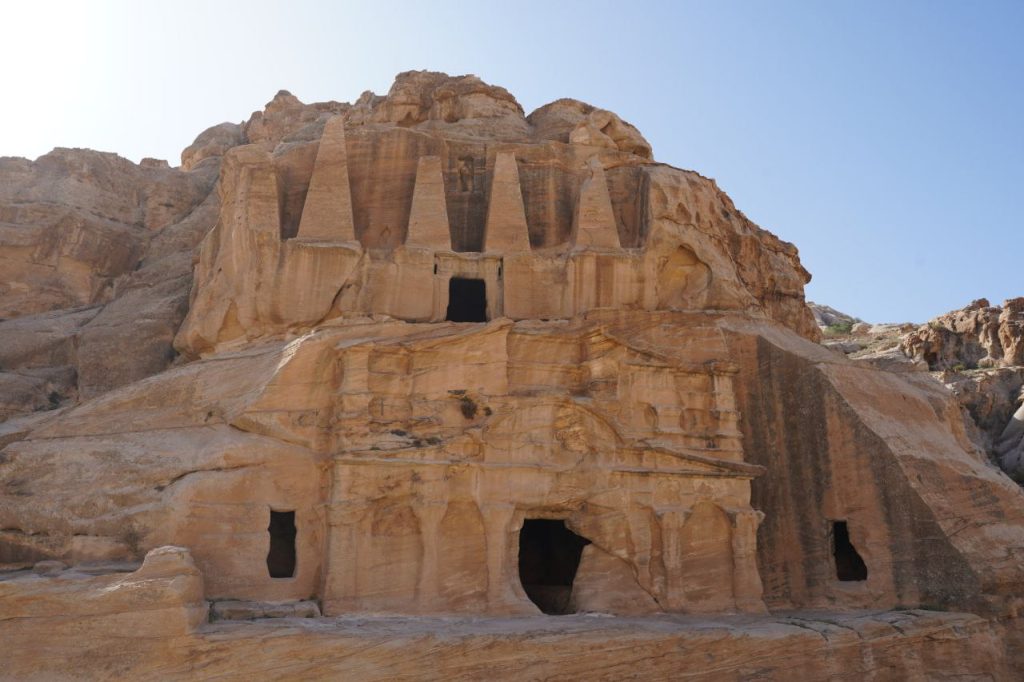
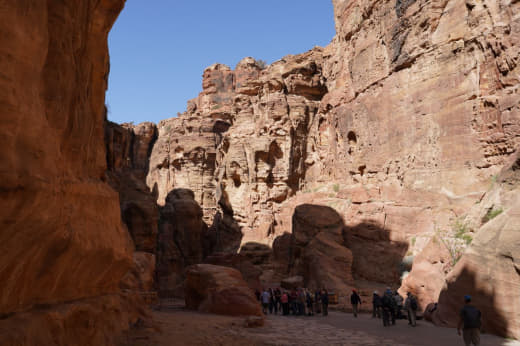
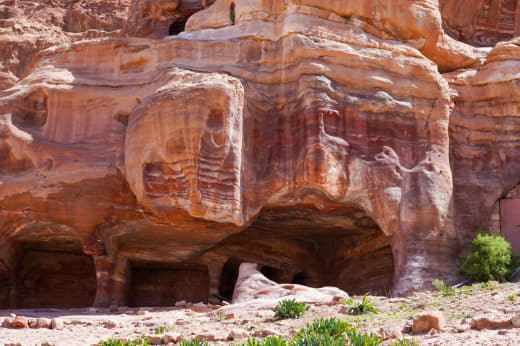
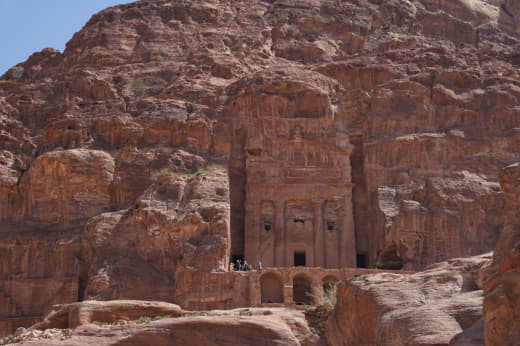
They carved tombs and temples in solid rock.
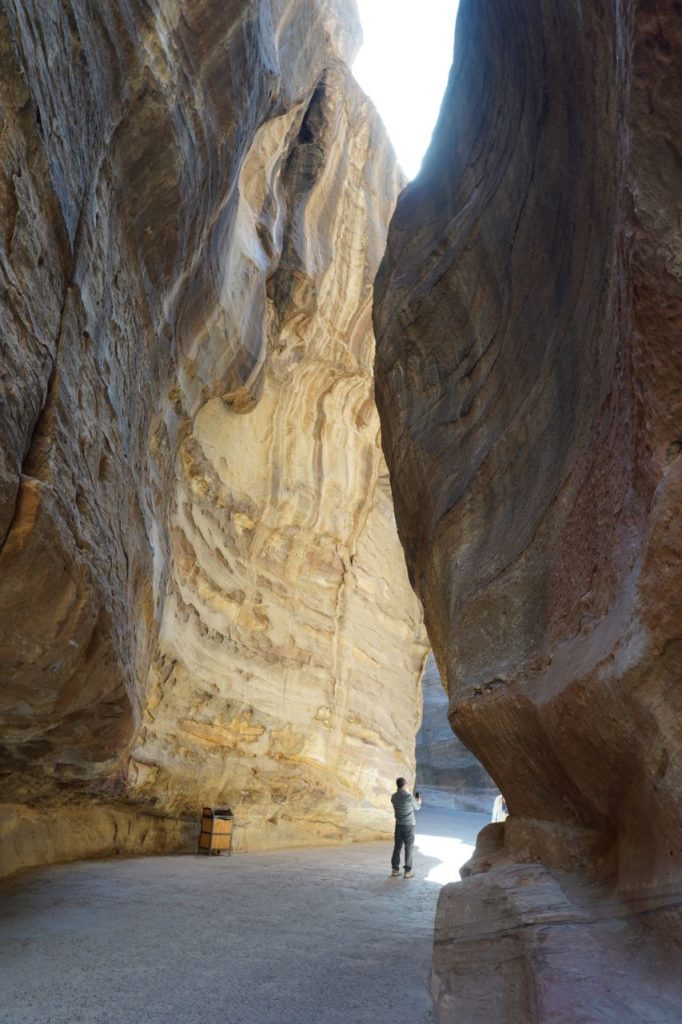
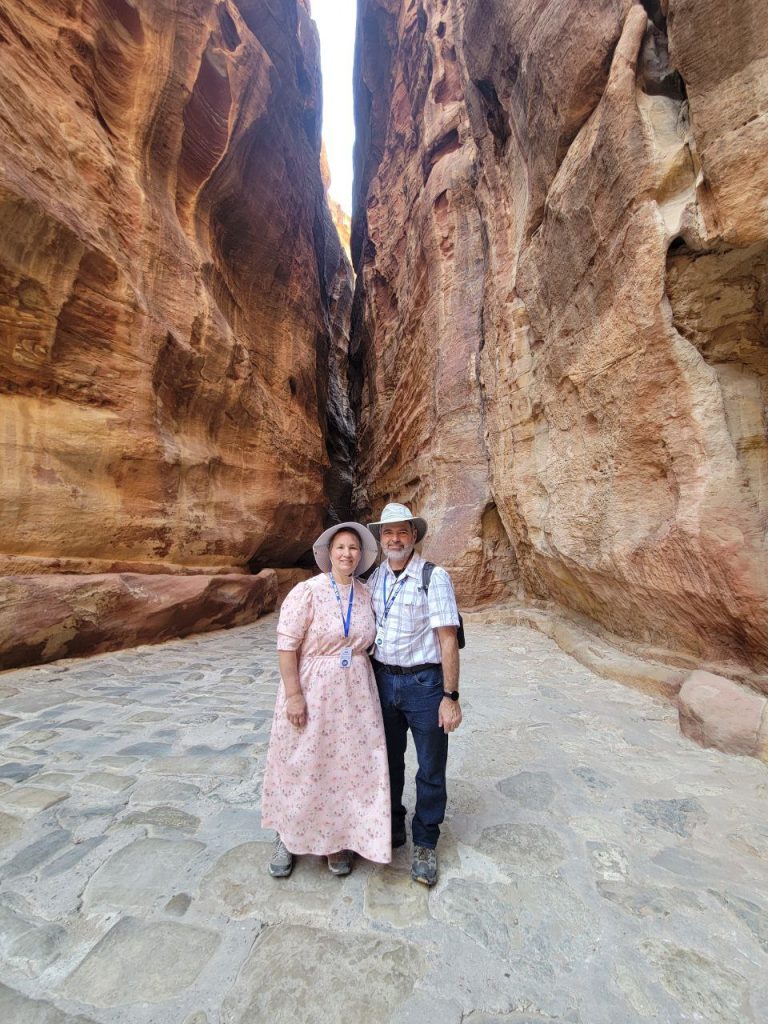
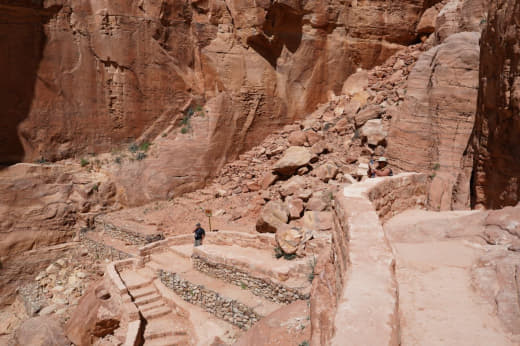
The walk through the canyon was spectacular. I have 360 footage, maybe I can share it later.
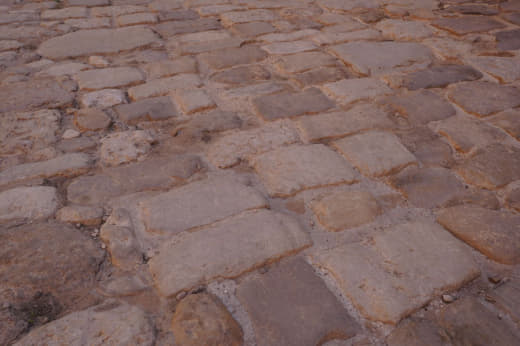
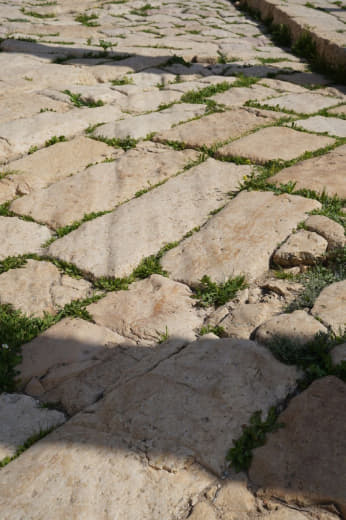
Some Roman road is still here.
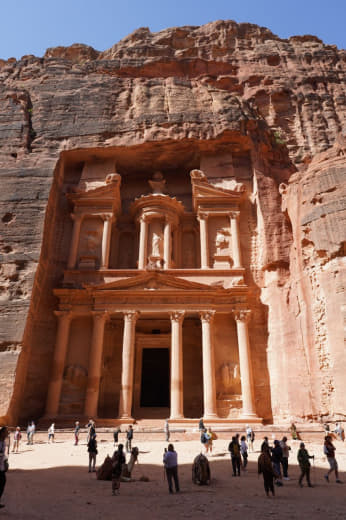
Known as the “treasury”, but Mo believes it’s a temple. We didn’t go inside. Apparently that’s available for $1,500.
I took an extra hike for another vantage point.
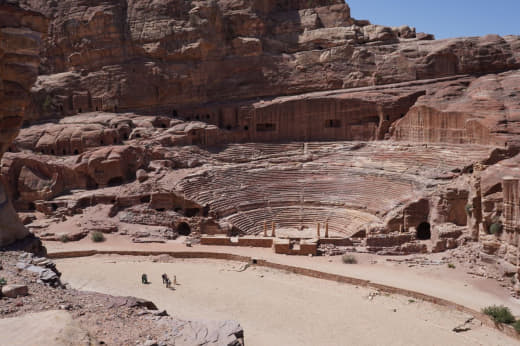
Roman
This one was used as a church in Byzantine times. Rich said it’s quite cavernous inside with wonderful reverb for singing. We didn’t have time for that today.
Riding out of ancient Petra.
We’re here at Aqaba looking at Exodus 13:17 & 18, and other scriptures. God took Israel by way of the wilderness to the Red Sea. After they crossed, they were still in a wilderness. What is known as the Sinai Peninsula today was under Egyptian control. Israel never saw Egyptians after they crossed.
We’re at the juncture of Jordan, Israel, Egypt, and Saudi Arabia. Tomorrow we plan to go into Saudi Arabia. Things become less certain. We didn’t get all the permits we wanted. Your prayers are appreciated.
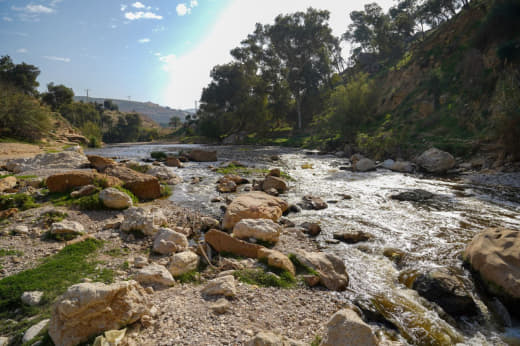
River Jabbok, where Jacob wrestled with God. Genesis 32. We’re in the northern part of Jordan, on our way to Jerash, a Decapolis city.
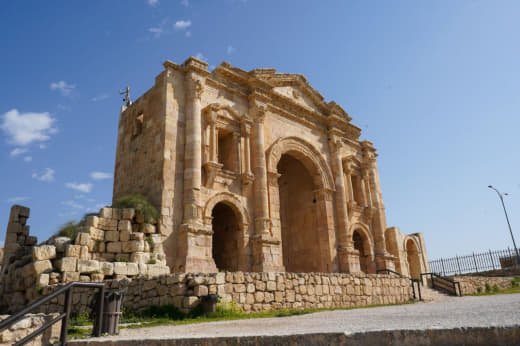
The Arch of Hadrian is outside Jerash. It was built in 129 AD.
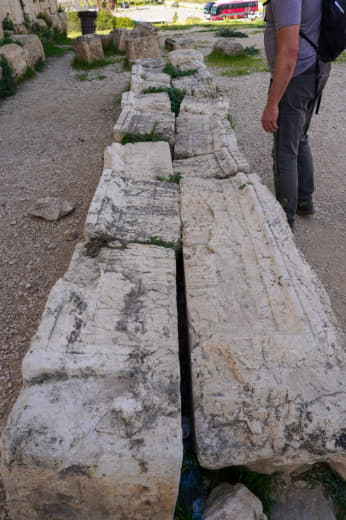
Greek inscription found near the arch. Greek was the universal language of trade.
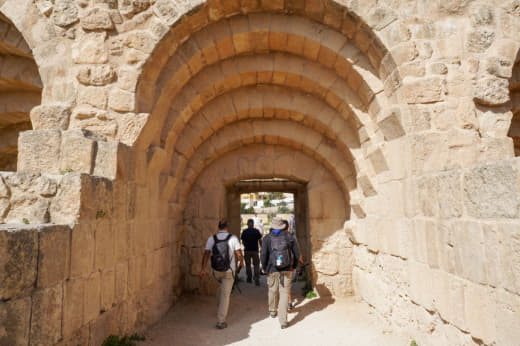
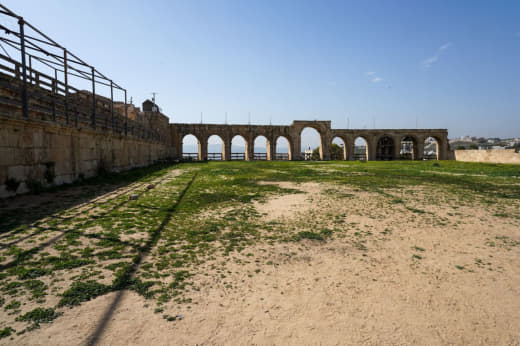
Entering the hippodrome, outside the city.
The hippodrome was the place for chariot races.
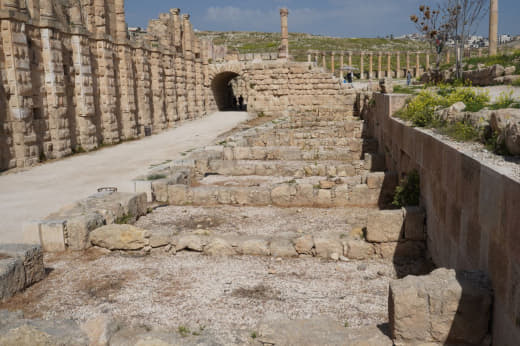
The souk, or market, inside the city. You could buy things from all over the then-known world.
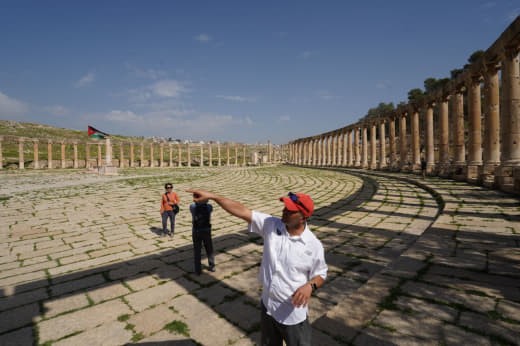
Our guide’s name is Mohammed. Apparently mispronouncing the name is common. The long em sound has something to do with it. He said we can call him Mo. Here we’re looking at the oval plaza. They were normally a circle, not oval. But Mo said he calls it the square of Jerash.
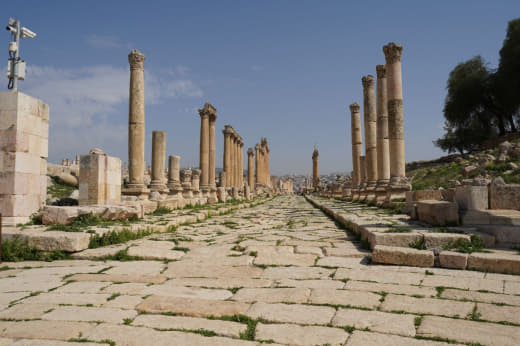
The cardo is the heart of the city.
Grooves from chariot wheels.
Water fountain
Below are a couple links to view 360 pics from yesterday. Open thelink, tap the pic, and then the circle icon. You can look around in all directions, and up and down.
A Note to the Reader: The author of this post is listed as Linda Martin, but all I’m doing is downloading Andrew’s photos and posts. I am not traveling with them!
Vienna Airport
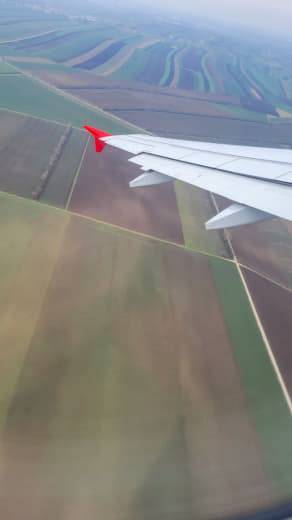
Leaving Austria
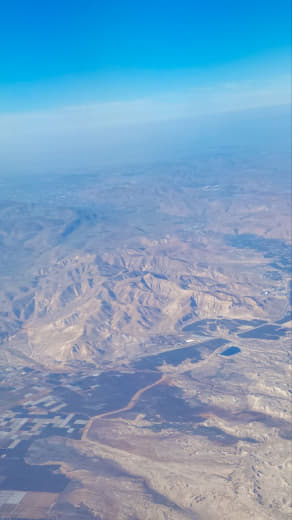
Judean wilderness. Pretty sure Wadi Qelt is in there somewhere.
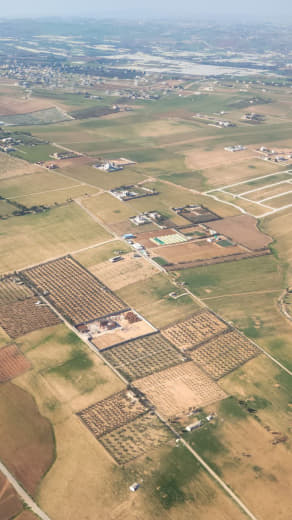
Jordan countryside near Amman.
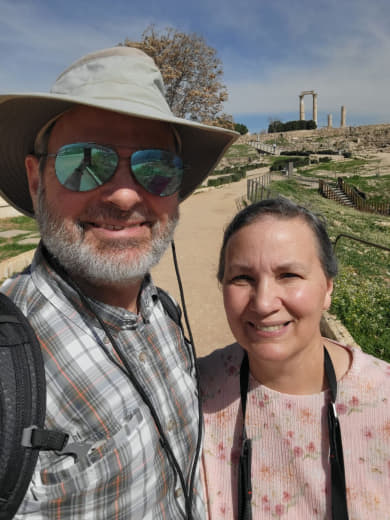
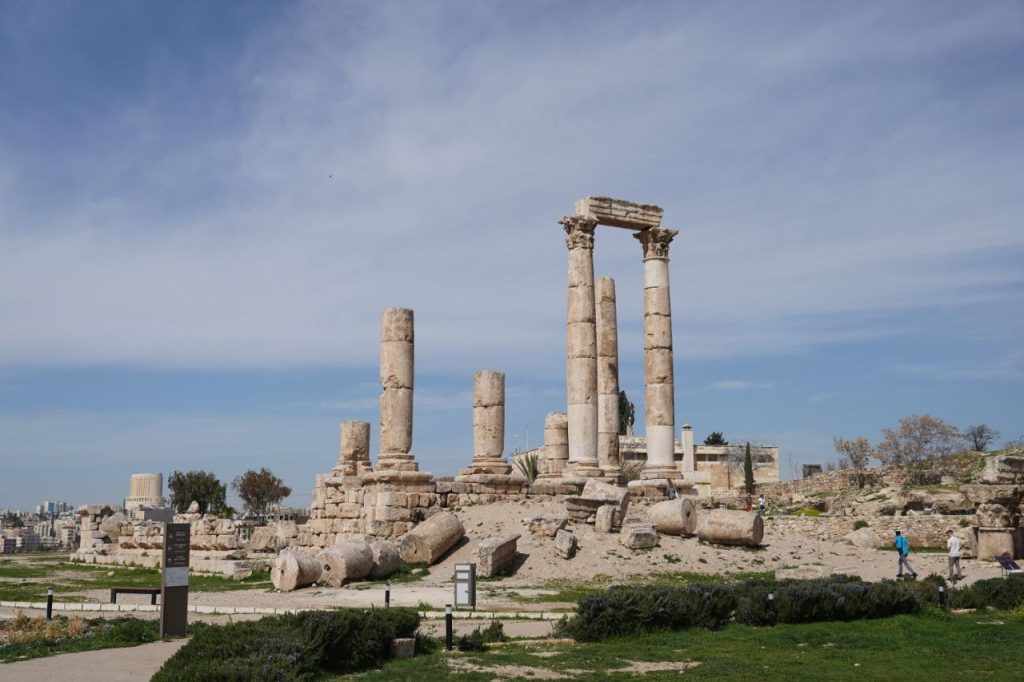
Visiting Amman Citadel on our free day. This is believed to be the place where Uriah, husband of Bathsheba, was sent to his death in the battle with the Ammonites.
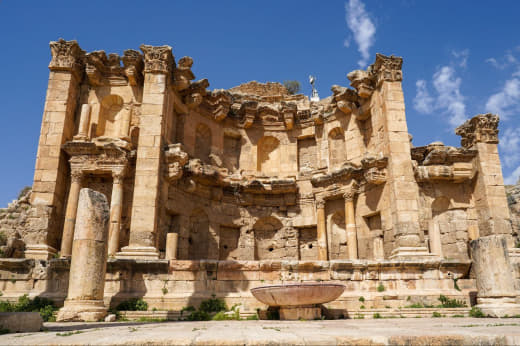
Temple to Hercules
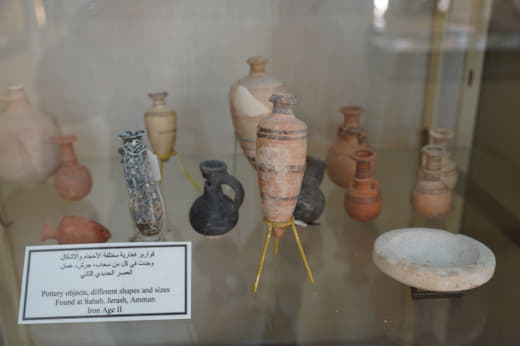
Iron Age 2 includes the time of the united Kingdom of Israel
~~~~~
I have 360 pics if I could find a good way of sharing them!
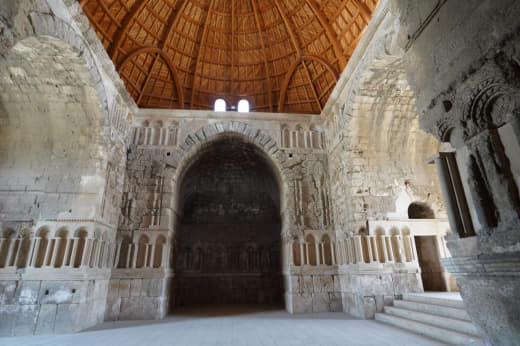
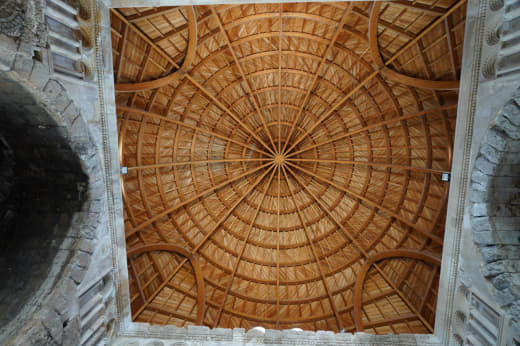
Large Meeting Building – check out the ceiling detail!
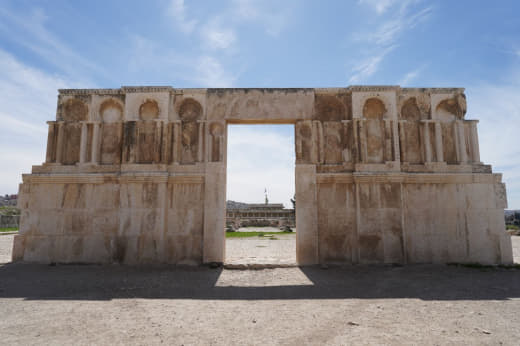
Wall of a mosque
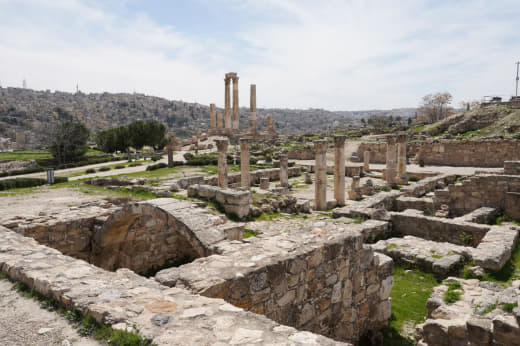
Columns of the Herculean Temple were repurposed as pillars in a Byzantine church.
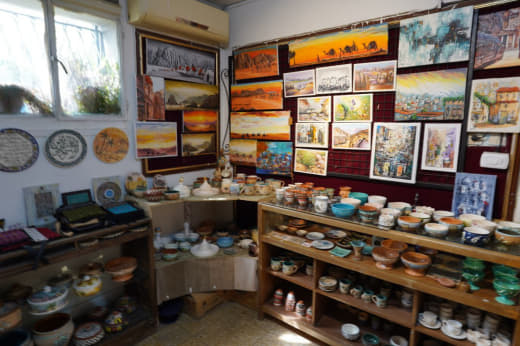
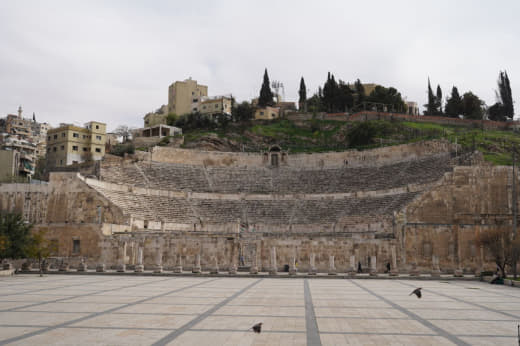
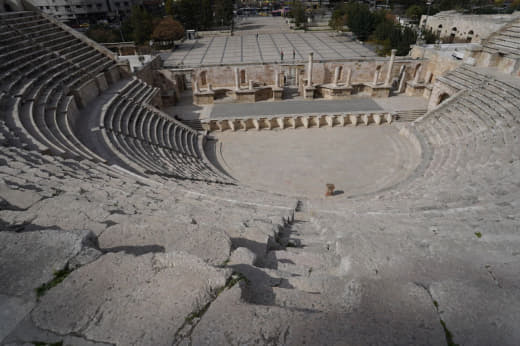
We walked from the Citadel down to the Roman theater. We stopped at an art shop.
God: “Great is the LORD, and greatly to be praised in the city of our God, in the mountain of his holiness” (Psalm 48:1). Visiting sites in Israel is a good opportunity to worship God, who chose this place to perform unique acts. It is also a time to mourn how His people rejected Him. “O Jerusalem, Jerusalem, . . . how often would I have gathered thy children together, even as a hen gathereth her chickens under her wings, and ye would not!” (Matthew 23:37).
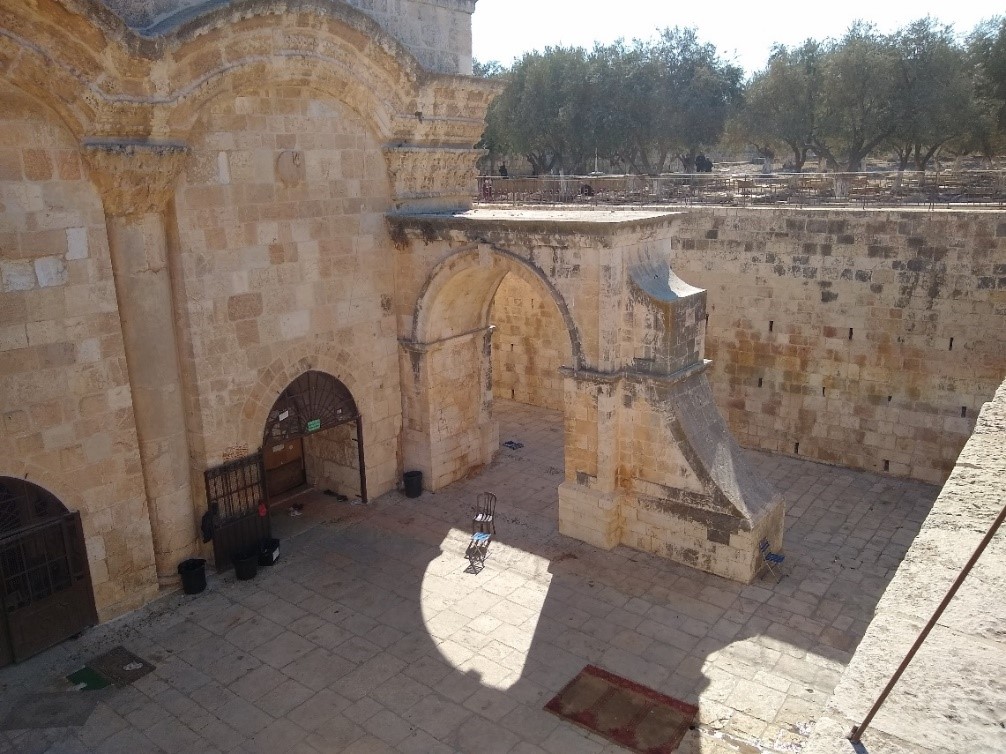
Inside the Eastern Gate of Jerusalem, November 11
Stones: Big stones, little stones, square stones, round stones. We saw stones “from Dan even to Beersheba.” Stones to build walls, to build pavements, and to build idols and temples. Empire builders destroyed the stones that others had arranged, and then they built other structures, which in turn others destroyed. After they had crossed the Jordan River, God told Joshua to build a stone memorial, so their children would ask, “What mean these stones?” (Joshua 4:21). As we viewed many ruins, we likewise pondered this question.
“O where are kings and empires now, Of old that went and came?
But Lord, Thy Church is praying yet, A thousand years the same.”
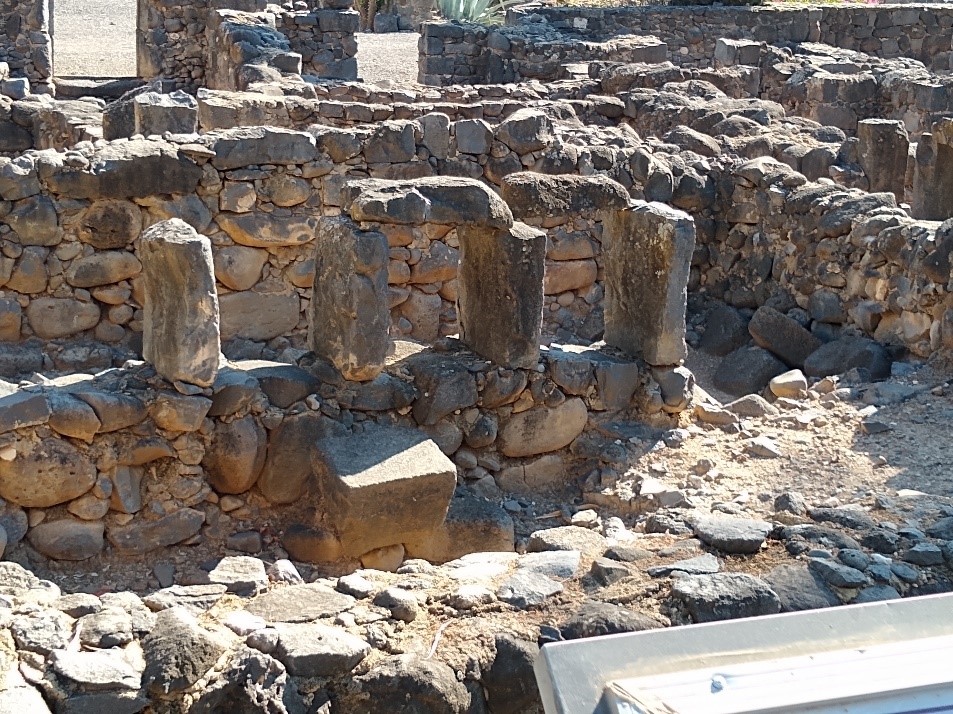
The ruins of Capernaum remind us of Jesus’ lament, “And thou, Capernaum, which art exalted unto heaven, shalt be brought down to hell: for if the mighty works, which have been done in thee, had been done in Sodom, it would have remained until this day” (Matthew 11:23). Abraham, in contrast, “looked for a city which hath foundations, whose builder and maker is God” (Hebrews 11:10).
Ruins in Capernaum, November 9
People: Stones help us understand the past and how it shaped our lives, but contacts with living people are more memorable. People memories begin with the fine group of thirteen fellow travelers. How many times we counted, “1, 2, 3, . . . 13.” This reminded me of the dozens of times I counted students on school trips to be sure everyone was there.
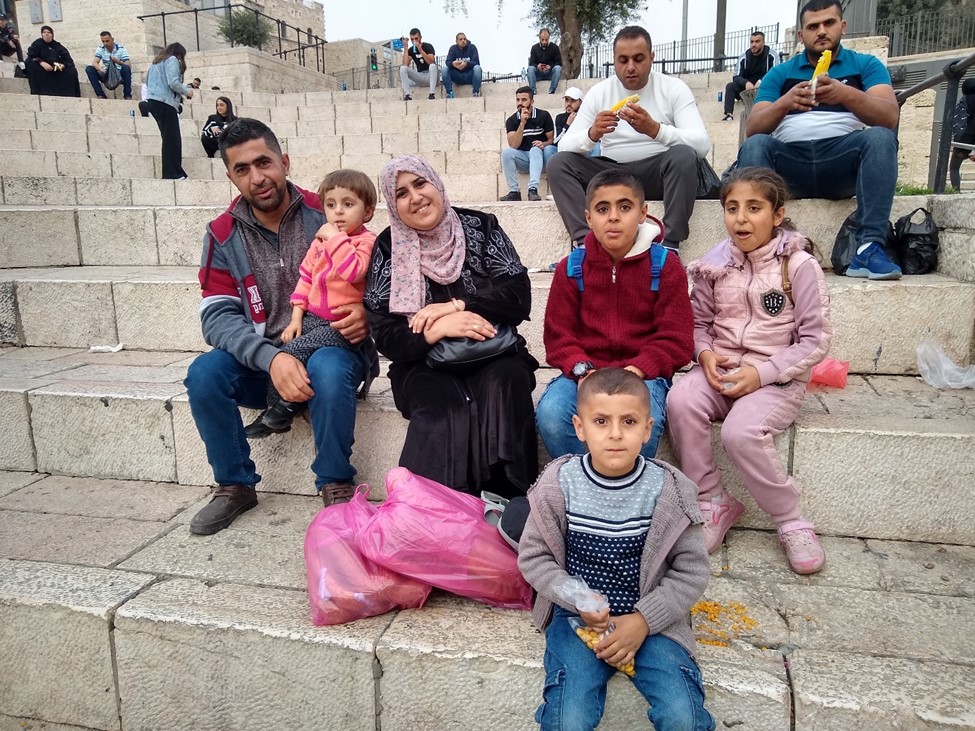
There were some negative experiences, such as aggressive salesmen shoving their wares into our hands and demanding that we give an offer, but the majority were positive. And some were superlative, such as a supper in Bethlehem with Palestinian Christians (and singing “How Great Thou Art” in four languages; see Nov. 11 report), and evening Sabbath worship and supper with a Jewish family two evenings later. The modest dress of conservative Jewish women was commendable.
Not only were we watching people, but people were watching us. “Are you Amish?” “Are you Mennonite?” We heard these questions various times or overheard people discussing us. We hope we gave a good Christian witness.
Friendly family at the Damascus Gate, Jerusalem, November 14
Singing: “God is a Spirit: and they that worship him must worship him in spirit and in truth” (John 4:24). We can worship God anywhere, but it was a blessing to sing “O Little Town of Bethlehem” and other songs about Christ’s Birth in Bethlehem; to sing “Tis Midnight” and “Alas, and Did My Savior Bleed,” etc. about His suffering and death in the Garden of Gethsemane; and to sing “Lift Your Glad Voices,” “Up from the Grave,” and “Alive Forevermore,” etc. as we visited a possible site of the Resurrection. What shall we sing in Nazareth? Is there any song that uniquely fits there? Yes. “I stand amazed in the presence of Jesus the Nazarene.” As we looked across the Kidron Valley at the Eastern Gate, we sang, “I will meet you in the morning, just inside the Eastern Gate . . .”
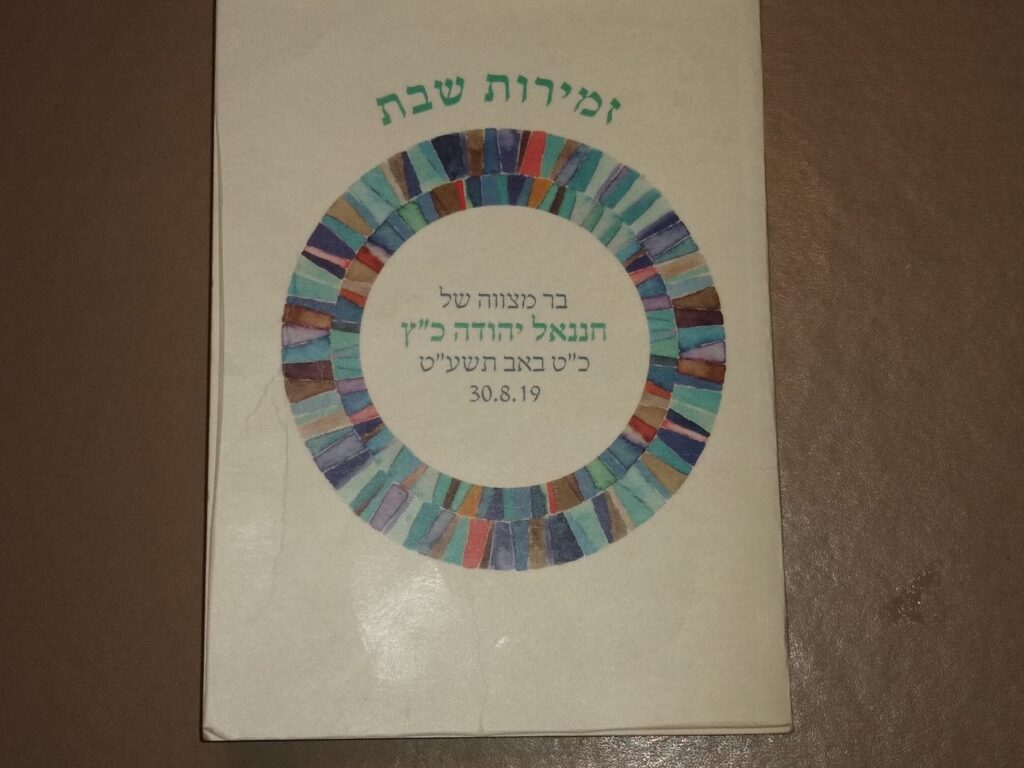
The Jewish family demonstrated that singing is an important part of their Sabbath routine by their songs at the beginning and end of their meal. Later after we visitors had sung the first two stanzas of “How Great Thou Art,” extolling our Creator God, they welcomed us to sing a distinctly Christian stanza. On the last day, Sunday, our guide sang “Our Father” (the Lord’s Prayer) for us in Arabic.
Jewish song book, used on the evening of the Sabbath
Home Again, November 15
With mixed feelings we boarded the B-787 late Sunday evening for our approximately 11 ½ hour flight from Tel-Aviv. We landed in Newark, New Jersey, shortly after 4:00 AM, grateful for a safe and enjoyable trip.
Later that morning, Sarah and I attended the funeral of her uncle. And so, the routines of life and death continue, at home and abroad. A mountaintop experience should renew us for the challenges before us, encourage us to be good Christian stewards of life’s opportunities, and help prepare us for death. Thank you, God, for the blessing of this trip; may You be honored in all things!