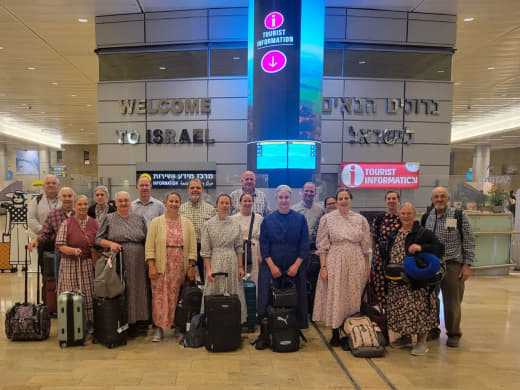
LaFaye Hurst – Today was a later start. We had a relaxed breakfast and boarded the bus at 9:00. Our bus driver is never late and maneuvers through these narrow Jerusalem streets like a pro! He lives in Jerusalem so he is very skilled.
Our first stop was at the Israel government building. It would be similar to an American Congress. Israel has a Prime Minister which would be like our president. We spent time touring the grounds and hearing about the Israeli government and past history.
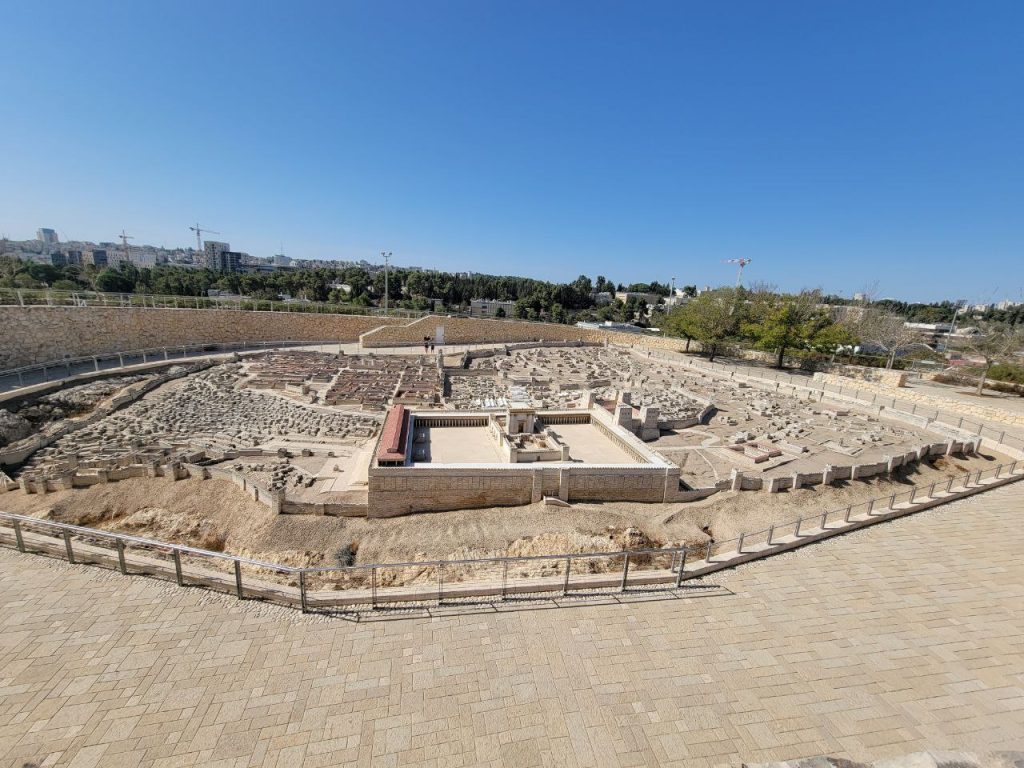
Then it was just a short jog across the street to the Israel Musuem where there are many artifacts. We spent the majority of our time in the Israelite period of time, looking for the artifacts of the places we had visited on this trip. We also spent time at the section on the Dead Sea Scrolls. Then we stepped outside to the large, but very detailed model of Jerusalem. Our guide walked us around the model and pointed out points of interest.
Model of Jerusalem
Lunch was in a restaurant with a birds-eye view over Jerusalem. We had kabobs and fries, a very traditional Israeli dish.
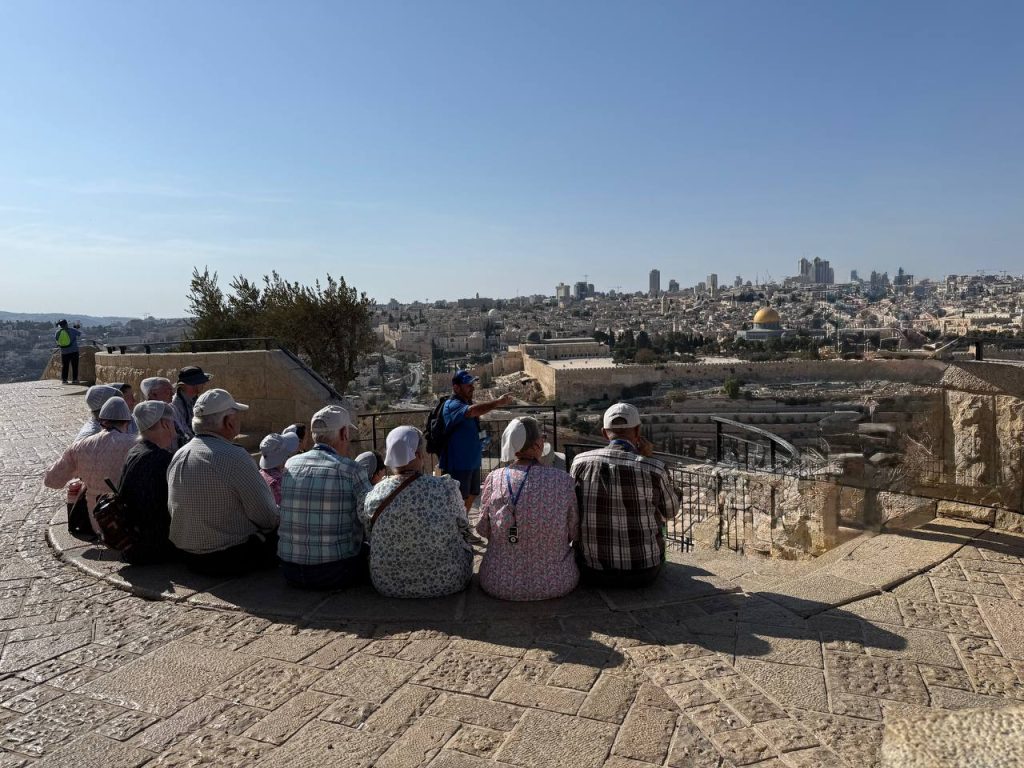
After lunch we sat at an overlook for a time of teaching on God’s love for Jerusalem and we had a special prayer for the people of Jerusalem. I can just picture Jesus overlooking the city and His heart aching for the people to turn to Him. O Jerusalem, Jerusalem, thou that killest the prophets, and stonest them which are sent unto thee, how often would I have gathered thy children together, even as a hen gathereth her chickens under her wings, and ye would not! Matt 23:37
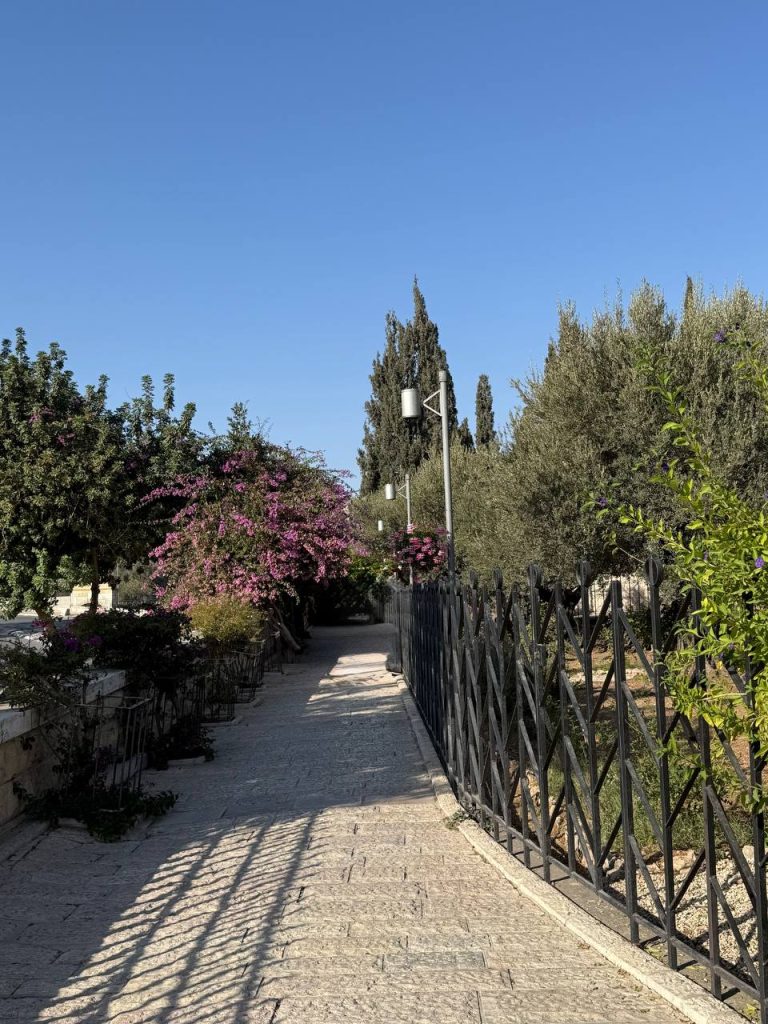
Next it was a walk down a steep hill called the Palm Sunday Path. It was a narrow road lined with high walls dripping with beautiful bougainvillea. We tried to envision Jesus traveling down this road riding on a donkey with palm branches strewn along the way.
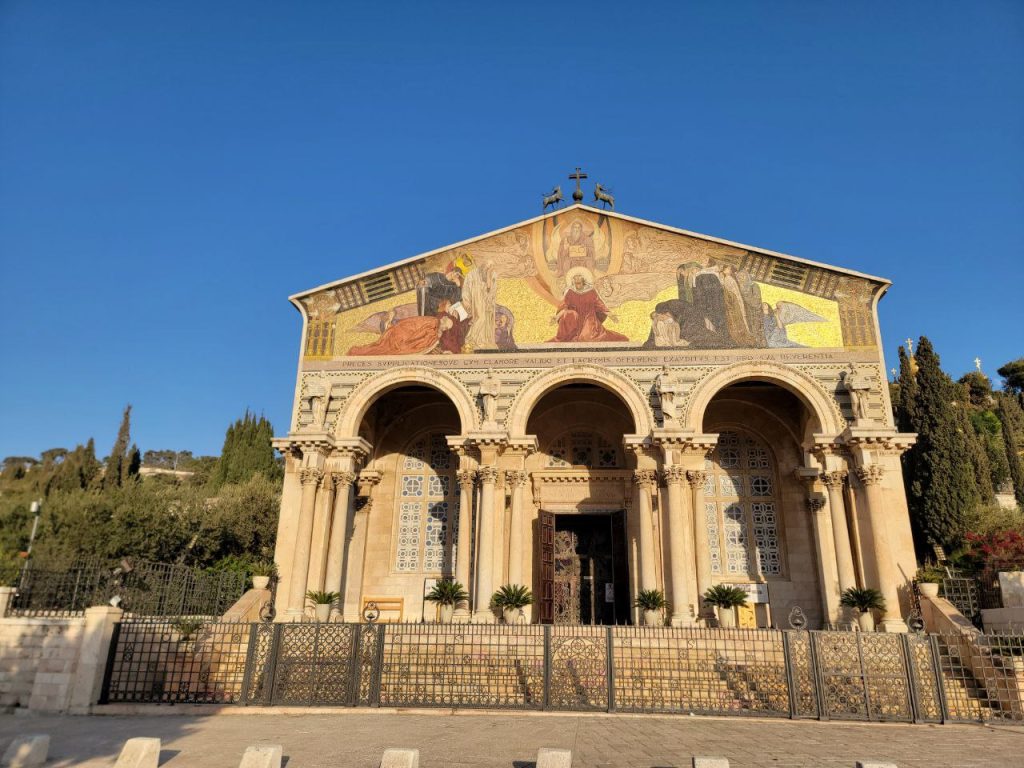
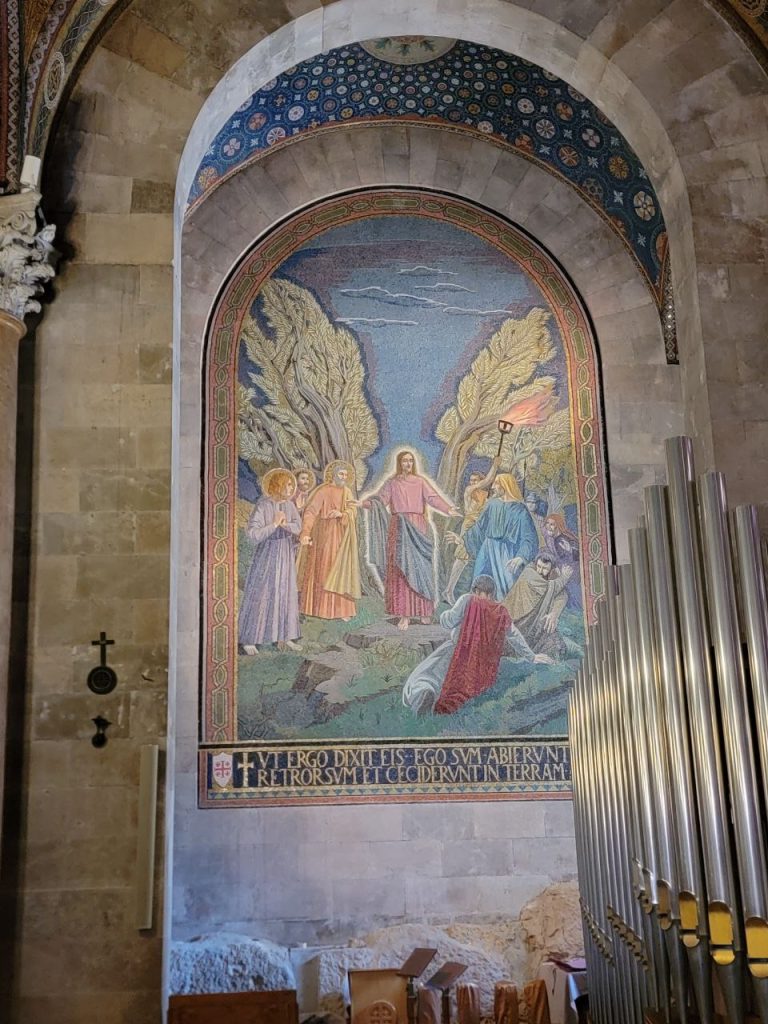
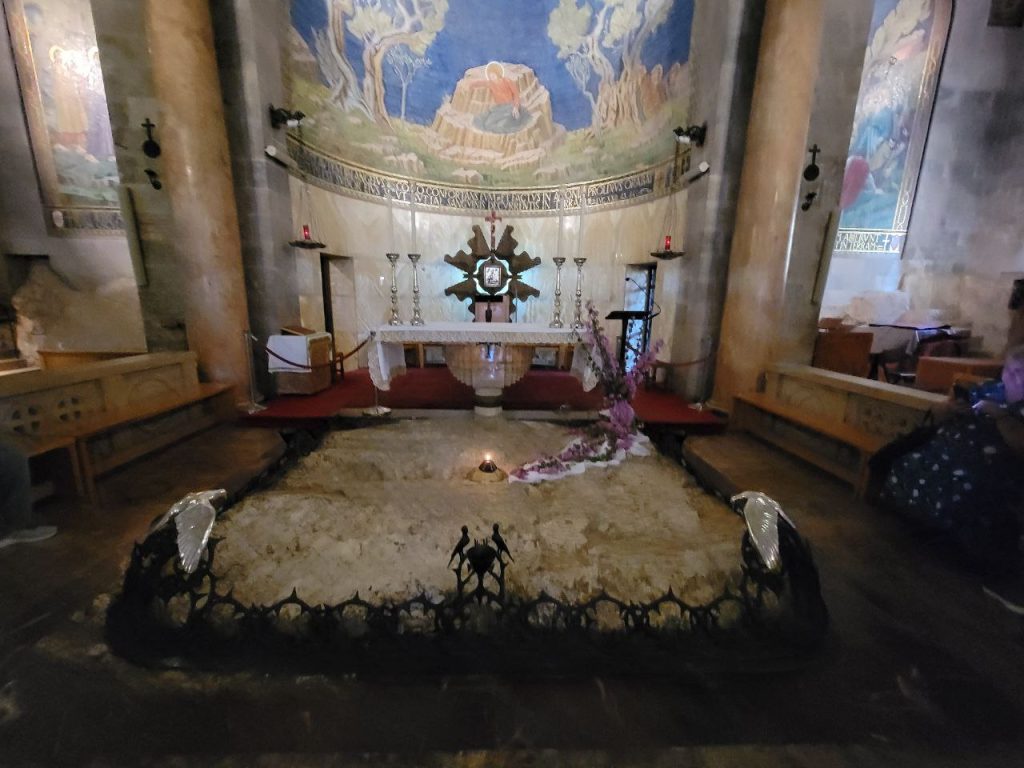
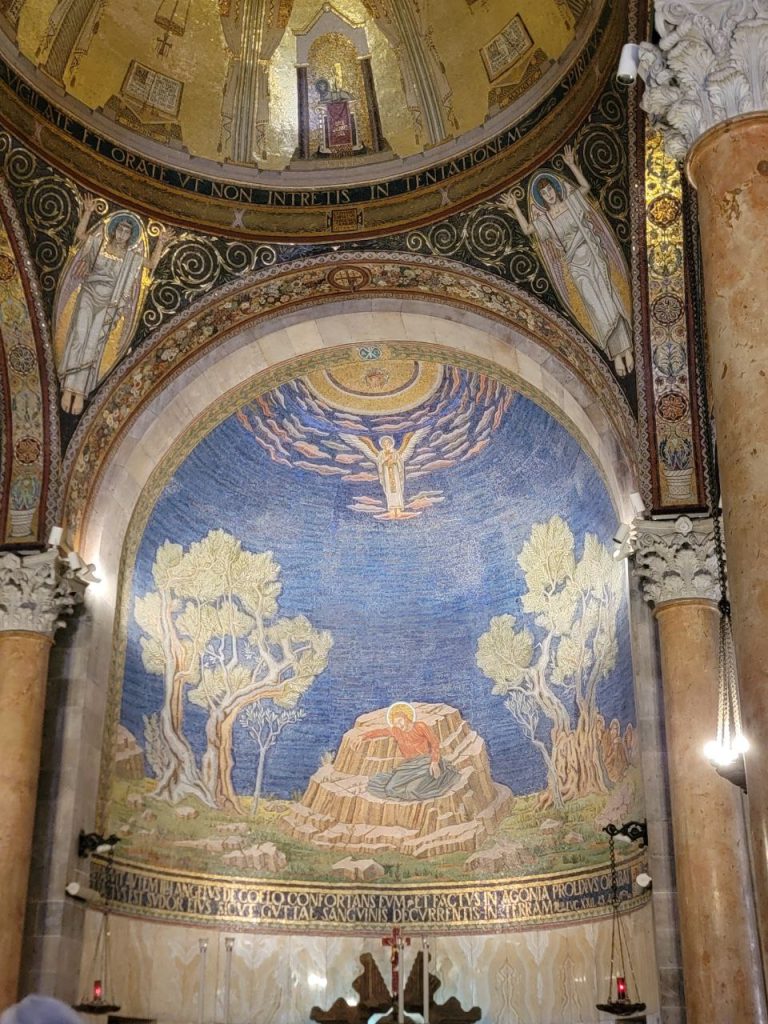
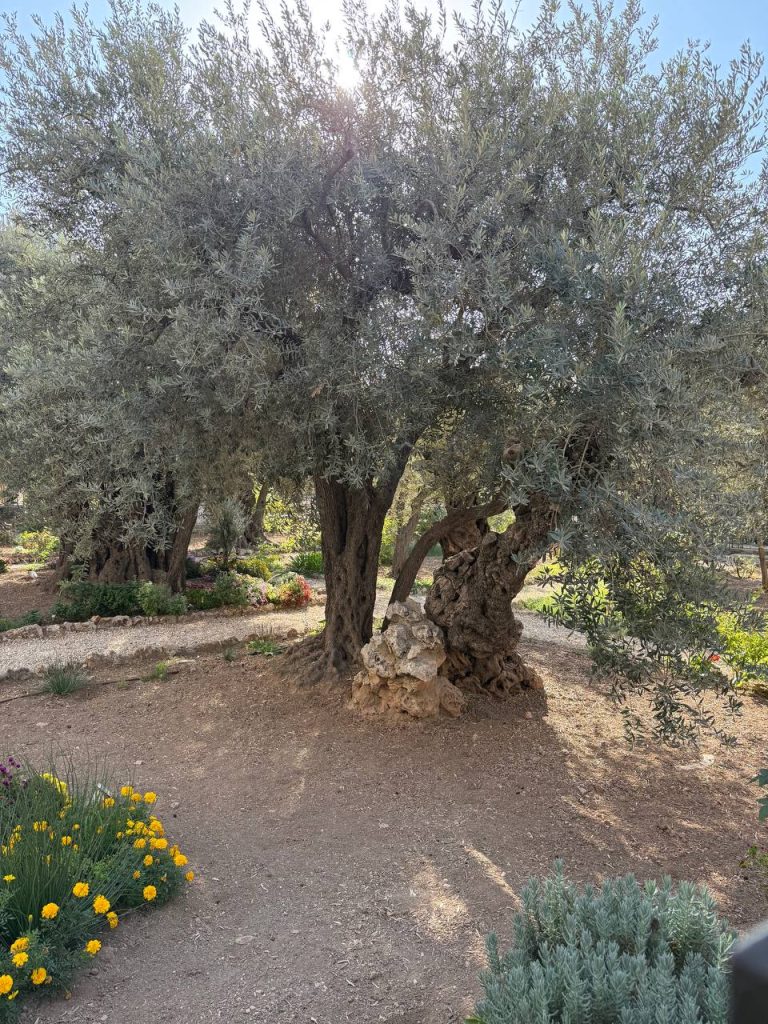
Almost at the bottom of the hill we stopped at the Garden of Gethsemane and the Church of all Nations. Here we sat down for a time of teaching on the suffering of Jesus. After a time for pictures we crossed the street to a private garden where we had a worship service led by Andrew and a time of singing, reflecting on Jesus’s suffering in the garden. I was challenged by the thought of Jesus’s disciples not being able to stay awake and stand by Him in His time of agony of soul. May we stand with our brothers and sisters going through difficult times and not turn away from their pain and suffering.
Then it was back to the hotel for a time of resting and supper. After supper we set out for an adventure by tram to Ben Yehuda Street. It was sundown, just as Sabbath was ending and the Jewish people were out to socialize. Families, groups of teenagers, the elderly, all out strolling, playing games or just standing around chatting. It was a great place for people watching!
Melinda Martin – We rode into Jerusalem in the dark last night, but we could see the lights of the city as we entered. We saw protesters like a flock of penguins in their black-and-white suits, (an Aaron joke) leaving the city by the scores, by the dozens, by the hundreds they were flocking to the buses.
This morning after a breakfast similar to the other hotels — several kinds of eggs, many kinds of cheeses, lots of different kinds of fruit, a variety of baked goods, we set out for the day.
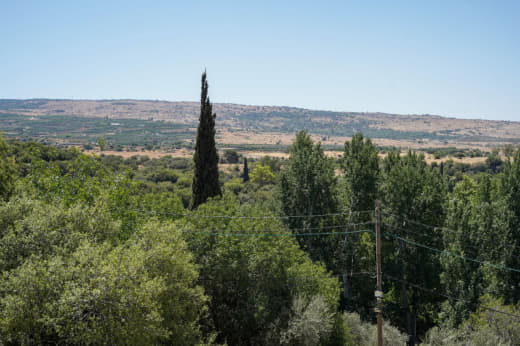
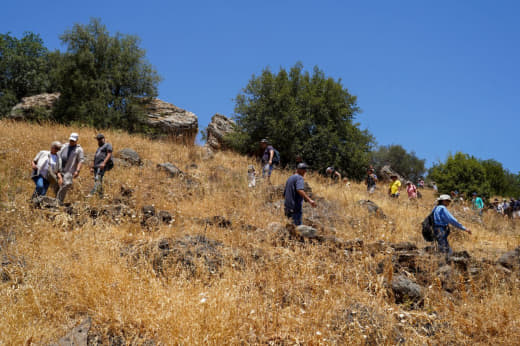
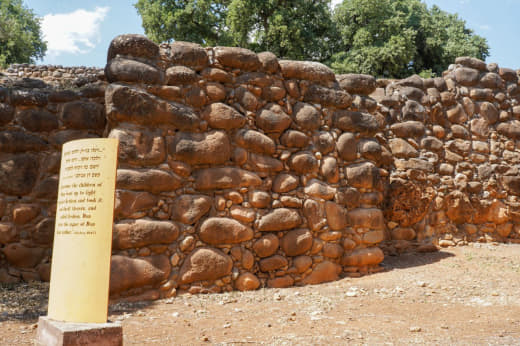
We drove to Tel Shiloh in the daylight. It was a beautiful view, uphill, and downhill. Some hillsides were terraced. Tell Shiloh is where the Tabernacle was set up when the children of Israel settled in the land of Canaan. The Philistines destroyed the tabernacle in the prophet Samuel’s day. This is also where Andrew has been helping with the archeological dig and has helped uncovered a corner of what they believe is the Tabernacle foundation. It was interesting to hear Andrew describe how the archaeological dig is done, how they brush with fine brushes, and sift the dirt to find small objects.
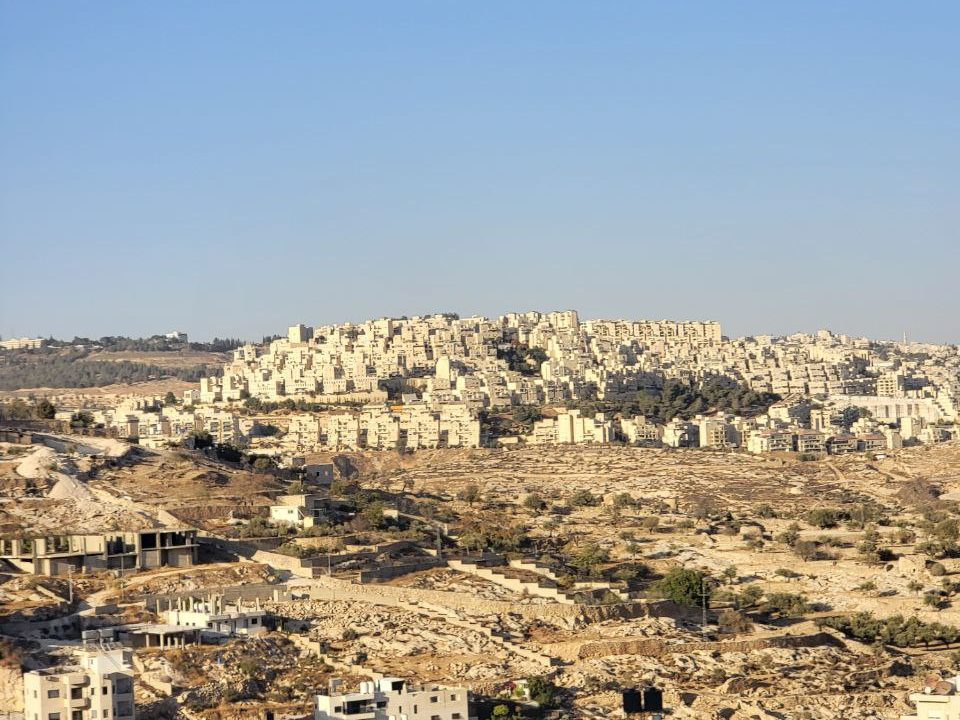
From Shiloh we went to Bethlehem. It was probably a 60-minute drive. On the way Aaron told us about the sacrifices. Jesus is the perfect sacrifice. He also expounded why the Jews will not eat blood — because the life is in the blood. He explained how they make it practical.
Entering into Bethlehem was quite an experience. Tarek again showed his expertise, going downhill on winding streets that were just barely wide enough for a bus and a car to meet without scraping each other, or the limestone buildings on either side.
We went to a restaurant for lunch. Our food was preordered. Our group was the only people in the restaurant. They said they haven’t had business for two years because of the war. They depended heavily on tourism before this. It was a delicious meal, with the salads and french fries, grilled chicken and what I believe in Bulgaria would be called kebabpChi – a delicious sausage shaped, spiced ground meat.
When we arrived at the restaurant, a man Aaron introduced as Dio climbed on the bus. Aaron gave him the mic that hangs around his neck and told us that he was going to be with us for the afternoon. I had seen a sign on the way into Bethlehem that said that Israelis are not permitted past this point, but Aaron went in so I didn’t think anything much of it, but apparently he did go back to the hotel after we were done at the Olive factory because Israelis are not permitted in Bethlehem. Bethlehem is under Palestinian authority and therefore Israelis are not permitted there.
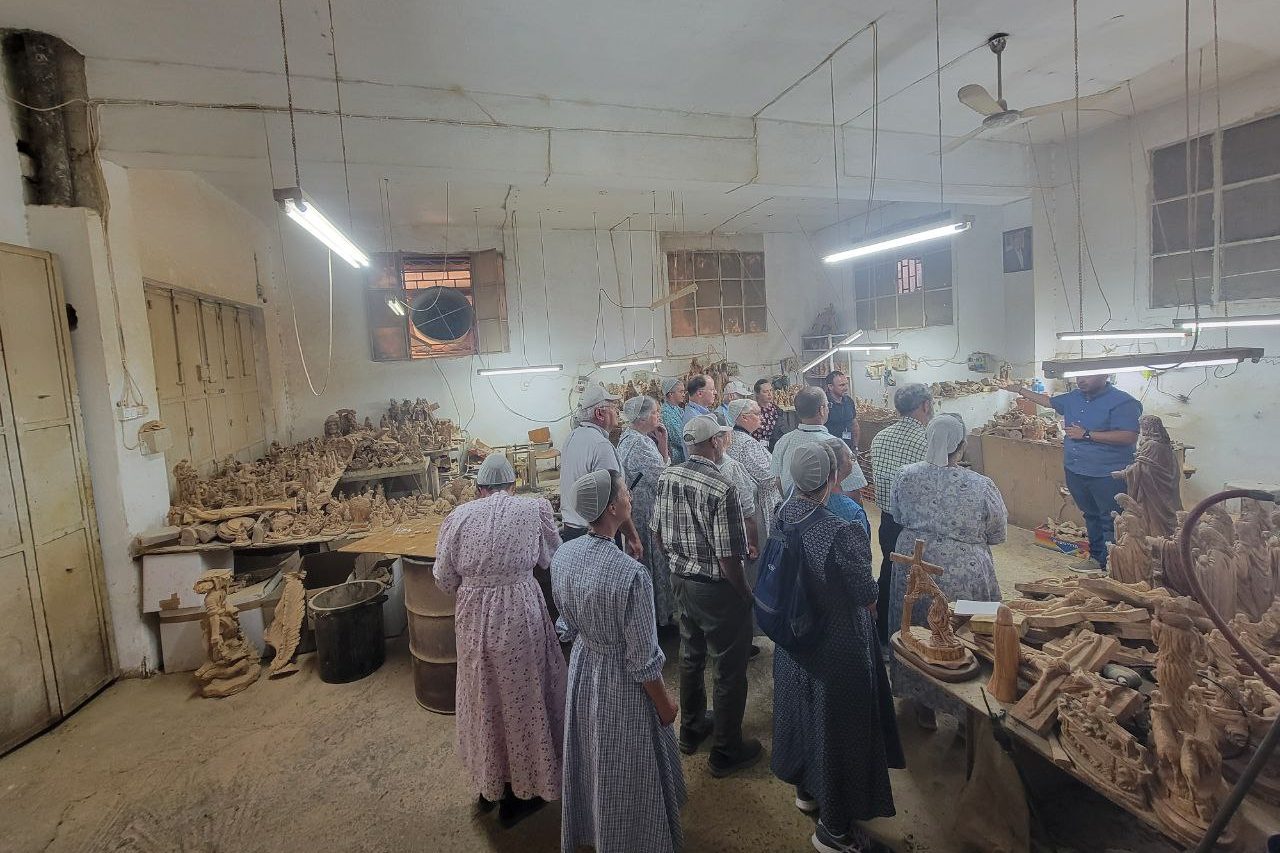
After lunch, we went to the olive factory close beside the restaurant. The grandson of the founder showed us how they carve olive wood into figurines. Hand carved items can take up to four months to complete. They also have a copy machine that they can make copies faster than that. In the gift shop they were high-pressure salesmen to some of our group. It was beautiful work but expensive in some ways. They did also have some things that were not wood carvings. I found a bottle of Spikenard there like Mary anointed Jesus’s feet with. Supposedly anyway.
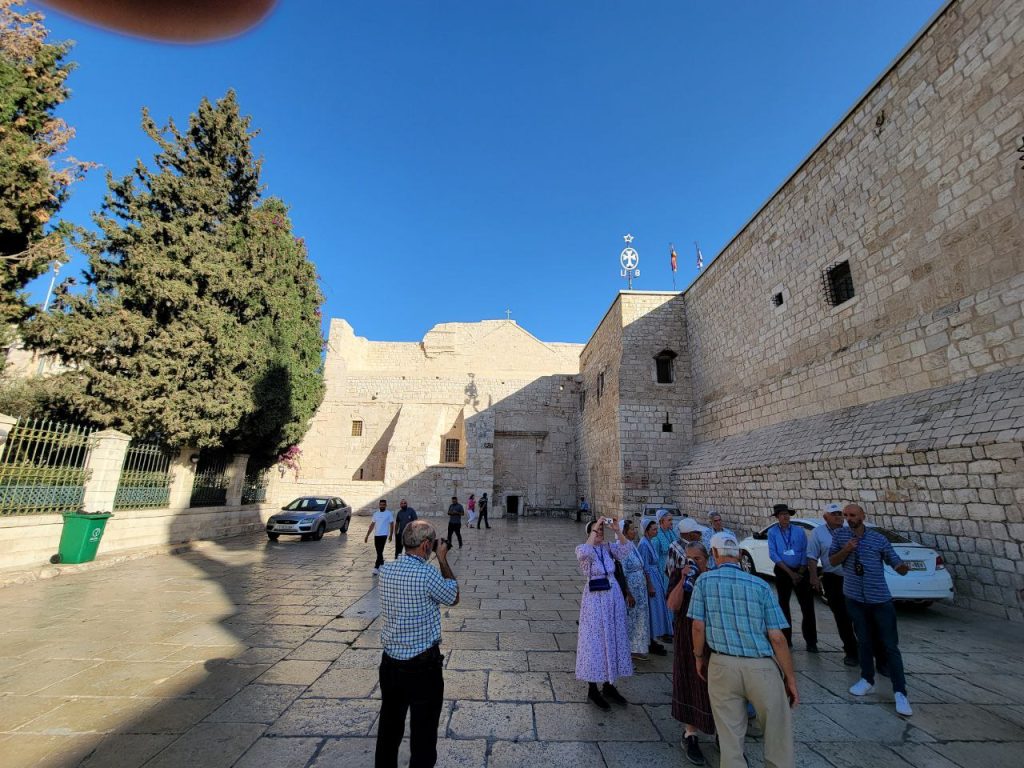
After the olive wood factory, we went to a Basilica where, in the basement, they have what they claim is the cave where Jesus was born. It is a basilica that three denominations claim — the Armenians, the Greek Orthodox, and the Roman Catholics. In the Armenian section there were beautiful mosaics on the wall with gold on it. Each denomination has their own auditorium so to speak, so it is a very large building. Also the cave that Jerome translated the Vulgate Bible in, is in this huge expanse of a church. It was something very rare—the keeper of the key unlocked the cave and allowed us to go down into the cave so we could see it.
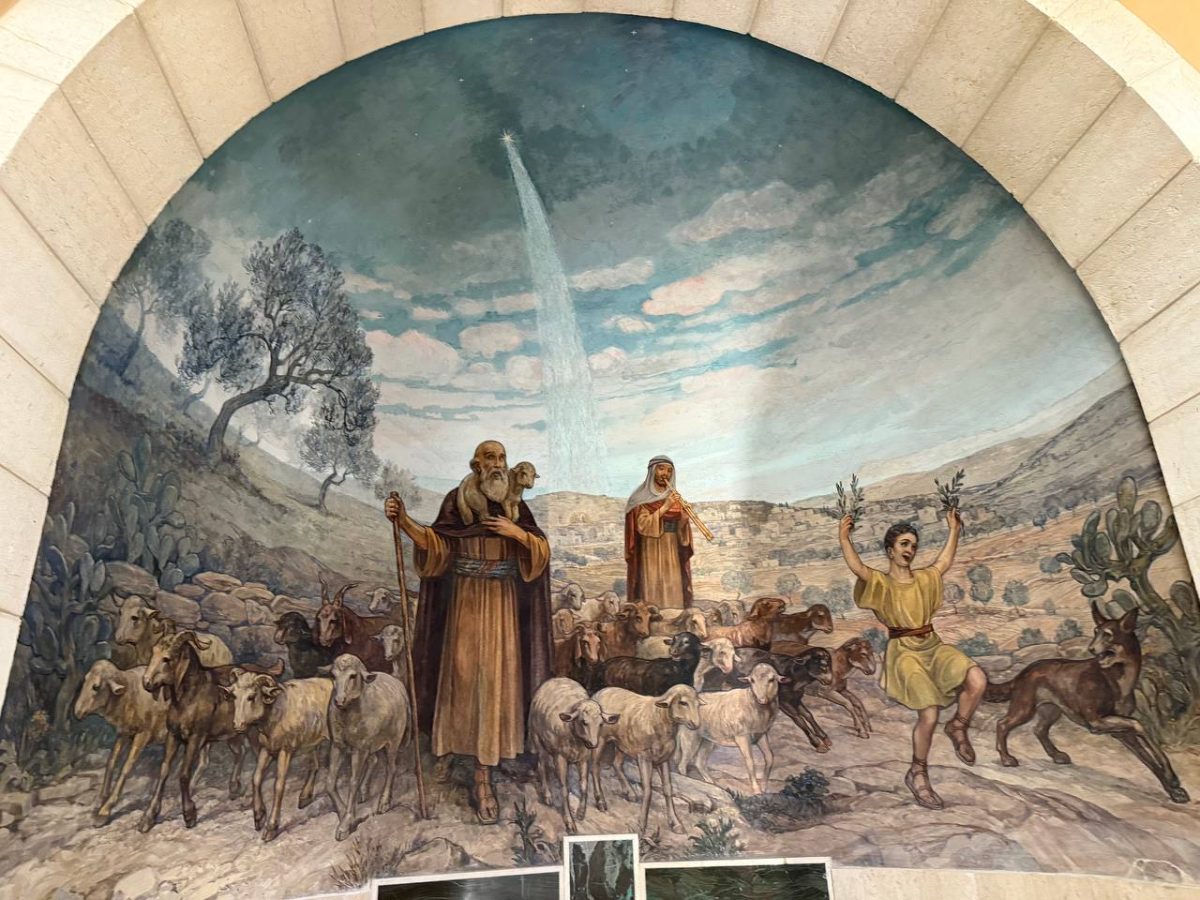
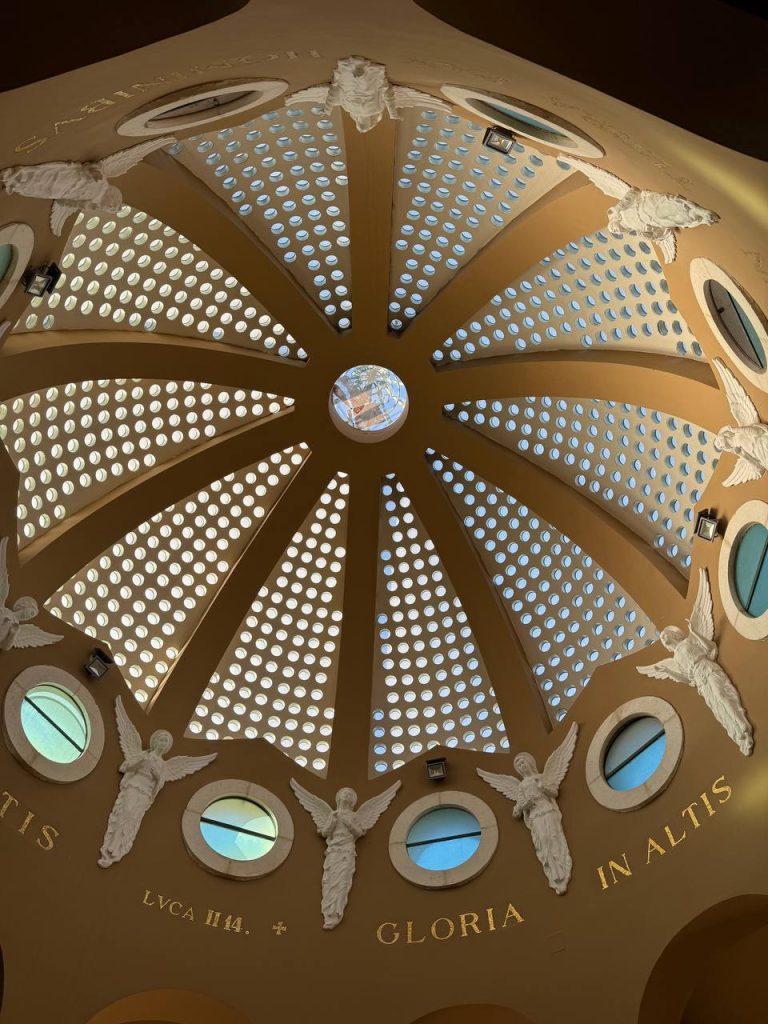
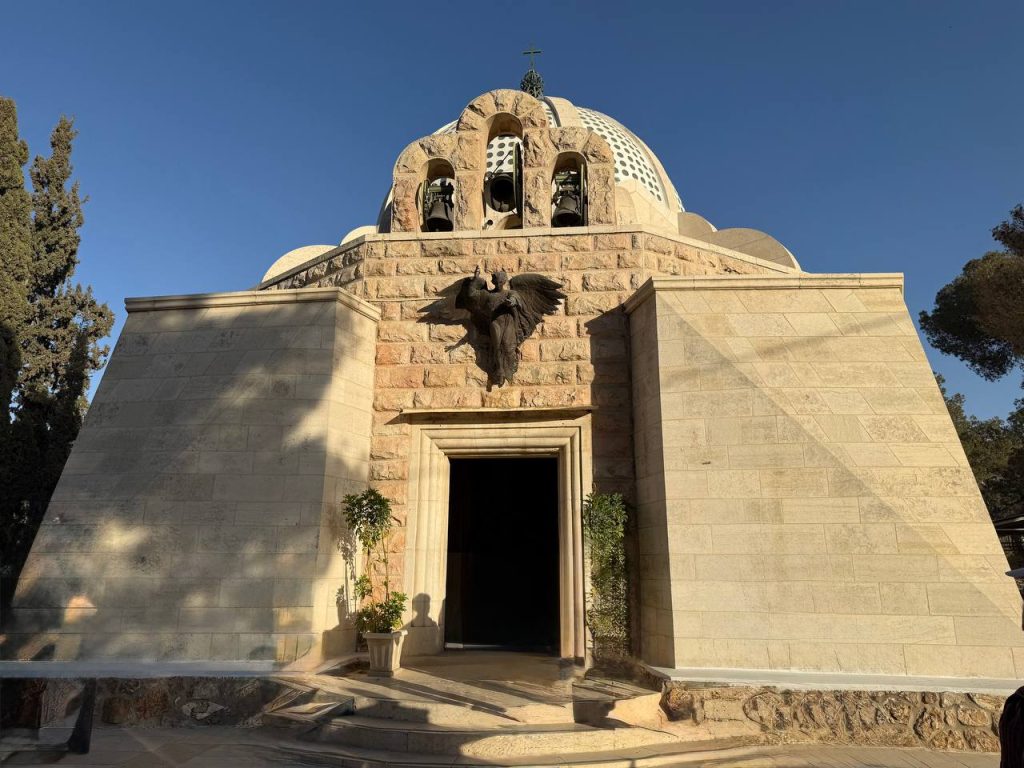
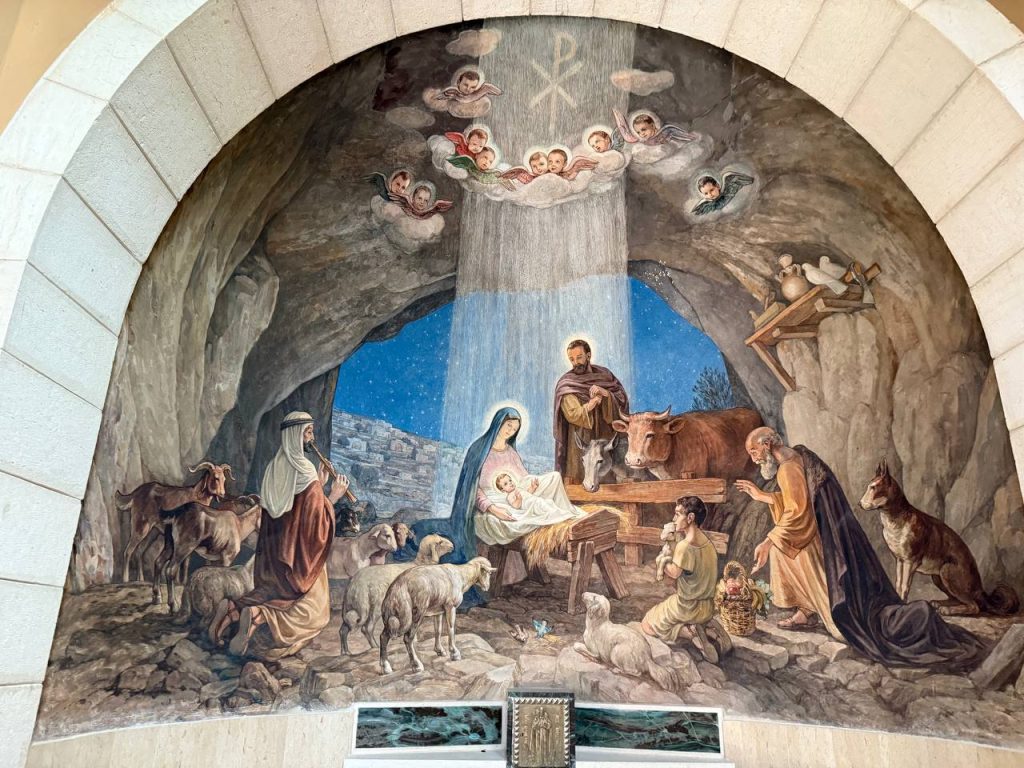
From there we went to the Shepherd’s Fields, where the Catholics also built a cathedral. We were going to see some other things there besides the cathedral, but it was busier there and we would have had to wait in line so we did not get to see the other things. And right now, I can’t remember what they were, but we saw the cathedral and sang two songs in there. When we were singing “Silent Night” another tour group came in and joined in to help us sing. It was beautiful.
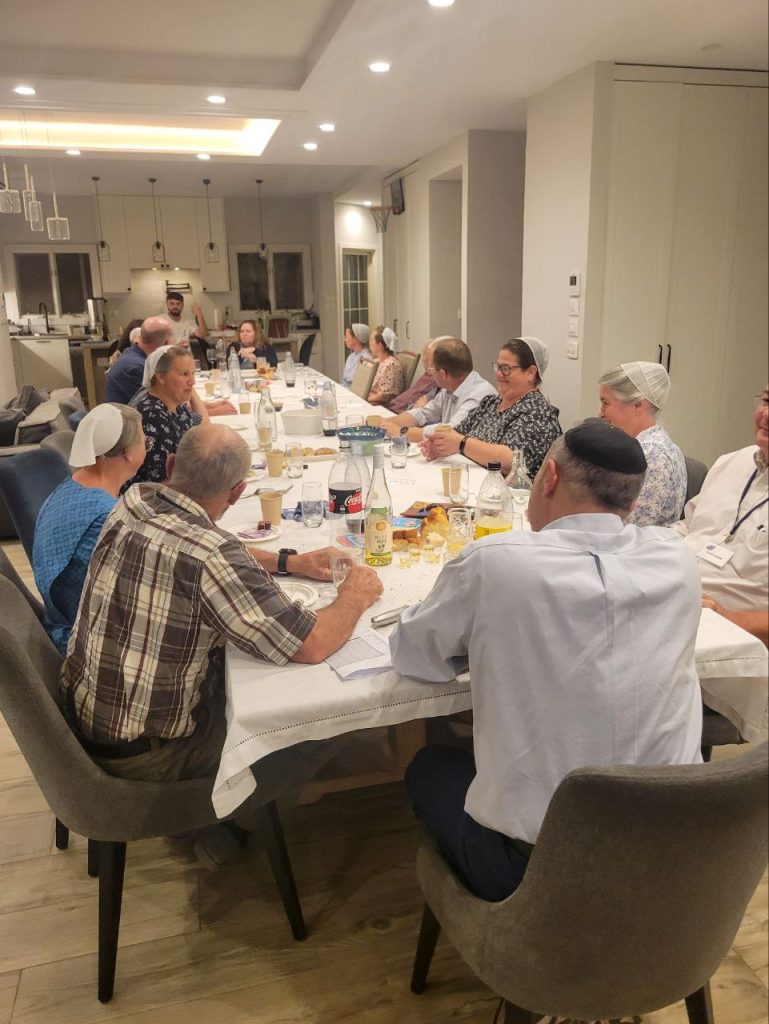
Then we had to hurry back to the restaurant where we had lunch, get freshened up, and go to David and Devorah Katz’s place for a Shabbat meal. On the way there, a police officer pulled Tarek over because they claimed he had run through a red light. He is sure he had not, and the police did not give him a ticket. Tarek figured probably it was because it’s Shabbat and the policeman wanted to go home. Then we had to stop at the checkpoint because we were going into the West Bank, which can be a hotspot. The army official spoke to Tarek but did not come onto the bus.
The Katz family lives in a gated community. Only Jews live in their community. We got off the bus outside the gate and waited for David to come meet us. We walked with him past their house where his wife joined us, then to the synagogue. When we arrived at the synagogue, the ladies walked up a ramp, and the men went in at the bottom. We went to their balcony. And sat on pews—chairs actually —that flipped down to be sat upon, and as soon as you stand up, they flip back up. We were there for their singing and prayers, but when the rabbi was going to speak they ushered us out.
We went back to their house and had a lovely meal together. First, they poured wine into little individual cups and had a blessing prayer over them and passed it out. Then they had a blessing over the bread and passed the bread out. With the bread there was hummus, and eggplant salad, pepper salad and olive oil. After the bread was eaten, they brought out soup—chicken broth with a little bit of carrots in it and a nice big, walnut size dumpling. After the soup, they served a rice and quinoa salad, kebabpChi, and chicken. After visiting a while more they brought brownies and cookies for dessert.
Some time along the line, they asked us to sing two songs. One was “The Lord is my Light and My Salvation.” The other was, “Oh Lord, my God…” They seemed to appreciate it. Their two oldest children were both at home, the three youngest were not. The oldest son was in the special unit that was deployed first on October 7, when Israel was attacked two years ago. He suffered trauma when 9 out of 14 people in his unit were either killed or wounded. But he was uninjured.
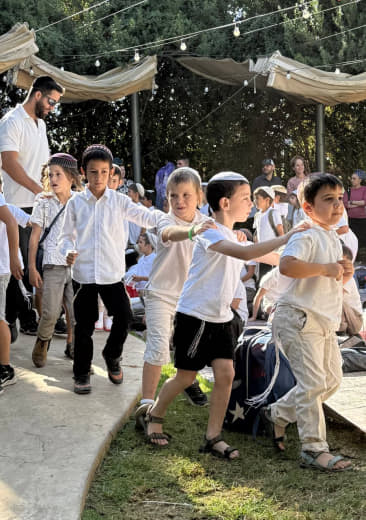
A special party for 6-7-year-old boys who were receiving their first Torah
It was arranged that we would be meeting Tarek and the bus at 8:30, so soon after we were done eating (and done drinking tea for some of us) we needed to head back to the bus. The whole family walked us out to the bus and said goodbye to us out there. The bus could not come into the community. We needed to walk a few blocks outside the gate to meet the bus.
LaFaye Hurst – This morning I awoke to the sound of birds and the scent of plumeria. Today is the day we leave the Sea of Galilee and head to Jerusalem. Part of me is sad to leave this beautiful seaside spot but our adventure continues and we must go!
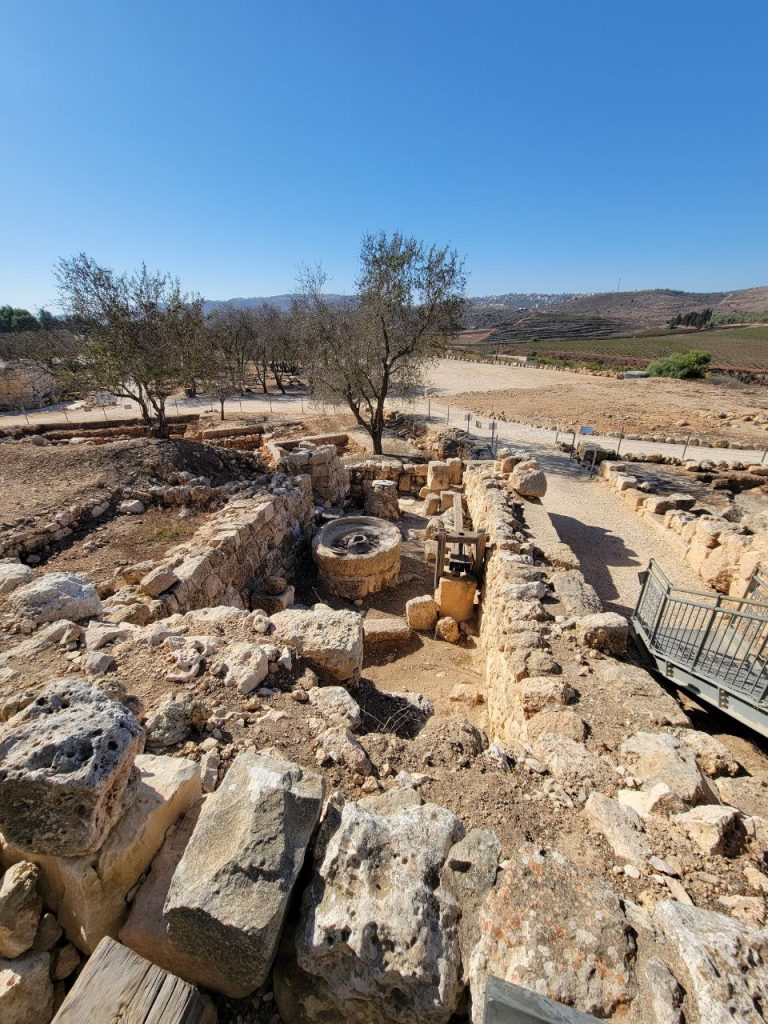
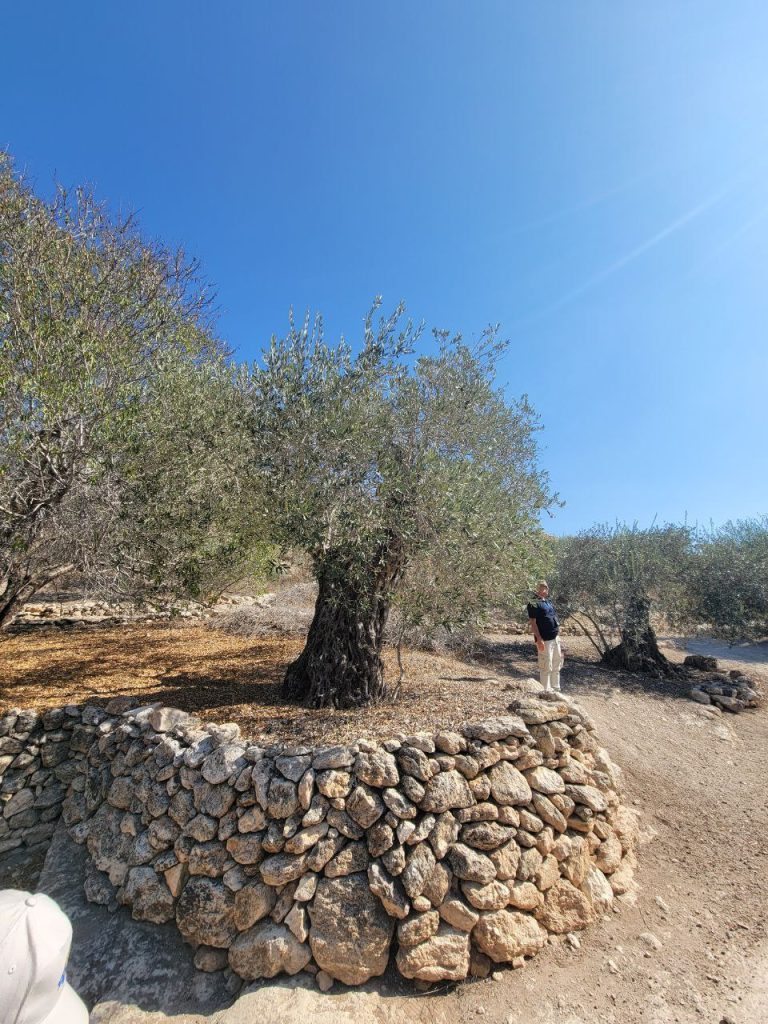
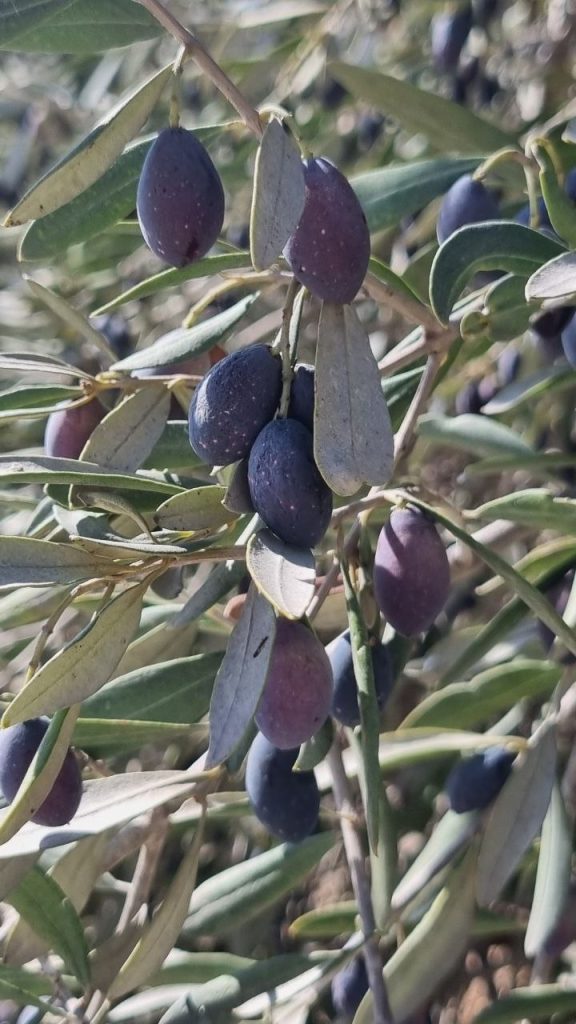
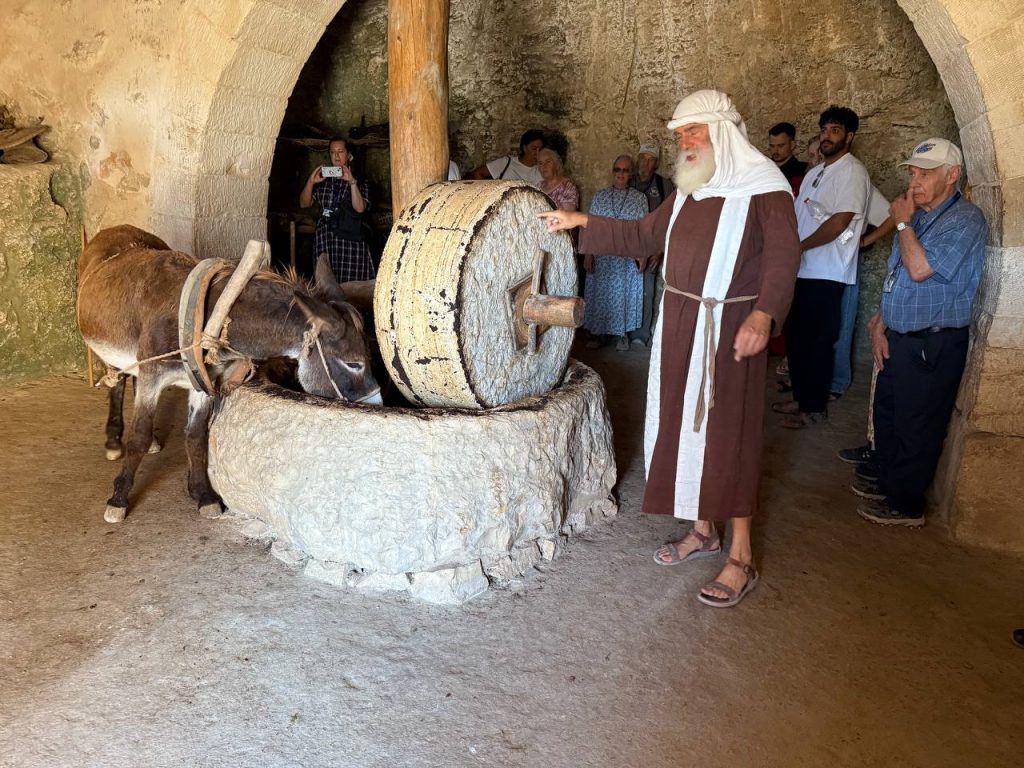
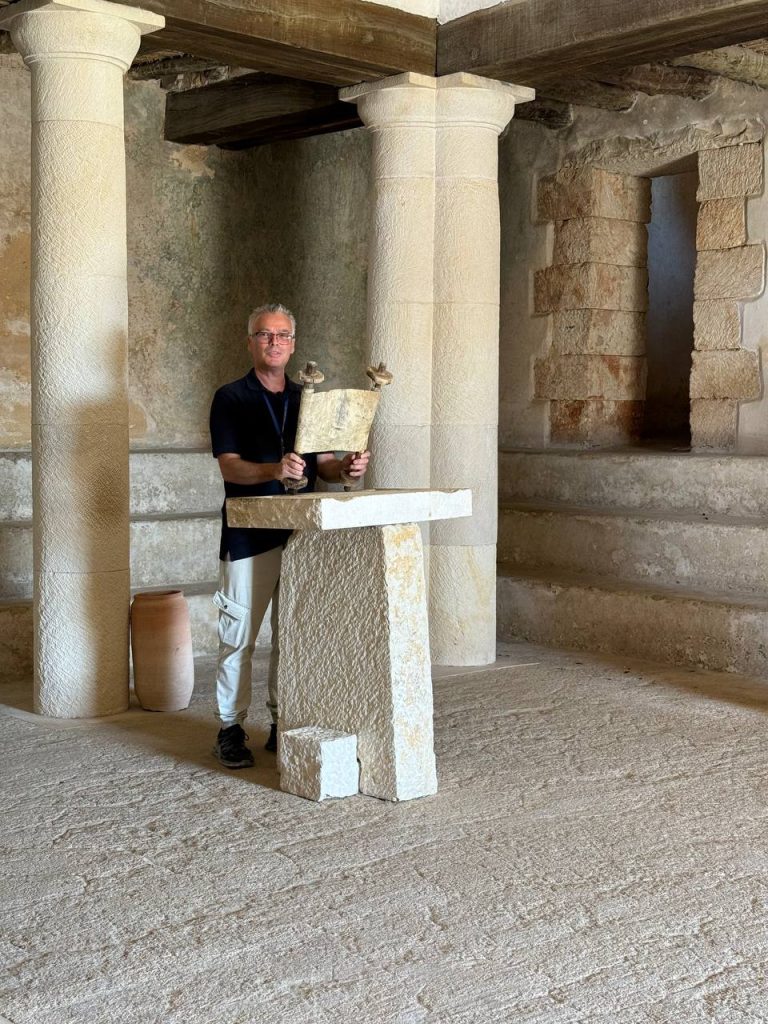
After saying good-bye to hotel staff and loading our suitcases we were off to Nazareth. This was an outdoor living history museum with costumed enactors. We learned about wine pressing. Did you know that the reason they pressed the grapes with their feet was to avoid crushing the seeds? The seeds are too bitter for good wine. We also learned about yarn making and weaving, as well as tool making and pottery throwing. Then we also had a lesson on olive oil crushing. First the olives, both green and black were crushed by a millstone powered by a donkey. You could hear the pits popping under the pressure, that’s where the good oil is, and then the mash was put in baskets and pressed three times. After the first press, this was the best oil, to be given to God. After the second pressing, this was for human consumption. The third pressing was nearly a ton of pressure, this was for lamp oil. Our guide drew a parallel to Jesus in the Garden of Gethsemane. In fact, Gethsemane means “oil press”. We concluded in the synagogue where the guide showed us a replica of a scroll.
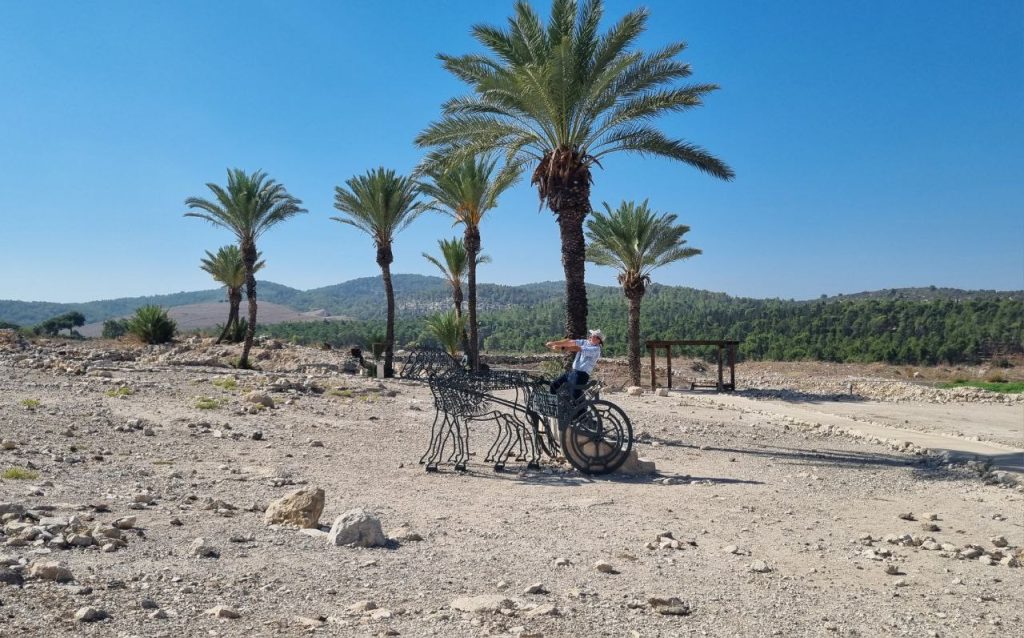
Our next stop was Tel Megiddo. This Tel is 20+ layers, so it was rebuilt on top of ruins 20+ times.
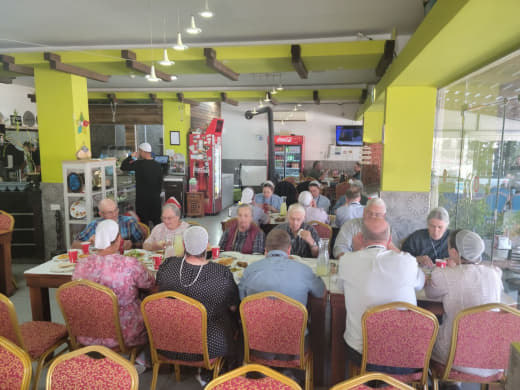
Next was lunch at a Druze restaurant. It was a buffet meal with delicious Israeli food.
Then it was up the mountain to Mt. Carmel. With a beautiful panoramic view we stopped to talk about Elijah and the prophets of Ba’al. This story happened on Mt. Carmel.
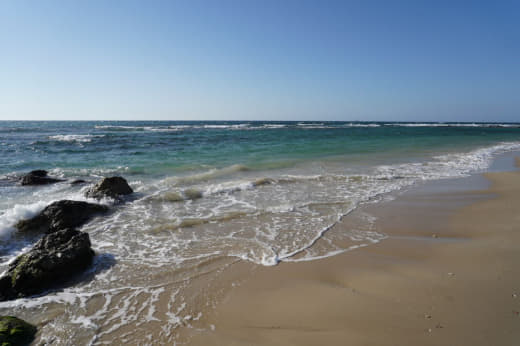
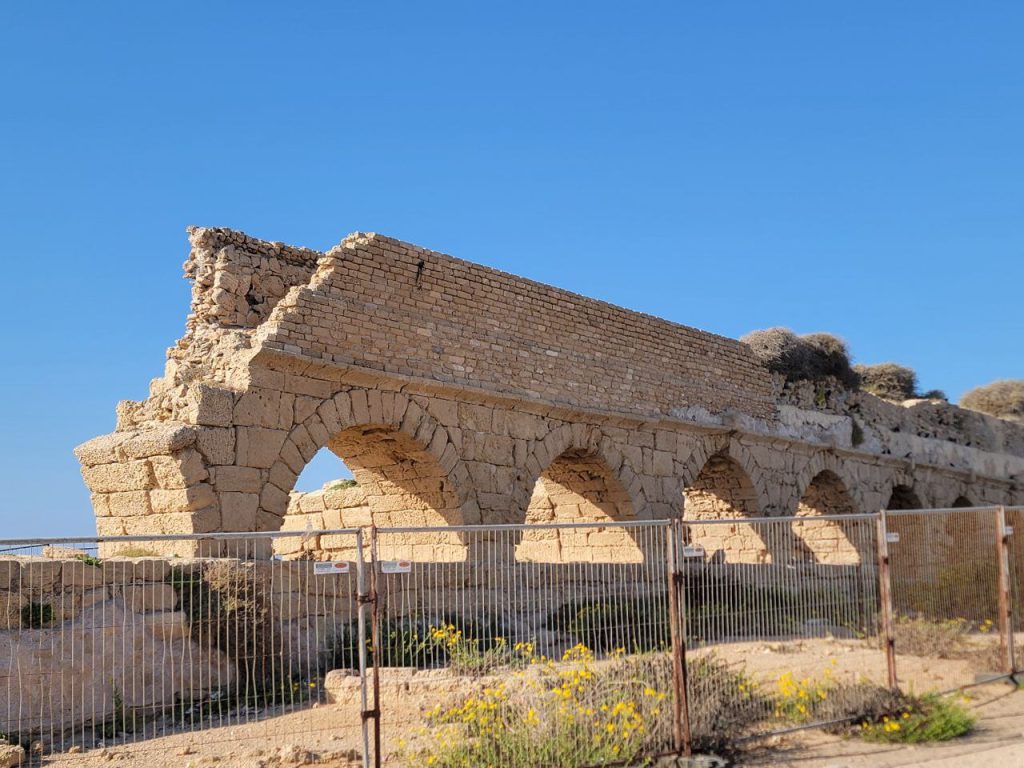
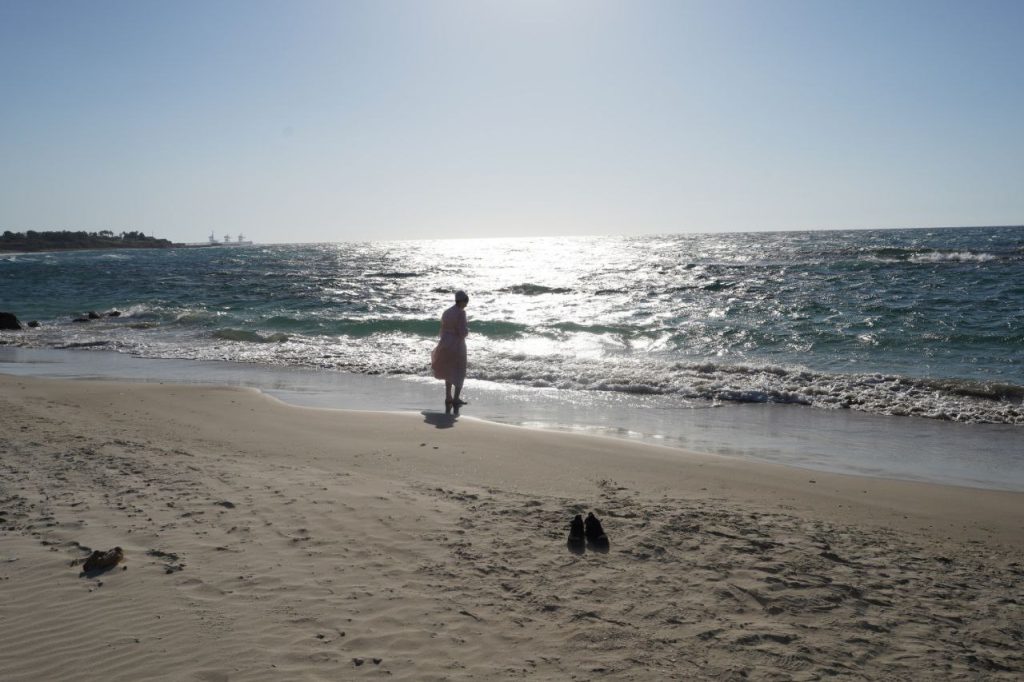
Then it was on to the Mediterranean Sea. First we stopped at the remains of an aqueduct built by King Herod. This aqueduct was 16 kilometers long, bringing fresh water to Herod’s palace. We enjoyed finding smooth rocks and pottery in the sand and envisioning it as part of Herod’s palace. Then we visited the palace ruins. These are 1st century ruins from Herod the Great. He had multiple palaces and this one was right by the Mediterranean Sea. We sang a few songs in the amphitheater before leaving. The ruins are all starting to run together, but this one was definitely the largest that we have visited.
Next we set our eyes toward Jerusalem. Traffic was heavy around Tel Aviv and as we entered Jerusalem we encountered a large protest. There were thousands of Orthodox Jews, men and boys in traditional attire in the streets and sidewalks. The government recently made a ruling that the Jews need to participate in the military and they were protesting in Jerusalem. We finally got through and on to our hotel where we will be staying for the next five nights.
Melinda Martin – The day started earlier than usual. Anyone who wanted to scale Mount Arbel was to be ready for the bus at 7:30.
After a good breakfast we were off. On the 15 minute ride, Andrew read the Great Commission. Mount Arbel is thought to perhaps be where Jesus gave it.
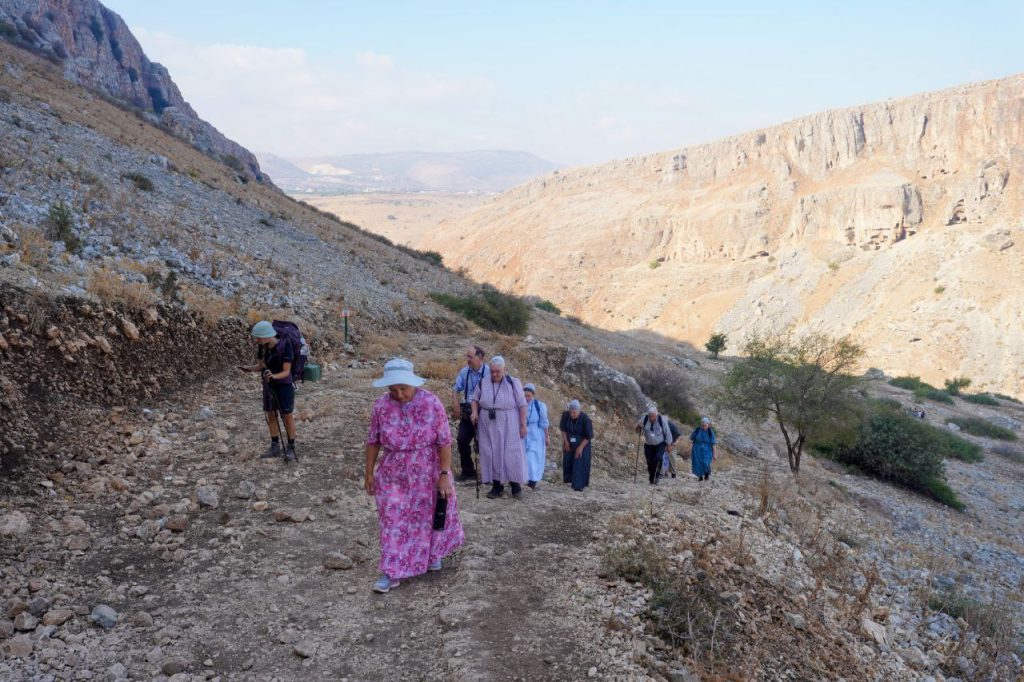
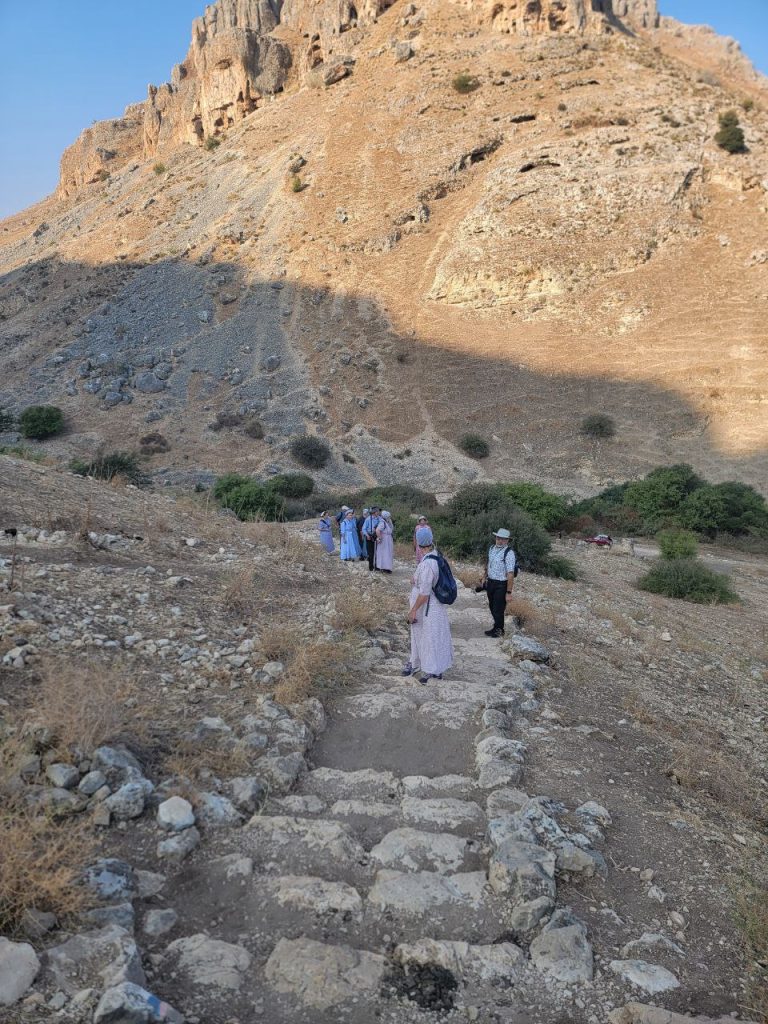
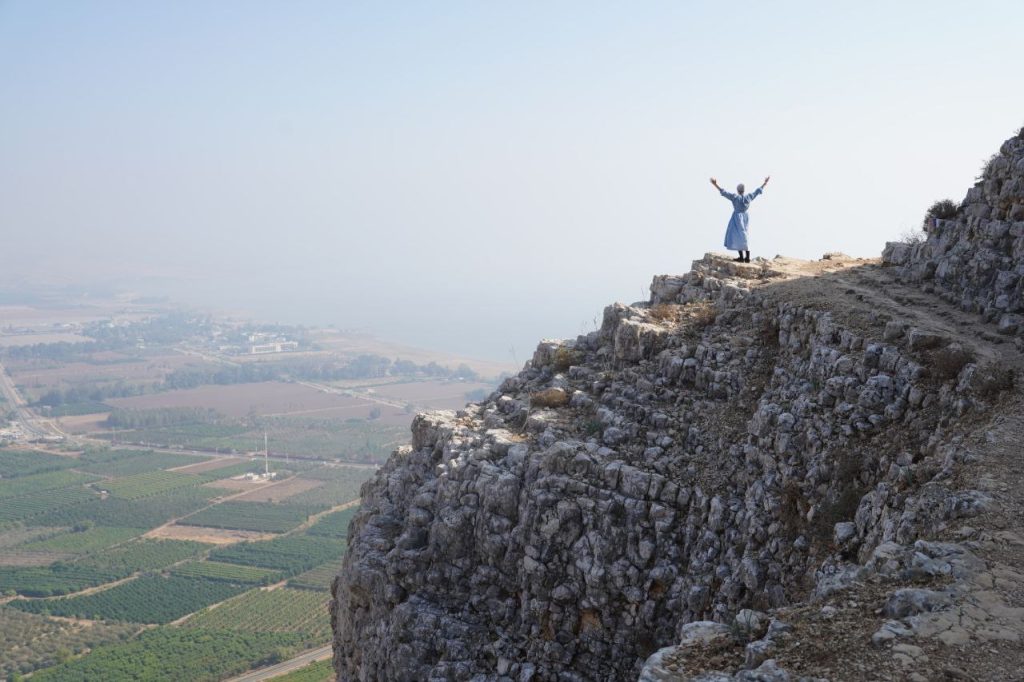
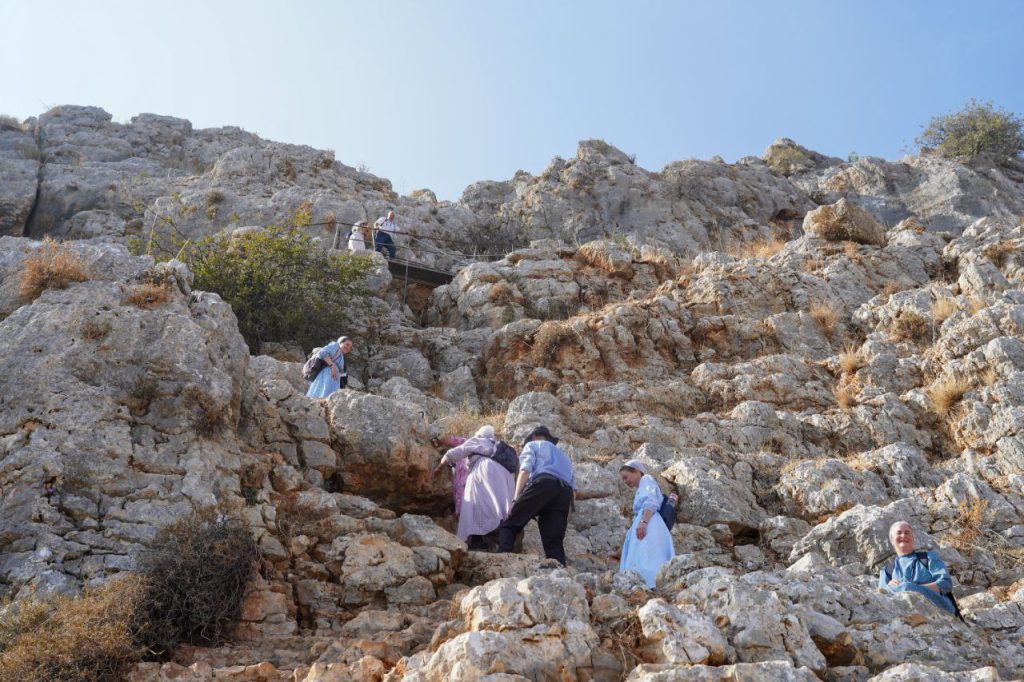
We scaled 1070 feet vertically in the length of 2.25 miles. It was mostly slopes, some places there were steps. Most places the path was 4-6 feet wide. For a short time it was just about 2 feet, I’d guess. We were not on a cliff most of the time. But the mountain sloped away fairly steeply. A lot of the steep slopes were a cow pasture. We saw a few cows grazing. I wondered what they found to eat. It wasn’t much, it seemed. It’s the end of summer/dry season, so everything is pretty much dried up. Winter/rainy season will begin soon.
We stopped fairly often to catch our breath. We started out at 100 metres below sea level and finished at 181 above. So we were not in thin air, but it was still a lung-punishing climb.
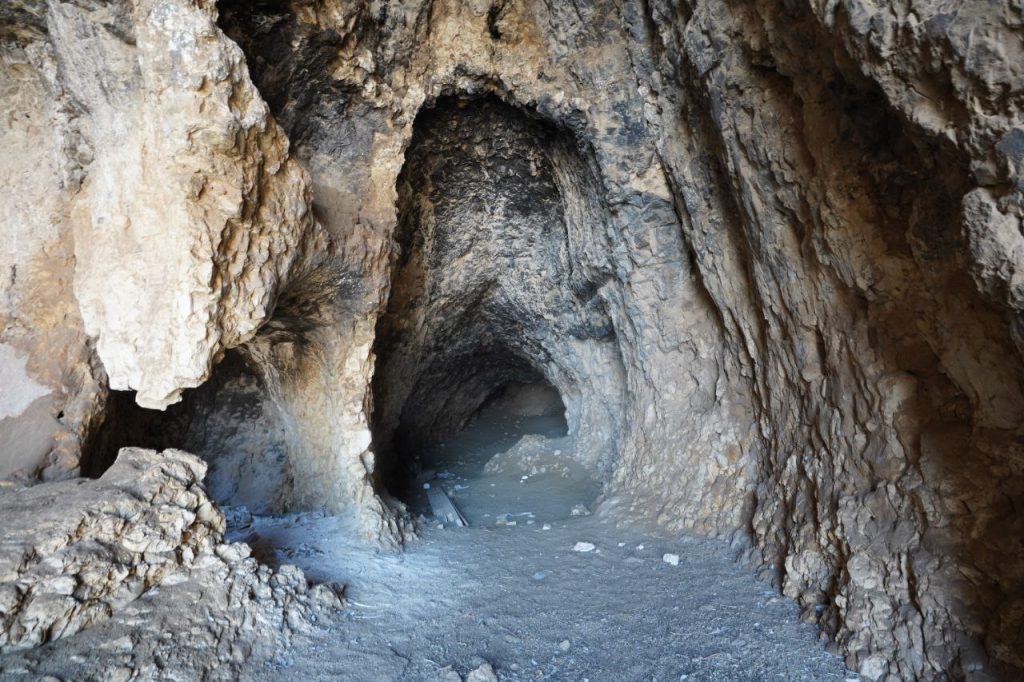
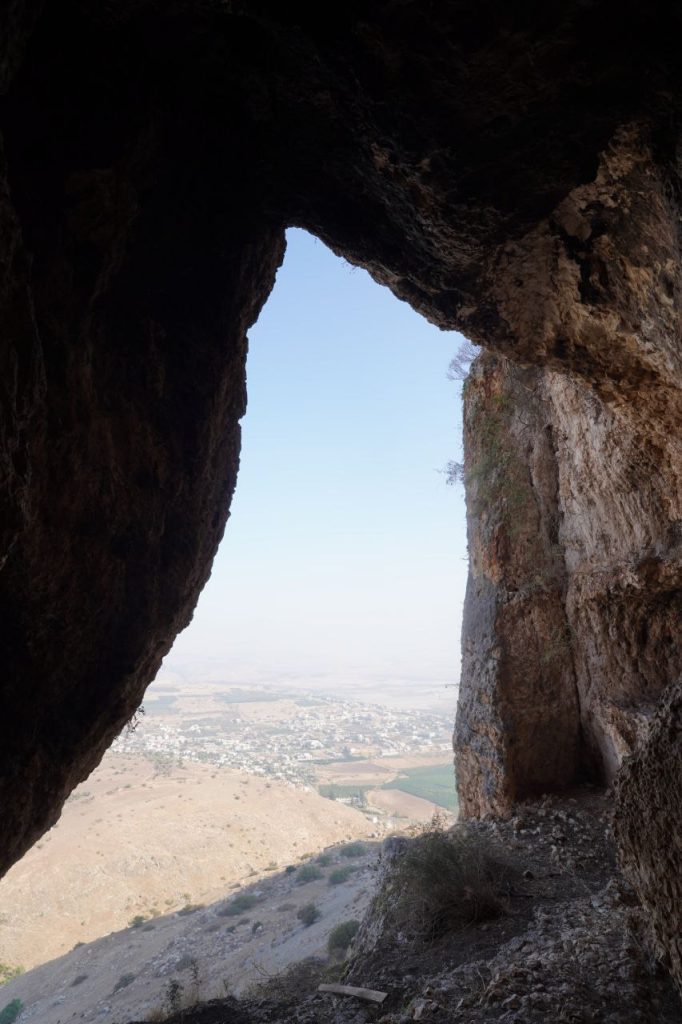
About half way up there were some caves, and an Ottoman fortress built into other caves. They were off the main trail a little piece. The climb to the caves included a spot that was no more than 16 inches of ledge, for one or two steps. The mountain sloped fairly steeply down hundreds of feet. A few of the more adventurous went to the other caves.
Some of us explored the fortress which was mostly caves instead, while others rested a little, then continued slowly on up the trail.
The last quarter of the climb was most difficult. It was not perpendicular, but close. A very steep set of “natural stairs” with varying heights of step. Some just small, others knee high or more, some stretches were so steep we about had to just crawl.
A few stretches were too vertical to hold onto the rocks to climb. There were rebar hand holds that I used for a ladder.
By doing the climb first thing in the morning, we were in the shade most of the way. It was 72 F when we started out. So it was warm already.
The last 200 feet or more was brutal. For some of us anyway. Faustina and I each were favouring an ankle by the time we got to the top, so we were not moving as fast as earlier. I think most of us ladies were pretty winded.
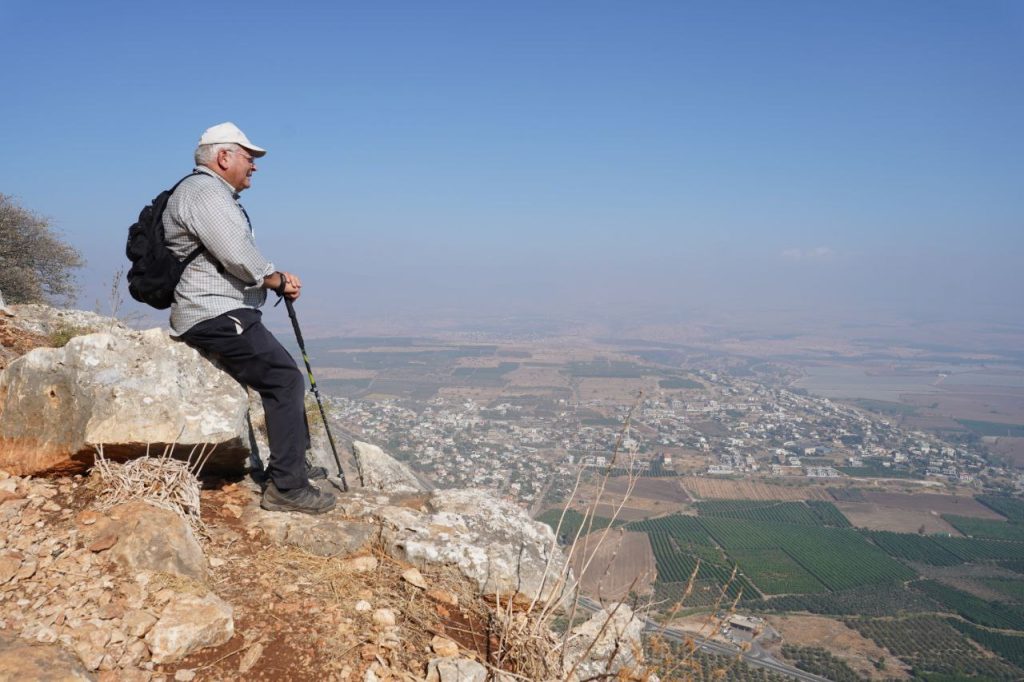
The view from the trail was phenomenal. Breath taking. Exhilarating. Words don’t do justice.
It was hazy today, so we could not see as far as we hoped. We could see the Sea of Galilee, the town of Magdala, and orchards and other green fields. They do a lot of irrigation.
Israel has learned to desalinize (de-salt) the water from the Mediterranean, so they have a good supply of water.
A few of the ladies didn’t do the climb. The bus drove them to the top, and they met us there.
The next stop in Gollan Heights was an hour away. The bus was very quiet for quite a long while as we drove along.
We stopped at a lookout where we could see Israel in the foreground, the UN compound in the middle, and Syria in the background. Someone had set up a stand and was selling honey, jam, and olive oil.
Tarek guided the bus deftly around many tight hairpin curves as we ascended the mountain.
We had lunch at a restaurant – Andrew’s favourite in that area. They had called ahead and ordered the meal, so the table was set when we arrived. It was authentic local food. Pita bread, hummus, falafel, etc. Baklava for dessert.
On our way down the mountain, we rounded a curve to meet a big truck with an excavator on it. The road was barely wide enough for bus and the truck to pass each other. Tarek said “Everyone breathe in please!” And somehow guided the bus past without scraping the guardrails or the truck. He did it with just one hand! (He isn’t maimed, he just uses one hand for most of the steering.)
Our next stop was at Caesarea Philippi. Aaron expounded on “Thou art Peter, and upon this rock I will build my church.” We sang “Oh Where are Kings and Empires Now”, and My Hope is Built on Nothing Less” in the alcove where an idol once stood.
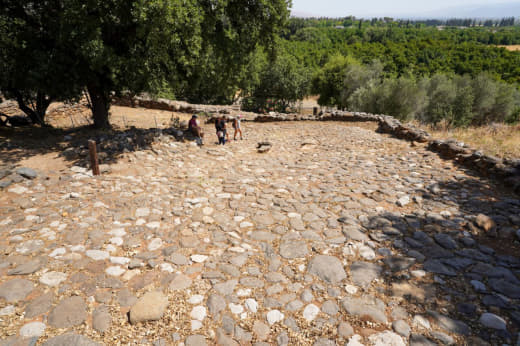
Next we went to the Tel Dan Nature Reserve. We hiked a piece, “short” according to Aaron, but not so short for those of us who were weary. Some of the trail was almost cobblestone, so we had to walk carefully.
There were lots of fig trees lining the path. Fig season is just over, so we didn’t get to see any, but the air still smelled sweet, almost coconuty. We thought maybe the leaves had a scent.
We saw where a spring bubbles up and a fair sized creek rushes away to join 2 other creeks to become the Jordan River.
We also saw the foundation of the place where Jeriboam set up his altar. He wanted to hang onto his power and authority rather than letting the people go to Jerusalem to worship. He brought in a fake religion rather than going right and trusting God for the outcome.
We had to hurry to get to the bus by closing time at 4. I think we were a little late.
We had an hour’s drive back to the hotel. We saw the Sea of Galilee at twilight as we passed by. It was a beautiful view. We sang a couple songs as we travelled.
Breakfast was delicious again. There was much more variety than the first (Inbar) hotel. And that one was Kosher, so they do not serve dairy products in the same meal as meat. Hence no meat for breakfast. This one (Ron Beach Hotel)had cold sliced sausage, hot turkey breast, and lots of kinds of cheese! And scrambled eggs, the poached eggs dish I mentioned before, vegetable and egg “muffins”. Pastries, breads, fresh fruit. And MUCH more. The crowning touch was a frame of honeycomb!
By 8:30 we went aship. A big boat was at the dock, waiting for us. The crew lent us their hand to climb aboard and we slowly sailed out. The sea was beautiful and calm. After we were out a ways, Andrew read a poem about “Mine Was the Boat.”
We sang several songs – Master the Tempest is Raging was one of them.
Aaron also gave an inspirational talk. We discussed what the “these” were when Jesus asked Peter “Lovest thou Me more than these?” We concluded that most likely Jesus meant his career, his life, his earthly pursuits
We were out for about an hour’s cruise. We popped in to our hotel rooms to pick up our bags and were off for the day.
The next stop was at what is called the Mount of Beatitudes. We walked up the path and sat in a pavilion to listen to Andrew read the Beatitudes. Aaron expounded on the first verse — “seeing the multitudes He went up into a mountain.” He made comparisons between Moses and Jesus. Then Aaron read in Hebrew and expounded in English on the Lord’s Prayer.
We had 15 minutes to tour the Catholic chapel there. There were 8 stained glass windows, each with a Beatitude on them. We were to be in total silence, so there were no explanations there.
Next stop was at Capernaum. We saw the hard basalt rock that is so plentiful in that area. They made mill stones from the basalt. Here, very close to the sea, is where Jesus said to his disciples “whosoever offends one of these little ones, it were better that a millstone were hanged about his neck and he be drowned in the depths of the sea.”
We also saw the remains of the synagogue. The basalt foundation was most likely from Jesus’ day, but the limestone walls were from the fourth century.
From there we went to a restaurant for lunch (paid by Pilgrim Tours. 😊) We had the choice of a whole “St Peter’s fish”, a fillet, or chicken. Six of us took the whole fish, one ordered chicken, the rest ordered fish fillets. We teased Nate that he’s a “chicken” for ordering chicken! When the meals came, they set fish in front of Nate too! He ate it and even said it was good. Our bus driver, Tarek (long e) said he doesn’t eat fish. He doesn’t like to worry when he’s eating.
After lunch we went to Magdala. Here we saw the ruins of a synagogue that was from Jesus’ day. Here Jesus most certainly sat. Matthew 9:35 tells us he went through all the cities and villages and taught in the synagogues.
There is also a Catholic cathedral there. In this one we were welcome to sing in the high domed foyer. We sang one song, then the priest came and took us to a room off the side where there was a mosaic of Jairus and his daughter, whom Jesus raised to life.
He showed us to the basement, to another room with a cobblestone floor. He said that was once part of the road where Jesus walked. There was a mosaic on the wall of “The Encounter,” depicting the woman who touched the hem of Jesus’ garment (or the corner of his tassels, as the Hebrew says). He asked if some woman would like a gift to take back home for some broken, depressed person. Lafaye was the first one to say yes. He got her to stand in an exact spot, and make her hand like she was touching Jesus. He took a picture of her. It turned out beautifully, looking just like she was touching the garment. He said, “Send that picture to someone and say ‘I touched Jesus in prayer for you today.’”
We returned to the foyer and sang a few more songs. The priest came and showed us that by standing at different places we get a different crescendo. He had us stand out at the edge of the circular foyer to begin the song and move in a few steps part way through, then end it right in the middle. It was glorious! We sang another 4-5 songs. We sang “Tell Me the Story of Jesus”, “There is a God” and more. Another tour came in and some of them sang with us. A touching experience, words don’t do justice.
It was warm in there, we were all in need of water by then.
It was well past 3. Time to head back to the hotel. We stopped at a parking lot on the north side of the lake and crawled out over the rocks to enjoy the view. Some dipped their toes into the cool water
We got back to the hotel around 4:15. We had time to relax, stick our toes into the water again, do laundry, etc.
LaFaye Hurst – The day dawned clear and bright, not a cloud in the skies. When we boarded the bus we headed toward the Dead Sea again. We drove along the shoreline of the Dead Sea with the Judean Mountains on the one side, the Dead Sea on the other, and on the other side of the water Jordan was always visible.
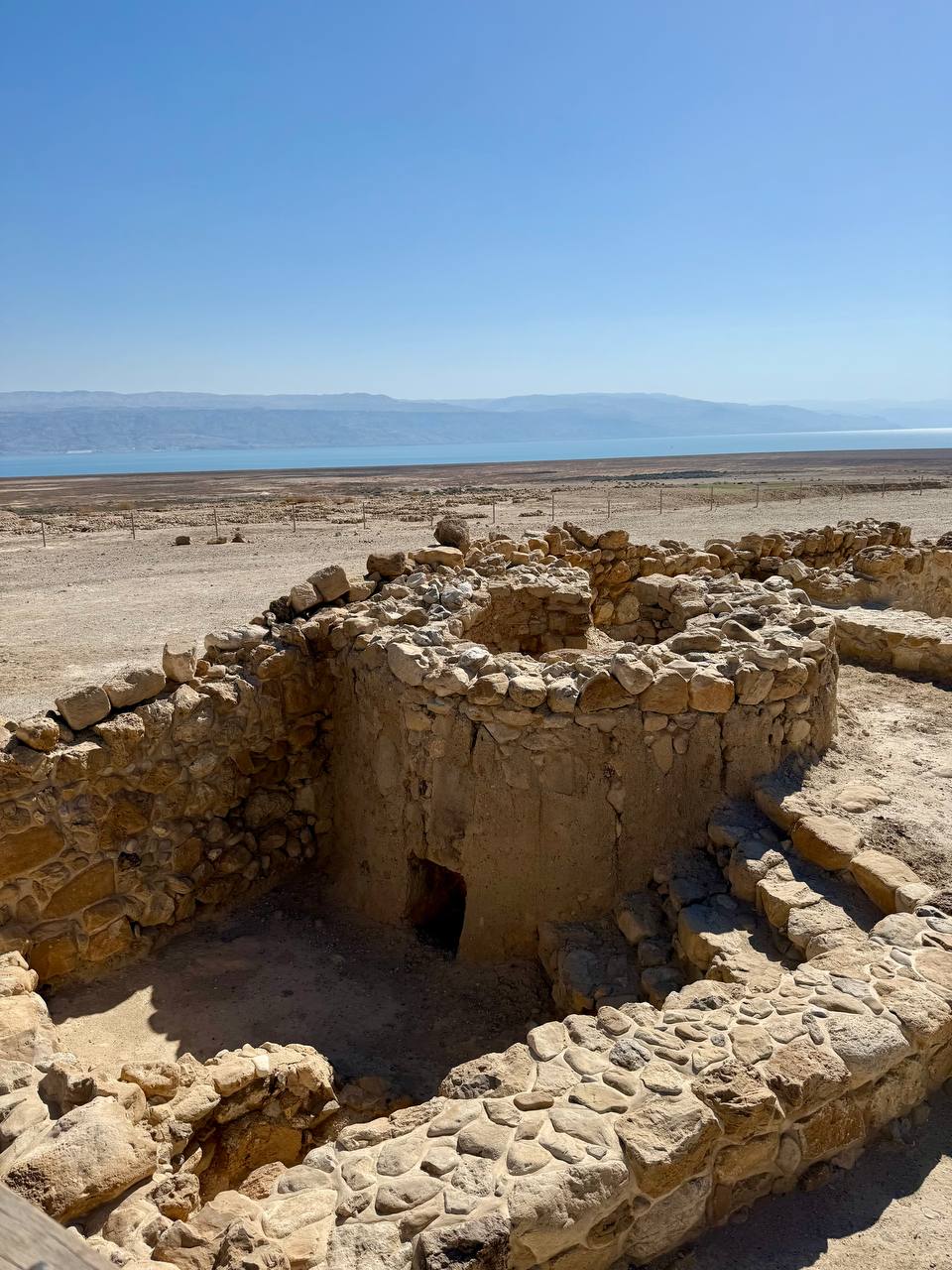
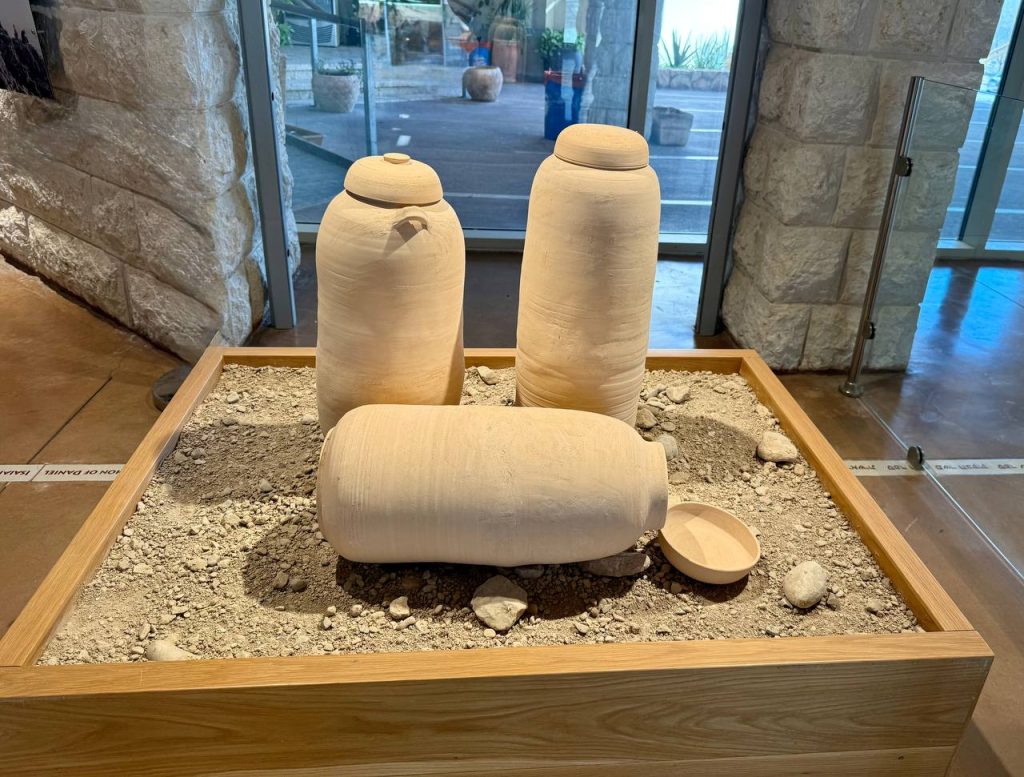
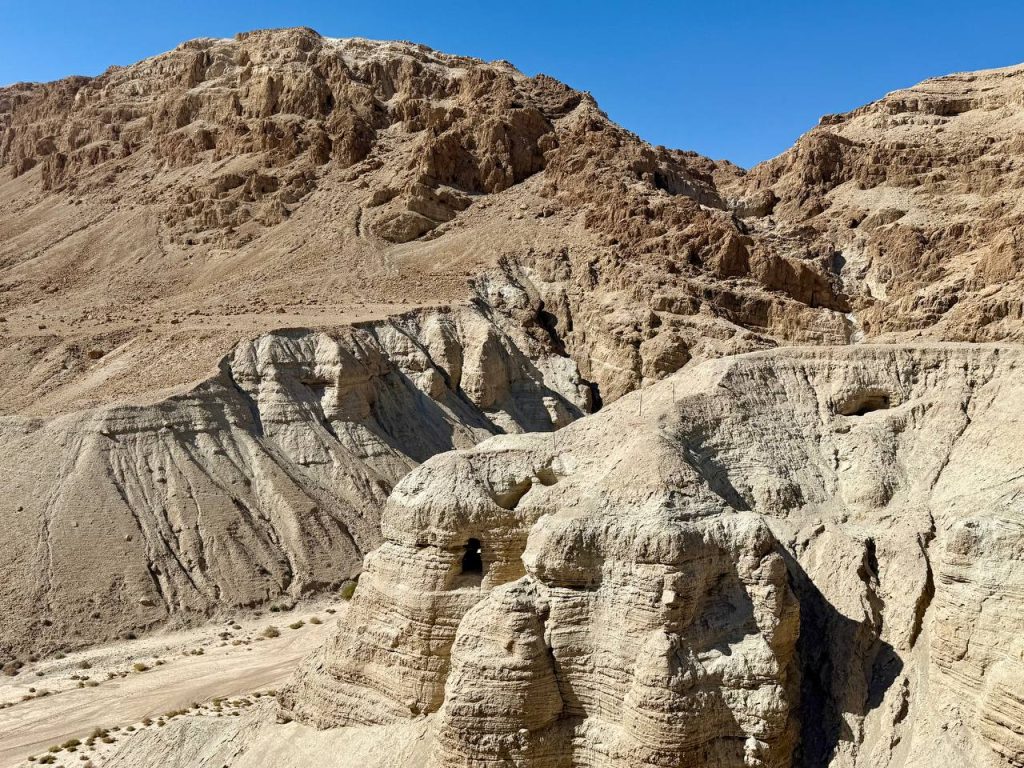
Our first stop was Qumran, the site of the discovery of the Dead Sea Scrolls. Within the modern day West Bank, Qumran is perched on the edge of the Judean countryside, overlooking the Dead Sea. Currently, there are 11 caves where Dead Sea Scrolls have been discovered. These ancient texts were written by a community (similar to Hutterites or a Kibbutz) of men, possibly Sadducees. When they sensed they were about to be invaded by the Romans they hid the parchments in clay jars and hid them in caves.
Can you find the caves where the scrolls were hidden in jars?
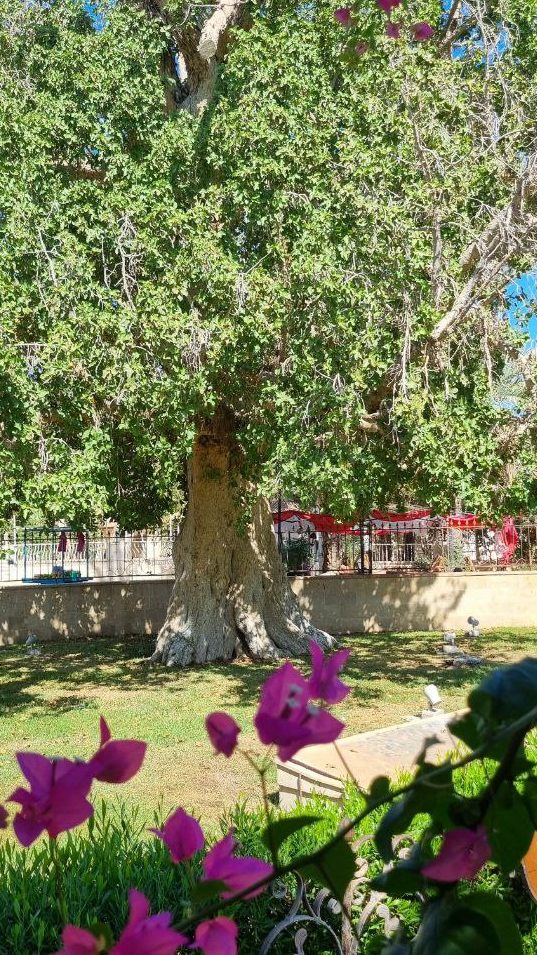
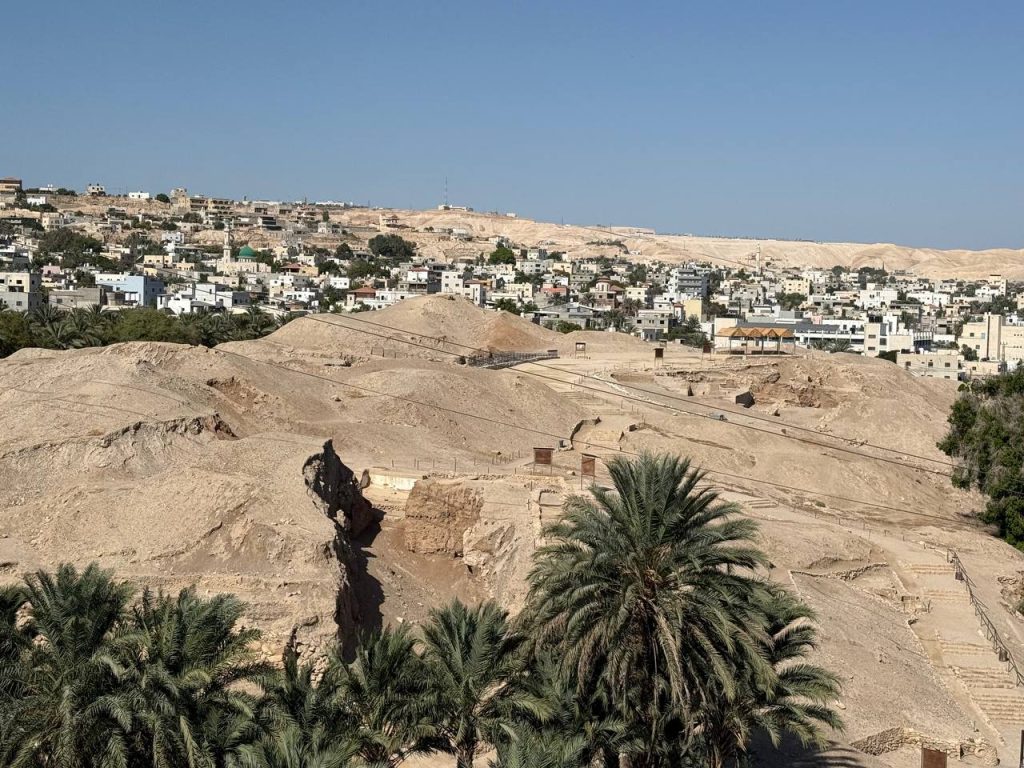
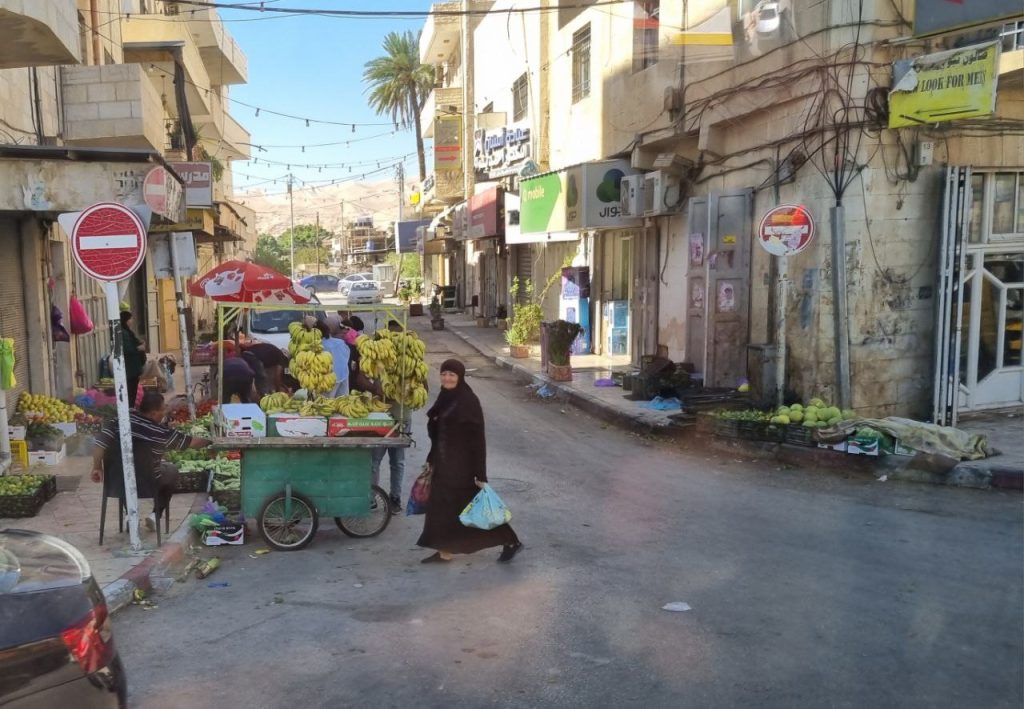
As we left Qumran there was an announcement made that one of our planned stops was not open so there was a change of plans. That we would instead be visiting the town of Jericho. What a lovely surprise! Current day Jericho is an Arabic community with some Muslims and Christians. Our first stop was at a large Sycamore tree. Possibly even the one that Zaccheus would have climbed. It was a large tree with wide spreading limbs.
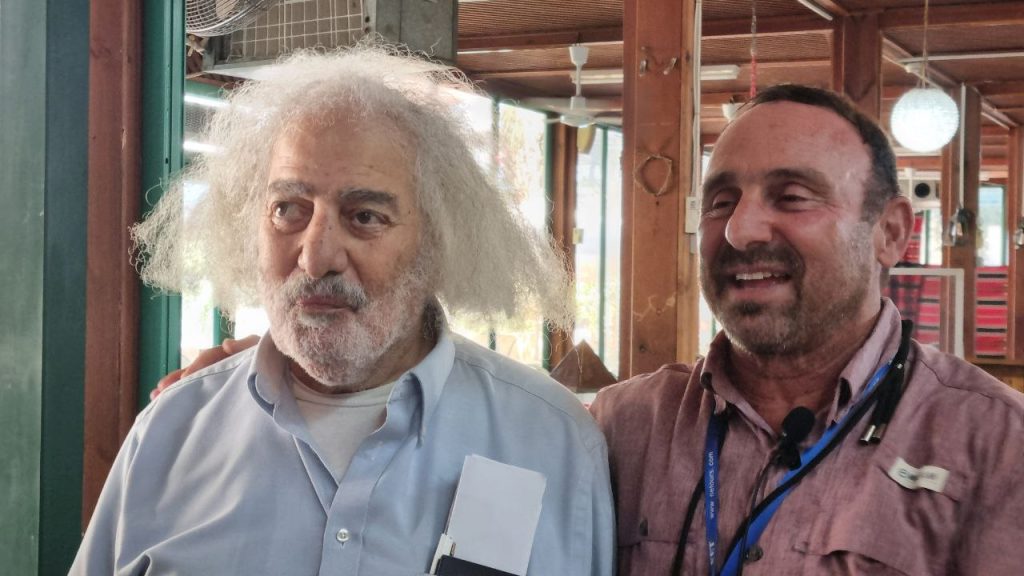
Then our tour guide took us to his friend’s establishment where we met an Albert Einstein look-alike. We had time for souvenir shopping of Dead Sea skin care products, Shofar horns, beautiful glass items, and dates.
Next we did a quick jog to the top of the building for some history and stories as we overlooked the city.
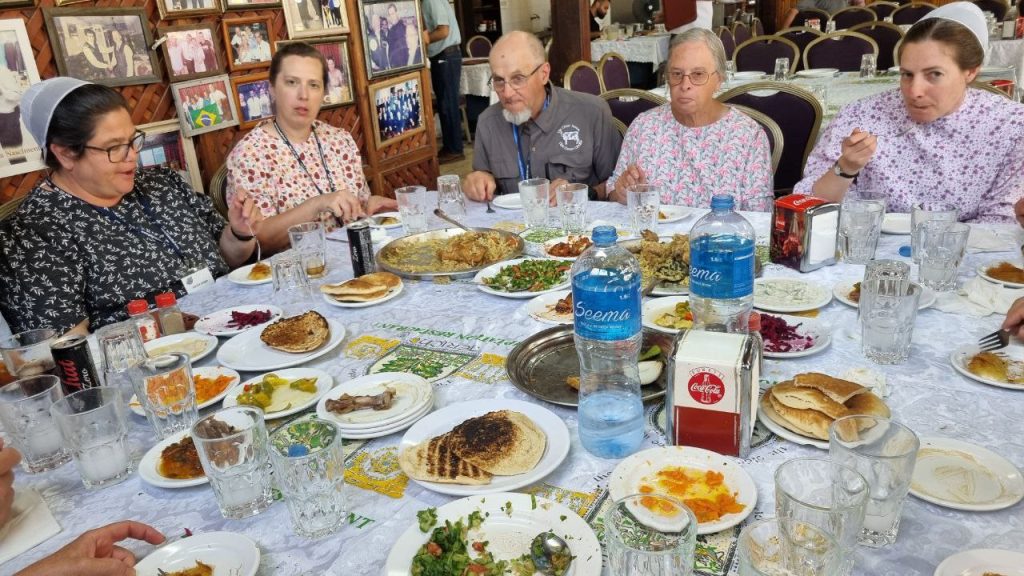
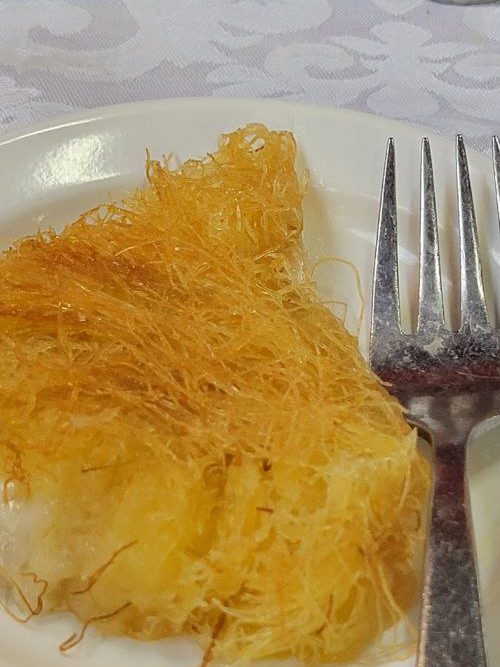
Then it was time for lunch. They set out an impressive spread for us! Many tasty salads and a special rice dish with chicken and vegetables. They topped it off with a special dessert called knafeh; it was so good it had the ladies asking for the recipe!
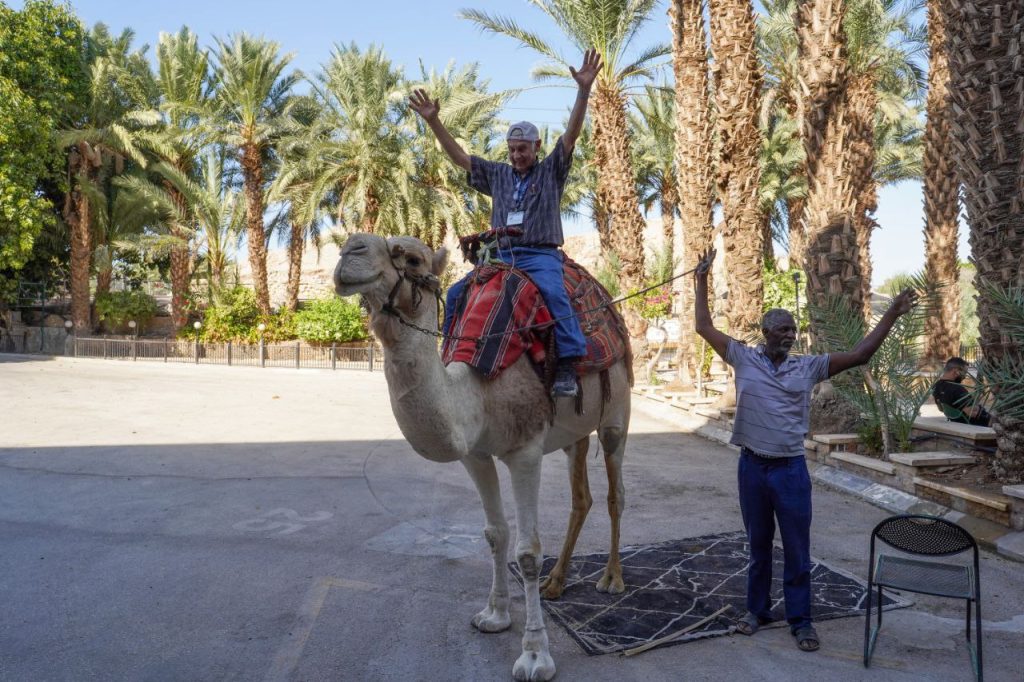
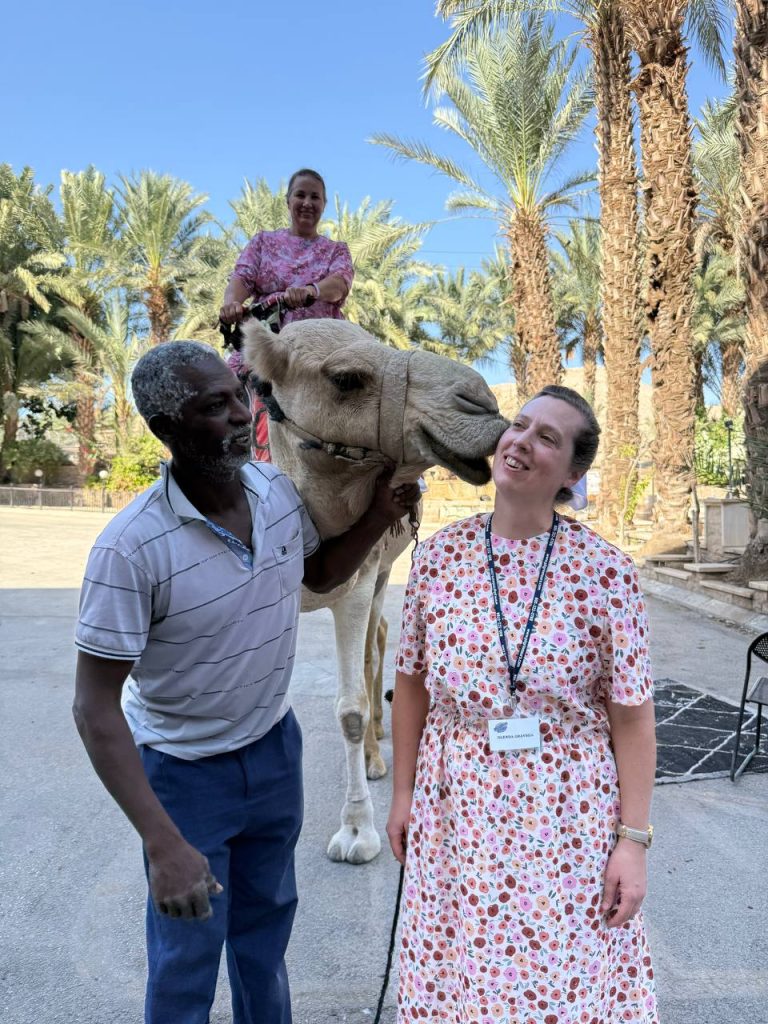
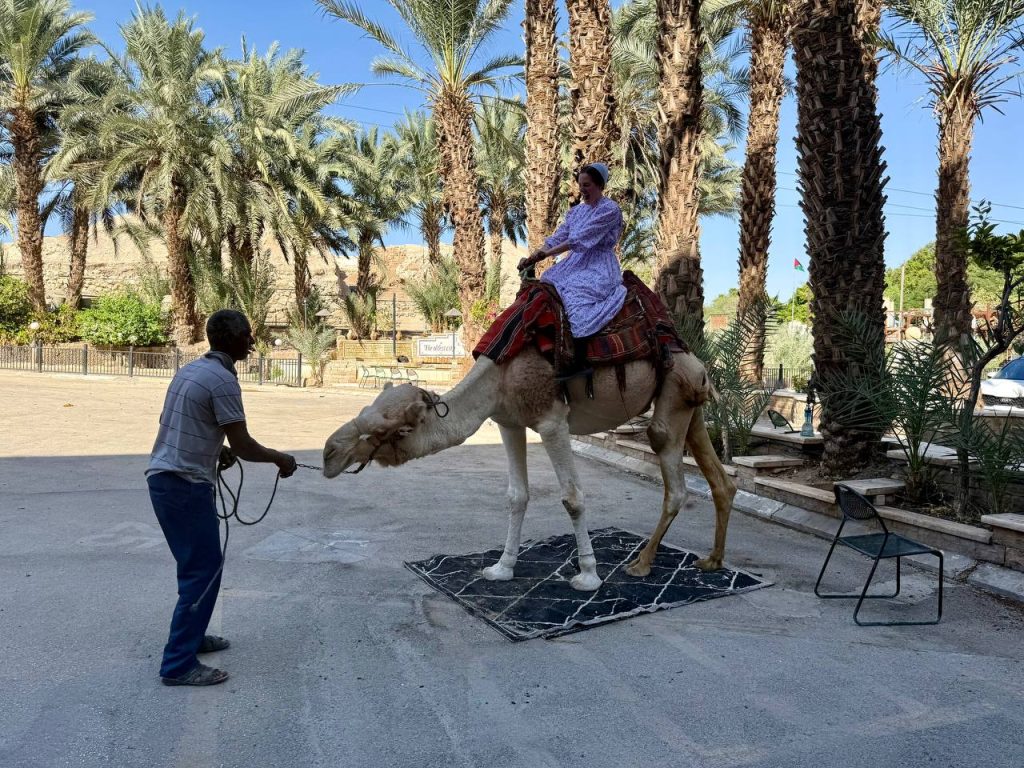
The highlight of the day was camel rides! Because time was slipping away, the rides were very short but a ride up on top of a tall camel is an experience not easily forgotten! Not to mention the ones who got camel kisses.
Everyone is very happy to see us. Tourism has been non existent for the past two years due to the war.
Leaving town and heading into the Judean hills the scenery quickly started to change. The ground turned from desert to lush farming ground. Large fields of date palms, mangos, apples, eggplants, corn, bananas and more date palms. The hills were covered with grasses and shrubs in the low lying areas.
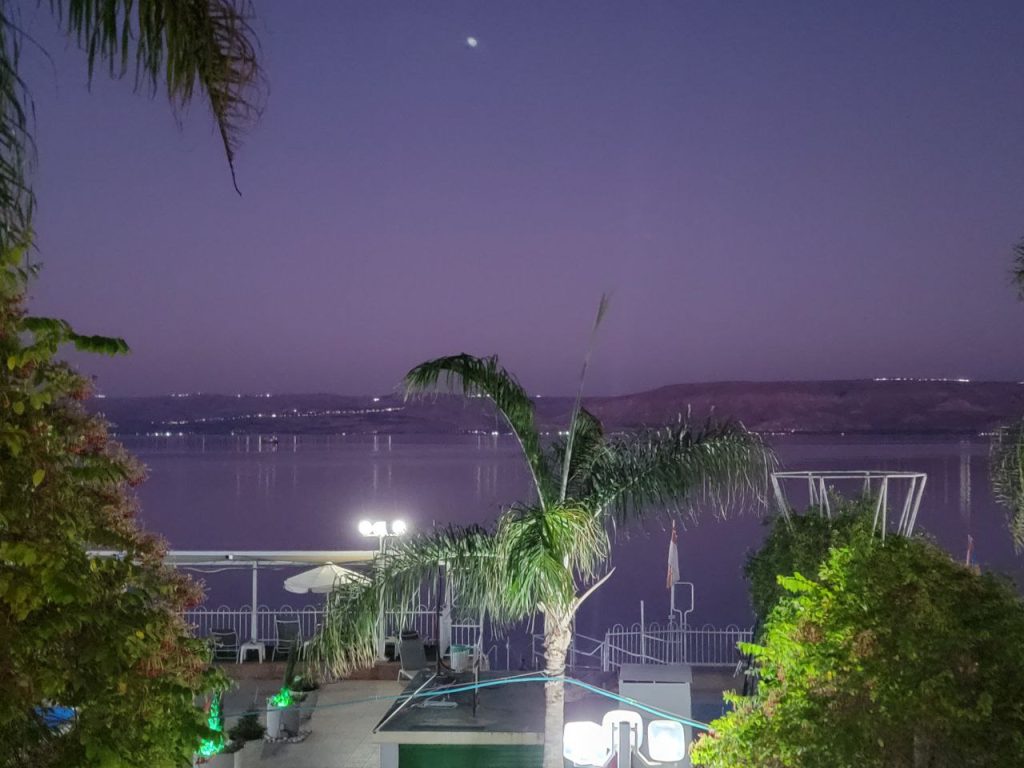
We left the Dead Sea behind and started looking for the Jordan River. Surely it’s there somewhere. When we finally crossed it, there was a bit of surprise and disappointment. It was barely larger than a small creek! Then as we rounded a curve the beautiful Sea of Galilee came into view. The sun was setting and it bathed the water and surrounding mountains with a soft glow.
We settled into our hotel on the shores of the Sea of Galilee and enjoyed a delicious supper before retiring for the night.
M.M. – Breakfast was very similar to yesterday, but instead of scrambled eggs it was poached eggs in a tomato/veggie “salsa” for lack of better description. (Editor’s Note: this is a Mediterranean dish called shakshuka)
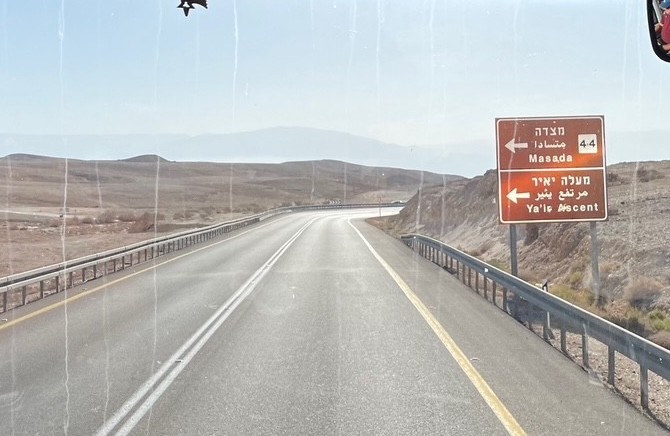
L.H. – After a delicious breakfast and boarding the bus we traveled north from Arad where we are staying. We started traveling down, down, down through the desert hills and valleys. As we descended we started to see signs specifying how many feet we were above sea level. Eventually we dropped below sea level and the Dead Sea appeared in view. Since we were at the southern end of the Dead Sea there were salt pans and mounds of salt being harvested. Caribbean blue in color with a backdrop of mountains behind it, the Dead Sea sits 1,400 feet below sea level, making it the lowest place on the earth.
M.M. – The Mountains of Moab, on the other side of the Dead Sea were very clearly visible today. They said it was exceptionally clear. Aaron pointed out Mt. Nebo.
Our driver was very careful. Cars passed him, but he didn’t go fast. I was sitting where I could see the speedometer, and the time I checked it looked like he was going 60 km/h if I could see right. Aaron told some of us that the driver is Muslim.
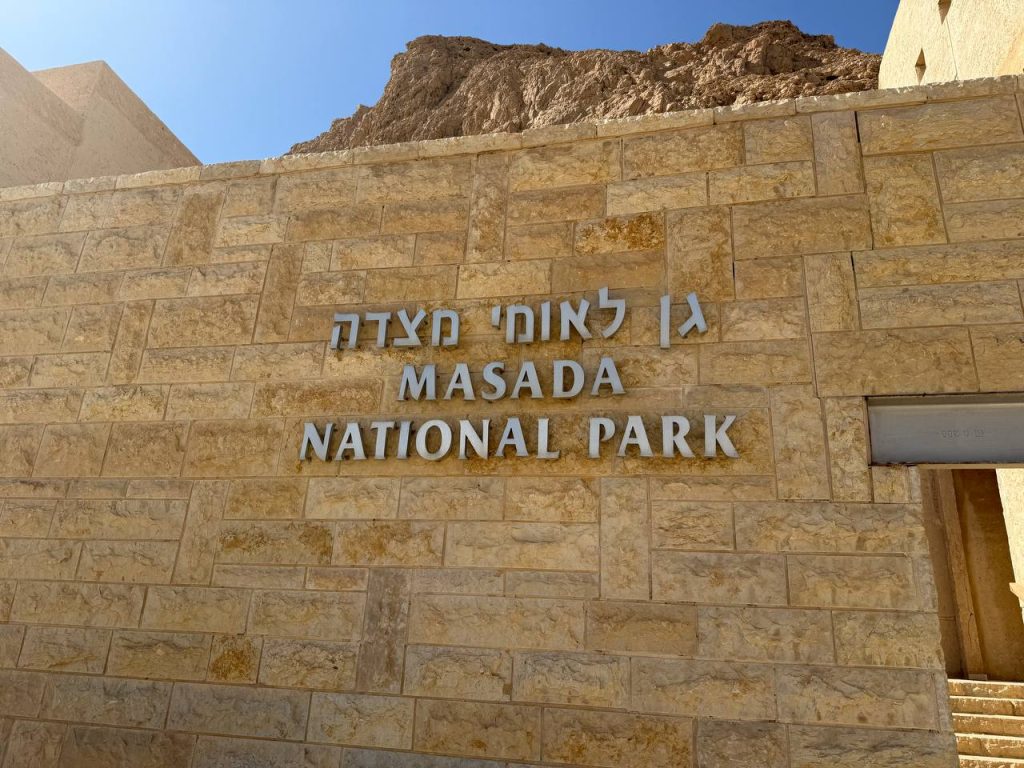
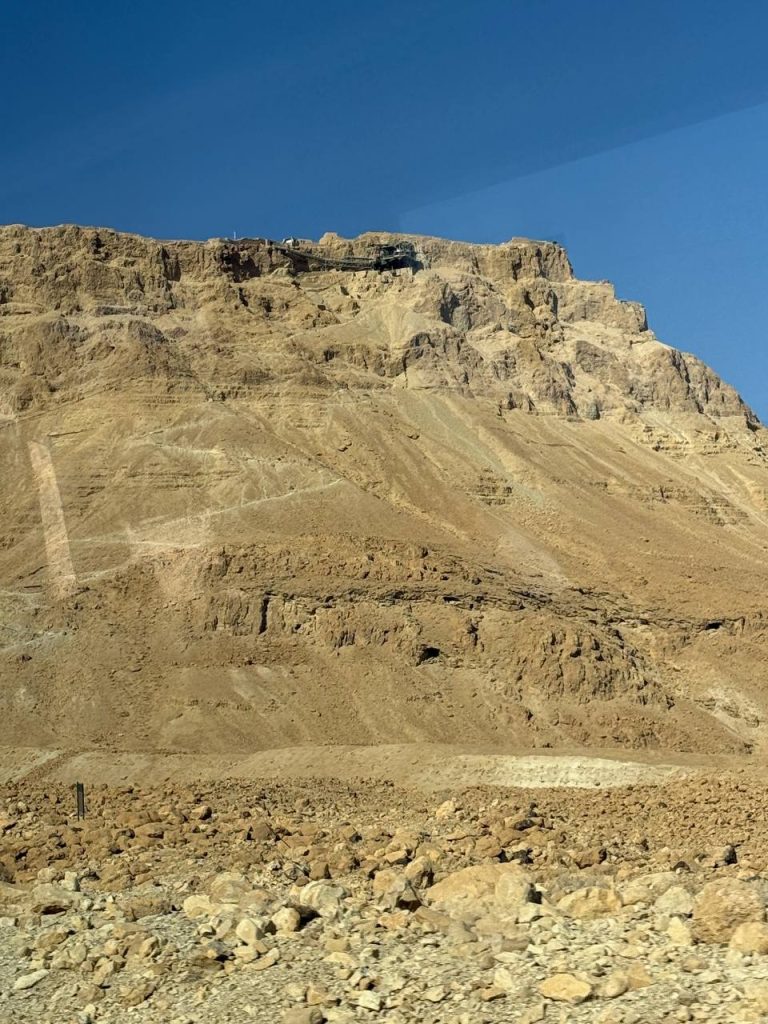
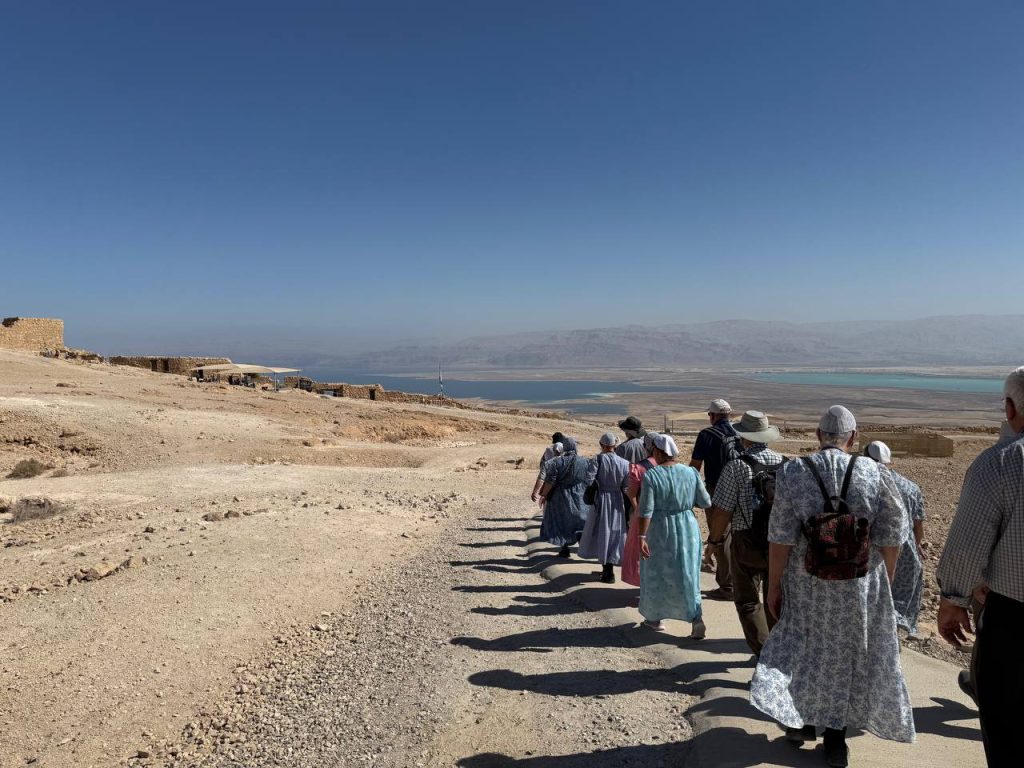
L.H. – But in all its beauty we were not headed to the Dead Sea. We were headed to a high mesa where a cable car awaited us to enter Masada Park. While this site is not specifically mentioned in the Bible, it has much historical relevance. Herod the Great had four palaces and a fortress here. Masada was also the site of the Jewish Zealots’ last stand in 72 AD.
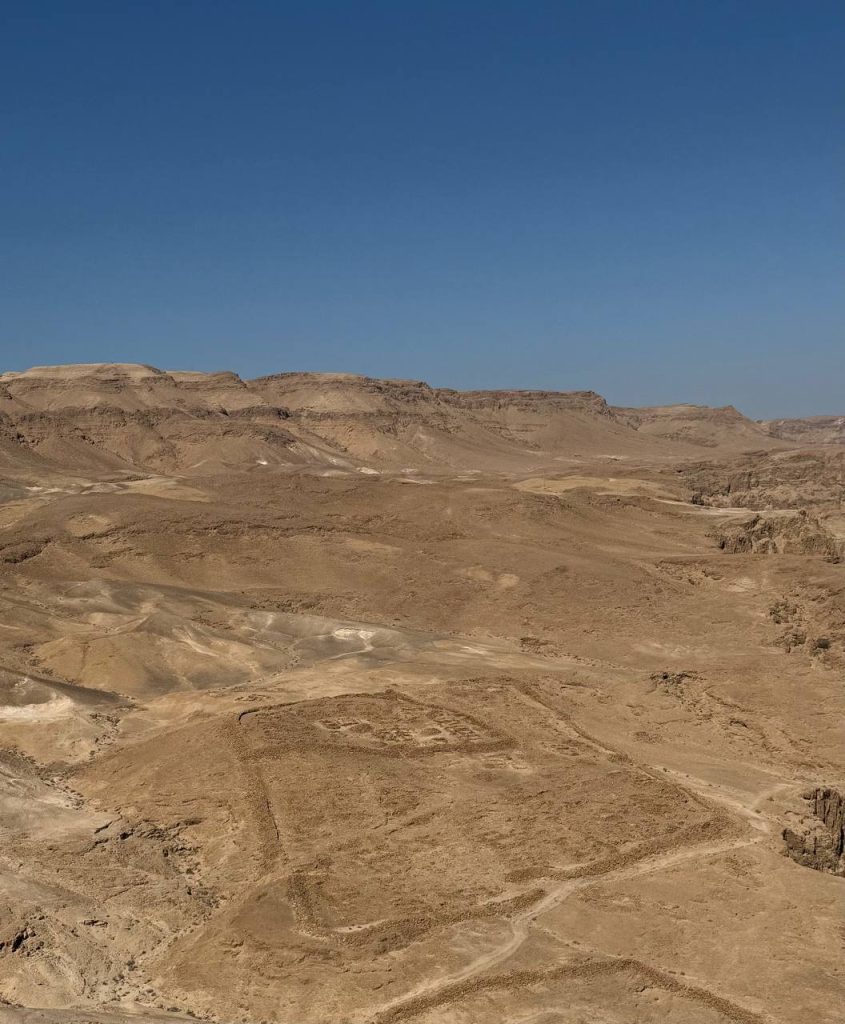
We had a short worship service with singing and a message by Orval Graybill. We explored the storage rooms, and the bathhouse complete with some original mosaic tiles and the casement walls. Because there is very little rain here, these sites have not been eroded away. We saw the Roman encampments (8 of them) and battle ramp below. We soon were short on time and there was still much to see so we hurried through parts of it. We did stop to say hello to the scribe who was tucked away in the Synagogue, copying the Torah.
Ruins of a Roman encampment below Masada
Our next stop was at Ein Gedi. Ein means spring and Gedi means young goats in Hebrew. This was the hiding place when David was hiding from Saul. It really made this story come alive when we saw the caves tucked away into the cliffside. It was easy to imagine Saul asleep in a cave and David slipping in and cutting off a corner of Saul’s robe but choosing not to slay him. There was a lovely waterfall and stream. It was refreshing to remove our shoes and socks and enter the crystal clear water. The air was filled with lovely birdsong as this area is on the migration path for birds.
En Gedi is a symbol of refreshment. God is our En Gedi. We are to be an En Gedi to others. Do you know someone going through a desert time? You can be their En Gedi.
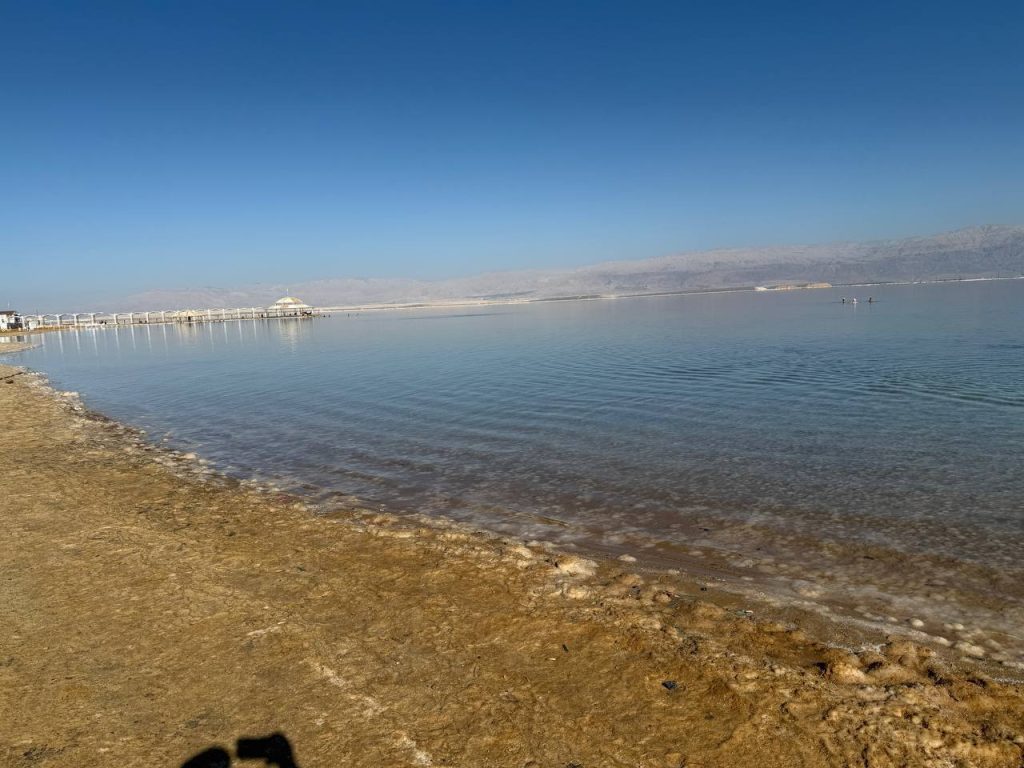
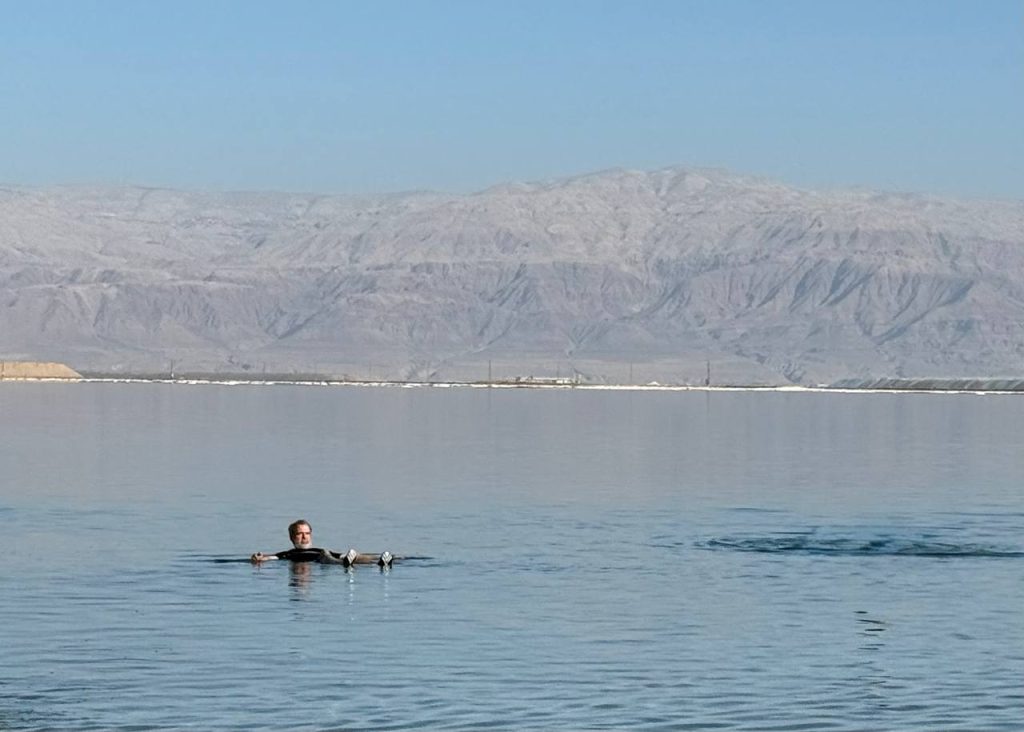
After a lovely lunch by the Dead Sea we had a time of exploration and cooling off in the Dead Sea. What an experience! Andrew said this is his first tour ever where everyone entered the water. Some floated, some sat, and some stood but we all enjoyed the water. It was a very unique feeling on your skin. It stung a little but it felt thick and almost oily. It’s hard to describe. It was clear all the way to the bottom with no waves. The bottom was white and had a crust of bumpy salt. After changing back into dry clothes we headed back to our hotel for a showers.
M.M. – One of the ladies had a few terrifying moments when she lost her balance and was face down in the water. Thankfully a couple people were able to hurry to her aid. We led her to the outdoor shower and showered her off. She kept her eyes closed as the salt water stung her eyes. But after she had recovered her equilibrium, she enjoyed a soak too.
We gathered salt from the bottom of the lake into ziplock bags to keep as a souvenir. The bottom was all just salt. No sand whatsoever where we were.
We saw fighter jets for the first time today, in practice runs down the Jordan/Rift Valley.
L.H. – For supper “Akiva” Jonathan Hollinger and his wife joined us. They were formerly Mennonites from Pennsylvania who moved to Israel and converted to the Jewish faith. We had a discussion time with them in the lobby following our meal till some of us couldn’t keep our eyes open any longer. Jet lag is still a part of our travel experience.
Most of our posts for this tour will be written by LaFaye Hurst and Melinda Martin. This first post contains excerpts from both, signed by their initials.Most of the photos are by Andrew.
M.M. – Doris and I both slept very well. The 6:00 wake up call on the phone announced the beginning of our day.
By 6:55 we went to the elevator. Breakfast was supposed to be at 7:00. It seemed to take the elevator a long time to come to us on the 4th floor. I think most of our group was down to the dining hall before 7. They were all sitting at tables, eating. There were about 5 stations of food. Hot scrambled eggs, hard boiled eggs, chunks of potato in a delicious brown sauce, several kinds of phyllo pastry delicacies. Another station had 3-4 kinds of cheese, besides yogurt, cottage cheese, etc. A veggie bar with cherry tomatoes, cucumber slices, pickles, olives, egg salad, hummus, red and orange bell pepper slices, several kinds of fish, etc, a baked goods bar and a cold cereal bar. And of course, coffee! But the baked goods, for all the good looks, are not sweet.
By 8:00 we were going to the bus. (Both the bus driver Tarek, and Aaron are staying at the hotel too.) Aaron and Andrew are a fairly relaxed pair. A “Try to be punctual, but don’t stress” kind.
We drove through the desert to Tel Be’er Sheva. We saw Bedouin settlements, complete with camels, new Jewish villages in the building stages (one had 29 cranes) and vineyards and olive trees. It seemed like a dream!
L.H. – Today we started our journey in Bible lands in the southern part of Israel, in the Negev Desert. We are starting out in the Old Testament sites. This is the land of the patriarchs. Abraham, Isaac & Jacob.
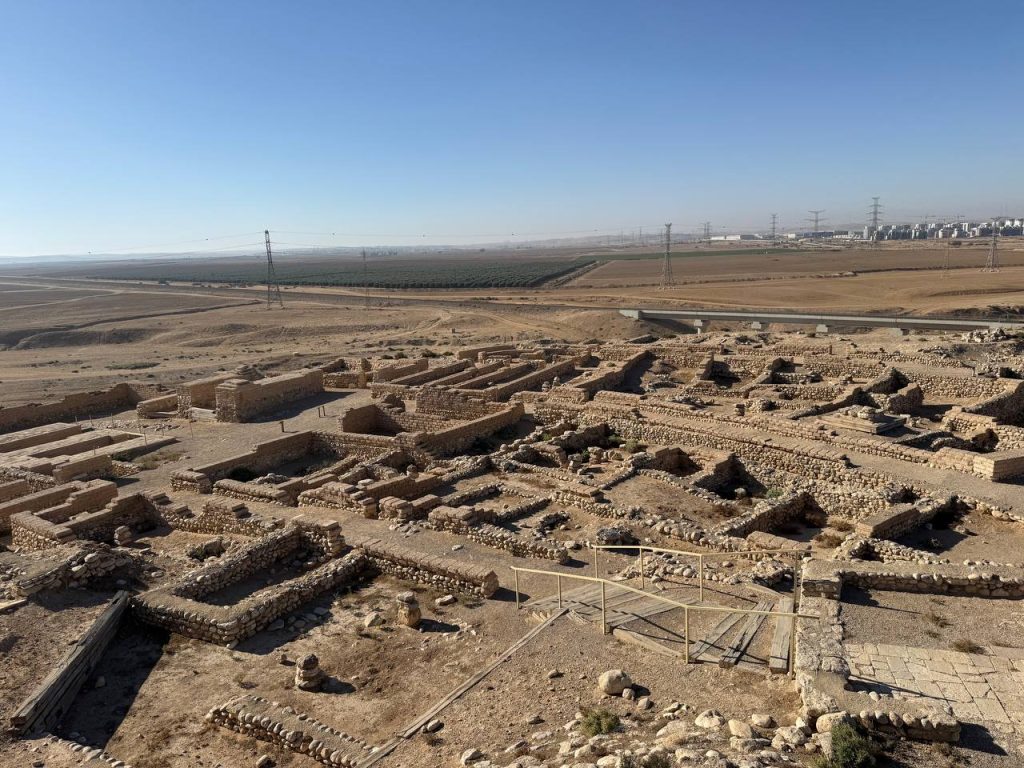
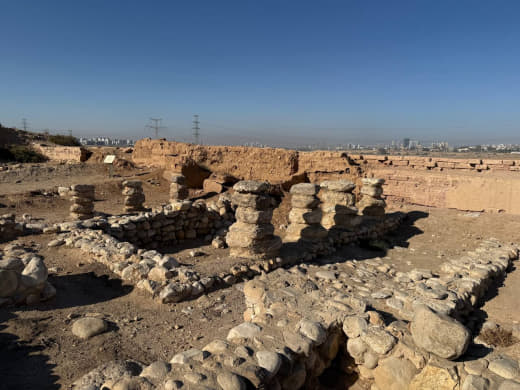
Our first stop was Tel Be’er Sheva or also known as Beersheba. This was the southernmost city in Old Testament Israel. So the saying from Dan (north) to Beersheba (south).
We learned that a Tel is a Hebrew word for a place where ruins have been discovered and built overtop . So now I know that when we are going to a Tel that we will see ruins.
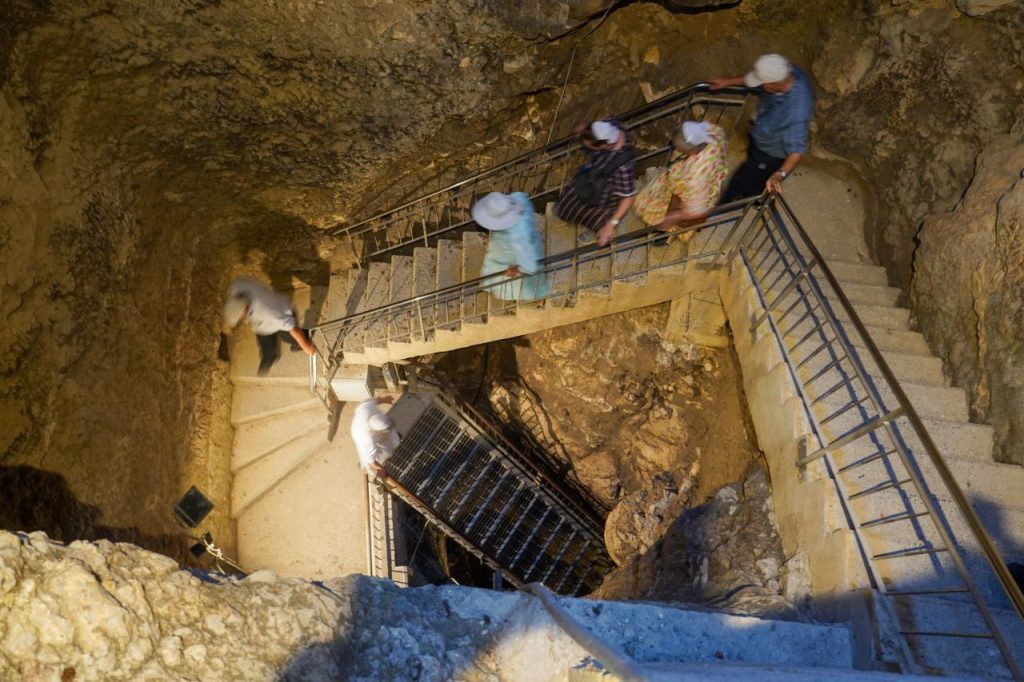
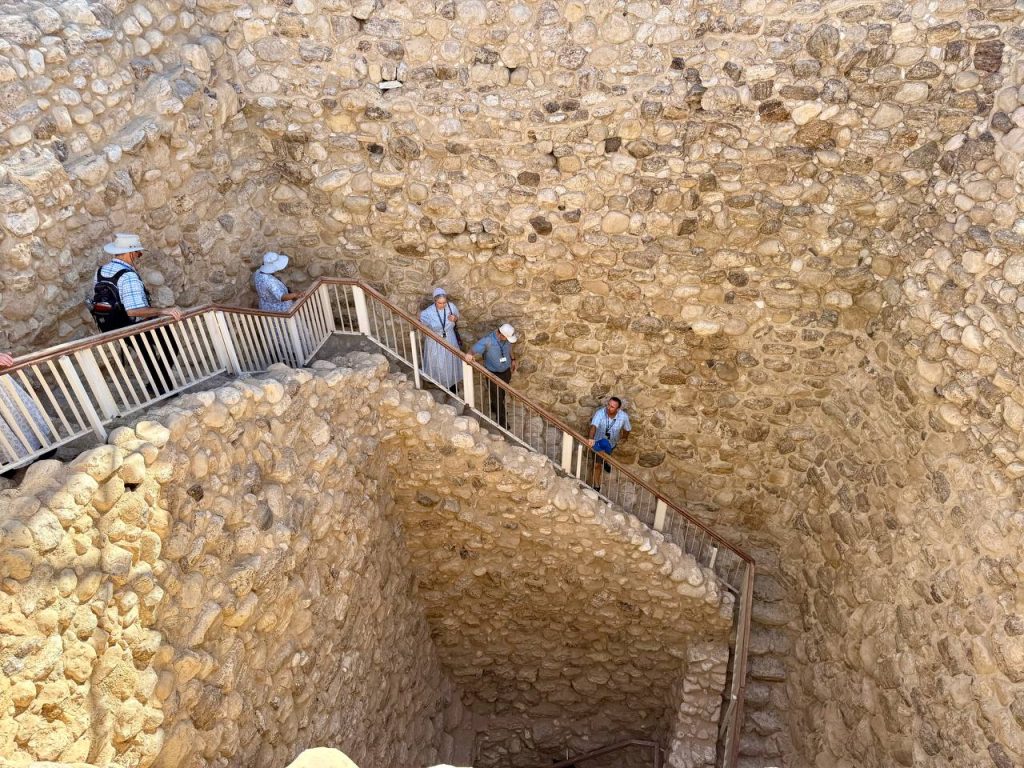
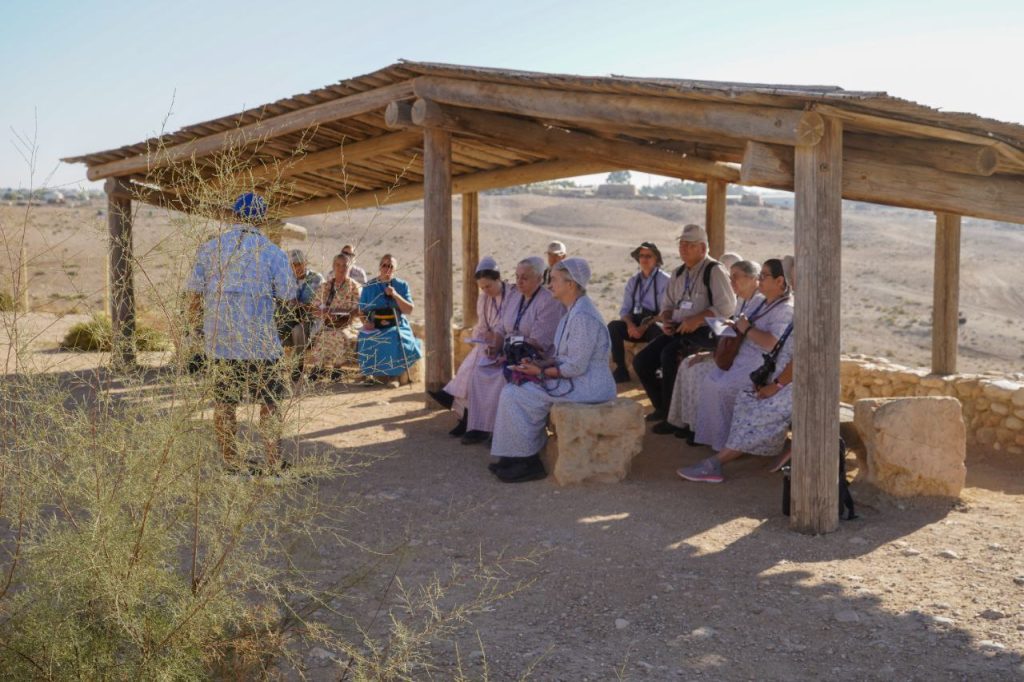
M.M. – We saw a stone lined well that goes down 700 feet. And the cistern where they caught the precious rain water. It only rains 3 inches a year in this area. We walked down the 151 stairs into the cistern. A few of the older ones opted to go back the other way rather than going down the stairs. In a chamber of the cistern we sang “Open the Wells of Salvation”.
L.H. – It was quite inspiring to visit a site where Abraham would have lived and walked. High in the desert, the sun bright and the air warm. We saw a herd of camel being herded by a pickup truck to the stream below us for water. What a contrast.
While we were traveling we saw lots of Beduin communities. Tumbletown shacks with tin roofs and barriers made of burlap and sticks. Abandoned vehicles outside the compound and children running around outside or herding animals such as goats. We also some some men riding camels like they were just out for a leisurely horseback ride. We would somewhat compare this people group to gypsies in America.
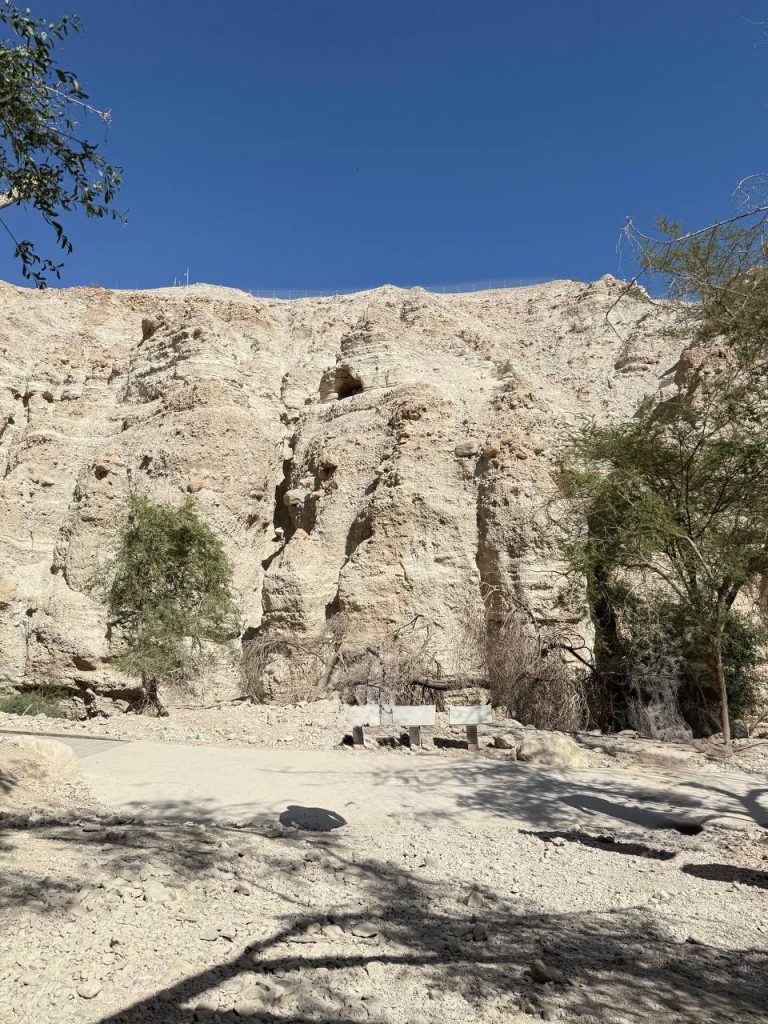
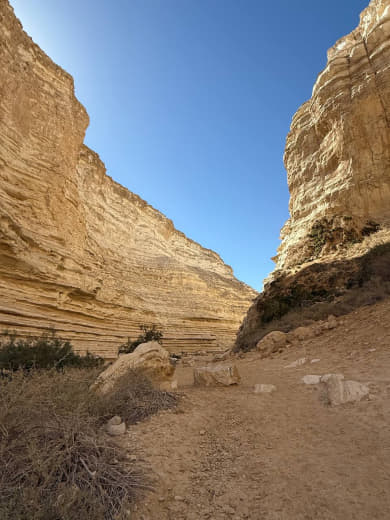
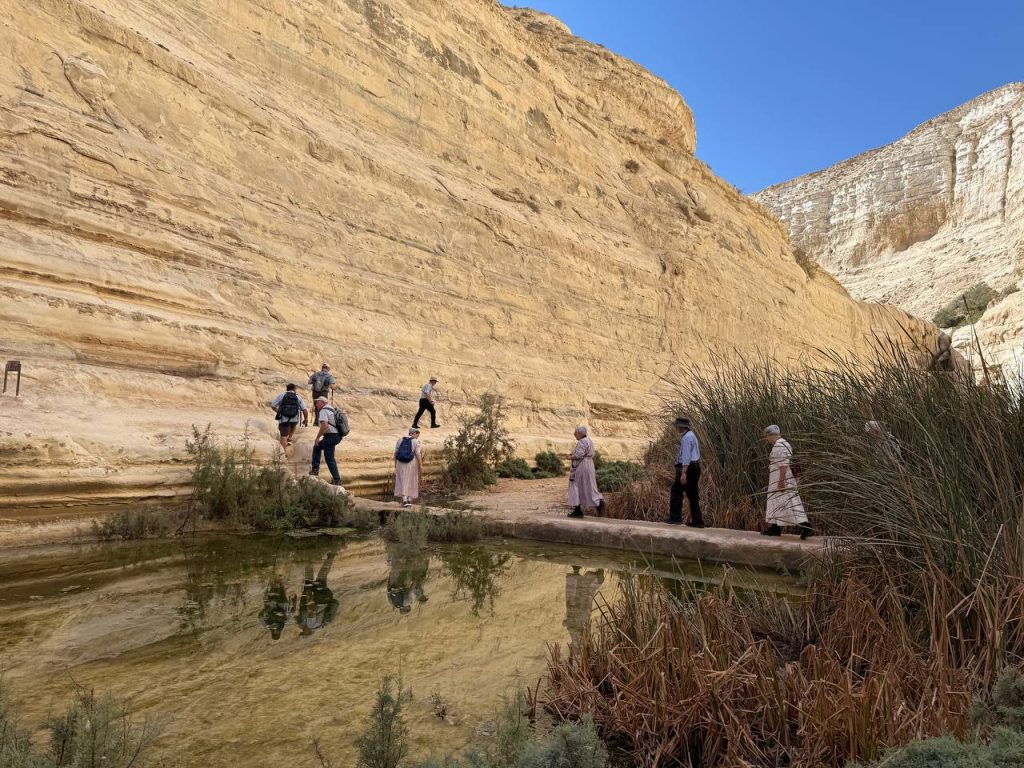
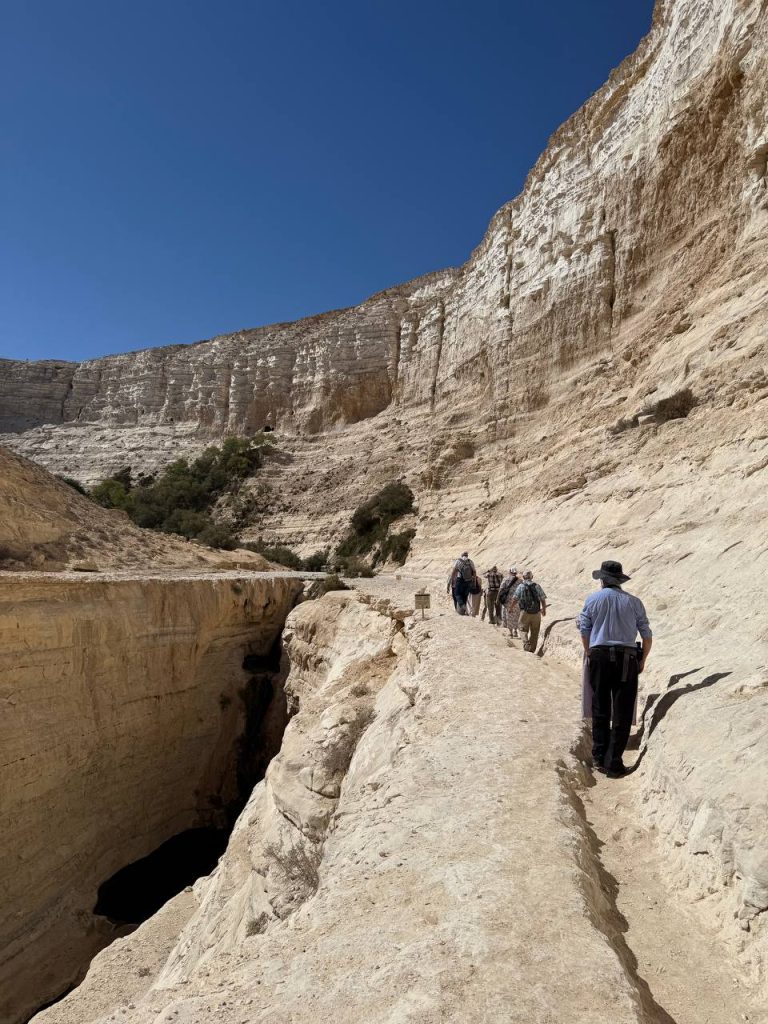
Our next stop was Wadi Zin, in the wilderness of Zin (Numbers 27:14) The landscape changed dramatically as we left the highway and headed down into the ravines of the wilderness. The landscape is very white/cream here. Reminds me of the Badlands or Utah in landscape but very light colored. We saw several Ibis scampering around on the rocks.
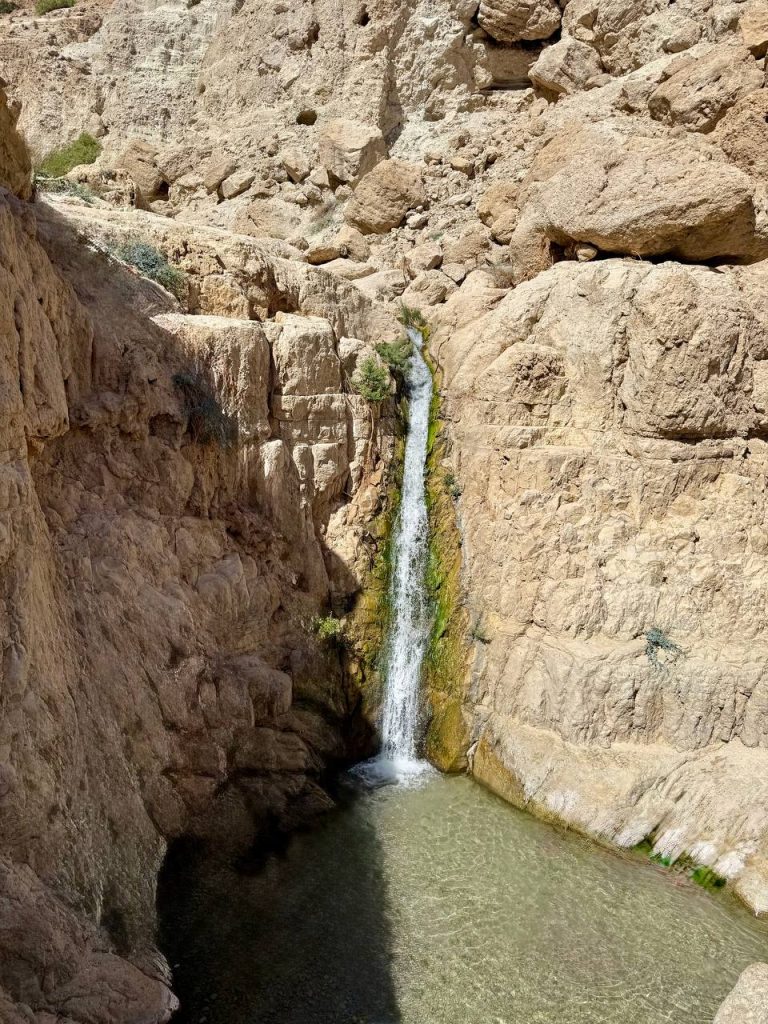
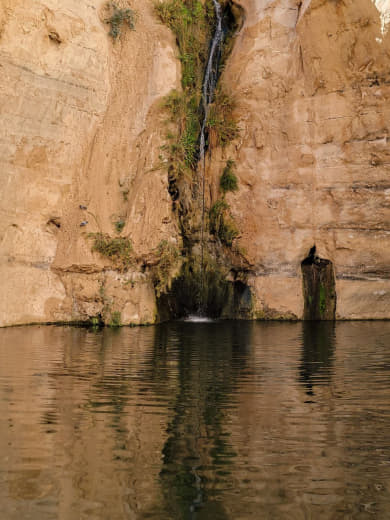
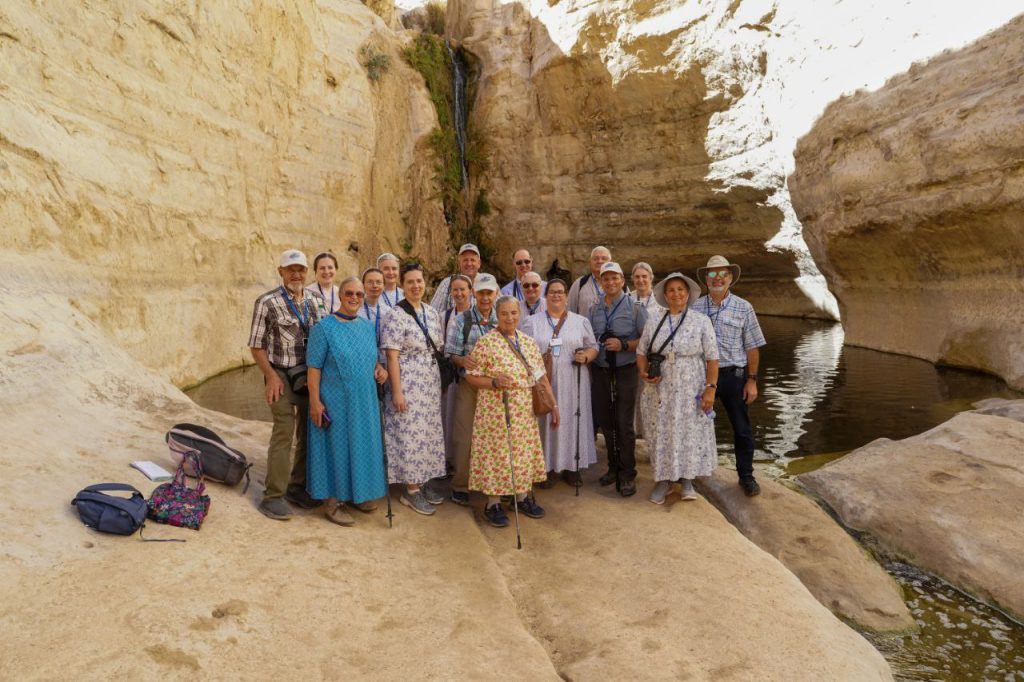
We exited the bus and walked back into the ravine even further into the wilderness and as we turned the corner there was a lovely little brook and waterfall! Streams in the desert for refreshment. As we traveled further we came to a tall waterful coming out of a split rock with a beautiful pool at the bottom. It is commonly felt that this is where Moses split the rock with his rod. Experts are not sure where the water comes from, but it is slightly salty. It was so inspiring to think of Moses and Aaron and their sister Miriam walking here.
M.M. – To the waterfall was mostly level walking. Some up hill, but not very strenuous.
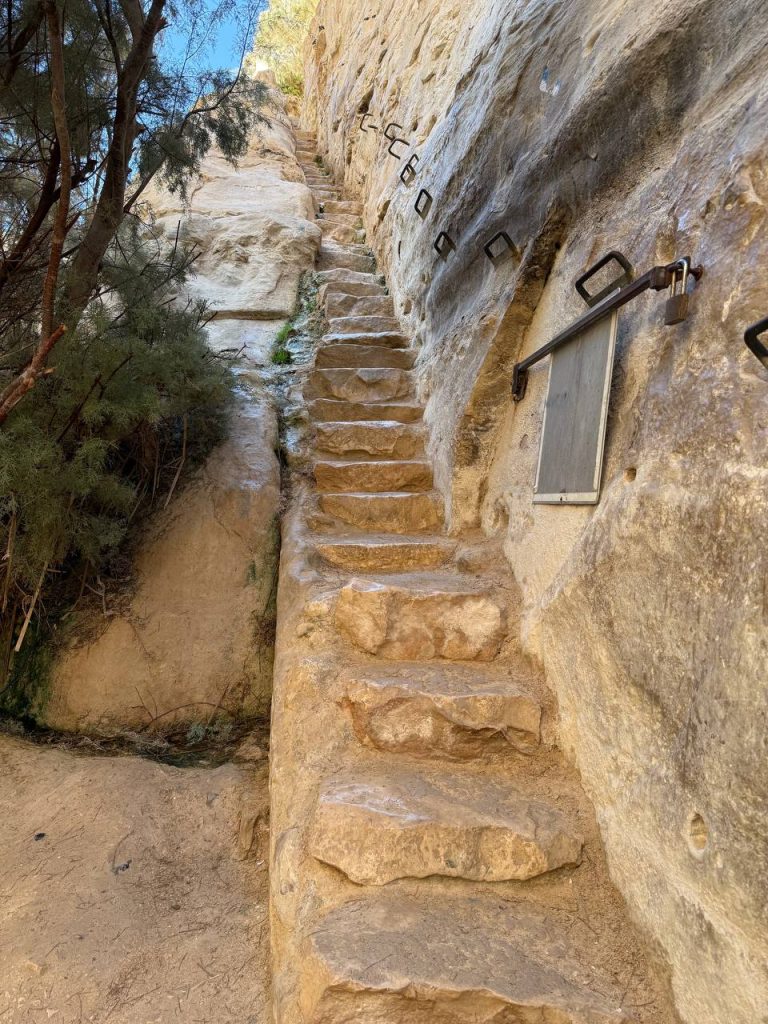
Soon after the waterfall we had to choose- to go back the way we came or climb upwards. Most of us went up. Some places it was slopes, but many places were stairs built into the side of the cliff. Thankfully there were rebar hand rails in the “worst” spots. There were 2 places that we had to go up ladders, about 15-20 feet long.
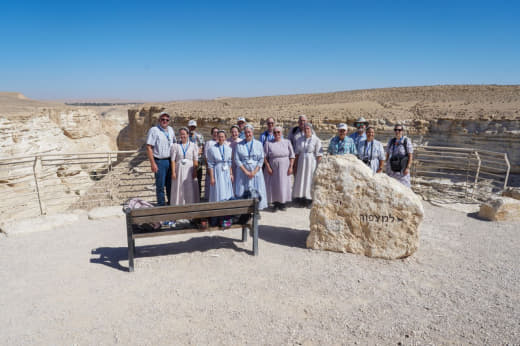
It was beautiful. And strenuous. And hot. The bus was waiting for us at the top. The trail is a one way trail. There was a sign that said that from this point you must go up. You may not go down.
Eugene Hurst has an Apple Watch. He measured 597 ft of elevation that we climbed, in the 1.4 mile hike.
L.H. – After a quick lunch at a travel area we headed to Tel Arad. Another ruins, this one from the Bronze Age, 3500 BC, then rebuilt in Canaanite times. It is commonly believed that Abraham would have camped in this area.
This ruins had a temple with an alter and Holy of Holies. In this place of worship are replicas of a stone tablet and two pillars. They were found purposely broken, placed on the floor and buried. The originals are in the Israel Museum. It was wonderful to put in perspective what the temple really looked like. It certainly didn’t look like I imagined!
M.M. – From the top of Tel Arad we walked down hill a ways, then up the slope opposite, where the ruins of a Canaanite house had been excavated. It is a multi-roomed house where a patriarch and his extended family lived. They reconstructed what may have been the main house, complete with a roof. We sang a song there.
By then it was time to head to the bus. Since it’s Shabbat, the site was closing soon.
We got back to the Inbar Hotel about 3:30. We had time to do laundry, take showers and relax before supper at 6.
It was a good meal. Baked Potato quarters that were seasoned, and rice, chicken, beef and fish. Lots of salads, and 2 kinds of squares, apples and tangerines for dessert.
After supper Andrew said they were going for a walk, does anyone want to join? I think we all did, except Cara. We walked a few blocks away to where there are shops, and a “town square” where people gathered. It was empty tonight.
It was about 8:30 when we got back. Time to finish off this report and go to bed. Breakfast will be at 7 again.
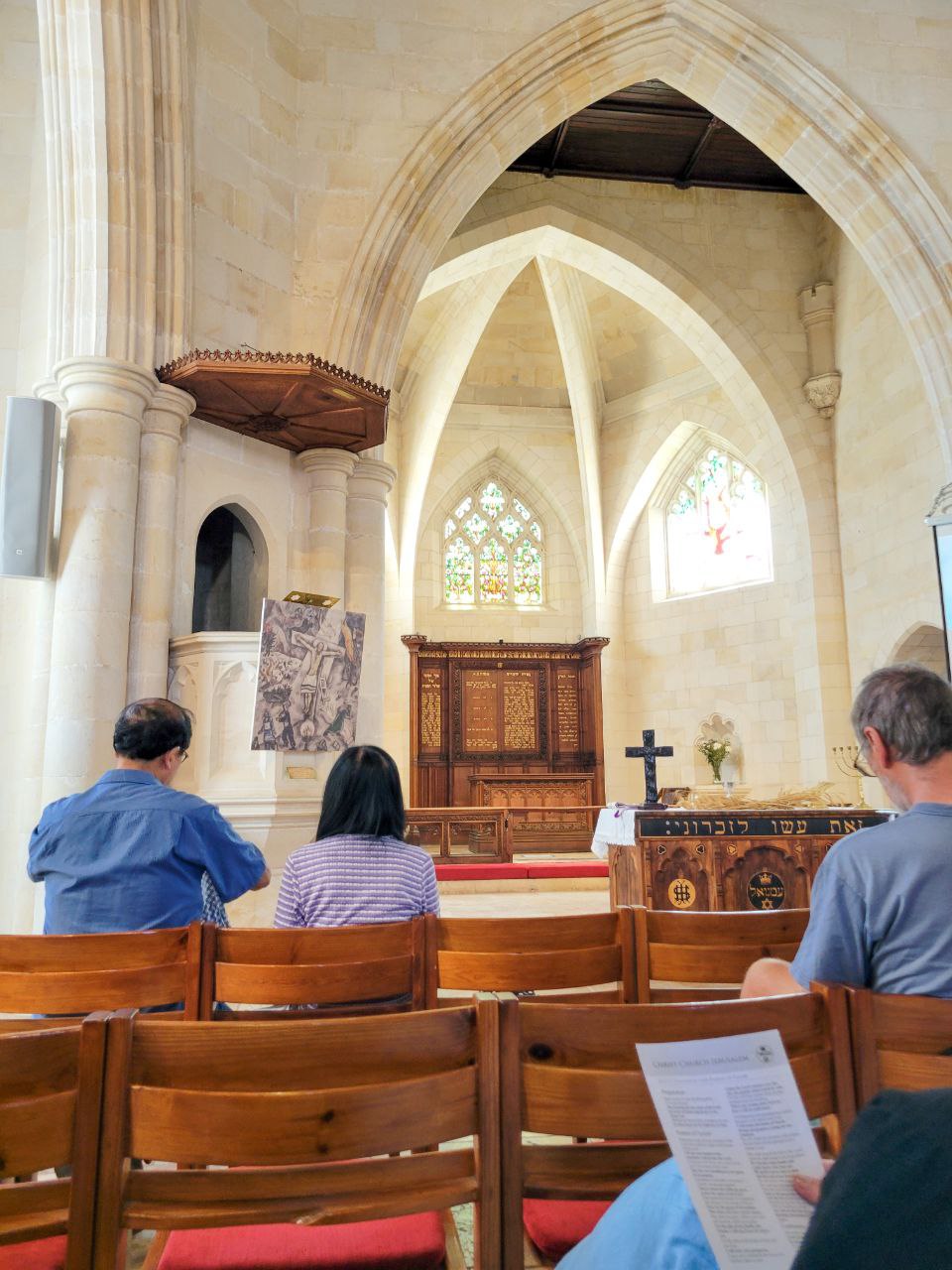
We visited Christ Church inside Jaffa Gate on Sunday morning.
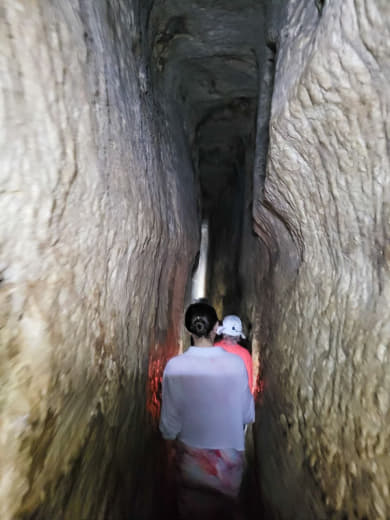
We walked through Hezekiah’s tunnel.
A group of Jews ready to enter Temple Mount
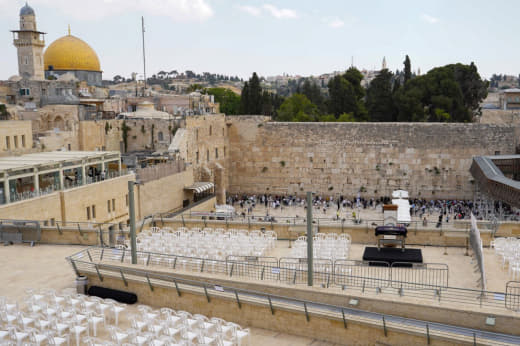
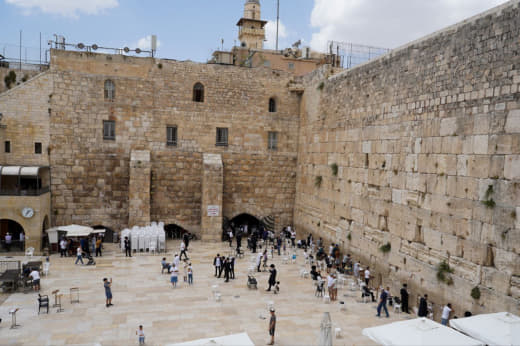
Western Wall, where people come to pray.
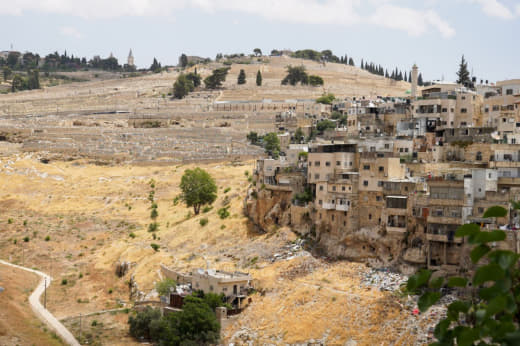
Mount of Olives. A Jewish cemetery covers much of the slope. There is a Jewish tradition about being first in line for the resurrection.
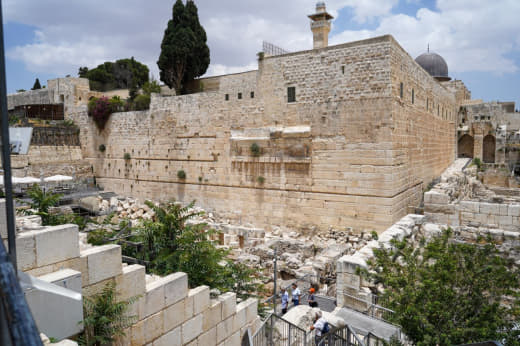
Southwest corner of Temple Mount. The tumble at the bottom of the wall is from the Roman destruction in 70 AD, left where it fell. Notice where an archway was attached to the wall. A street with shops was inside the arch and a bridge to the temple was on top of it. This corner was the place of the blowing of the shofar, according to an inscription found below.
The men’s section of the Western Wall. The arch in the corner is known as Wilson’s Arch for the archeologist who discovered it. There’s a spacious prayer room inside.
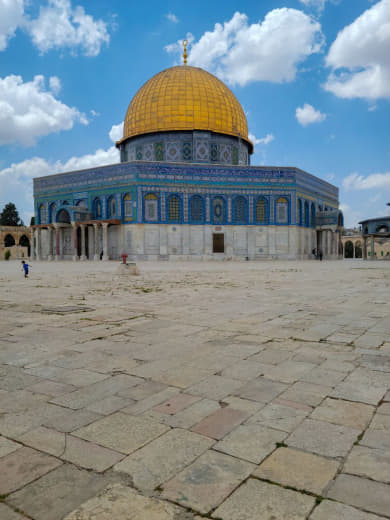
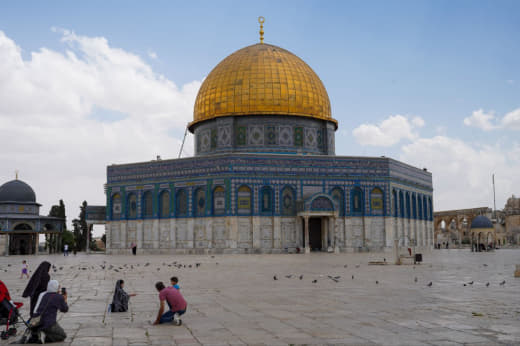
Dome of the rock. Mount Moriah, threshing floor purchased by David, Solomon’s Temple, Second Temple, all here. A holy site for both Jews and Muslims.
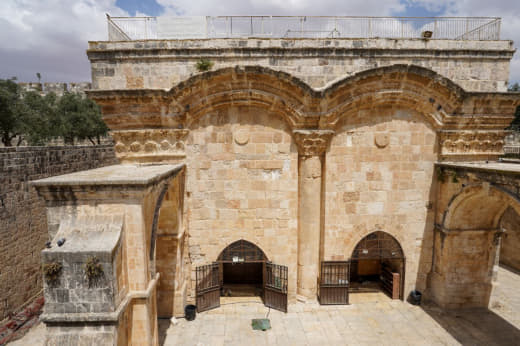
Just inside the Eastern Gate, over there…
Muslim family feeding pigeons next to the Dome of the Rock
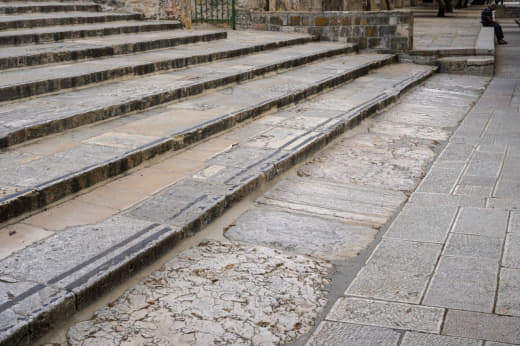
Some of the stones in the first step may be repurposed from Hezekiah’s temple platform, which was a square 500 cubits by 500 cubits.
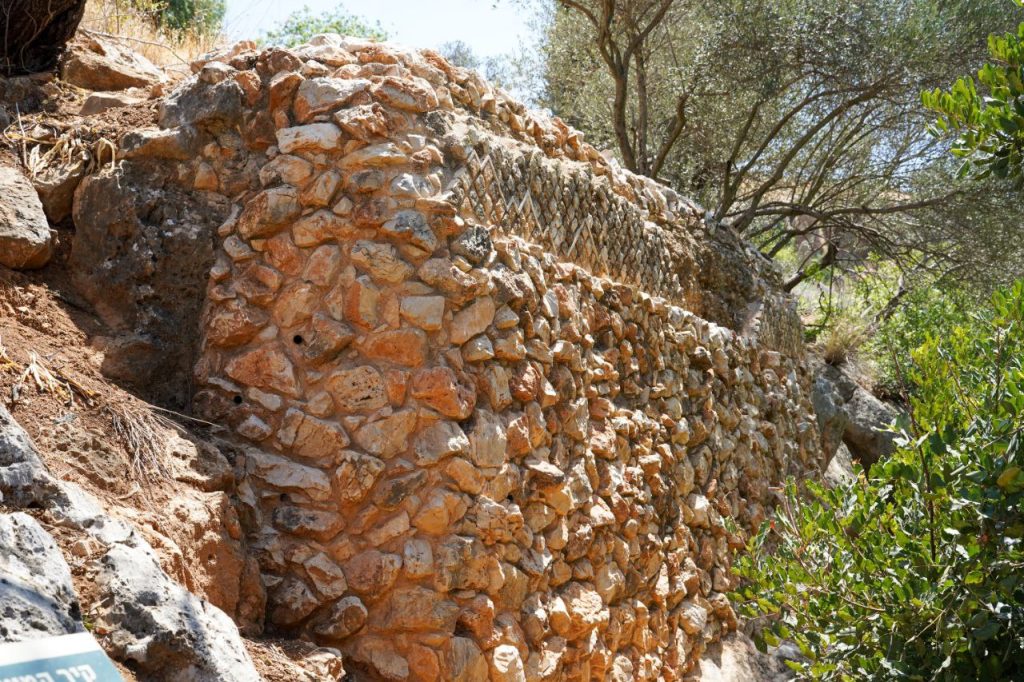
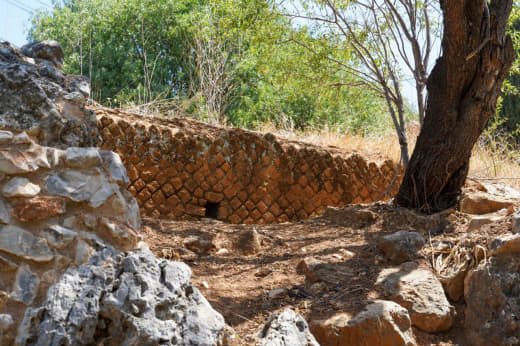
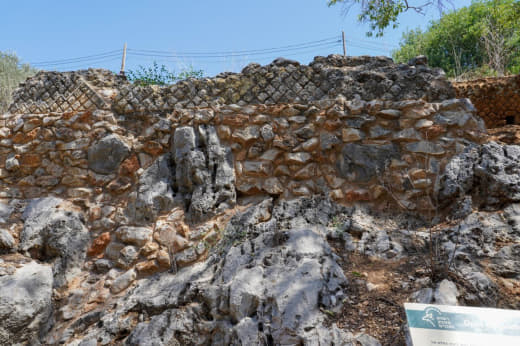
Dr Stripling is taking us on a bus tour today. We visited the Opus Reticulatum, a retaining wall for a palace of Herod here at Banias Spring (known as Caesarea Philippi in the New Testament era). This is a recent discovery. Frankie was part of the finding and uncovering.
There are two parallel walls.
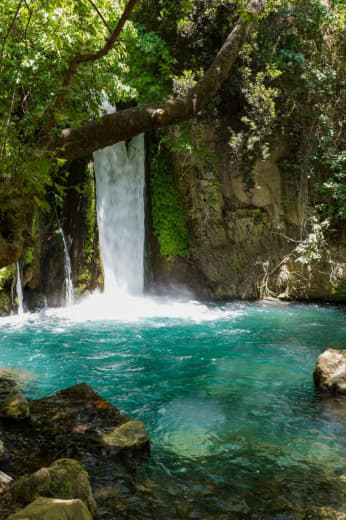
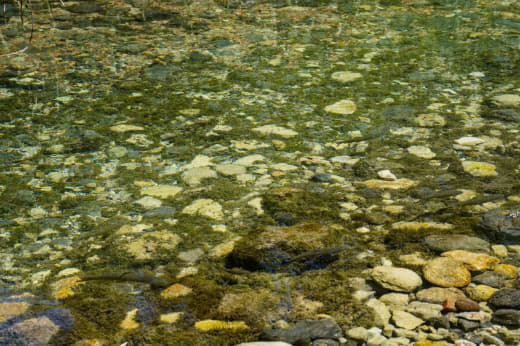
Banias Spring is one of three springs that feed the Jordan River. The water is from the melted snows of Mount Hermon.
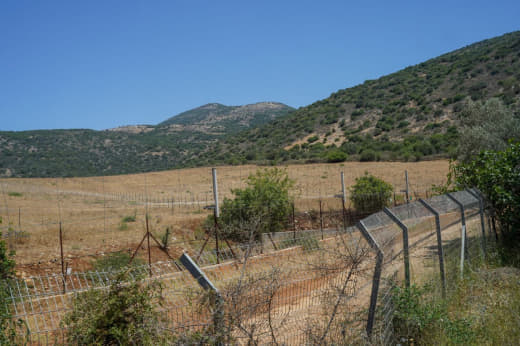
Here you can reach out and touch Lebanon.
Golan Heights
The trail to Banias waterfalls
Banias Waterfalls
The fortified Israelite city at Tel Dan
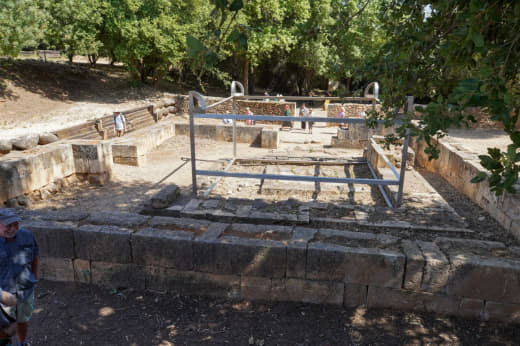
Here’s where the king would sit in the gate. This is inside the outer gate. Gates were for justice, economics, worship, security.
Large area for commerce between the outer and inner gates.
The golden calf worship site that Jeroboam set up in Dan.