April 1–We drove to JFK this morning. Flying to Istanbul, then Cairo, God willing. We are joining a Life of Moses study trip.
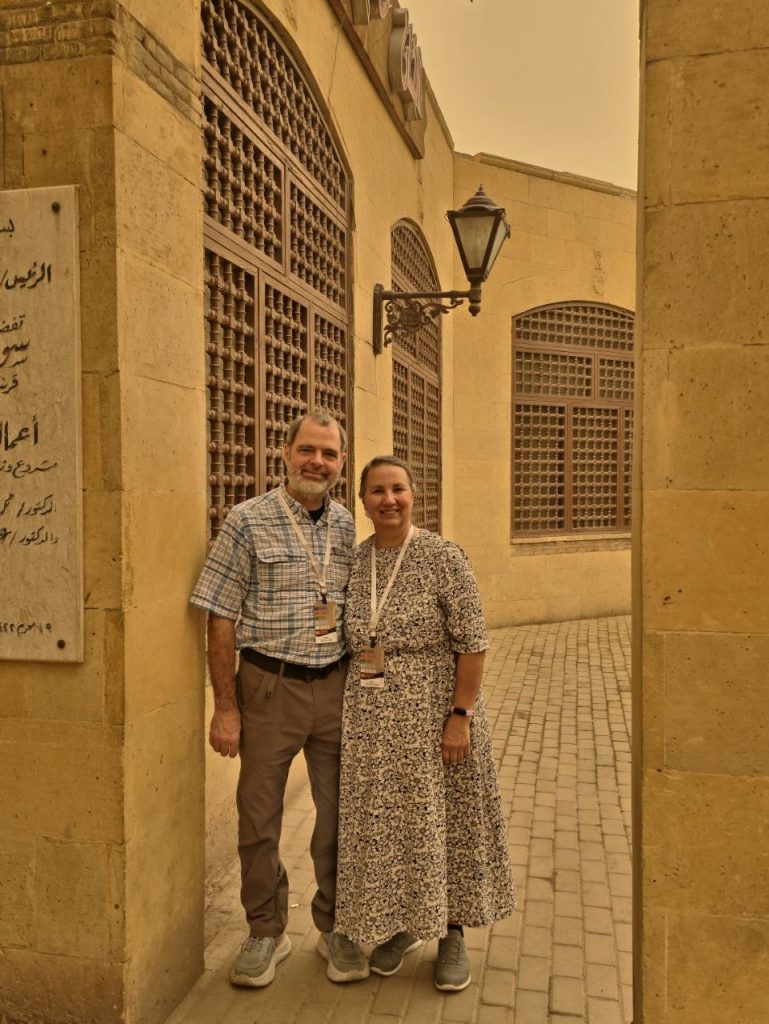
April 2–We’re touring Old Cairo.
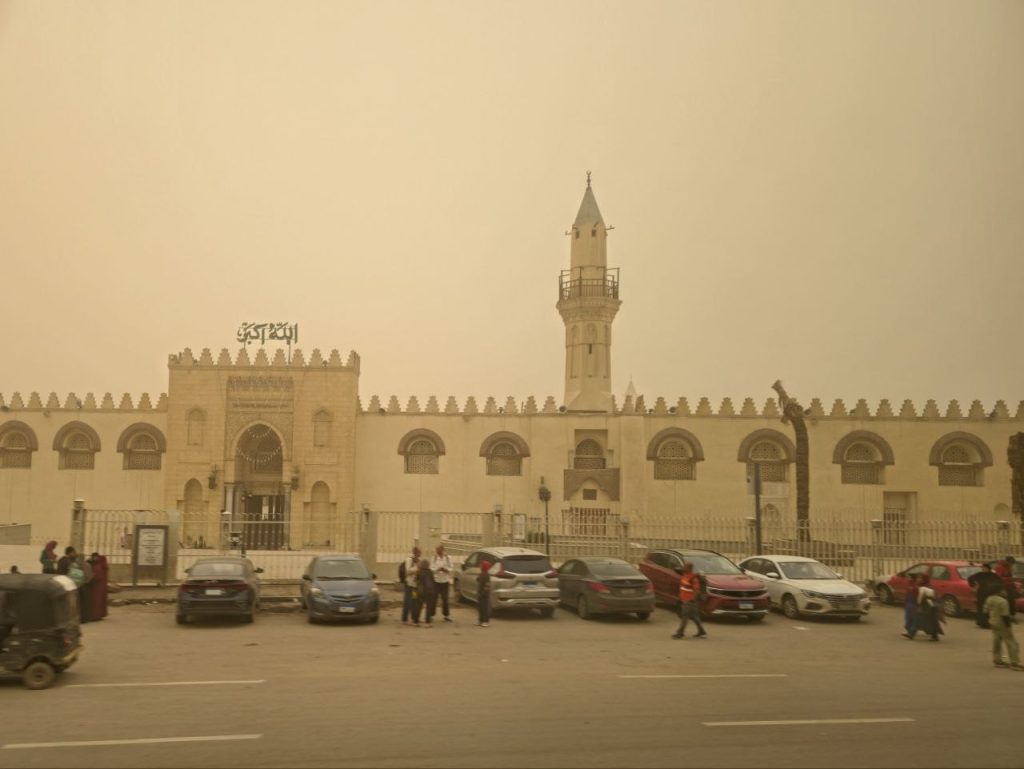
The air is filled with fine dust because of a recent storm.
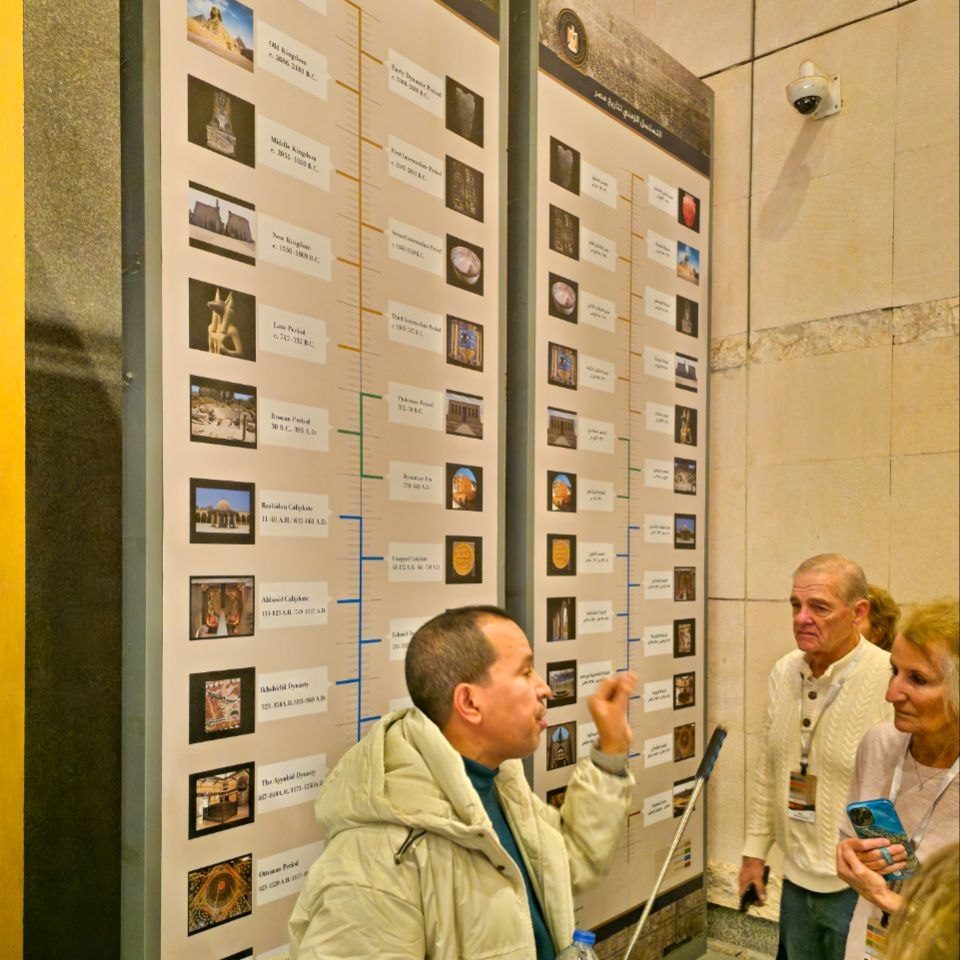
Our Egyptian guide gave us an overview of Egypt’s long history.
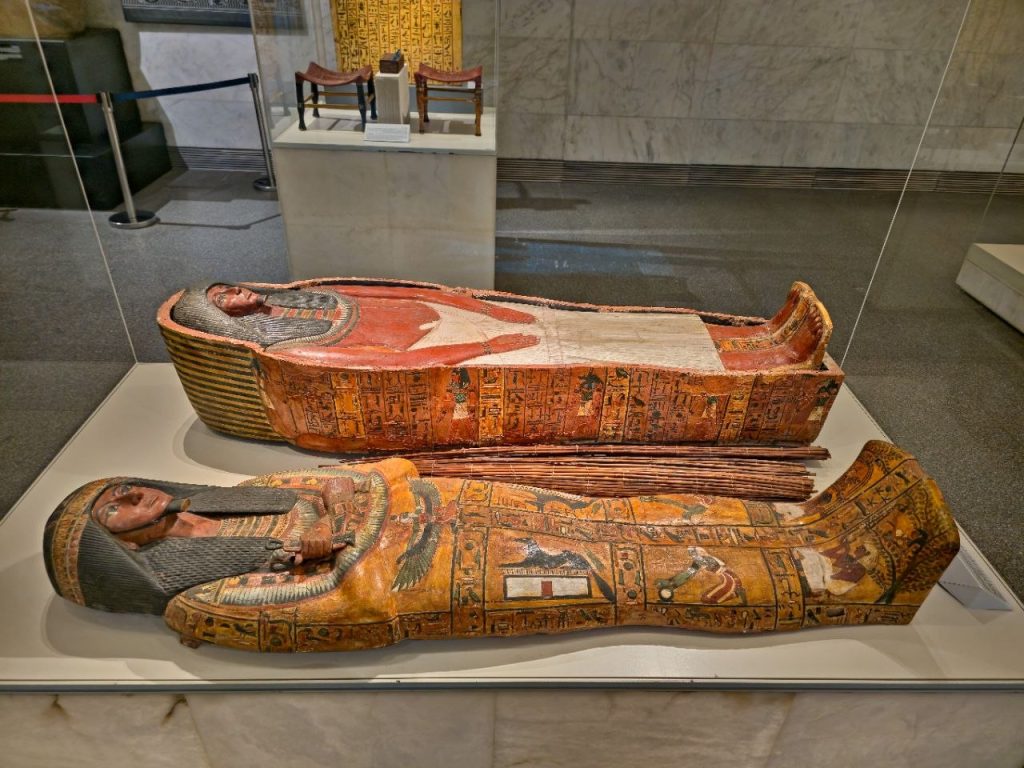
This is an example of a multi-layered carved wooden coffin. Sort of like Russian stacking dolls.
It felt like descending into a pyramid when we went downstairs to see the royal mummies. There were a dozen or more Pharaohs. Moses must have seen some of them when they were alive. We weren’t allowed to take pics.
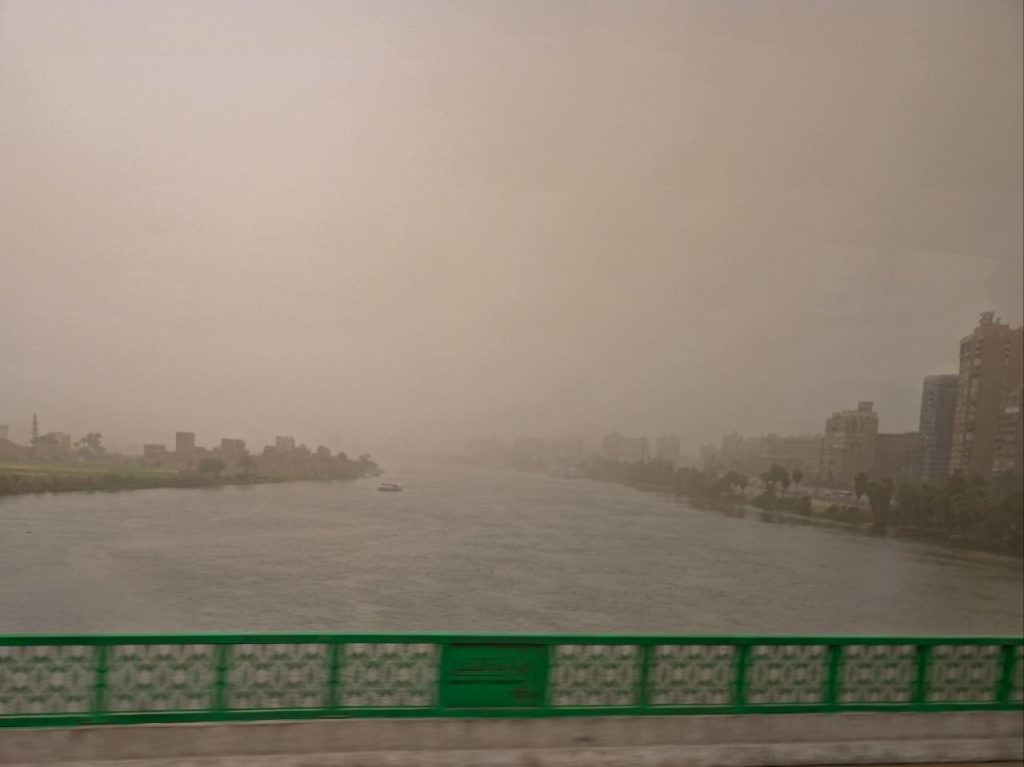
I grabbed a pic of the Nile as we crossed. The dust storm really reduces visibility today. Apparently they don’t get many storms like that. There also was some flooding.
April 3–We started the day with background on Egypt and Moses. Egypt had the Nile for water, agriculture, and transportation. Egyptians were traditional, and the afterlife was highly important to them.
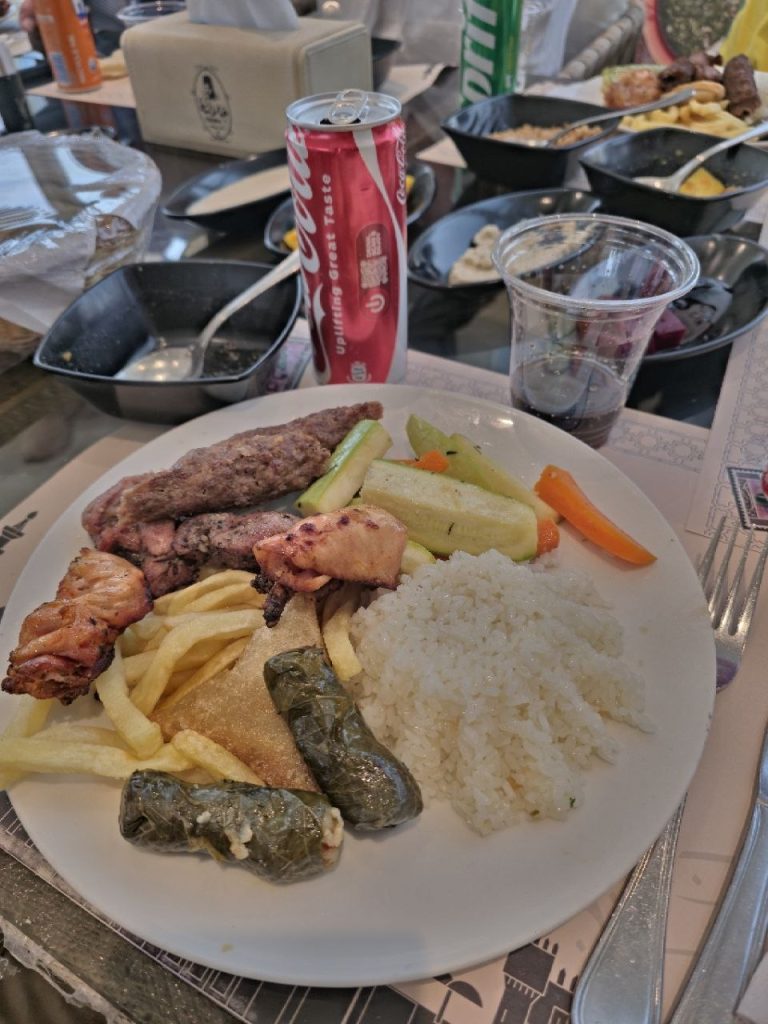
Lamb and chicken for lunch. Julia likes the stuffed grapes leaves, but I figure there’s enough good food without them.
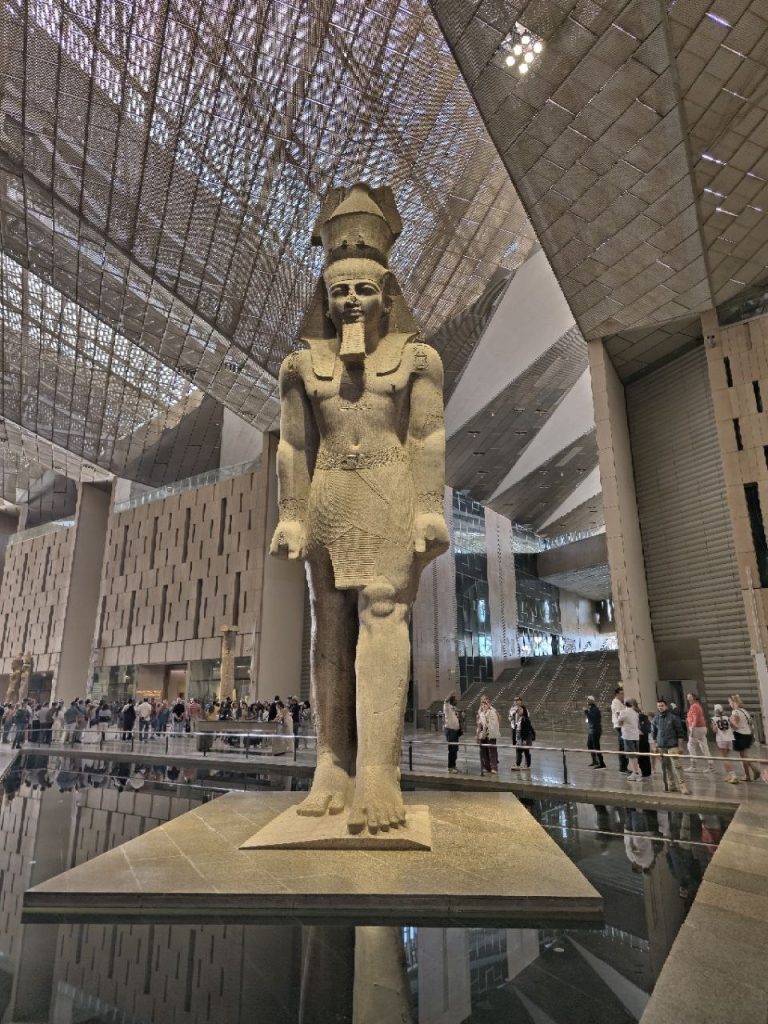
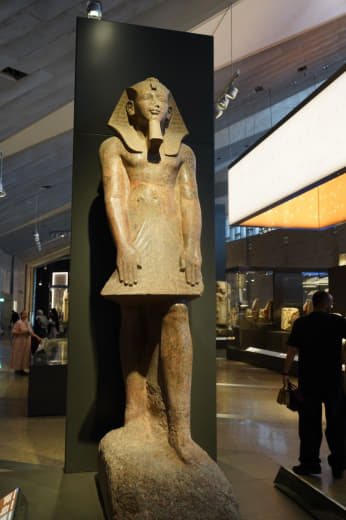
We’re in the new Grand Egyptian Museum. On the left, Ramses II statue, 83 tons, 3,200 years old. On the right, statue of Amenhotep II. Some evangelical scholars consider him the likely Pharaoh of the Exodus. It could fit with an early-date Exodus, which fits a literal reading of 1 Kings 6:1.
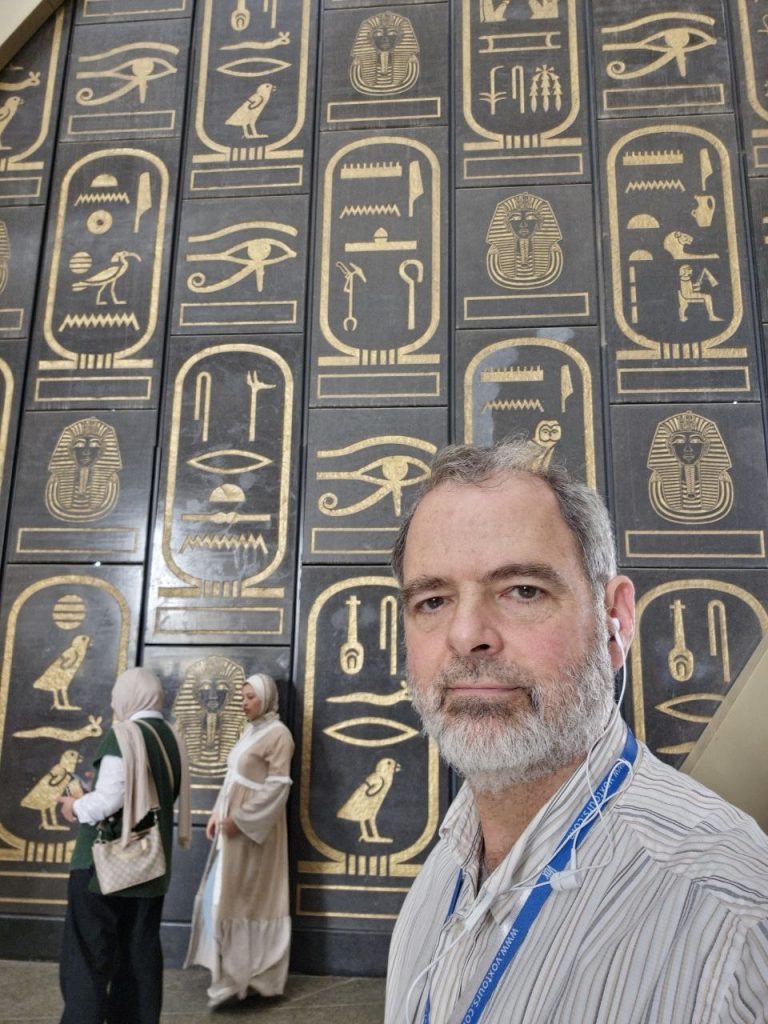
Wall of cartouches inside GEM, the largest museum in the world. In Egyptian hieroglyphs, a cartouche is an oval with a line at one end, indicating that the text enclosed is a royal name. Cartouches were worn by pharaohs. The oval surrounding their name was meant to protect them from evil spirits in life and after death.
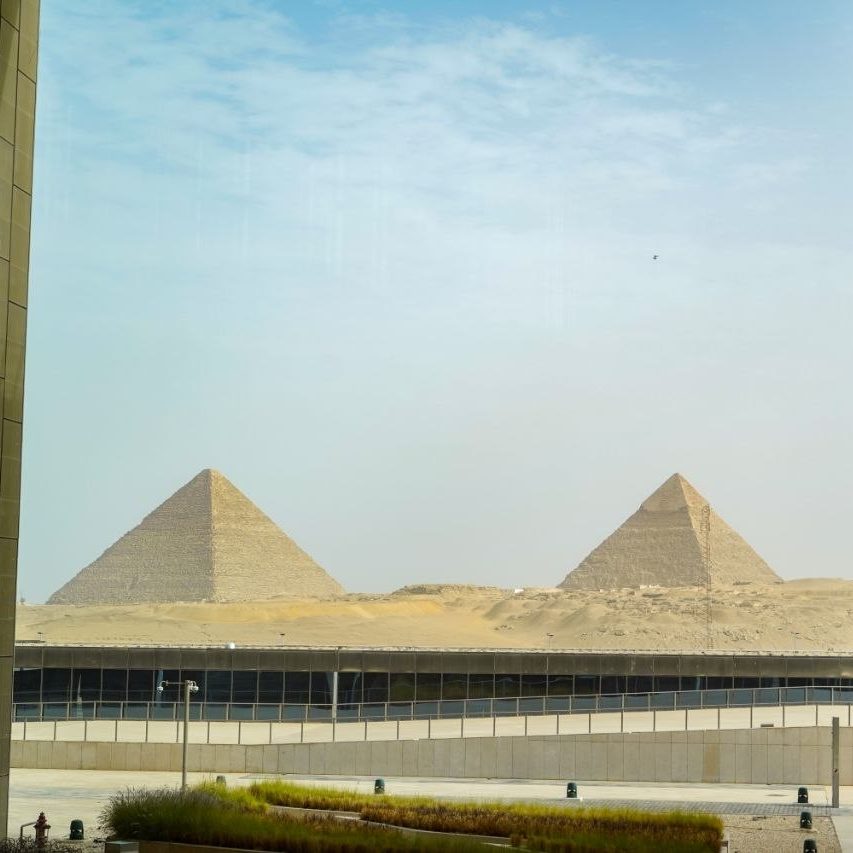
View of Giza pyramids from the museum
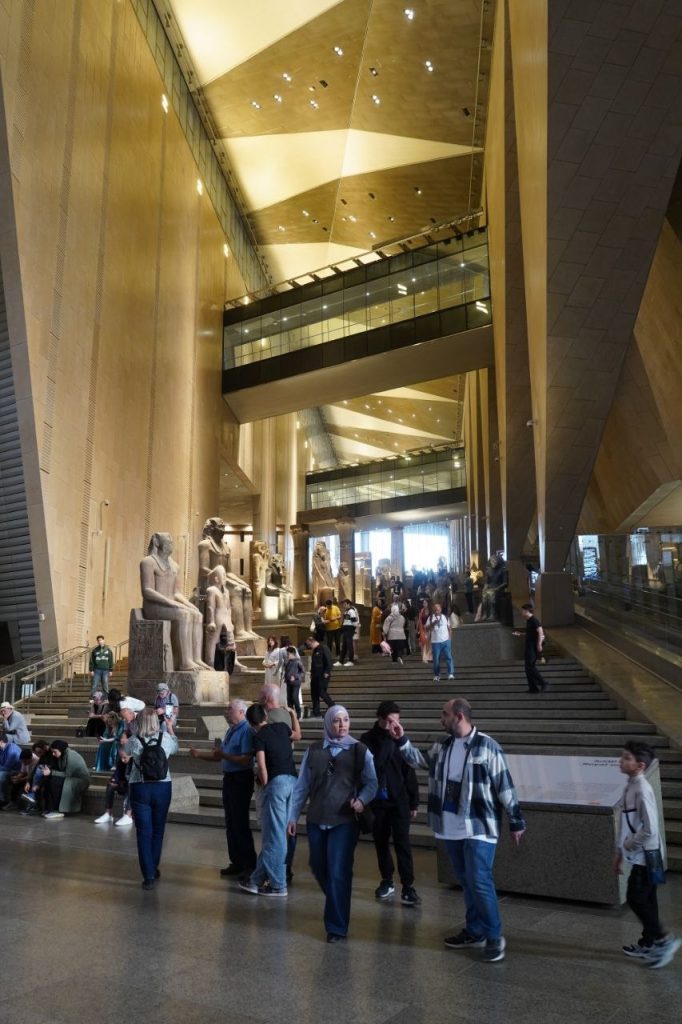
The grand staircase leads to the entrance of the GEM.
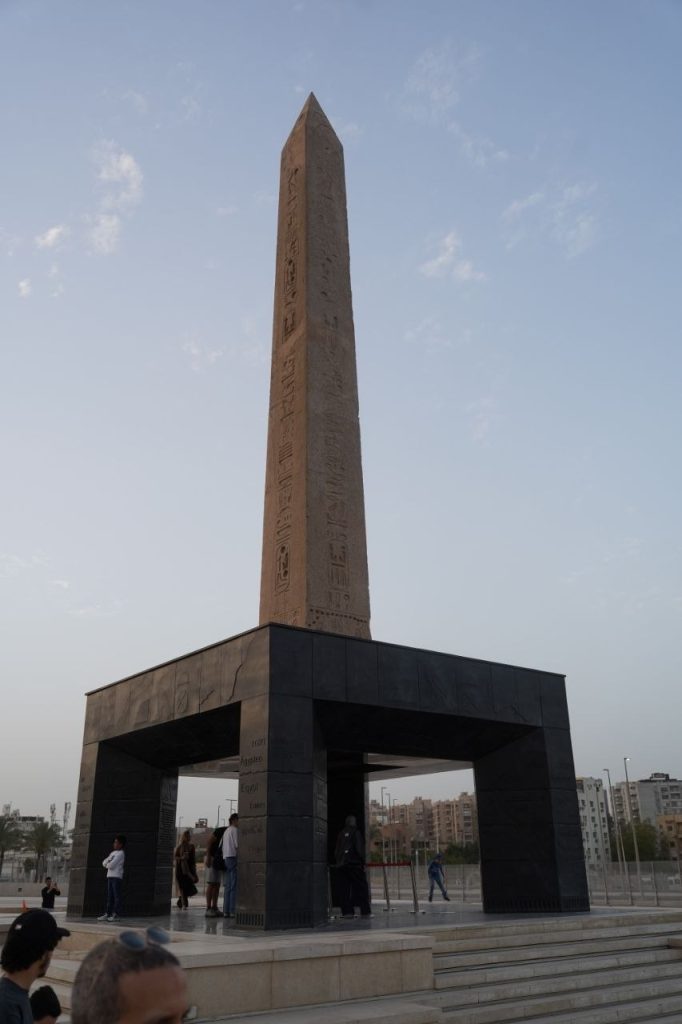
The only suspended obelisk in the world. The hanging obelisk of Pharaoh Ramses II.
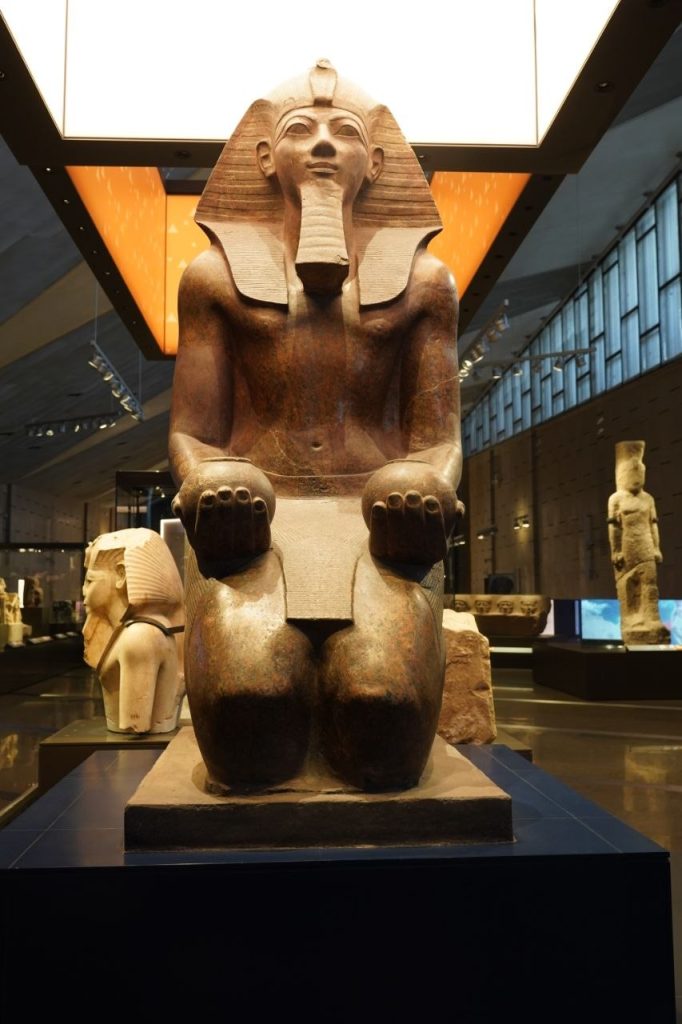
Hatshepsut, daughter of Thutmose I. Some early-date scholars suggest her as the one who rescued Moses from the Nile.
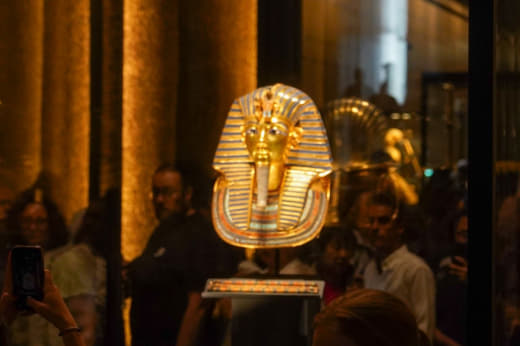
King Tut’s burial mask. Inside several layers of coffins. Remember the Russian stacking dolls.
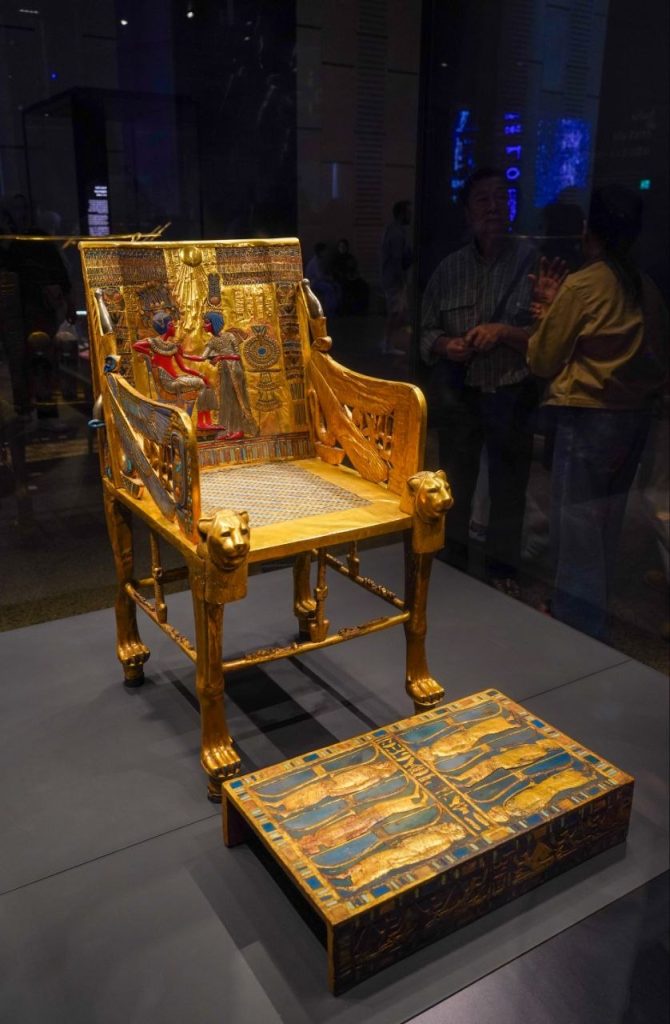
King Tut throne